Why Newton EV and Auto Plants Need a Different Answer in 2026
Newton-area EV and auto component plants in 2026 do not discharge a single, well-defined stream; they discharge a blend. Stamping lubricants, dielectric fluids, electrode-coating residues, and battery-particle fines exit the same floor drain as cleaning chemistries and parts-washer rinse water. That mix contains both floating contaminants (oils, greases, light emulsions) and settling contaminants (metallic fines, inorganic sludges), and the dominant fraction is what should drive the technology choice, not a generic "DAF versus clarifier" ranking.
The supplied research establishes two clear technology classes. Dissolved air flotation (DAF) systems use air bubbles to float light particles, oils, and greases to the surface of a treatment tank, where they are skimmed off, while clarifiers rely on gravity sedimentation to settle heavier solids to the bottom of a tank, where they are removed as sludge (Source S2, Ecologix). A 95% DAF oil-removal result and a 70% clarifier result on the same oily stream (Source S2) and a >99% DAF TSS and O&G result in industrial pretreatment (Source S1) anchor the comparison in measured data rather than vendor marketing.
Because the streams are mixed, a single-technology specification carries real risk. Choosing a clarifier alone under-treats oils and dielectric fluids; choosing a DAF alone may leave fast-settling metallic fines under-managed. The defensible 2026 approach is to pick the primary unit, then decide whether a secondary polishing stage is needed — a framing the generic top-of-page comparisons do not explicitly make for an EV/auto buyer in Newton.
How DAF and Clarifiers Actually Work in an Auto Plant
A DAF system pressurized a recycle stream with air, then releases that pressure inside a flotation tank. The released air forms fine bubbles that attach to oil droplets, grease flocs, and light suspended solids, lifting them to the surface as a stable float layer that a mechanical skimmer removes. A gravity clarifier, by contrast, is a quiescent tank; flow enters, slows, and heavy solids settle to the bottom under gravity while clarified water overflows a peripheral launder. The two mechanisms target different fractions of the same waste stream, which is why the technology choice follows stream characterization rather than flow rate alone (Source S2, Ecologix).
The engineering detail that matters for an auto-line spec is the recycle-pressure step. The supplied research documents that at 20°C, the maximum amount of air that can be saturated in water at 80 psig is 46% greater than the amount at 50 psig, and higher-pressure systems generally create whitewater with smaller bubbles (Source S1, Academia.edu). Smaller bubbles mean more surface area per unit volume of air for floc particle attachment, which translates directly into more efficient flotation. Smaller bubbles rising to the water surface also do not agitate and shear the forming floc bed as larger ones do (Source S1), so light lubricants and dielectric residues form a stable float layer that the surface skimmer can remove cleanly rather than re-dispersing.
Clarifiers carry a different mechanical reality. They are simpler, have lower operational cost than DAF systems, but perform poorly on emulsified oils without upstream chemistry (Source S2). For an EV/auto plant, that limitation is decisive: stamping emulsions, dielectric residues, and electrode-coating carriers are exactly the fractions a clarifier cannot reach without coagulant and flocculant aid, so a clarifier-only line typically needs chemistry equipment in front of it anyway.
Side-by-Side: DAF vs Clarifier on the Metrics That Matter
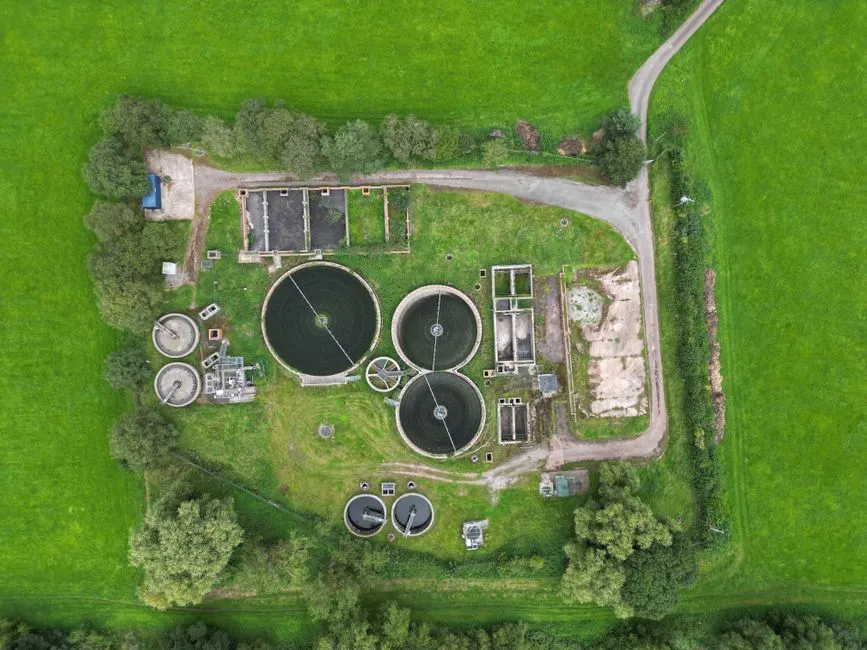
Removal efficiency is the first axis a Newton POTW reviewer will check. The supplied research documents that DAF systems can achieve over 99% removal of TSS and O&G in various industrial applications, including rendering and food-processing wastewater (Source S1, Academia.edu), and a direct head-to-head on the same oily stream showed 95% oil removal for a DAF versus 70% for a clarifier (Source S2, Ecologix). For the heavy-solids axis, a mining facility with heavy sediment loads opted for a clarifier, reducing solids by 90% at lower costs than a DAF would have achieved on the same stream (Source S2), confirming the clarifier's strength on fast-settling inorganic loads.
Footprint and capacity matter for any 2026 retrofit. Rectangular DAF units are more space-efficient and cost-effective than circular designs, but are limited in flow capacity (Source S1). Concrete product envelopes from DAF Corporation (Source S4) put the FC Maximizer circular line at 10–11,000 GPM with diameters from 6 ft to 70 ft, and the rectangular RC UniMax line at 10–1,000 GPM. Effluent quality is also a documented DAF strength: total suspended solids removal to below 20 ppm of filterable solids and thickened sludge consistency of 2–4% is indicative of efficient DAF operation (Source S4), which directly drives Newton POTW surcharges and hauling cost.
Operating-cost profile splits the two technologies cleanly. DAF systems require moderate auxiliary equipment (air compressor, pumps) and carry higher upfront and operational costs, while clarifiers are simpler and have lower operational cost (Source S2). The trade-off a Newton buyer is really making is paying a higher opex for a unit that pulls oils and greases out of the stream at >99% (Source S1) versus a cheaper gravity unit that struggles below 70% on the same oils (Source S2).
| Parameter | Dissolved Air Flotation (DAF) | Gravity Clarifier |
|---|---|---|
| Primary mechanism | Air bubbles attach to oils, greases, light solids; float skimmed from surface (Source S2) | Gravity sedimentation of heavier solids; sludge removed from tank bottom (Source S2) |
| Documented oil & grease removal | >99% TSS and O&G in industrial pretreatment; 95% on a food-processing oily stream (Sources S1, S2) | 70% on the same food-processing oily stream (Source S2) |
| Heavy-solids performance | Less economical for fast-settling inorganics; suited to oil and light solids (Source S2) | ~90% solids reduction in a mining installation at lower cost than DAF (Source S2) |
| Flow envelope (FC Maximizer / RC UniMax) | Circular FC Maximizer: 10–11,000 GPM, 6–70 ft diameter; Rectangular RC UniMax: 10–1,000 GPM (Source S4) | Flow envelope not specified in supplied research; simpler tankage |
| Effluent quality (DAF data) | Below 20 ppm filterable TSS; sludge 2–4% consistency (Source S4) | Not specified in supplied research |
| Equipment complexity & opex | Moderate auxiliary equipment (air compressor, pumps); higher upfront and operational cost (Source S2) | Simpler; lower operational cost than DAF (Source S2) |
| Best-fit stream | Oils, greases, dielectric fluids, electrode-coating residues, light emulsified solids (Source S1) | Heavy, fast-settling inorganic solids such as metallic fines (Source S2) |
Which One Should a Newton Auto/EV Plant Choose in 2026?
The decision is driven by the dominant contaminant at the site, not by flow rate alone. Choose a DAF as the primary unit when the load is dominated by oils, greases, dielectric fluids, electrode-coating residues, or light emulsified solids — the exact profile of an EV battery line or an auto-stamping and assembly plant — because DAF can exceed 99% removal of TSS and O&G in documented industrial cases (Source S1, Academia.edu) and 95% on a direct oil-removal comparison (Source S2). For a Newton plant whose POTW permit and MassDEP filing both turn on oil and grease limits, that gap between 95% and 70% (Source S2) is the permit-defensibility argument.
Choose a clarifier as the primary unit only when the stream is dominated by heavy, fast-settling inorganic solids such as metallic stamping fines and parts-washer sludge, where clarifiers reach roughly 90% solids reduction at lower cost (Source S2, Ecologix). For a body-shop or heavy-stamping line with little dielectric or electrode chemistry, that case is real; for a mixed EV/auto campus in Newton, it is not the dominant case.
Pick tank geometry after flow. Rectangular DAFs are more space-efficient and cost-effective than circular designs but limited in flow capacity (Source S1), which makes them the right answer for space-constrained retrofits and modest flows. The circular FC Maximizer class covers up to 11,000 GPM with diameters from 6 ft to 70 ft (Source S4, DAF Corporation), which is the right envelope when the 2026 expansion pushes plant flows into the thousands of GPM. The default recommendation for mixed Newton auto/EV streams is a DAF-led train with a downstream polishing stage, because hybrid DAF + clarifier arrangements address complex wastewater by combining DAF's oil removal with sedimentation (Source S2).
The Hybrid Option: DAF as Primary, Clarifier or DAF-Clarifier as Polish
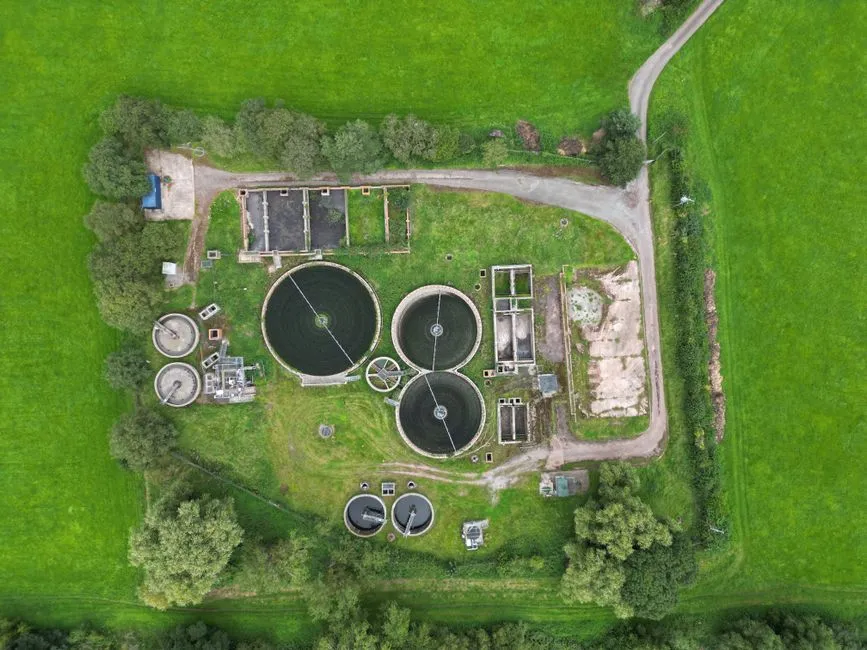
Most 2026 EV/auto pretreatment specifications end up as a hybrid, and the supplied research explicitly supports that architecture. Hybrid DAF + clarifier systems can address complex wastewater streams by combining DAF's oil removal with clarifier sedimentation capability (Source S2, Ecologix). The DAF takes the oils, greases, and light fractions; the clarifier polishes settleable fines and protects downstream biology or membranes from inorganic overload.
There is also a DAF-only polish option. DAFs have grown in popularity for use as clarifiers of biological solids from aerobic processes such as activated sludge and moving bed biofilm reactors (MBBR) (Source S1, Academia.edu), which lets a single DAF unit act as both primary oil remover and biological-solids clarifier in series. For a Newton EV/auto plant considering a future biological step, a DAF-as-clarifier polish avoids buying a second gravity tank and keeps the surface loading inside DAF design limits, with the practical DAF chemistry and pump pairings covered in this walkthrough of efficient chemical dosing and pump pairing for 2026 wastewater trains.
Use a gravity clarifier polish instead when the biological step is already in place and the polish load is mostly settleable biosolids rather than emulsified oil, since clarifiers are simpler and have lower operational cost than DAF systems (Source S2). The narrower Newton auto/EV mining-and-metals analogy is laid out in this DAF vs clarifier selection guide for mining and metals, and the recurring DAF operating pitfalls that drive hybrid-train design choices are catalogued in this 2026 guide to common DAF operating problems and fixes.
2026 Pre-Purchase Checklist for Newton Buyers
Before signing a PO, the procurement-side reader should anchor every claim in documented data and in their own wastewater study. The supplied research stresses that considerable study and supporting information must be analyzed before choosing the best solution, and that a comprehensive wastewater study is often warranted as an up-front cost to manage all potential scenarios and to minimize future costs (Source S4, DAF Corporation).
- Request a comprehensive wastewater study from any supplier before specifying, so the DAF-or-clarifier decision is built on the site's actual flow, FOG fraction, and solids loading rather than on a vendor's standard proposal (Source S4).
- Demand documented removal data on a stream compositionally similar to yours; the >99% DAF TSS/O&G figure (Source S1) and the 95% DAF vs 70% clarifier oil-removal result (Source S2) come from specific industrial cases, not generic marketing claims.
- Confirm tank geometry and flow envelope with the supplier: rectangular DAFs for space-constrained sites and modest flows; circular FC Maximizer-class units up to 11,000 GPM for higher 2026 capacities (Source S4).
- Verify sludge consistency targets because they directly drive Newton POTW surcharges and hauling cost. DAF systems in the supplied research deliver 2–4% thickened sludge and below 20 ppm filterable solids in the effluent (Source S4).
- Check whether the supplier can deliver a hybrid train, not just a single unit, because hybrid DAF + clarifier systems are explicitly supported as a complex-stream answer (Source S2). For plants that may add a biological step later, confirm the vendor's DAF-as-clarifier experience on activated sludge or MBBR effluents (Source S1).
A useful cross-check is the broader 2026 AOP process selection and sizing guide, which is relevant where polishing must also knock down recalcitrant organics before discharge. And if a DAF is selected as the primary unit, the industrial DAF system paired with an automatic chemical dosing system is the standard pretreatment pairing, with a high-efficiency sedimentation tank available for the downstream polish.
Frequently Asked Questions
What flow rate, FOG fraction, and TSS loading do I need to measure before I can choose between DAF and clarifier?
You need a 2–4 week composite wastewater characterization that captures diurnal flow (peak and average GPM), oil and grease concentration, and total suspended solids at the same sample points. Without those three numbers, neither the >99% DAF TSS/O&G reference (Source S1) nor the 95% vs 70% oil-removal comparison (Source S2) can be mapped to your site. As a practical action, request that any shortlisted supplier run a bench or pilot DAF test on your actual stream and report the resulting oil and TSS removal at your site-specific flux, since the documented removal figures in the supplied research are stream-specific.
Which qualifications and case studies should I require from a 2026 DAF or clarifier supplier?
Require documented case studies on streams compositionally similar to yours, with measured influent and effluent values rather than percentage claims, plus references the buyer can contact. Ask specifically for evidence on oil-and-grease removal and on biological-solids clarification if a DAF-as-clarifier polish is in scope (Source S1), and require the supplier to commit to a hybrid train design if your characterization shows mixed loads, because the supplied research explicitly supports hybrid DAF + clarifier systems for complex streams (Source S2).
Will a DAF or a clarifier put me in a better position with the local Newton POTW and MassDEP in 2026?
A DAF is the stronger position when oil and grease is on the permit, because the documented industrial removal is >99% for TSS and O&G (Source S1) and 95% on a direct head-to-head oily-stream comparison (Source S2), versus 70% for a clarifier on the same stream. A clarifier is the stronger position only when the permit is driven by settleable inorganic solids and when the 90% mining-installation result (Source S2) maps to your load. For a mixed Newton EV/auto stream, the permit-defensible answer is a DAF-led train with a clarifier or DAF-as-clarifier polish, because the hybrid architecture is what the supplied research actually supports (Sources S1, S2).
What drives the price gap between a DAF and a clarifier, and is the gap justified for an EV/auto line?
The price gap is driven by auxiliary equipment and operating cost: DAF systems require moderate auxiliary equipment (air compressor, pumps) and carry higher upfront and operational costs, while clarifiers are simpler and have lower operational cost (Source S2, Ecologix). The supplied research does not quote a dollar figure for either unit, so request a site-specific budgetary quote from at least two vendors and ask each to break out the auxiliary-equipment, controls, and chemistry line items. The gap is justified on an EV/auto line when the permit and POTW surcharge exposure from oils and dielectric fluids exceeds the DAF opex premium; it is not justified when the stream is dominated by fast-settling metallic fines, where the clarifier's ~90% solids reduction at lower cost (Source S2) is the better economic case.