Why Delphi-area food and beverage plants face a three-layer compliance problem
Food and beverage plants within roughly 60 miles of Delphi, Indiana are governed by three overlapping authorities at the same time: federal categorical pretreatment standards under 40 CFR Part 403, the Indiana pretreatment program administered by the Indiana Department of Environmental Management (IDEM), and the local sewer-use ordinance enforced by the receiving publicly owned treatment works (POTW) — for most plants in that radius, the Delphi Wastewater Treatment Plant or a neighbouring municipal authority. The rule of thumb is that the strictest of the three layers controls the design, and in practice local sewer limits are typically tighter than the federal floor (Crystal Clean, 2024). Integrated Water Services (2023) makes the same point for the sector as a whole: regulations vary significantly by state and by receiving utility, and businesses have to meet two sets of rules that are often different in their specifics.
The parameters that decide whether a food and beverage plant passes or gets surcharged are BOD, TSS, pH, oil and grease, and nutrients (nitrogen and phosphorus) (ALAR Corp; USP Technologies, 2024). Crystal Clean (2024) reports that dairy, meat and brewery plants face the same risk profile — BOD and COD routinely exceed what sewer districts will accept without pretreatment or surcharges, and pH swings from acidic to alkaline within a single shift. The operational consequence is that repeated violations can trigger increased monitoring, mandatory pretreatment retrofits, surcharge fees, and in severe cases permit revocation or production shutdown (Crystal Clean, 2024). Non-compliance is therefore a production risk, not just an environmental one.
What makes food and beverage wastewater hard to treat near Delphi
Food and beverage plants run four distinct sub-streams, each with a different contaminant signature. Process water from washing, cooking, cooling and packaging carries suspended organics; clean-in-place (CIP) and sanitation flows release detergents, caustics and acids; cooling water adds thermal load and trace lubricants; and floor wash picks up solids and product spills (ALAR Corp; Crystal Clean, 2024). The line type determines which contaminant dominates. Meat and poultry generate FOG-rich wastewater that can clog pipes and interfere with biological treatment; beverage and confectionery lines generate sugar- and starch-rich wastewater that drives rapid bacterial growth and BOD spikes; dairy and protein lines generate protein-rich wastewater that foams and causes odor issues; and packaging/prep lines generate suspended solids such as pulp, seeds and grains that need clarification before discharge (ALAR Corp, 2024).
The single quantitative anchor the research provides is a load ratio: a dairy operation or brewery can easily generate wastewater with BOD levels 10 to 20 times higher than domestic sewage (Crystal Clean, 2024). That is the ratio that drives biological-stage sizing and surcharge risk. The under-appreciated variable is pH volatility — USP Technologies (2024) notes that improper pH causes nitrification failure, poor sludge settling and ammonia breakthrough, and Crystal Clean (2024) describes the same discharge moving from acidic to alkaline in a single day as fruit acids and CIP caustics cycle through the line. Equalization and online pH control are not optional.
The treatment train most Delphi-area food and beverage plants run
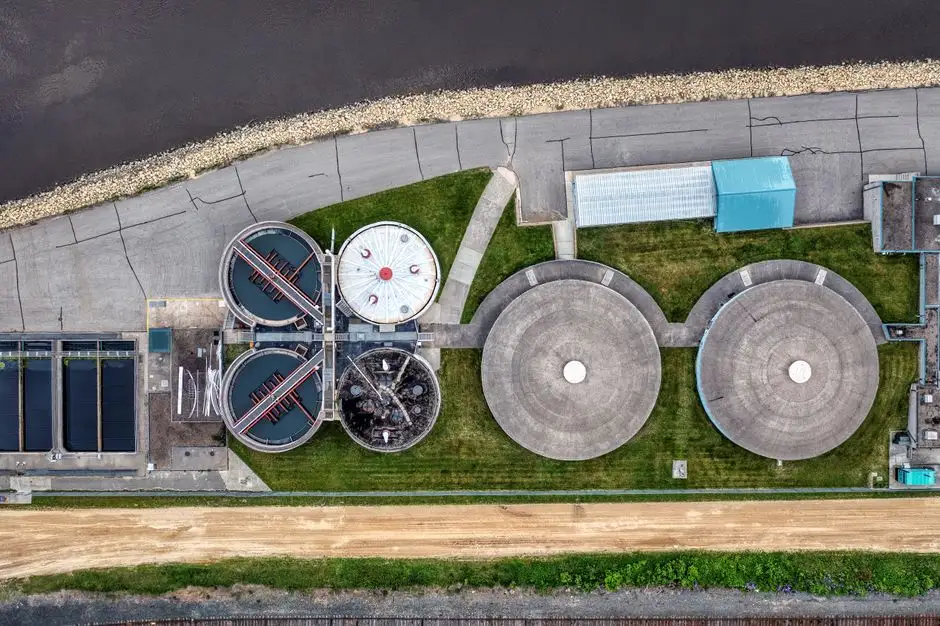
Most food and beverage plants in the Midwest run a staged train that mirrors the contaminant profile: screen, equalize, neutralize, float, biotreat, polish, disinfect, and dewater sludge. Each step is paired with a process role that an IDEM inspector or a POTW pretreatment coordinator will recognize.
| Stage | Unit operation | What it removes | Why it matters near Delphi |
|---|---|---|---|
| 1 | Screening and grit removal (rotary bar screen or fine screen) | Rags, packaging debris, large solids | Protects downstream DAF nozzles and pumps |
| 2 | Flow and pH equalization | Peak flow surges from washdowns and shift changes; pH swings | Damps peak flows flagged in the research; protects biological stage |
| 3 | pH adjustment and chemical dosing (PLC-controlled acid/caustic, coagulant, flocculant) | pH drift; colloidal solids | Improper pH causes nitrification failure and ammonia breakthrough (USP Technologies, 2024) |
| 4 | Dissolved air flotation (DAF) | FOG, suspended solids, colloids | Standard first separation for meat, dairy, protein and brewery lines (ALAR Corp; USP Technologies, 2024) |
| 5 | Biological treatment (MBBR, MBR, IFAS, or activated sludge) | BOD, COD, ammonia | High-rate aerobic options for high-strength food and beverage waste (Integrated Water Services, 2023; ALAR Corp, 2024) |
| 6 | Polishing and disinfection (clarifier, multimedia filter or membrane, then chlorine dioxide, UV or ozone) | Residual TSS, fecal coliform, sheen | Meets residual chlorine and sheen limits that local permits often add |
| 7 | Sludge dewatering (plate and frame filter press or rotary vacuum drum) | Water from sludge | Cuts hauling cost; both technologies are listed as standard for food and beverage plants (ALAR Corp, 2024) |
The first three stages are usually where a permit-driven retrofit pays for itself. An industrial DAF system for food and beverage FOG removal is the workhorse for the FOG/SS step; a PLC-controlled chemical dosing system for pH and coagulant control keeps equalized flow inside the POTW pH band; a compact MBR system for high-strength food and beverage wastewater is one of the credible options for stage 5 when space is tight; and a plate and frame filter press for food plant sludge dewatering is the standard stage-7 endpoint.
Parameter targets a 2026 permit near Delphi is likely to enforce
The research does not publish numeric discharge limits specific to the Delphi POTW, so any table of values should be treated as a planning band, not an enforceable limit. The parameters the research confirms are routinely limited in food and beverage permits are BOD, TSS, pH, oil and grease, and nutrients (ALAR Corp; USP Technologies, 2024). The one quantitative anchor is the 10–20× domestic BOD load ratio for dairy and brewery waste (Crystal Clean, 2024), which sets the biological-stage sizing envelope.
| Parameter | Why it is on the permit | What to verify with the POTW/IDEM |
|---|---|---|
| BOD (5-day) | High BOD can overload the POTW's biological stage and trigger surcharges (Crystal Clean, 2024) | Daily maximum, monthly average, sampling point |
| TSS | Solids accumulate in sewer lines and increase hauling cost (Crystal Clean, 2024) | Daily maximum, monthly average |
| pH | Damage to pipes, treatment biology, and toxic gas release in confined spaces (Crystal Clean, 2024) | Instantaneous min/max; grab vs. continuous |
| Oil and grease (hexane extractable) | FOG interferes with biological treatment and upsets the POTW (ALAR Corp, 2024) | Method (HEM/hexane), frequency |
| Ammonia / total nitrogen | Improper pH causes ammonia breakthrough and nitrification failure (USP Technologies, 2024) | Limit value, whether seasonal |
| Total phosphorus | Excess nutrients drive eutrophication in receiving waters (USP Technologies, 2024) | Limit value, whether seasonal |
The parameters most often missed in older permits — and the ones that drive 2025–2026 retrofits — are ammonia, total phosphorus, and oil and grease by hexane extraction. The "confirm with POTW/IDEM" column is the only one a plant engineer should trust for permit-binding numbers.
DAF, MBBR and MBR: choosing the right biological and separation step
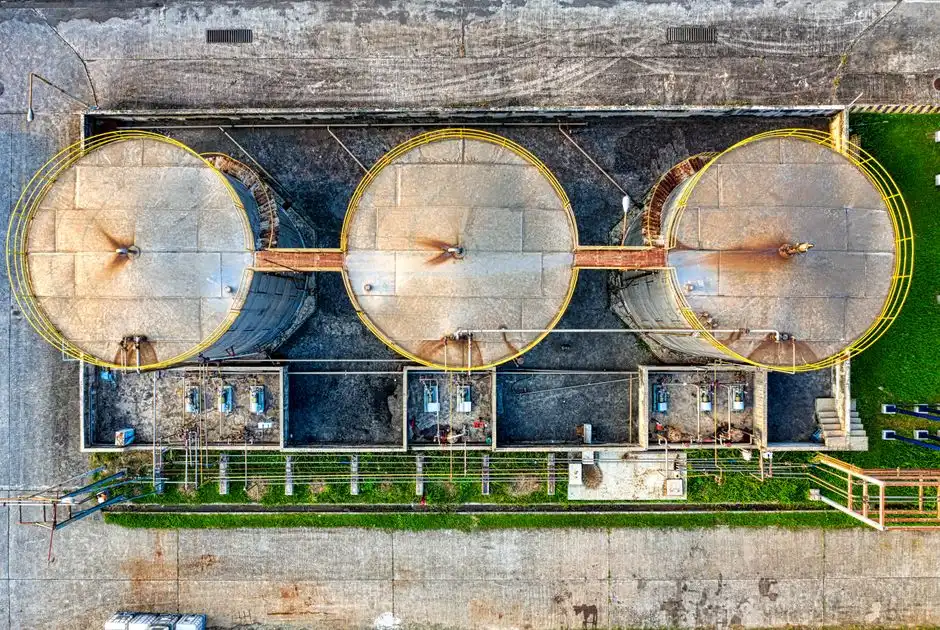
The capex decision most Delphi-area plants face is whether to size the front end as DAF and the biological step as MBBR, IFAS, MBR, or conventional activated sludge. The research supports a clear separation of roles: DAF is the standard first separation step for meat, dairy, brewing and protein lines because it removes FOG and suspended solids that would otherwise poison the biological stage (ALAR Corp; USP Technologies, 2024). MBBR and IFAS are the workhorse biological options for plants with limited footprint and variable load — described as efficient aerobic systems tolerant of the high-strength waste streams food plants produce (ALAR Corp, 2024). MBR combines biological treatment with membrane filtration to achieve higher removal rates and reuse-quality effluent (Integrated Water Services, 2023), which makes it the right answer when the plant is space-constrained, has reuse ambitions, or is under a tight TSS or ammonia limit.
| Decision driver | Favored technology | Research support |
|---|---|---|
| High FOG and suspended solids front-end removal | DAF | Standard first separation for meat, dairy, brewery and protein lines (ALAR Corp; USP Technologies, 2024) |
| Limited footprint, variable load, capex-sensitive | MBBR or IFAS | Efficient aerobic options for high-strength food and beverage waste (ALAR Corp, 2024) |
| Tight TSS or ammonia limit, reuse target | MBR | Combines biological treatment with membrane filtration for higher removal and reuse-quality effluent (Integrated Water Services, 2023) |
| Existing basin retrofitted for higher load | Conventional activated sludge or IFAS upgrade | Used as biological baseline in food and beverage plants (ALAR Corp, 2024) |
The decision rule is that the choice between DAF, MBBR and MBR is driven by influent variability, the strictest parameter in the local permit, and whether reuse is a near-term goal — not by a single best technology. A DAF system sized for peak FOG load usually precedes either a compact MBR or an MBBR; if the plant is already MBR-equipped, the MBR membrane module is the replaceable component that determines reuse viability. The DAF troubleshooting guide for food and beverage plants is a useful reference when the front end is performing below permit.
2026 cost frame and 90-day action list for a Delphi-area plant
The research does not provide Delphi-specific 2026 cost data, so any dollar figure a plant manager puts in front of a CFO should be framed as a planning band and validated with engineering bids. What the research does support is the capex structure: most food and beverage pretreatment projects break into five buckets — screening and equalization, pH and chemical dosing, primary separation (DAF), biological step (MBBR/MBR/activated sludge), and sludge dewatering. On the opex side, the recurring lines a plant manager should track monthly are chemical dosing, sludge hauling, surcharges, and laboratory/self-monitoring. Surcharges and permit-driven self-monitoring are the hidden costs the research flags repeatedly (Crystal Clean, 2024; Integrated Water Services, 2023). Reuse and water reduction can offset opex; the manufacturing water-reuse and reduction playbook and the 2026 chemical metering pump comparison for U.S. wastewater are useful inputs to that side of the budget.
The 90-day action list a plant engineer can hand to a CFO:
- Pull the current discharge permit and the last 12 months of DMRs/self-monitoring data; map every reported value against the 40 CFR Part 403 floor and the local POTW band.
- Identify the strictest single parameter on the permit (often ammonia, phosphorus, or oil and grease by hexane extraction) and confirm the sampling point and frequency with the receiving POTW.
- Run a jar test and a side-by-side DAF trial at peak flow to verify FOG/SS removal is still inside the band, especially if production has changed since the last commissioning.
- Request a pretreatment audit from the receiving POTW and a courtesy file review with IDEM before any capex commitment; surface the gap list before sizing equipment.
Frequently Asked Questions
What 2026 pretreatment limits apply to a food and beverage plant near Delphi, Indiana?
There is no single number. Compliance is set by the strictest of three layers: federal categorical pretreatment under 40 CFR Part 403, the Indiana program administered by IDEM, and the local sewer-use ordinance enforced by the receiving POTW (Crystal Clean, 2024). A plant engineer should pull the site-specific discharge permit — not a generic EPA table — and benchmark the last 12 months of self-monitoring data against it.
How much does a 2026 food and beverage pretreatment upgrade cost in Indiana?
The research does not publish Delphi-specific or Indiana-specific 2026 pretreatment project costs. Rather than rely on assumed ranges, a plant manager should request itemized engineering bids broken into the five capex buckets the research identifies — screening/equalization, pH and chemical dosing, DAF, biological step, and sludge dewatering — and validate them against two recent comparable installations. Surcharges, sludge hauling, and self-monitoring are the opex lines that should be tracked monthly alongside chemical dosing.
How do I choose between DAF, MBBR and MBR for a food or beverage line?
The research supports a clear separation of roles. DAF is the standard front-end FOG and suspended-solids step for meat, dairy, brewery and protein lines (ALAR Corp; USP Technologies, 2024). MBBR or IFAS is the right biological option when footprint is limited and load is variable (ALAR Corp, 2024). MBR is the right answer when the plant is space-constrained, has a reuse target, or is under a tight TSS or ammonia limit (Integrated Water Services, 2023). The decision is driven by influent variability, the strictest permit parameter, and whether reuse is a near-term goal.
What supplier or system questions should we ask before signing a 2026 pretreatment bid?
At minimum, ask for: (1) documented performance on a comparable food or beverage line under a similar BOD load (the research anchors the load range at 10–20× domestic sewage for dairy and brewery waste, per Crystal Clean, 2024); (2) the lead time on the biological and membrane stages, since MBR and DAF skids typically drive the project schedule; (3) confirmation that the proposed chemical dosing system can hold the permit pH band under peak flow, since improper pH causes nitrification failure and ammonia breakthrough (USP Technologies, 2024); and (4) a written compliance plan that names the receiving POTW, IDEM, and 40 CFR Part 403 as the three reference documents. Treat any vendor that cannot answer all four as a compliance risk, not a cost risk.