Why Aeration Equipment Is the Bottleneck in Indian Sugar-Distillery ETPs
At the height of a Maharashtra crushing campaign, raw effluent floods the equalisation tank and the aeration basin that follows it cannot keep dissolved oxygen above 1 mg/L, causing BOD and COD to bleed past consent limits and triggering SPCB notices. The cause is rarely the biology and almost always the equipment selection inside the aerobic stage.
Indian sugar-mill raw effluent carries a BOD ten to thirty times stronger than ordinary sewage, delivered almost entirely inside a four-month window, according to the Sugar Factory Wastewater Treatment design guide (studiomatrx.org). Anaerobic reactors—most often a UASB or an anaerobic lagoon—remove 70–85% of the COD, which is the design logic that makes an anaerobic-first train the standard for sugar ETPs in the same reference. That is the workhorse stage, but it is not the bottleneck.
The aerobic polishing stage downstream decides whether the plant meets discharge limits. Anaerobic biomass is slow to grow and is sensitive to pH and temperature swings, as the studiomatrx.org design text notes, so any upset in the anaerobic reactor carries forward into the aeration tank, where the aerator's standard oxygen transfer efficiency and its ability to restart cleanly every campaign determine compliance. When an attached distillery is part of the same complex, distillery spentwash is a by-product that needs its own treatment logic; it cannot simply be merged into the sugar-mill stream without re-evaluating aeration design. Distillery wastewater is strongly acidic, has a high chemical oxygen demand, a high polyphenol content, and is highly variable, per Melamane, Strong and Burgess in the South African Journal of Enology and Viticulture (2016-12-13). The practical consequence is that the upstream equalisation tank and pH correction are not optional prerequisites—every aerator supplier's performance claim is conditional on stable upstream biology.
Effluent Characterisation: What the Aeration Tank Must Actually Treat
Every aerator selection in a sugar-distillery ETP starts from the same upstream numbers: the COD and BOD load arriving at the aerobic basin, the temperature and pH, and the magnitude of those swings across the crushing campaign. The studiomatrx.org design guide presents raw sugar-mill effluent as directional planning figures covering BOD, COD, TSS, and pH, with the explicit caveat that actual values swing with cane quality, housekeeping, and stream segregation. Treating those numbers as guarantees is the most common design error in the Indian sugar belt.
The crushing-campaign surge drives a specific design move: the equalisation tank is deliberately oversized as a shock absorber against campaign peaks, per the same guide. That oversized equalisation tank does not reduce oxygen demand—it only dampens its peak. The aeration tank must be sized for the average loading the equalised stream delivers, not for the raw peak flow arriving at the gullet.
Temperature control is non-negotiable. The studiomatrx.org design text states that hot streams must pass through a cooling arrangement to drop below about 38 °C so microbes are not cooked; above that threshold, microbial activity in the aeration tank is suppressed and the delivered oxygen is largely wasted. In Maharashtra and Uttar Pradesh, where crushing-season ambient temperatures are already high, this parameter limits the size of the biology that can survive in the basin.
For an attached distillery, spentwash cannot be merged into the sugar-mill stream without re-evaluating aeration design—the strong acidity, high COD, and high polyphenol content documented by Melamane et al. (2016-12-13) push the equalisation tank and pH correction system harder, and the aerator must be specified against that load swing.
| Parameter | Raw sugar-mill effluent (typical, combined) | Domestic sewage (comparison) | Design implication for the aeration tank |
|---|---|---|---|
| Organic strength | BOD roughly 10–30× domestic sewage (studiomatrx.org) | Baseline | Aerator SOTE and blower sizing must be checked at peak, not average |
| Temperature | Hot; must be cooled below ~38 °C (studiomatrx.org) | Near-ambient | Cooling arrangement upstream of aeration tank is mandatory |
| Variability | Highly variable, campaign-concentrated (studiomatrx.org) | Relatively uniform | Equalisation tank must be oversized as a shock absorber |
| Distillery contribution (if attached) | Strongly acidic, high COD, high polyphenol, highly variable (Melamane et al., 2016-12-13) | Not applicable | pH correction and re-aerator sizing before re-evaluating design |
| Stream segregation | Clean cooling water kept separate from process streams (studiomatrx.org) | Single mixed stream | Reduces the volume the aeration tank must handle |
Stream segregation is identified in the same design text as the single most valuable design move: keeping the large, clean cooling-water flow away from the small, filthy process streams reduces the volume the aeration tank must handle, and every cubic metre of segregated cooling water is a cubic metre the aerator does not have to oxygenate. For an Indian plant manager evaluating aeration capex, this is the lowest-cost oxygen saved.
Calculating Oxygen Demand for a Sugar-Distillery Aeration Basin
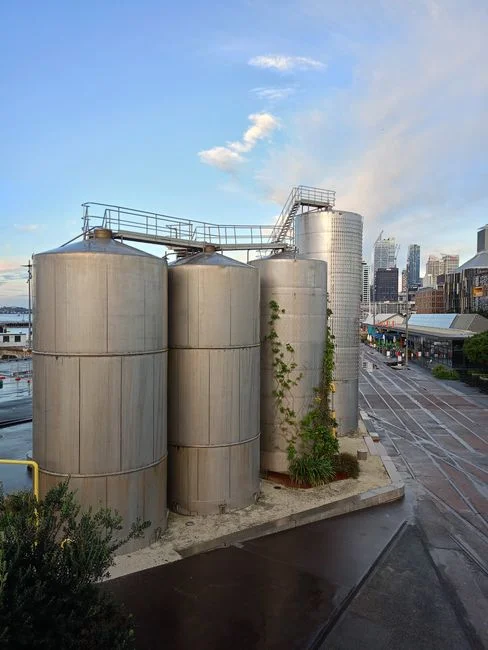
Sizing an industrial plant starts from load—converting the seasonal peak flow and COD into the kilograms of BOD per day that the biology must digest, which the studiomatrx.org design guide identifies explicitly as the starting point for sizing an industrial sugar ETP. This exercise produces a value in kg O₂/day, the single input every aerator supplier will ask for during quotation.
The oxygen required at the diffuser is higher than the theoretical BOD-equivalent oxygen because of standard oxygen transfer efficiency losses. Suppliers should be asked to state standard oxygen transfer rate (SOTR) and standard aeration efficiency (SAE) at the actual diffuser submergence depth, not at clean-water standard conditions. A fine-bubble diffuser quoted at 6 m depth is not the same machine when it sits at 4 m because the basin was shallower than designed—a common retrofit situation in Indian sugar-mill aeration tanks.
Because distillery wastewater is highly variable, per Melamane, Strong and Burgess (2016-12-13), aeration design should be checked at both average and peak crushing-season loading, with the equalisation tank credited for dampening the swing. The peak load check is often skipped, yet it determines whether the consent limit is held in late March when the campaign is running hardest. For seasonal plants, the studiomatrx.org design text specifically recommends forgiving technologies such as aerated lagoons and MBBR over higher-maintenance options because the plant must restart cleanly every campaign—a capital-cost decision that needs to be made on operational reliability grounds, not on first-cost grounds.
For the conceptual load on the basin, the direction is straightforward: take the peak crushing-season COD in mg/L, multiply by the peak flow in m³/day, divide by 1000 to get kg COD/day, multiply by the factor for BOD-to-O₂ stoichiometry (typically around 0.5 to 0.7 for sugar effluent), and apply the residual COD load left after the 70–85% anaerobic removal cited in the same design guide. The buyer should request this number in writing from the aerator supplier, alongside the SOTR they are basing it on. The detailed BOD reduction methods behind that number are laid out in this BOD water treatment process guide.
Aerator Types Compared: Diffused, Mechanical, Jet, and MBBR for Indian Conditions
The table below compares aerator families at the equipment level for an Indian sugar-distillery context, built directly from the equipment notes in the studiomatrx.org design guide and the distillery-stream characteristics in Melamane et al. (2016-12-13).
| Aerator family | Suitability for seasonal sugar ETPs | Behaviour with distillery spentwash (acidic, polyphenol-rich) | Maintenance profile in Indian sugar belt |
|---|---|---|---|
| Coarse-bubble diffused aeration | Tolerates fibrous and particulate load that passes through equalisation; tolerates intermittent off-season operation (studiomatrx.org) | Robust against fouling from particulates; lower SOTE per kW than fine-bubble | Simple membrane or nozzle replacement; widely supported in Maharashtra, UP, Karnataka |
| Fine-bubble diffusers | Higher SOTE per unit blower power, but the design text's preference for forgiving technologies on seasonal plants implies a trade-off against power tariffs and restart reliability | Higher fouling risk from polyphenol and sugar residues; membrane inspection more frequent | Cleaner handling required; membrane replacement more frequent than coarse-bubble |
| Mechanical surface aerators | Simple to maintain, no blower room needed; oxygen transfer sensitive to basin geometry | Spray exposure to acidic aerosols—gearbox and bearing protection matters | Gearbox and bearing service widely available; monsoon humidity reductions in oxygen transfer must be checked |
| Jet aerators | Listed as an aerobic polishing option; suits foaming streams and footprint-constrained plants | Good mixing helps handle polyphenol-rich, foaming spentwash | Jet nozzle and pump sealing require skilled maintenance; less common spares |
| MBBR carrier-aeration | Listed as a forgiving technology explicitly preferred for seasonal plants (studiomatrx.org) | Biofilm on carriers handles shock loads better than suspended-growth ASP; spentwash variability is buffered | Carrier screen inspection; less routine than diffuser maintenance |
Selection should weigh four Indian-specific factors rather than generic municipal comparisons. First, SOTE at field conditions at the actual submergence. Second, turndown ratio for off-season operation, because the blower or gearbox that performs well at full crushing load may stall or waste power when the plant is idling between January and October. Third, susceptibility to fouling by sugar residues and the polyphenols documented in distillery wastewater (Melamane et al., 2016-12-13). Fourth, ease of membrane, bearing, or carrier replacement in an Indian maintenance environment—a fine-bubble membrane that takes three weeks to ship is a different machine in practice than the same membrane in a metro-area municipal plant. Plants that move from diffused aeration to a biofilm-based polishing step often specify an MBR membrane bioreactor system for final clarification, keeping the aeration tank's job focused on BOD removal and pushing TSS polishing downstream.
Blower, Piping, and DO Control for Seasonal Operation
The classic mistake on Indian sugar-mill aeration upgrades is over-sizing the blower for peak crushing-season load and running that same blower at full throttle during the off-season, which strips DO from a starved basin and wastes power. The studiomatrx.org design guide frames the four-to-five-month crushing peak against the near-idle off-season as the operating envelope the entire plant is designed around.
Blower selection should account for that envelope, typically with VFD control to allow turndown rather than on/off cycling, because on/off cycling stresses bearings and membranes and prevents the biology from reaching a stable DO setpoint. Dissolved-oxygen setpoint in a high-strength aerobic polishing basin is targeted above 1.5–2 mg/L to keep biology active; below this, the residual BOD from the anaerobic stage is not consistently oxidised, and the plant fails consent on BOD even if the blower is running.
Because the same design text emphasises that anaerobic biomass is slow to grow and sensitive to pH and temperature swings, the aerobic stage provides the plant's compliance margin—DO control is a compliance tool first and an energy-optimisation knob second. The DO probe, the VFD, and the control loop protect the consent limit, while the aerator delivers the oxygen. Piping and diffuser layout should allow isolation of sections for maintenance without draining the entire aeration tank, which is critical when the next crushing campaign is only months away.
Frequently Asked Questions
Are fine-bubble or coarse-bubble diffusers better for distillery streams in an Indian sugar mill?
For distillery streams that carry polyphenols and high variability (Melamane et al., 2016-12-13), coarse-bubble diffused aeration is generally more forgiving on fouling and seasonal restart, while fine-bubble delivers higher SOTE per kW at the cost of more frequent membrane inspection. The buyer should request SOTR at field submergence and a written turndown ratio for both options before comparing capex.
What SOTE or SAE value should a buyer demand in writing from an aerator supplier?
The buyer should demand SOTR and SAE quoted at the actual diffuser submergence depth of their basin, not at clean-water standard, and require the field-condition correction the supplier has applied. Without those two numbers in writing, the comparison between fine-bubble, coarse-bubble, and mechanical surface aeration is not a true comparison. The buyer should also ask for a guaranteed turndown ratio and a written fouling-cleaning interval for the specific influent.
Frequently Asked Questions
Which aerator type is best for high-COD sugar distillery wastewater in India?
For high-COD sugar distillery effluents, which often exceed 50,000 to 100,000 mg/L before primary treatment, high-speed surface aerators or jet aeration systems are generally preferred. These systems provide the necessary turbulence to handle high organic loads and prevent the clogging issues frequently associated with fine-bubble diffusers in high-strength, solids-laden distillery spent wash.
What SOTE should I require from an aerator supplier for a sugar mill ETP?
You should specify a Standard Oxygen Transfer Efficiency (SOTE) of at least 25% to 35% for fine-bubble diffused aeration systems operating in clean water conditions. However, when dealing with sugar distillery effluent, you must adjust this for the alpha factor (α), which typically ranges from 0.6 to 0.8 due to the presence of surfactants and dissolved solids, significantly reducing the actual field oxygen transfer rate compared to the manufacturer’s rated SOTE.
How do I size an aeration tank for a seasonal sugar mill with an attached distillery?
Sizing must be based on the peak volumetric loading rate during the 150-180 day crushing season, typically targeting a Food-to-Microorganism (F/M) ratio of 0.05 to 0.15 kg BOD/kg MLSS/day for extended aeration processes. Given the seasonal nature, the tank volume should be calculated to accommodate the maximum hydraulic retention time (HRT) of 24 to 48 hours required for high-strength distillery wastewater to ensure adequate biodegradation before discharge.
Is MBBR or fine-bubble diffused aeration more cost-effective for Indian sugar ETPs?
Moving Bed Biofilm Reactor (MBBR) technology is generally more cost-effective for Indian sugar mills dealing with fluctuating seasonal loads because it provides a higher biomass concentration (up to 3,000–5,000 mg/L) in a smaller footprint. While fine-bubble aeration offers higher energy efficiency under steady-state conditions, MBBR systems are more resilient to the shock loads and varying chemical compositions characteristic of distillery operations, resulting in lower long-term operational and maintenance costs.
What should I check in an aeration equipment supplier before buying for a distillery ETP?
Verify that the supplier provides equipment constructed from corrosion-resistant materials such as SS 316 or specialized epoxy-coated steel to withstand the acidic and aggressive nature of spent wash. Additionally, confirm that the supplier can provide performance guarantees based on third-party oxygen transfer testing (ASCE standards) and ensure they have a local service network in India capable of performing rapid maintenance during the critical, non-stop 24/7 crushing season.