Why an ETP in Indore Is Not a One-Stage Box
Hospital effluent in central India carries a documented multidrug-resistant bacterial load that conventional aeration and clarification do not fully eliminate. Chitnis et al. (Water Research, 2004) sampled the ETP at Choithram Hospital and Research Centre, Indore 452001, and recorded 8.6 × 10⁶ bacteria/ml in the raw effluent, of which 55% were coliforms and E. coli and 0.26% were already multidrug-resistant coliforms. The clarifier step delivered a >3-log reduction, yet the treated liquid stream still carried a "sizeable load of MDR bacteria," which the authors stated requires inactivation by chlorination. That single published Indore dataset reframes ETP design: a biological stage alone is not the answer, and downstream disinfection is a non-negotiable unit operation for any hospital or pharma effluent in the district.
Indore's industrial mix compounds the problem. Pithampur's pharmaceutical formulation units, the textile dyeing clusters around the city, distilleries, and a dense network of tertiary-care hospitals each push the influent in a different direction — high TDS and colour from dyeing, antibiotic residues and MDR organisms from hospitals, variable BOD from mixed industrial sewage. A 2026 ETP in Indore is therefore not a packaged unit but an engineered primary–secondary–tertiary train with a documented disinfection step and a sludge-handling plan, rather than a single vessel dropped behind the building.
MPPCB and CPCB Compliance Frame for 2026
The federal framework governing hospital effluent in India originally relied on the Bio-Medical Waste (Management and Handling) Rules, 1998, MoEF, New Delhi. For a 2026 project, that federal baseline still feeds into the state-level consent process administered by the Madhya Pradesh Pollution Control Board (MPPCB), with CPCB's industry-specific effluent standards sitting underneath as the technical floor. Any new or expanded ETP in Indore must clear two sequential consents: Consent to Establish (CTE) before construction and Consent to Operate (CTO) before commissioning, both routed through the MPPCB regional office.
The exact 2026 numeric discharge limit for each parameter is set by the industry-specific schedule applicable to a unit's product category and by MPPCB's consent conditions rather than by published literature. Literature and the consent process do confirm the documentation MPPCB requires: treated-effluent quality data over a representative period, sludge generation and disposal records, and an Environmental Management Plan covering chemical handling, odour control, and accident response. These items should be confirmed directly with the MPPCB regional office before a quotation is signed, because they set the boundary conditions the ETP must be designed to meet.
Influent Characterisation for the Three Indore Effluent Archetypes
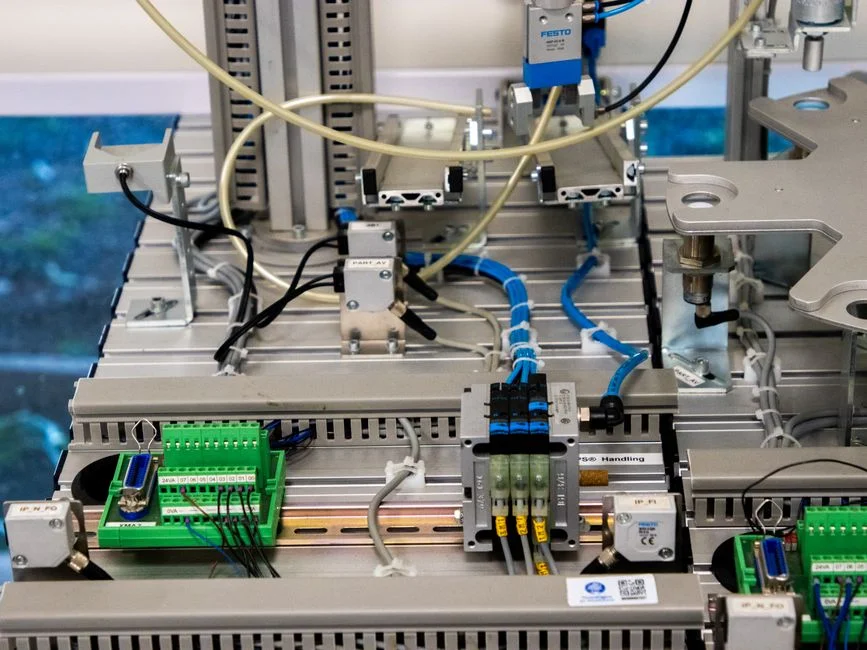
The Indore-Dewas-Pithampur corridor produces three dominant effluent archetypes, and each one sets a different design problem.
| Archetype | Representative source | Key influent signals | Evidence base |
|---|---|---|---|
| Textile / dyeing | Dyeing units in and around Indore | High TDS, variable pH, residual Cu, Zn, Cr above generic standard limits; strong colour; high BOD/COD | IJBAMS, 2025 (Bangladesh textile-hub study; Indore-specific published numbers absent — jar-test confirmation required) |
| Hospital / pharma | Tertiary-care hospitals and Pithampur formulation units | 8.6 × 10⁶ bacteria/ml raw; 55% coliforms/E. coli; 0.26% MDR coliform prevalence; antibiotic residues including amoxicillin, ciprofloxacin, metoprolol, ofloxacin at higher concentrations than European, Japanese and Australian WTP effluents | Chitnis et al., Water Research, 2004; Springer hospital-effluent review, 2024 |
| Mixed industrial / domestic sewage | Common ETP operator, industrial estate STPs | Variable BOD/COD with pharmaceutical residues; no fixed ratio; depends on tenant mix | Qualitative — minimum 24-hour composite sampling required before sizing |
The IJBAMS 2025 textile-hub paper documents the same archetype—TDS, Cu, Zn and Cr consistently above DoE Bangladesh limits—which is the realistic design envelope for Indore's dyeing units until local jar-test data is generated. For hospital and pharma streams, the Chitnis 2004 influent numbers and the Springer 2024 review's finding that Indian WTP effluents carry higher amoxicillin, ciprofloxacin, metoprolol and ofloxacin than European, Japanese or Australian plants are the defensible technical anchors. For mixed sewage there is no shortcut: a 24-hour composite sampling campaign across at least one working week is the minimum input any competent vendor should size against.
Process Train Options and Where Each One Fits
Three process trains cover the realistic design space for a 2026 Indore ETP, with the final selection depending on influent load, discharge route, and reuse ambition.
| Process train | Reported removal performance | Best-fit Indore scenario | Key caveat |
|---|---|---|---|
| Conventional activated sludge (ASP) + clarifier | ~80% BOD, COD and ammonia removal (Springer 2024, hospital duty) | Discharge-to-drain for low-to-medium strength industrial streams where MPPCB allows | Will not reliably eliminate MDR bacteria downstream of the clarifier (Chitnis 2004) |
| Membrane bioreactor (MBR) | 98% COD, 99% ammonia, 82% total nitrogen, 78–82% pharmaceutically active compounds (Springer 2024) | Hospitals, pharma formulation, and any project with reuse or stringent discharge limits | Higher operating cost; membranes need disciplined maintenance — see an MBR plant operation and maintenance guide for the operational discipline required |
| Tertiary polishing + disinfection (chlorination, chlorine dioxide, UV) | Required to control MDR residual after biological step (Chitnis 2004) | Mandatory downstream of every train handling hospital or pharma effluent | Choice of disinfectant is a separate decision — see a chlorine dioxide vs ozone comparison before specifying |
The Springer 2024 hospital-effluent review is explicit that activated sludge "is also capable of removing approximately 80% of BOD, COD, and ammonia," and that an MBR system has demonstrated 98% COD, 99% ammonia, 82% total nitrogen and 78–82% pharmaceutically active compound removal. Neither removes the MDR residual that the Chitnis 2004 Indore study documented in the clarifier overflow, so disinfection is not an optional polish; it is the unit operation that closes the gap between biological treatment and a regulator-defensible discharge. For buyers comparing an MBR wastewater treatment system against a conventional ASP for Indore duty, the trade-off is reuse quality and footprint versus operating cost and membrane discipline.
Sizing Rules of Thumb for a 2026 Indore ETP
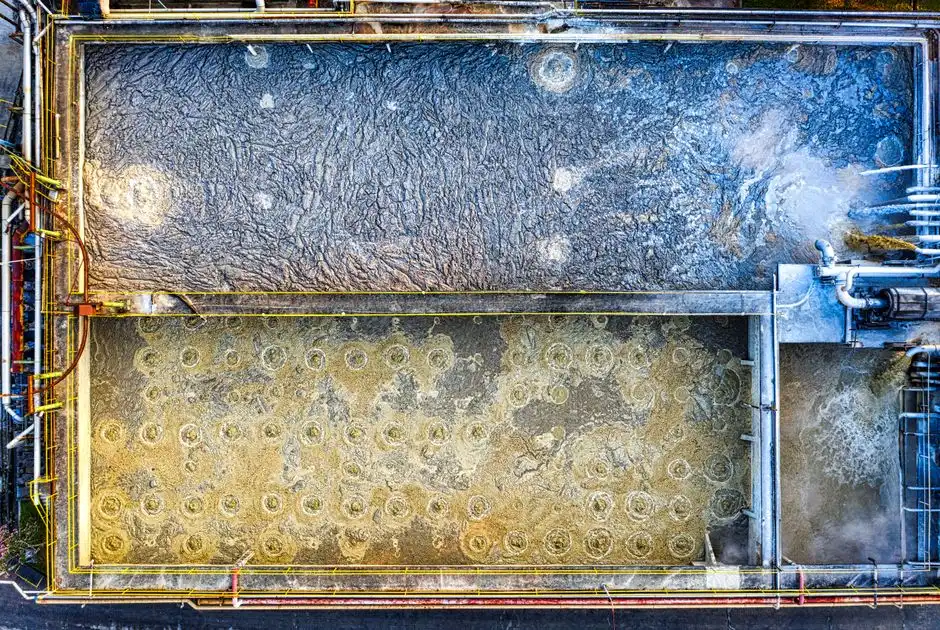
The Wageningen University thesis by Lei (WU thesis 8189) on tertiary removal of micropollutants from WWTP effluent establishes that polishing-stage design must account for trace organics, not just conventional BOD/COD, which means an Indore polishing train needs capacity for pharmaceutical-active compounds. The University of Twente PhD thesis by Schrader (2024, doi 10.3990/1.9789036523325) provides the technical basis for using nanofiltration as a direct polishing step on WWTP effluent for water reclamation. These academic outputs do not contain Indore-specific flow or loading numbers.
Indore-specific hydraulic and organic loading data must be assembled on site: average daily flow (m³/day) across a representative week, peak factor, COD (mg/L), BOD (mg/L), TDS (mg/L), total suspended solids (mg/L), pH, temperature, and any sector-specific parameter such as residual chlorine, colour, or heavy metals. None of these can be substituted by a generic datasheet. Any vendor quoting a tank volume without this dataset should be down-weighted in the evaluation.
2026 Cost and Procurement Reality for Indore Buyers
Cost is a function of three variables—design capacity, automation level, and the discharge/reuse choice—rather than a single quotable number. The 2024 Twente and Wageningen theses are technical documents, not commercial benchmarks; they justify why an NF/RO polish or a constructed-wetlands tertiary stage exists, not what either costs in Indore this year. Any vendor quotation presented as a "2026 Indore benchmark" without a written scope of supply should be treated with caution.
The defensible procurement move is to insist on a written split of CAPEX and OPEX before signing.
| Cost bucket | What the buyer should request in writing | Why it matters |
|---|---|---|
| CAPEX — civil | Foundation, tankage, building works as a separate line | Civil cost is where scope creep hides |
| CAPEX — mechanical | Pumps, blowers, diffusers, membranes, filters, sludge dewatering | Differentiates a real process train from a cosmetic one |
| CAPEX — electrical & instrumentation | PLC, sensors, MCC, standby power | Drives automation level and long-term OPEX |
| OPEX — power, chemicals, sludge, labour | Year-1 estimates with consumption basis | OPEX dominates lifecycle cost over 10 years |
| Discharge route | Discharge-to-drain, reuse, or ZLD — cost differential stated | ZLD is the costliest path; conventional ETP with tertiary reuse is the default unless MPPCB explicitly requires ZLD |
For comparison with peer Indian cities, an Effluent treatment plant in Pune guide applies a similar consent-and-scope framework, which is useful when sanity-checking a Pithampur vendor's commercial offer against a second industrial market.
Choosing an ETP Supplier in Indore
Three checks separate a defensible Indore ETP supplier from a box-shifter. First, the vendor must produce a documented hydraulic and organic-load sizing tied to on-site influent characterisation—a vendor that skips jar testing and the influent dataset is guessing, and that guess will surface during the first MPPCB sampling visit. Second, the disinfection stage must be specified in writing, because the Chitnis 2004 Indore study is the published evidence that a biological stage alone leaves an MDR residual; an on-site chlorine dioxide generator is one defensible option, and a MBR wastewater treatment system is the strongest polishing platform for hospital and pharma streams. Third, a sludge-handling plan has to be on the table from day one, because the Chitnis 2004 work explicitly notes that "bacteria get concentrated in sludge and a greater concentration of chlorine is required for decontamination"—meaning dewatering and disposal cannot be an afterthought.
For healthcare and pharma buyers specifically, a packaged medical wastewater treatment system with a documented MDR-control disinfection step is the minimum credible offer; anything less will not survive an MPPCB hospital-effluent audit.
Frequently Asked Questions
What size ETP does a 100-bed hospital in Indore need in 2026?
Design flow must be built from the hospital's own measured water-use data (typically 250–400 L/bed/day for Indian tertiary-care hospitals) and a peaking factor agreed with the ETP designer. The buyer should give the vendor at least one week of metered inflow data and a composite sample before any tank sizing is accepted.
Do we need ZLD or is a discharge-to-drain ETP acceptable in Indore?
The defensible move is to read the unit's existing or draft MPPCB consent conditions: if the receiving water body is the Kshipra river or a municipal sewer that MPPCB has classified as a drain, a conventional ETP with tertiary reuse is normally acceptable. ZLD is the costliest path and should only be specified if MPPCB explicitly requires it or if the receiving environment cannot accept any discharge.
How do we choose between chlorine, chlorine dioxide, and UV for disinfection?
The Chitnis 2004 Indore study is explicit that the clarifier overflow still carries MDR bacteria and "in