Why 2026 Changes the Wastewater Calculus for Hyderabad Fabs and Data Halls
The binding constraint for any new semiconductor fab or data-hall campus in the Hyderabad Metropolitan Region in 2026 is freshwater availability rather than discharge consent. HMWSSB has invited DBFOT expressions of interest to develop treated-wastewater conveyance and distribution for the Attapur–Chandan Valley, Shabad, and Nagole–Future City corridors, with HMR-level demand estimated at 233 MLD and 290 MLD respectively by 2035 (New Indian Express, 27 Jun 2026). The selected concessionaire will own and operate the off-site treatment, storage, pumping and transmission assets, while HMWSSB provides approvals and right-of-way.
Telangana is targeting 5 GW of data-centre capacity and roughly $30 billion of investment by 2029; around 300 MW is already operational and a further ~2 GW is in the pipeline (The Hans India, 2026). The Hans India reports that a 100 MW facility using conventional evaporative cooling can consume two million litres of water a day, and that India-wide data-centre water use is around 150 billion litres, projected to more than double by 2030. That is a direct siting risk on top of the 2026 hydrology: a deficient El Niño-influenced monsoon has left Singur reservoir at times near dead-storage thresholds, with Manjeera and other reservoirs also low, and groundwater tables down an average of 2–4 m across large parts of Telangana (The Hans India, 2026).
ADBI Working Paper 1506 (Sakakibara et al.) adds the spatial dimension: as of 2024, HMR sewerage coverage is 100% in the Core Area, around 30% in the Periphery Area, and 0% in the ORR Village Area. The state already mandates decentralized wastewater treatment plants for large commercial buildings, which is why most peripheral fab and data-hall campuses run their own plant rather than waiting for a public sewer.
Two Streams, Two Trains: Separating Fab Process Waste from Data-Hall Cooling Water
Designers of Indian greenfield sites often make the error of combining fab UPW reject and data-hall cooling blowdown into a single biological plant. Fab wastewater is a portfolio of segregated, low-flow but high-strength streams: UPW reject (high-purity, low-flow), CMP slurry (high TSS, silica, metals), acid/alkali rinse (pH swings, fluoride, nitrate) and organic solvent streams, each of which needs its own buffer, neutralization and metals-removal step before any consolidation. Data-hall cooling blowdown is dominated by TDS, hardness, silica and biocides with little organic load, requiring a focus on side-stream filtration, scale control and RO concentrate management rather than biology.
Several large operators have moved away from traditional evaporative cooling. The Hans India reports that Microsoft's India South Central cloud region in Hyderabad was designed with a closed-loop mechanical system that uses effectively zero water for cooling under normal operation; the loop is filled once during construction and then recirculated, with only ancillary uses (kitchens, restrooms) drawing modest volumes. Other operators are adopting direct-to-chip liquid cooling paired with dry coolers; The Hans India describes one multi-dozen-megawatt campus where engineering estimates put on-site consumption at levels comparable to a mid-sized hotel rather than a small town.
The right architectural choice is to design two trains in parallel: a fab train that segregates UPW reject, CMP slurry, and acid/alkali rinse into a dedicated metals-recovery and precipitation block before any HMWSSB offtake or ZLD polishing, and a cooling-blowdown train where RO permeate feeds cooling-tower make-up and the concentrate is sent to either the HMWSSB corridor supply or an on-site ZLD block. Consolidating them upstream of biological treatment compromises both. Engineers planning fab wastewater in Hyderabad can compare the metals-removal block against the CMP wastewater cost comparison to size precipitation and clarification realistically.
The 2026 Treatment Train: From Headworks to Reclaimed-Water Tie-In
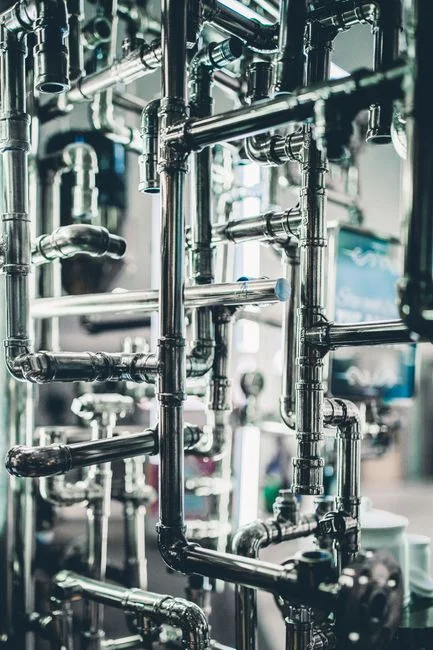
Unit operations for a Hyderabad P&ID in 2026 follow a specific sequence to manage industrial wastewater effectively.
- Headworks screening. A rotary mechanical bar screen protects downstream pumps and membranes from rags, plastics and fibrous debris typical of combined industrial sewage inflows. Without it, UF and RO racks fail consistently.
- DAF for fab streams. For streams with FOG, oil or high suspended solids (CMP slurry overflow, photo-resist waste), a DAF unit is the standard pre-RO step. Coagulant and flocculant dosing should be PLC-controlled so the unit can manage load swings from batch CMP campaigns. A properly sized DAF system upstream of biology is the difference between stable RO feed and chronic fouling.
- MBR for biological streams. Where biological treatment is needed — canteen and domestic sewage from the campus, or organic-bearing fab streams — an MBR membrane bioreactor delivers near-reuse-quality effluent suitable for toilet flushing, gardening and cooling-tower make-up, with a smaller footprint than conventional activated sludge and an effluent quality below 1 μm. Operators already running MBRs in India can use the MBR operation and maintenance guide to set realistic aeration and CIP intervals.
- UF as the workhorse polisher. 0.03 μm PVDF UF removes colloids, bacteria and residual turbidity and protects RO membranes from fouling, with automated backwash and air-scour to handle the variable feed from a fab/data-hall campus.
- Industrial RO for water recovery. An industrial RO system is the core water-recovery step. Recovery rates of up to 95% are achievable under good feed chemistry; the concentrate becomes the design input for either the HMWSSB offtake or the ZLD block.
- Disinfection. UV handles chemical-free microbial control in the reclaimed-water line; chlorine dioxide is the choice for cooling-loop and reject-line dosing where a residual is required; ozone is the alternative for tank and storage disinfection without taste or odour carry-over.
The HMWSSB interface is the final node on the train. The DBFOT concessionaire owns the off-site treatment, conveyance, storage, pumping and transmission infrastructure; HMWSSB provides approvals and right-of-way. The on-site plant must be designed to deliver a quality and pressure that matches the reclaimed-water offtake spec. Reuse contracts typically call for secondary-treated wastewater at the corridor boundary, with tertiary polishing (UF/RO) added by the user if the intent is to push reuse above 70% and avoid sending reject to sewer. Engineers benchmarking a regional plant can compare layouts against the Munich semiconductor and data hall wastewater guide, which uses a similar unit-operations stack but with different influent chemistry.
Parameter Targets the 2026 Plant Should Be Designed Around
Exact offtake values must be confirmed against the latest TSPCB consent and the HMWSSB reclaimed-water contract, but the table below captures the design intent and the inputs required before freezing the P&ID. Where research does not provide a Hyderabad-specific number, the cell identifies the input to request.
| Design node | Design intent for 2026 | Input to confirm before freezing the P&ID |
|---|---|---|
| Cooling-tower make-up (RO permeate) | Low silica, low hardness, controlled TDS to allow higher cycles of concentration and lower blowdown | HMWSSB offtake spec and cooling-tower OEM chemistry limits — do not assume potable-water numbers |
| HMWSSB offtake boundary | At least secondary-treated wastewater quality; tertiary polishing (UF/RO) if reuse is to be pushed above 70% | DBFOT concessionaire's published offtake spec for the relevant corridor (Attapur–Chandan Valley / Shabad / Nagole–Future City) |
| Fab UPW reject + CMP streams | Segregated, neutralised, metals-precipitated, FOG/solids removed before any combination with low-strength streams | Site-specific mass balance of CMP slurry, acid/alkali rinse and UPW-reject flows; flag any stream that rules out co-discharge |
| On-line monitoring at offtake | Continuous flow, pH, conductivity, TSS, free chlorine; periodic heavy metals and fluoride for fab streams | TSPCB consent schedule and HMWSSB metering requirements; auditable data logging, not manual sheets |
| On-site storage buffer | Enough to ride out a reservoir event without curtailing production | Latest Singur/Manjeera storage data and the HMWSSB supply commitment for the specific corridor; buffer should be confirmed against current hydrology |
Closed-Loop, Hybrid Reuse, or ZLD: A 2026 Decision Framework
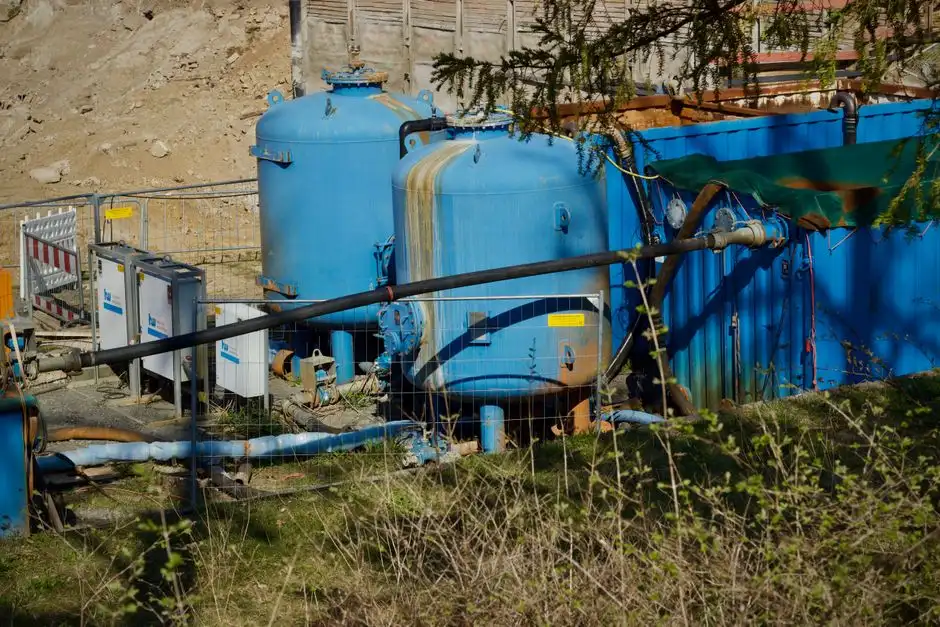
Strategy selection should follow this order of precedence: closed-loop first, then hybrid reuse, then ZLD as a last resort. 2026 hydrology does not support a once-through evaporative model on a multi-decade horizon.
| Strategy | When it fits | What it costs you |
|---|---|---|
| Closed-loop mechanical cooling (Microsoft's reported Hyderabad design) | AI/cloud campuses designed from scratch; AI workloads with high rack density | Careful heat-rejection design for Hyderabad's ambient conditions; less cost-effective as a retrofit on a conventional air-cooled data hall |
| Hybrid reuse — direct-to-chip or adiabatic cooling + side-stream filtration, softener make-up and RO polishing of blowdown | Most mixed-use campuses inside the HMWSSB corridor | Aligns naturally with the corridor supply for the 20–40% that cannot be recovered on-site; requires the offtake contract to be in place at COD |
| On-site ZLD (thermal or membrane-concentrate ZLD) | Periphery sites outside the corridor, or streams where consent requires zero liquid discharge | Capital- and energy-intensive; should be reserved for cases where the HMWSSB offtake is unavailable or fab chemistry rules out co-discharge |
On-site storage should be sized for at least 3–7 days of operation under a Singur-style reservoir event; the buffer must be confirmed against the latest reservoir data and HMWSSB supply commitments. The DBFOT pipeline is a long-life asset, and any design that depends on a guaranteed freshwater make-up is now a stranded-asset risk.
Frequently Asked Questions
What capex band should a project expect for a 2026 Hyderabad on-site treatment train for a mid-size fab or data-hall campus?
The supplied research does not quote a Hyderabad-specific capex band for the full train (screening → DAF → MBR → UF → RO → disinfection). The buyer should request an itemised bid that breaks out the fab stream (DAF + metals precipitation + neutralization) and the cooling-blowdown stream (softener + side-stream filtration + RO + disinfection) separately, plus a priced optional ZLD block, to compare strategies on a like-for-like basis.
How do we pick the right supplier for a 2026 Hyderabad fab or data-hall wastewater plant?
Shortlist based on three criteria: (1) documented reference plants in India that have run an MBR + UF + RO stack on industrial influent; (2) willingness to performance-test the RO at the 95% recovery number on a site pilot rather than a brochure; (3) experience delivering a plant that hands off reclaimed water to a third-party DBFOT concessionaire at the corridor offtake spec.
Do we still need TSPCB consent if the effluent goes to an HMWSSB DBFOT offtake?
Yes. HMWSSB supplies secondary treated wastewater to the campus, but the campus remains the discharger of any reject or RO concentrate not reused on-site. TSPCB consent under the Water Act and the HWM Rules governs the on-site discharge stream, the monitoring schedule and the heavy-metal and fluoride limits for fab waste. The DB