Why a 100 GPM Mobile RO Skid Is the Standard CIP-Downtime Fix
A clean-in-place (CIP) outage on a process RO train stops permeate production while chemistry is being circulated, leaving three engineering options: rent a mobile RO skid, reroute to a second in-place RO, or accept downtime. A 100 gpm mobile reverse osmosis rental serves as the bridge for mid-scale food, dairy, brewing, or light-industrial process lines, providing enough capacity to keep a bottling run, CIP rinse loop, or heat-exchanger loop fed while remaining small enough for trailer transport.
WesTech positions mobile RO as a rapid-deployment option for planned plant maintenance and emergency response, and Wigen’s mobile water purification trailers are explicitly marketed for replacement water processing and emergency plant failure. Western Reserve Pure Water lists flexible systems designed for easy transport, setup, and temporary use directly under their products and services, placing a 100 gpm temporary RO skid within their scope. Plant engineers must verify whether a proposed unit is sized, equipped, and logistically feasible for the specific CIP window.
How 100 GPM Maps to Feed Flow, Recovery, and Concentrate
Recovery is the fraction of feed water that becomes permeate; a mobile RO unit in this class operates between 75% and 98% recovery. The relationship is defined as Feed = Permeate ÷ Recovery, and Concentrate = Feed − Permeate. Applied to a 100 gpm permeate target, the skid pulls different feed volumes and produces different concentrate levels based on the recovery setpoint.
| Recovery setting | Feed flow required (gpm) | Concentrate flow produced (gpm) | Trade-off |
|---|---|---|---|
| 75% | ~134 | ~34 | Most membrane-gentle; lowest scaling risk; highest feed demand. |
| 85% | ~118 | ~18 | Common operating point; balances permeate yield against membrane stress. |
| 95% | ~105 | ~5 | Maximizes permeate per feed gallon; requires stronger pretreatment and antiscalant dosing. |
Concentrate streams generally represent 20–25% of feed flow, which aligns with the 85% and 75% recovery benchmarks. Choosing the recovery point is a function of feed-water chemistry: lower recovery suits high-TDS or scaling-prone feed, while higher recovery is preferred when feed is clean and concentrate disposal is constrained. Closed-circuit reverse osmosis (CCRO) allows for recovery adjustment between 75% and 98% on a single skid. Since Western Reserve’s service list includes a free water analysis, the operating point should be anchored to that data rather than an assumed feed profile.
What's Actually Inside a CIP-Ready Mobile RO Skid
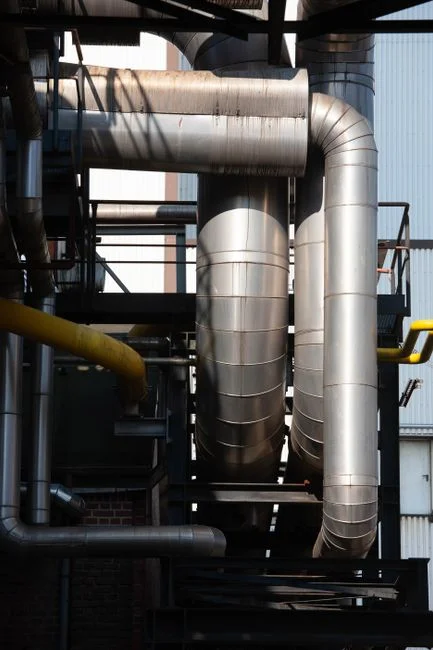
Mobile RO quotes are defined by their component lists, which remain consistent across industry vendors. Veolia’s mobile RO units include pretreatment filters, high-pressure pumps (200–1,000 psi), RO membranes, control systems, and storage. WesTech’s containerized RO adds chemical dosing, a 5-micron cartridge filter, and pretreatment stages, emphasizing the need for a water analysis prior to deployment. Wigen’s mobile trailers include feed pumps, air supply, chemical metering, backwash tanks, and HVAC-controlled interiors.
Buyers auditing a 100 gpm mobile RO rental should confirm the following in writing: a pretreatment train sized to the water analysis, a high-pressure pump (200–1,000 psi), membrane count, a CIP loop, chemical metering, a control panel with remote monitoring, and a permeate tie-in. Omitting pretreatment or CIP hardware in a quote often pushes hidden scope onto the host plant. For reference designs and spare membrane elements, see an industrial RO reference design and spare membrane elements and cartridges.
Verifying Western Reserve Pure Water for a 100 GPM CIP-Downtime Rental
Western Reserve Pure Water’s service list aligns with standard vendor verification requirements. Use these five items as a written confirmation request before shipping the skid.
- Free water analysis. Request this as the first deliverable so feed chemistry drives skid sizing and recovery selection.
- Certified technicians and service plans. Confirm on-site response times and the applicability of service plans during the rental period.
- Membrane cleaning with loaners. Verify the availability of loaner membranes to protect the rental if fouling occurs mid-window.
- Standards familiarity — ANSI/AAMI ST108:2023. This signals competent process-water engineering for both healthcare-adjacent and general industrial processes.
- Geographic fit and U.S.-wide reach. Confirm trucking distance, mobilization costs, and on-site response times for the specific site in writing.
Footprint, Power, and Discharge Constraints at the Host Site
A 100 gpm skid requires less space than a 40 ft containerized unit, but the site-utility requirements remain comparable. WesTech’s reference 700 gpm containerized RO runs on 480 VAC, 60 Hz, 3-phase power at 250 A. While a 100 gpm skid will draw less power, the 480 V / 3-phase requirement should be confirmed rather than assumed. Concentrate disposal options include local drains, evaporation ponds, zero-liquid-discharge (ZLD) systems, or reuse for irrigation or dust control, depending on site permits.
| Parameter | Reference value (WesTech 700 gpm containerized RO) | Action for a 100 gpm rental |
|---|---|---|
| Footprint | 40 ft L × 8 ft W × 9 ft 6 in H | Request exact skid dimensions; confirm pad space and hose runs. |
| Power | 480 VAC, 60 Hz, 3-phase, 250 A | Confirm 480 V / 3-phase availability and breaker sizing. |
| Permeate target | Up to 700 gpm | Confirm 100 gpm at the agreed recovery point and feed temperature. |
| Concentrate disposal | 20–25% of feed flow; drain, pond, ZLD, or reuse | Match concentrate flow at chosen recovery to a permitted discharge path. |
| Pretreatment | 5-micron cartridge filter plus staged pretreatment | Confirm pretreatment train matches the free water analysis. |
Facility managers should populate this table using the Western Reserve proposal to ensure all site-specific constraints are addressed before delivery.
From PO to Permeate: A Western Reserve Mobile RO Deployment Sequence
- Water analysis and scope letter. Request the free water analysis and provide the CIP schedule, target permeate flow, feed source, and discharge destination.
- Skid scope confirmation. Confirm pretreatment, high-pressure pump, membrane count, CIP loop, and remote monitoring against the component list.
- Logistics lock-down. Confirm delivery date, power requirements, footprint, and concentrate discharge routing.
- Startup and standby. Conduct a performance check before taking the in-place RO offline, and keep the membrane-cleaning loaner service on standby. For the wider build-vs-rent decision, see the DaaS vs CapEx 20-year TCO comparison and the MBR O&M 2026 engineering manual.
Frequently Asked Questions
What is the lead time for a 100 gpm mobile RO skid from Western Reserve Pure Water?
Western Reserve does not publish specific lead times. Request a written mobilization and startup date with the quote to ensure the rental window aligns with the CIP schedule.
How much does a 100 gpm mobile RO rental cost?
Pricing is not published and varies based on recovery targets, pretreatment, rental duration, and mobilization distance. Request an itemized quote covering mobilization, monthly rental, consumables, and demobilization, including a line item for membrane-cleaning loaner services.
What recovery rate should a 100 gpm mobile RO skid run at?
Mobile RO systems typically operate between 75–98% recovery. 75–85% is gentler on membranes and is the default for high-TDS feed, while 90–98% maximizes permeate yield but requires more intensive pretreatment. The optimal setting should be determined by the free water analysis.
Does the mobile skid come with its own CIP system?
Western Reserve’s scope lists mobile systems and membrane cleaning, but buyers must confirm in writing whether CIP hardware is included with the skid or if the host plant’s equipment is required, as this is a common scope gap.