
What MWRD Actually Buys: A Plant-by-Plant View
Selecting a vendor for the Metropolitan Water Reclamation District of Greater Chicago involves addressing seven distinct equipment requirements across the district's seven water reclamation plants: Calumet, O'Brien, Egan, Kirie, Hanover Park, Stickney, and Lemont (per MDPI 2023 case study). Founded in 1889 and serving roughly 5.2 million residents across 883 square miles of Cook County, the district is one of the largest wastewater agencies in the United States (per mwrd.org). The seven plants share a service mandate but diverge sharply on discharge pathway, and that divergence defines vendor fit.
Five of the seven WRPs — Calumet, O'Brien, Egan, Kirie, and Hanover Park — disinfect their effluent on a seasonal basis, meaning the upstream biological and tertiary stages must consistently produce water clean enough for either reuse or controlled stream discharge during high-recreation months. Stickney and Lemont operate differently: both discharge to the Chicago Sanitary and Ship Canal under Title 35 III, which sets Illinois effluent quality standards but stops short of mandating reuse-grade polishing (per MDPI). The practical consequence is that Stickney and Lemont skew toward high-flow primary and secondary capacity, while the five disinfecting plants are the natural target for fit-for-purpose reuse trains built around MBR, UF, UV, and chlorine dioxide.
| WRP | Discharge Pathway | Dominant Equipment Need |
|---|---|---|
| Calumet | Seasonal disinfection / stream | MBR + UF polishing + UV/ClO₂ |
| O'Brien | Seasonal disinfection / stream | MBR + UF polishing + UV/ClO₂ |
| Egan | Seasonal disinfection / stream | MBR + UF polishing + UV/ClO₂ |
| Kirie | Seasonal disinfection / stream | MBR + UF polishing + UV/ClO₂ |
| Hanover Park | Seasonal disinfection / stream | MBR + UF polishing + UV/ClO₂ |
| Stickney | Chicago Sanitary and Ship Canal | High-flow primary/secondary, NPDES-grade |
| Lemont | Chicago Sanitary and Ship Canal | High-flow primary/secondary, NPDES-grade |
A vendor qualified for "MWRD work" in 2026 must be able to address both columns of this table — either directly or through documented partner capacity — rather than pitching one piece of equipment to all seven.
The 2026 Regulatory and Water-Stress Context
Vendor evaluation in 2026 requires benchmarks updated for current climate and water-use data. As of October 2022, 27% of the U.S. Midwest was in drought, with 6% in severe drought according to the National Integrated Drought Information System (per MDPI); this figure serves as the reference point for Chicago-area reuse planning. Nationally, 74% of the public water supply comes from surface water and 26% from groundwater, with 44% of the U.S. population on public supply (per MDPI) — a mix that explains why Greater Chicago leans heavily on Lake Michigan withdrawals and why any incremental withdrawal reduction translates directly into reuse demand.
Illinois Title 35 III (Subtitle C) is the governing framework for effluent discharged from Stickney and Lemont to the Chicago Sanitary and Ship Canal, and it is the document most MWRD-area vendors reference when discussing compliance. Title 35 III does not regulate water reuse directly, and no City of Chicago ordinance addresses water reuse (per MDPI). That regulatory gap is the engineering reason "fit-for-purpose" reuse — matching treatment intensity to end use rather than producing one universal effluent quality — has become the design philosophy of choice for 2026 capital planning in Cook County (per MDPI).
For a buyer, a vendor's compliance story should be evaluated against Title 35 III for canal-discharge plants and against end-use specifications (irrigation, industrial cooling, groundwater recharge) for the five disinfecting plants. A vendor that can document both pathways is a stronger shortlist candidate than one that can only point to a generic "Title 35" letter.
Core Treatment Categories Qualified Vendors Must Cover
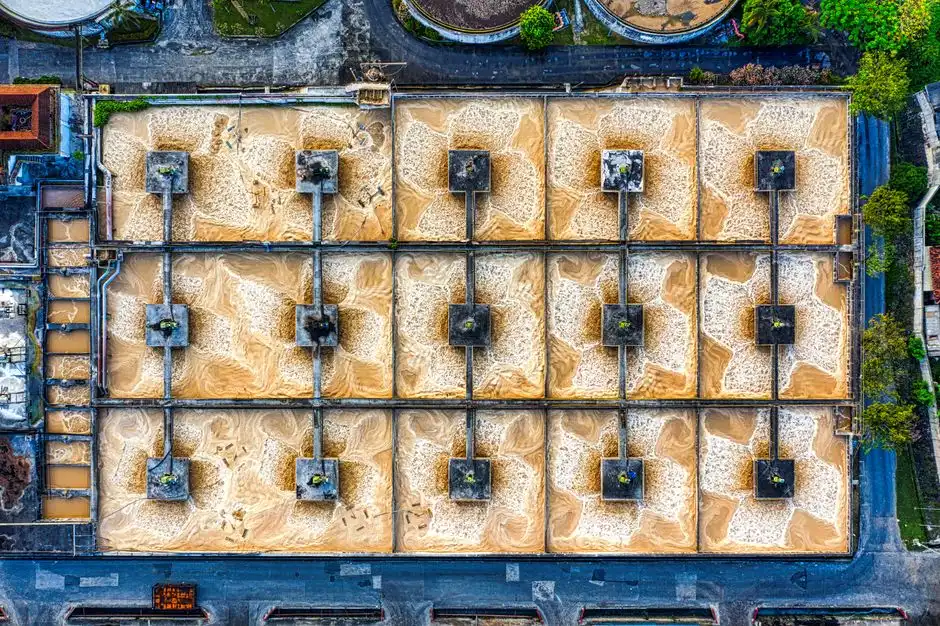
A credible MWRD-area vendor in 2026 requires depth across the full treatment train rather than a single flagship product. The unit processes that recur most often in district specifications fall into five categories, and each carries specific operating parameters to verify on data sheets.
Headworks screening is the first line of defense. Rotary mechanical bar screens sized for MWRD's typical peak wet-weather flows are required to remove rags, fibrous debris, and gross solids before they reach the biological stage, where a single pass of debris can shut down an MBR module. Below that, biological treatment is increasingly delivered as an MBR membrane bioreactor system producing near-reuse-quality effluent at sub-1 μm filtration, with packaged skid capacities in the 10–2,000 m³/day range and roughly 60% smaller footprint than conventional activated sludge of equivalent throughput (per MBR product parameters).
Tertiary polishing locks in reuse intent. A hollow-fiber UF system with 0.03 μm PVDF membranes, accepting feed turbidity up to 300 ppm and operating in the 2,000–40,000 L/h capacity band, is the typical spec for reuse-grade TSS and microbial reduction (per UF product spec). For disinfection redundancy — required at the five seasonal-disinfection plants — a UV-C disinfection system is effective against chlorine-resistant Cryptosporidium and Giardia with no disinfection by-products, paired with an on-site ClO₂ generator sized from 50 g/h to 20,000 g/h for residual carry and EPA/WHO-compliant dosing.
Industrial pretreatment closes the train on the front end. A DAF pretreatment system for fats, oils, and grease (FOG) and colloidal removal is typically offered in 13 standard models spanning 4–300 m³/h, which is the capacity range most MWRD tributary industries fall into.
| Unit Process | Key Parameter | Typical Range |
|---|---|---|
| Mechanical bar screens | Opening aperture | 3–10 mm typical |
| MBR | Effluent particle size | < 1 μm |
| MBR | Packaged flow range | 10–2,000 m³/day |
| Hollow-fiber UF | Pore size / membrane | 0.03 μm PVDF |
| Hollow-fiber UF | Feed turbidity tolerance | Up to 300 ppm |
| UV-C | Target organisms | Cryptosporidium, Giardia |
| ClO₂ generator | Output range | 50 g/h to 20,000 g/h |
| DAF | Flow range | 4–300 m³/h |
How to Compare Water Technology Companies in 2026
Mapping equipment categories to MWRD's seven WRPs allows for a head-to-head comparison across five axes: process-train coverage, flow range, automation level, compliance documentation, and after-sales support. A vendor that scores on four out of five may leave a gap in the project; the goal is full-train coverage with documented evidence at each step.
Benchmarks from comparable reuse programs are useful calibration points. The Orange County Groundwater Replenishment System reduces total dissolved solids from 1,017 mg/L to as low as 55 mg/L through reverse osmosis, producing water that exceeds both state and federal drinking water standards (per MDPI). Singapore's NEWater trajectory — supplying 30% of national water demand today and projected to reach 55% (~440 MGD) by 2060 — provides a long-horizon reference for how reuse scales once trains are in place (per MDPI). These examples define what "qualified" looks like in operator, regulatory, and public-acceptance terms.
For the 2026 shortlist, the hard pass/fail questions are: can the vendor evidence <1 μm MBR effluent on a municipal reference, can they quote RO recovery up to 95% on a comparable feed, and can they deliver chemical-free UV or on-site ClO₂ generation rather than bulk hypochlorite? A vendor that cannot bridge headworks through disinfection with documented municipal references is a single-niche supplier, forcing the EPC contractor to integrate multiple vendors where one was scoped. For broader context on the MBR vendor market, the MBR market 2026 buyer data summary is a useful cross-check, and the 2026 digital water market outlook covers the automation layer that separates qualification from disqualification.
| Evaluation Axis | Pass Evidence | Disqualifier |
|---|---|---|
| Process-train coverage | Headworks → biological → tertiary → disinfection in-house or via documented partners | Single-niche (e.g., UV only) |
| Flow range | 10–2,000 m³/day packaged MBR; 4–300 m³/h DAF | Capacity outside WRP envelope |
| Automation | SCADA integration, remote monitoring per smart pump monitoring for US municipal wastewater practice | Manual-only controls |
| Compliance documentation | EPA 40 CFR 133, EU 91/271/EEC, WHO guidelines, Title 35 III | No municipal reference list |
| After-sales support | Regional service, membrane replacement program, 24/7 spares | International-only support |
A 2026 Vendor Selection Checklist for MWRD-Area Projects
The comparison framework above compresses into a five-step checklist that procurement leads can run against any shortlist.
- Map the WRP. Identify which of the seven plants — Calumet, O'Brien, Egan, Kirie, Hanover Park, Stickney, or Lemont — the bid targets, and confirm whether the discharge pathway is seasonal disinfection (reuse-ready train) or Ship Canal discharge (NPDES-grade train).
- Confirm Title 35 III compliance documentation. Require the vendor to name the specific Title 35 III subsections their equipment meets, and to address NPDES permit assumptions for the receiving waterbody.
- Validate flow range against packaged capacity. Packaged MBR should fall in the 10–2,000 m³/day band; DAF pretreatment in the 4–300 m³/h band. Reject vendors whose standard skid sizes require custom engineering outside these ranges.
- Require disinfection redundancy. Seasonal disinfection at five of seven WRPs means UV and ClO₂ should both be in scope — UV for primary inactivation of chlorine-resistant organisms, ClO₂ for residual carry.
- Request Midwest municipal references. A vendor without at least one active Cook County or comparable Midwest municipal installation should be downgraded. Membrane replacement history, uptime data, and Title 35 inspection outcomes are the primary data points to request.
Running this checklist takes roughly 30 minutes per vendor and helps refine the shortlist within one cycle.
Frequently Asked Questions
How many water reclamation plants does MWRD operate?
MWRD operates seven water reclamation plants across Cook County: Calumet, O'Brien, Egan, Kirie, Hanover Park, Stickney, and Lemont (per MDPI 2023).
Does the City of Chicago regulate water reuse?
No. There is no City of Chicago ordinance that directly addresses water reuse; Illinois Title 35 III governs effluent discharged to the Chicago Sanitary and Ship Canal, while reuse decisions are driven by end-use specifications and Title 35 III compliance (per MDPI).
Which MWRD plants disinfect effluent seasonally?
Five plants disinfect seasonally: Calumet, O'Brien, Egan, Kirie, and Hanover Park