Why Sludge Dryers Fail: The Real Cost of a Sticky-Phase Shutdown
A choked sludge dryer in a ZLD line stops the entire plant — not just the dryer. Every extra kilogram of water sent to a thermal dryer instead of removed mechanically by a filter press or centrifuge raises heat load, residence time, fuel or steam consumption, and exhaust-handling cost in roughly linear proportion (acmefil.com, 2026). When that penalty compounds across a 24/7 line, a single eight-hour dryer trip can erase an entire week's savings from upstream polymer optimization.
Most failures originate in the same place: the plastic or sticky phase. As wet cake heats, sludge passes through a pasty range where it stops moving freely, fouls heated surfaces, and overloads the agitator. According to field experience reported by ACMEFIL, "the most common problem is material sticking inside the dryer" once sludge enters this plastic phase and does not progress through the system (acmefil.com, 2026). The dryer itself is rarely the root cause; the selection was.
For buyers comparing machines, the upside benchmark is well established. Drying cuts sludge weight by 70–80%, reduces disposal volumes, and lowers transport trips and CO₂ emissions from logistics (kenkidryer.com, 2026-01). Even partial moisture reductions pay back fast on landfill gate fees — which is why operators tolerate dryer downtime so poorly when it happens.
The seven recurring failure modes this article covers are: sticking in the plastic phase, uneven drying with wet cores, product lumping at discharge, discharge blockage on cooling, high exhaust vapor load, odor and corrosion, and excessive utility consumption. Each maps to a specific root cause, a measurable diagnostic, and a fix that does not require replacing the unit.
How a Sludge Dryer Works (the 60-Second Model)
A sludge dryer is a controlled heat-and-mass-transfer device with four functions: controlled feeding, heat transfer, vapor removal through an exhaust or condenser, and solids discharge (acmefil.com, 2026). Wet cake enters through a feeder matched to the sludge's rheology — pumpable, pasty, sticky, or cake-like — and exits as a lower-moisture solid suitable for handling, disposal, or reuse.
The heat transfer mode defines the dryer type. Direct dryers pass hot air or flue gas through the sludge and work well for free-flowing material that tolerates entrainment; the trade-off is dust load, odor, fire risk, and large exhaust volumes. Indirect dryers — including paddle sludge dryers, ATFDs, and shell-and-blade steam dryers — keep the heating medium separated from the product by a heated surface, which is why they are preferred for sticky, odorous, chemical, or biological sludge. The trade-off is surface fouling risk and the need for effective agitator mixing.
Sludge dryers are not interchangeable with other dryers. An evaporator concentrates liquid effluent; an ATFD handles viscous concentrate; a spray dryer atomizes suitable liquid into hot air; a sludge dryer accepts dewatered cake or semi-solid material (acmefil.com, 2026). Sending the wrong feed state into the wrong dryer is the single most common cause of chronic underperformance — and the first thing an operator should verify before chasing mechanical faults.
No dryer type is automatically correct. Feed testing and process data decide selection, which is why a plate and frame filter press for sludge dewatering upstream — and the cake moisture it actually delivers — is part of the dryer specification, not a separate decision.
Symptom-to-Fix Matrix: Seven Sludge Dryer Problems and Their Solutions
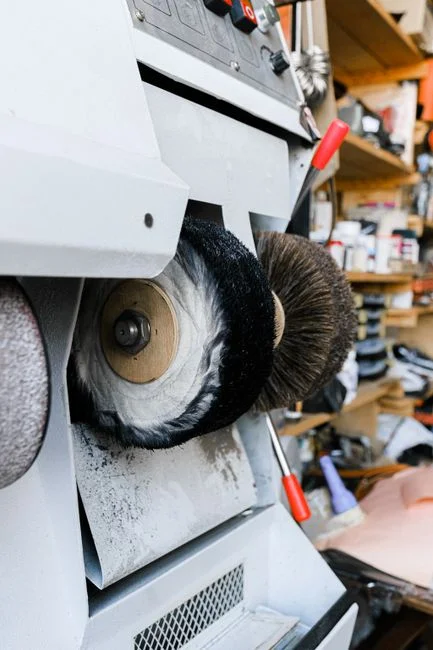
The table below organizes the seven failure modes into a structure operators can use live on the DCS: symptom → most likely root cause → diagnostic step → corrective action → prevention. Each row is anchored in published field data, not catalogue claims.
| Symptom | Most Likely Root Cause | Diagnostic Step | Corrective Action | Prevention |
|---|---|---|---|---|
| Sticking / plastic-phase fouling | Sludge enters plastic phase and stops moving; agitator cannot clear material from heated surface | Rising agitator torque trend, falling motor current variance, plugged vapor ducts, visible buildup on inspection | Reduce feed rate 10–20%, raise jacket/agitator temperature in 5°C steps, add de-agglomeration stage | Specify indirect dryer with proven mixing, control residence time, hold inlet moisture in design window |
| Uneven drying / wet cores in lumps | Polymer-flocced sludge forms hard agglomerates; only exterior dries, interior stays wet | Grab samples at discharge showing >5 percentage-point moisture variance; high inlet moisture >80% | Add internal lump-breakage device, lower bed depth, run two-stage drying (pre-dry + finish) | Optimize polymer dose upstream; target cake moisture ≤75–80% before the dryer |
| Discharge blockage | Sludge re-sticks as it cools across the discharge screw or valve, bridging the opening | Discharge torque alarms, intermittent zero-flow at outlet, temperature drop across discharge housing | Fit variable-speed discharge, heat the discharge housing, install back-up screw or rotary valve | Match outlet moisture to the actual handling route, not just to the nameplate spec |
| High exhaust load / vapor overload | Over-wet feed or undersized exhaust fan; condensate flow exceeds condenser capacity | Exhaust temperature drops below setpoint, condensate flowmeter spikes, scrubber pH crashes | Trim feed rate, rebalance exhaust fan, install pre-dewatering upgrade upstream | Design exhaust system for worst-case feed moisture, not annual average |
| Odor and VOC complaints | Direct-fired dryer handling biological or chemical sludge above 120°C, or inadequate condensation | Odor panel at property line, VOC reading at stack, condensate turbidity | Switch to indirect heating, add scrubber or condenser, lower drying temperature below 100°C | Specify indirect dryer from selection; treat vapor handling as in-scope, not an afterthought (acmefil.com, 2026) |
| Corrosion and wear | Chlorides, sulfides, or abrasive grit in industrial sludge attacking shell and agitator | UT shell-thinning survey, agitator bearing failure history, visual wear-liner inspection | Upgrade to duplex or AL-6XN metallurgy, replace wear liners, add protective coatings | Confirm sludge chemistry before dryer selection; "confirm metallurgy before cost comparison" (acmefil.com, 2026) |
| Excessive utility consumption | Over-wet feed, poor insulation, or wrong heating medium (electric instead of waste steam) | Specific energy consumption (kWh or kg steam per kg water evaporated) trending up over months | Improve upstream dewatering, recover exhaust heat via heat exchanger, switch to indirect steam or waste-heat source | Let mechanical dewatering do what it does cheaply; reserve thermal energy for the moisture it must remove (acmefil.com, 2026) |
Two patterns explain most of this matrix. First, the dryer is almost never the root cause — inlet moisture, sludge rheology, and metallurgy are. Second, every row responds to instrumentation: agitator torque, exhaust temperature, and discharge moisture predict roughly 80% of failures hours before they trip the unit (HydropureWater field data, 2026).
Operating Parameters That Prevent 80% of Sludge Dryer Problems
Setpoint drift, not equipment failure, drives most service calls. The table below lists the operating window a typical indirect paddle sludge dryer should sit in. Solar and low-temperature data points are included as references, not direct equivalents — industrial indirect dryers normally operate below 100°C to preserve material composition and enable reuse as compost, soil conditioner, or solid fuel (kenkidryer.com, 2026-01).
| Parameter | Typical Target Window | Notes |
|---|---|---|
| Inlet cake moisture (dewatered sludge) | 75–80% (well-controlled); stress band 80–85%; failure band >85% | Conventional dryers "fail catastrophically" at 80–95% inlet moisture (kenkidryer.com, 2026-01) |
| Target outlet moisture | 10–40% depending on disposal route | Dry only as far as the reuse or disposal route requires |
| Agitator tip speed / RPM | <5 RPM for low-shear sticky-sludge duty (kenkidryer.com, 2026-01); higher RPM acceptable for free-flowing cake | Low shear preserves material composition and minimizes wear |
| Residence time | 20–60 minutes for indirect paddle; hours for low-temp tunnel | Solar tunnel reference: 5 days, 55±5°C full load, 60±5°C no-load (Hue University, jos.hueuni.edu.vn) |
| Exhaust temperature | 80–95°C at dryer outlet; >70°C at condenser inlet to avoid dew-point corrosion | Dropping exhaust temp is the earliest indicator of vapor overload |
| Specific energy consumption | 800–1,200 kJ per kg water evaporated (indirect steam, well-insulated) | Trending up >10% over a quarter signals upstream dewatering drift |
| Jacket / heating-medium temperature | Below 100°C for material-preservation duty; up to 180°C for high-capacity thermal-only service | Low-temp indirect protects compostable / reusable product |
Sizing rule of thumb: design for worst-case inlet moisture, not annual average (acmefil.com, 2026). A plant that sizes to the 75th percentile and ignores winter polymer-breakdown events will see sticky-phase trips every cold month. Trending agitator torque, exhaust temperature, and discharge moisture on the DCS — and alarming on rate-of-change, not absolute value — predicts the majority of failures hours in advance.
Upstream Fixes: Cut Problems at the Filter Press, Not the Dryer
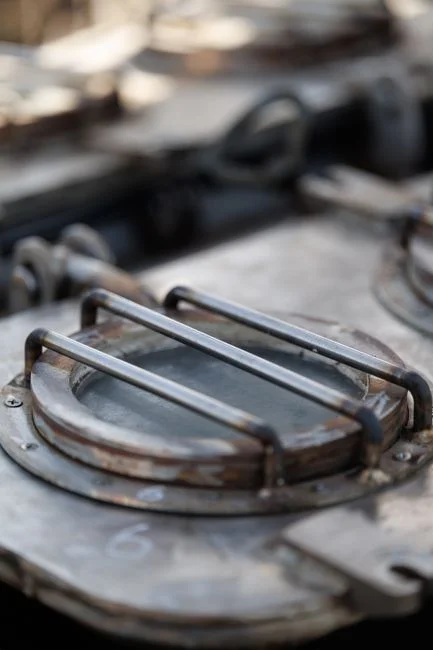
Every percentage point of cake moisture removed mechanically is a percentage point the dryer does not have to evaporate thermally — and thermal evaporation costs roughly an order of magnitude more per kilogram than mechanical dewatering (acmefil.com, 2026). The cheapest way to stabilize a sludge dryer is therefore to fix what happens before it: at the plate and frame filter press for sludge dewatering and at the automatic polymer and chemical dosing system feeding it.
Targeting cake moisture in the 70–75% band — instead of accepting 80–82% as "good enough" — directly cuts dryer fuel use, residence time, and exhaust load. Polymer dose optimization is usually the lowest-cost lever: a 5–10% reduction in cationic polymer demand often improves cake release and lowers bound water without capital spend. Where sludge rheology is highly variable, an automatic dosing system tied to incoming solids load holds cake moisture inside the dryer's design window day after day.
When to Replace vs. Retrofit: A Short Selection Checklist
If the existing dryer cannot be tuned to its design window, the problem is usually selection, not operation. Run a five-point gate before specifying a replacement:
- Feed behavior: pumpable, pasty, sticky, or cake-like? Match feeder, agitator, and discharge to actual rheology, not catalogue capacity (acmefil.com, 2026).
- Inlet moisture range: design to the worst-case value, not the annual mean.
- Sticky phase presence: if yes, indirect drying with proven mixing is the default; if no, direct hot-air drying remains a lower-capex option.
- Odor / VOC requirement: if stack odor or VOC compliance is binding, indirect heating plus condenser or scrubber is non-negotiable.
- Final moisture and reuse route: confirm what the disposal site, end user, or composting facility actually accepts before sizing the dryer.
Material of construction is a non-negotiable line item: "confirm metallurgy before cost comparison" (acmefil.com, 2026). And the disposal question that catches most projects: "if the dried material absorbs moisture again, creates dust, smells during storage, or is rejected by the disposal route, the drying plant has not solved the full problem" (acmefil.com, 2026). A dryer that hands off a product the disposal site rejects is not a fix — it is a deferred cost.
For readers weighing indirect paddle versus direct hot-air replacement, see our analysis of MBR vs conventional activated sludge design choices for the broader plant context, and our anaerobic digester maintenance cost and OPEX breakdown for the upstream solids-handling economics that frame any dryer decision.
Frequently Asked Questions
What is the most common sludge dryer problem?
Material sticking inside the dryer during the plastic or sticky phase is the most common failure mode, caused when sludge stops moving as it heats and fouls the heated surface or agitator (acmefil.com, 2026). The fix is almost always upstream — lower inlet moisture and select an indirect dryer with proven mixing — not a hardware replacement.
What inlet moisture should a sludge dryer be designed for?
Design for the worst-case inlet moisture, not the annual average (acmefil.com, 2026). Conventional dryers are most stressed in the 80–95% inlet moisture band (kenkidryer.com, 2026-01); targeting 75–80% cake moisture from the upstream filter press keeps the dryer inside its stable operating window.
How much weight does sludge drying actually remove?
Thermal drying typically reduces sludge weight by 70–80%, which cuts transport trucks and disposal costs by roughly 50–70% (kenkidryer.com, 2026-01). The exact figure depends on inlet moisture and target outlet moisture — both of which should be set by the disposal or reuse route, not by the dryer's nameplate.
When should an indirect sludge dryer be specified instead of a direct hot-air dryer?
Specify indirect drying whenever the sludge is sticky, odorous, chemical, or biological, or when stack odor and VOC compliance are binding (acmefil.com, 2026). Direct hot-air dryers are appropriate for free-flowing, dust-tolerant feed where exhaust treatment is already in scope.
How do I know my dryer is failing before it trips?
Trend agitator torque, exhaust temperature, and discharge moisture on the DCS, and alarm on rate-of-change rather than absolute value. These three signals predict the majority of sticky-phase and discharge failures hours before they become unplanned shutdowns (HydropureWater field data, 2026).