Why Sleeve Cleaning Is the Single Biggest Reliability Lever for UV Reactors
A 1986 US EPA review of UV installation maintenance found that even reactors fitted with wipers and ultrasonic cleaners eventually needed hand acid cleaning to restore the original UV transmittance of their quartz sleeves. Rapid sleeve fouling was the primary technical reason early UV systems were dismissed as suitable only for small treatment plants (US EPA 1986, summarized in WaterWorld). More than 2,000 wastewater UV systems are operating in North America today; equipment continues to foul, and whether a UV train delivers its design dose reliably over a 10–15 year asset life is governed almost entirely by the cleaning regime bolted to it.
A quartz sleeve separates the lamp from the effluent while passing UV-C into the water; any deposit attenuates the dose delivered. Once that attenuation is large enough, the first sign is a rising fecal coliform count — a fail signal for any UK discharge consent and, on drinking water duty, for the DWI compliance evidence pack. Cleaning method, frequency and chemistry decide whether a reactor keeps delivering its design dose or drifts below it between service visits. The rest of this article turns that statement into a working procedure a UK plant engineer can lift into an O&M file.
What Actually Fouls a Quartz Sleeve in UK Drinking Water and Wastewater Duty
Two deposit families form on hot quartz, and most sleeves carry both. The inorganic layer is a hard-water analogue scale — calcium, magnesium, iron and manganese — that precipitates out of the effluent or out of treatment chemicals dosed upstream of the UV bank. The organic layer is the harder one to remove: colloids, proteins, oils and grease, extracellular polymers and microorganisms, which together form a biofilm "starter" that mineral scale then binds onto (WaterWorld, summarising EPA and plant maintenance data). The result is a combined organic-plus-inorganic film that no single cleaning chemistry fully removes.
Process conditions drive both the rate and the mix: temperature, pH, influent concentration and residence time. Field data compiled by WaterWorld shows fouling rate and composition are seasonal and site-specific; for conventional low-pressure systems the average cleaning rate is once a month, with some sites cleaning weekly and others only once or twice a year. For UK sites, the practical reading is direct: groundwater works with high hardness plus iron/manganese removal will scale sleeves fast, while food, beverage and dairy effluents stack the organic layer on top. Pretreatment with a DAF unit upstream of the UV train is often the cheapest way to knock the organic load back before it reaches the sleeves.
The Three Cleaning Families — Manual Acid Soak, Mechanical Wiper, Combined Automatic
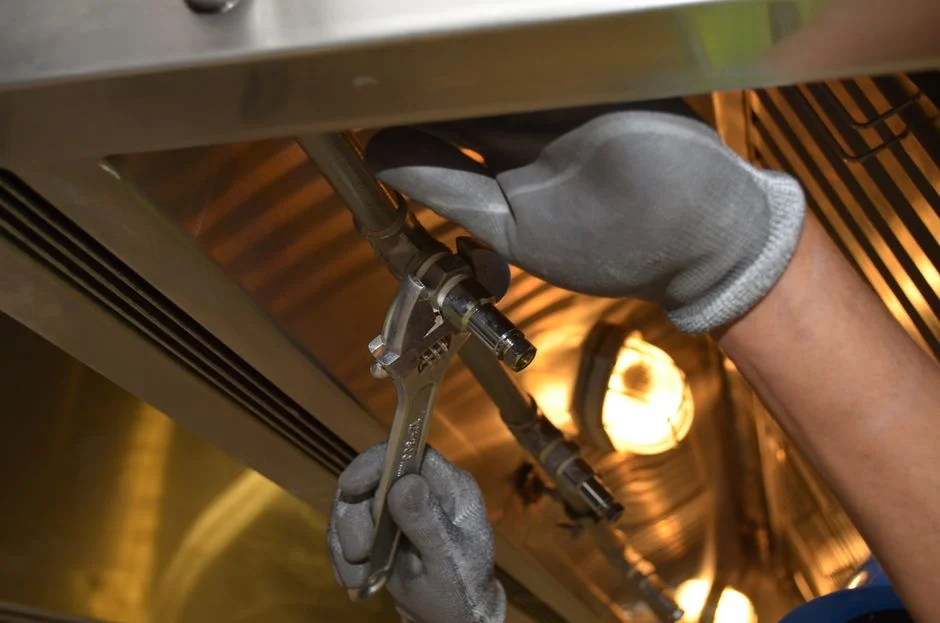
Manual chemical cleaning is the baseline every other method is judged against. Operators remove the lamp and sleeve, soak them in an acid cleaning tank or hand-wipe with 20–25% phosphoric acid or an industrial descaler such as Lime-A-Way, effective pH below 2; sleeves are then air-dried so any residual film shows up under visual inspection (WaterWorld). As pH climbs above 3–4, cleaning efficiency falls and phosphates begin to redeposit as a white film on the sleeve surface.
Mechanical wipers—a ring or collar driven along the sleeve on a programmed pass—slow the rate of fouling on relatively clean effluents but cannot remove hard scale. They delay, they do not eliminate, the need for acid. For high-intensity low-pressure or medium-pressure systems treating higher flows through fewer lamps, fouling is faster and the deposits harder, so mechanical wiping on its own is rarely enough.
Combined automatic systems pair a sealed chemical reservoir with a mechanical wiper and a programmable timer. The reactor cleans modules sequentially within each operating bank while lamps stay submerged in the effluent, so dose delivery is not interrupted. Trojan UV4000 and UV3000Plus are the reference designs in this class (WaterWorld), and the same architecture is now standard in any modern self-cleaning UV sterilizer range worth specifying on UK duty.
Two cleaning ideas to reject outright: car wax and windshield protective films leave a transparent film that blocks UV light, and strong bases (sodium or potassium hydroxide) etch the quartz itself, permanently reducing transmittance (WaterWorld). Both shorten sleeve life and destroy dose delivery.
Decision Matrix: Picking the Right Cleaning Approach for a UK Site
The right choice is driven by duty, labour availability and whether dose continuity is contractually required. The matrix below maps the three families against the variables a UK procurement or plant engineer weighs.
| Cleaning method | Typical cleaning frequency | UV dose continuity | Labour intensity | Relative CapEx | Best-fit UK duty |
|---|---|---|---|---|---|
| Manual acid soak (20–25% phosphoric, pH < 2) | Weekly to quarterly (site-dependent) | Interrupted while lamps are removed | High — 2 operators, 1–2 hours per module | Low | Small low-pressure drinking-water sites; standby or low-throughput reactors |
| Mechanical wiper only | Wiper pass every few hours; acid every 1–6 months | Continuous during wiper passes; interrupted for any acid step | Medium — programmed, plus periodic acid intervention | Medium | Medium-pressure systems on relatively clean effluent; industrial reuse loops |
| Combined automatic (chemical + mechanical, sequential modules) | Programmable; typically daily to weekly cycle | Continuous — lamps stay submerged throughout | Low — refilling acid reservoir and logging only | High | Large municipal wastewater; any UK site with continuous-compliance obligations |
WaterWorld reports more than 2,000 combined automatic UV installations in North American wastewater duty, and the differentiator in every procurement evaluation is dose continuity: only the combined class guarantees the design dose across a cleaning cycle without taking a module off-line.
UK Standards, DWI and UKCA: Anchoring Sleeve Cleaning in Compliance Evidence
A cleaning procedure not tied to a named standard will not survive a DWI or UKCA evidence review. BSI recommends the ISO/TR 24539 family of standards on service activities relating to drinking water supply, wastewater and stormwater systems to UK organisations, and the stormwater-management document is a useful operational anchor for any site that wants its sleeve-cleaning SOP to sit inside a recognised good-practice framework (BSI, knowledge.bsigroup.com). On drinking-water duty, every wetted part — sleeve, O-ring, wiper seal, acid reservoir — must be supported by DWI Regulation 31 / UKCA conformity evidence; on wastewater duty, spent acid and phosphate rinses must be routed to the head of works for disposal and aligned with the site's environmental permit.
| Document / regime | What it covers | What it means for sleeve cleaning |
|---|---|---|
| ISO/TR 24539 (recommended by BSI for UK) | Good practices for service activities on drinking water, wastewater and stormwater systems | Frame the SOP, training records and inspection routine around a recognised standard |
| DWI Regulation 31 / UKCA conformity | Approval of materials and products in contact with wholesome water | Every sleeve, wiper seal and cleaning-chemical reservoir must be in the conformity pack |
| Site environmental permit | Controls on effluent quality and waste handling | Spent acid and phosphate rinses must go to head of works, not drains or bunds |
| OEM warranty and O&M manual | Validated cleaning chemistry, frequency and acid concentration | Cleaning log per reactor (date, method, acid %, pH, UVT before/after, sign-off) — the audit trail |
Keep one cleaning log per reactor. Date, method, acid concentration, pH, transmittance before and after, and operator sign-off. That single document is what DWI, the OEM warranty team and the site environmental auditor will request.
12-Month Sleeve-Care Checklist for UK UV Reactor Operators
- Monthly: visual inspection of every sleeve, log the UVT sensor reading against commissioning baseline, verify the wiper completes a full pass on automatic systems, and check acid reservoir level. Replace any sleeve showing a cloudy film after air-dry.
- Quarterly: full sleeve removal for acid soak where the reactor design allows (20–25% phosphoric, pH < 2), air-dry, re-measure UVT, and record in the compliance log. Inspect wiper seals for wear.
- Annually: review cleaning-frequency trend. If intervals have drifted from monthly to weekly, investigate upstream chemistry (hardness, iron, organics, pH) before accepting the higher OPEX. A 12-month review is also the right moment to confirm spare sleeves, lamps and filter elements are on site.
- Always: keep hand acid cleaning as the documented fallback. Even combined automatic systems eventually need an out-of-channel acid soak, and no O&M procedure is complete without it.
Frequently Asked Questions
How often should UV reactor quartz sleeves be cleaned in a UK wastewater plant?
For conventional low-pressure systems the average is roughly once a month, with site range from weekly to once or twice per year depending on effluent hardness, organic load and temperature (WaterWorld, summarising EPA and plant maintenance data).
What acid concentration should be used to clean UV quartz sleeves?
20–25% phosphoric acid or an industrial descaler such as Lime-A-Way, with an effective pH below 2. Above pH 3–4 cleaning efficiency falls and phosphates redeposit as a white film (WaterWorld).
Can caustic soda be used to clean UV sleeves?
No. Strong bases (sodium or potassium hydroxide) etch the quartz surface and permanently reduce UV transmittance; they are explicitly excluded by UV cleaning guidance (WaterWorld).
Do self-cleaning UV reactors interrupt disinfection during cleaning?
Combined automatic chemical-and-mechanical systems clean modules sequentially while lamps stay submerged, so dose delivery is not interrupted. Manual soak and any acid step do interrupt dose, because the lamp and sleeve are out of the channel.
Which UK standards apply to UV reactor maintenance on drinking water duty?
BSI recommends the ISO/TR 24539 family for service activities on drinking water, wastewater and stormwater systems, and every wetted part must sit inside a DWI Regulation 31 / UKCA conformity evidence pack (BSI knowledge.bsigroup.com).