Why Microplastics Removal Is Now an Industrial Wastewater Priority in 2026
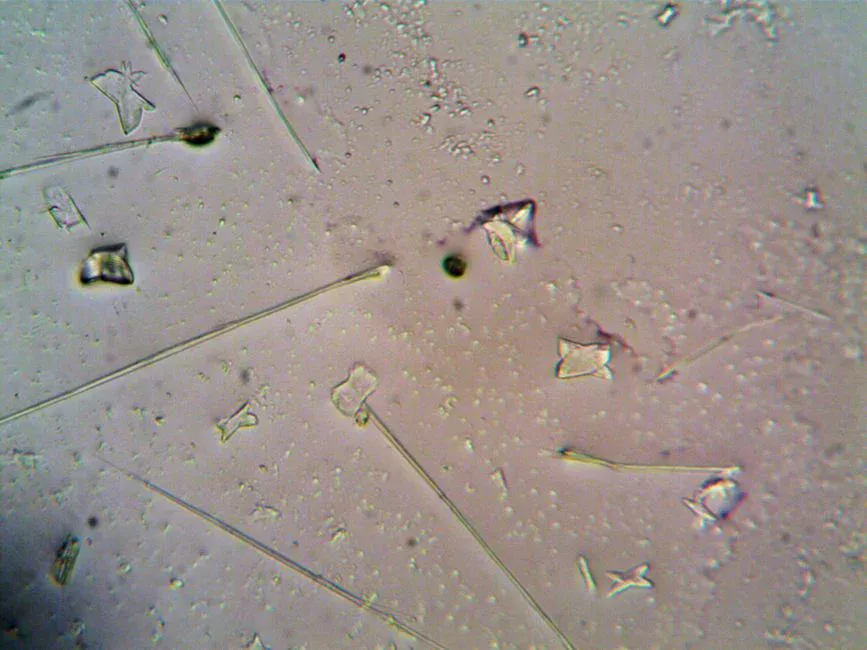
Microplastics in industrial wastewater are operationally defined as synthetic polymer fragments, fibers, and pellets spanning 0.001–5 mm, with the 1–100 µm band creating the most difficulty for conventional primary clarifiers and dissolved air flotation units designed for settleable solids. A 2024 study in Water, Air, & Soil Pollution (May 2025 publication date) confirmed that permanganate pre-oxidation and pre-chlorination significantly improve coagulation-sedimentation removal of microplastics, while the 2019 Molecules membrane review (doi:10.3390/molecules24224148) established MBR and RO as the most reliable barriers for particles below 10 µm. These two papers are the strongest modern anchors an engineer can cite when specifying a removal train.
Discharge scrutiny has tightened across textile, plastics manufacturing, tire wear, food packaging, and cosmetics facilities because microplastic fiber and pellet loads are now traceable to source in most receiving-water monitoring programs. A plant that returned compliant BOD and TSS numbers in 2022 can still be flagged in 2026 for an unregulated but increasingly enforced microplastic load. For a process engineer evaluating capital projects this year, the question is no longer whether to add a microplastics stage, but where in the existing train it slots in and what particle size window it must hit.
The Six Core Technologies for Industrial Microplastics Removal
Coagulation-sedimentation with permanganate pre-oxidation is the workhorse for the 100–1,000 µm range. The 2024 Water, Air, & Soil Pollution study showed that permanganate oxidizes the organic surface coatings on polyethylene and polypropylene particles, which improves floc formation; pre-chlorination then enhances aggregation so the microplastic-laden floc settles with conventional clarifier geometry. Removal gains were reported relative to alum-only baselines, though exact percentage improvements vary with influent characteristics and dose. A PLC-controlled coagulant and permanganate dosing system is the practical hardware pairing for this step in 2026.
Dissolved air flotation (DAF) targets buoyant microplastics and fibers that refuse to settle, which is the typical failure mode for textile microplastic fiber removal and for plastic wash-water streams carrying low-density fragments. A industrial DAF micro-bubble flotation system attaches 20–80 µm micro-bubbles to particle surfaces and floats them into the surface sludge blanket, removing particles in the 50–500 µm window efficiently when surface loading rates stay under roughly 10 m³/m²·h.
MBR membrane bioreactors combine a 0.1 µm PVDF submerged membrane with an activated sludge basin, where biological floc captures sub-10 µm particles that primary treatment misses. A submerged MBR membrane bioreactor with 0.1 µm PVDF filtration is the standard 2026 configuration for the 0.1–10 µm window, and the DF series flat sheet membrane module with 0.1 µm pore size is the typical replacement element. The 2019 Molecules review identified MBR as the most reliable barrier between biological treatment and any downstream RO stage.
Reverse osmosis and tight nanofiltration reject particles at the sub-0.001 µm scale by semi-permeable membrane transport, but pretreatment is mandatory—a DAF or MBR guard stage is non-negotiable to keep RO membranes from fouling within weeks. RO is the technology of choice when the discharge target is reuse-quality or when the plant discharges into a sensitive receiving water where any sub-micron fiber or fragment must be eliminated.
Bio-electrochemical systems (BES)—microbial fuel cells that degrade microplastics at the anode—are documented in a 2024 ScienceDirect review as an emerging concept. Treat BES as research-stage in 2026: pilot data exists, but no commercial supplier is offering a turnkey unit for industrial flows in the 10–500 m³/day range that an EPC procurement lead can specify today.
Sorption technologies using functionalized adsorbents and ion-exchange resins were characterized in a 2023 ResearchGate study as a niche polishing option. They remain under development for broad industrial deployment and are best treated as a tertiary safety net rather than a primary removal step.
Performance Comparison: Removal Rate, Particle Size Window, and Cost Class
The table below compares all six technologies using the 2019 Molecules membrane review and the 2024 Water, Air, & Soil Pollution coagulation-sedimentation paper as the citation backbone. Where a specific percentage is not directly given in the cited literature, the cell is marked as mechanism-dependent or influent-specific rather than fabricated.
| Technology | Effective particle size range | Typical removal rate class | Footprint | CAPEX class (10–500 m³/d plant) | Best-fit influent |
|---|---|---|---|---|---|
| Coagulation-sedimentation + permanganate pre-oxidation | 100–1,000 µm | High (mechanism-dependent per 2024 WA&SP study) | Medium | Low | Textile, food packaging mixed streams |
| Dissolved air flotation (DAF) | 50–500 µm (buoyant) | High for buoyant fibers and pellets | Small | Low | Textile microplastic fiber, plastic wash water |
| MBR (0.1 µm PVDF) | 0.1–10 µm | High (per 2019 Molecules review) | Medium | Medium | Municipal-style mixed influent, textile effluent |
| Ultrafiltration | 0.01–0.1 µm | High, influent-specific | Medium | Medium-High | Polishing after MBR or biological step |
| Reverse osmosis / nanofiltration | < 0.001 µm | Very high (per 2019 Molecules review) | Medium | High | Reuse-quality or sensitive discharge |
| Bio-electrochemical (BES) | Mechanism-dependent | Research-stage, not commercial in 2026 | Large pilot footprint | N/A in 2026 | Pilot only |
| Sorption (functionalized resins) | Sub-micron polishing | Niche, influent-specific | Small (polishing) | Low-Medium | Tertiary safety net |
Two patterns dominate. First, no single technology covers the full 0.001–5 mm range—every working 2026 train is a staged combination. Second, the CAPEX ordering DAF < coagulation < MBR < RO is consistent across plants in the 10–500 m³/day range, and the cost step from MBR to RO is the single largest capital jump in the train.
How to Match a Microplastics Removal Train to Your Industrial Process
Matching the removal train to the specific waste stream ensures optimal particle capture and minimizes membrane fouling. Step 1 — Characterize the influent. Fiber-heavy streams (textile, carpet, laundry) need a DAF guard up front because fibers float and foul downstream membranes. Pellet-heavy streams (plastics manufacturing, resin handling) respond well to coagulation-sedimentation with permanganate pre-oxidation. Mixed streams (food packaging, cosmetics) usually need both stages in series.
Step 2 — Define the discharge target. Surface water discharge to a non-sensitive receiving body can often be met with coagulation plus MBR alone. Reuse-quality, or discharge to a sensitive watershed, forces an RO or tight nanofiltration polish at the end of the train.
Step 3 — Integrate with existing biology. An MBR drops into an existing activated sludge basin without a secondary clarifier, which is a major civil-work saving for retrofits. DAF slots ahead of biological stages as a fiber and FOG guard and protects the biology from loading shocks that would otherwise kill nitrification.
Step 4 — Address sludge handling. Captured microplastics concentrate in the waste sludge, and that sludge is the final compliance problem. A filter press for microplastic-laden sludge dewatering brings the cake to a handleable solids content for landfill or incineration disposal, and it closes the mass balance on the microplastics you have removed from the water side.
Cost Reality Check: Where the 2026 CAPEX and OPEX Actually Land
For a 10–500 m³/day plant, the relative CAPEX ordering is DAF < coagulation-sedimentation < MBR < RO, with RO typically doubling or tripling the total equipment cost of a coagulation-plus-MBR train. OPEX is dominated by three drivers: chemical consumption (coagulant, permanganate, and pre-chlorine dosing), membrane cleaning and replacement cycles (MBR every 3–5 years, RO more frequently under heavy fouling loads), and sludge disposal, which is universal across every technology. For detailed operating cost numbers, the 2026 OPEX breakdown for industrial wastewater plants and the membrane replacement cost optimization for 2026 engineering guide cover line-item budgets for each stage.
Frequently Asked Questions
What is the best technology for microplastics removal in 2026? There is no single best technology. The 2026 working answer is a staged train: DAF or coagulation-sedimentation with permanganate pre-oxidation for the 100–1,000 µm band, MBR for the 0.1–10 µm band, and reverse osmosis for the sub-micron fraction when reuse-quality is required.
How effective is MBR for microplastics removal? The 2019 Molecules membrane review identified MBR with 0.1 µm PVDF membranes as the most reliable barrier for the 0.1–10 µm window, with biological floc providing additional capture of sub-micron particles that purely physical membranes would miss.
Can coagulation alone remove microplastics from industrial wastewater? Coagulation-sedimentation handles the larger 100–1,000 µm fraction, and the 2024 Water, Air, & Soil Pollution study showed that permanganate pre-oxidation plus pre-chlorination significantly improves removal by oxidizing surface coatings and enhancing floc aggregation. It is not sufficient on its own for sub-100 µm particles.
Is reverse osmosis necessary for microplastic compliance? RO is necessary only when the discharge target is reuse-quality or a highly sensitive receiving water. For standard surface water discharge, MBR alone often meets the practical requirement, but RO remains the only technology that rejects the sub-0.001 µm fraction with high confidence.
How do you handle the microplastic-laden sludge after removal? Captured microplastics concentrate in the waste activated sludge or DAF float. Dewatering with a plate and frame filter press raises the cake solids to a handleable content for landfill or incineration, which closes the mass balance on the microplastics removed from the water side. For related biological-stage selection, the MBBR vs IFAS engineering comparison for 2026 is the natural next read.