Why Legionella and Biofouling Are the Cooling Tower Risks That Take Data Centers Down
Legionnaires' disease cases in the United States have increased more than 400% since 2000, according to CDC surveillance data cited in industry reporting (ChemREADY, 2026). For a data center running 24/7 under constant thermal load, that statistic is a direct liability line on the balance sheet. Heat exchanger failures run $50,000-$200,000 per event, Legionella remediation averages $30,000-$100,000, and a 15% scale-driven efficiency loss on a 1,000-ton chiller adds $30,000-$60,000 per year in energy costs (ChemREADY, 2026).
Biofilm is the upstream failure mode most operators never see forming. The U.S. DOE has documented that 1/32 inch of scale raises chiller energy consumption 10-15%, and biofilm accumulation is the precursor that lets mineral scale bond to heat exchanger surfaces (ChemREADY, 2026). A 2026 metataxonomic study of two industrial cooling towers in Brazil identified 14 bacterial genera, with Bacillus spp. representing 60% of cultured isolates and Acinetobacter spp. representing 14% — both heavy biofilm formers — alongside Legionella detected via 16S rRNA amplicon sequencing (Dias-Souza et al., World J Microbiol Biotechnol, 2026-07-14).
Biofilm cuts cooling capacity precisely when demand peaks. On the hottest days, when IT load is highest, fouled fill media reduces evaporative efficiency, and the chiller has less margin. The result is derated capacity in the exact operating window where redundancy was supposed to protect uptime.
What a 2026 Cooling Tower Microbiome Study Tells Us About Single-Chemistry Programs
A July 2026 study by Dias-Souza and colleagues at the Universidade Federal de Minas Gerais combined culture-based isolation with 16S rRNA metataxonomic sequencing on two industrial cooling towers in Brazil. The work identified 22 bacterial species across 14 genera, with Bacillus (60%), Acinetobacter (14%), Pseudomonas, Serratia, and Ochrobactrum dominating the cultivable fraction (Dias-Souza et al., 2026). Metataxonomic analysis revealed broader, non-culturable families including Burkholderiaceae, Comamonadaceae, and Sphingomonadaceae — all three are tied to biofilm resilience and persistence under oxidative stress.
The antimicrobial susceptibility results matter even though antibiotics are not dosed in cooling water. The isolates showed high resistance to β-lactams and nitrofurantoin, with meropenem the most effective agent (Dias-Souza et al., 2026). β-lactam and nitrofurantoin resistance patterns are documented cross-resistance markers with quaternary ammonium compounds — a class that includes common non-oxidizing biocides used in cooling tower programs. A single-chemistry oxidizer program selects for organisms that are pre-adapted to survive the secondary biocide rotation.
The most actionable finding for data center operators concerns source water. CTw 2 in the study, fed by untreated industrial and domestic effluent, exhibited higher bacterial richness than CTw 1, which received treated secondary effluent. A data center pulling from a reclaim-fed or lower-quality makeup source cannot assume conventional chlorination-dechlorination will control biological loading. Multi-barrier treatment — oxidation plus side-stream removal — is the defensible response.
Treatment Technologies Compared: Oxidizers, Non-Oxidizers, UV, Ozone, and Side-Stream Filtration
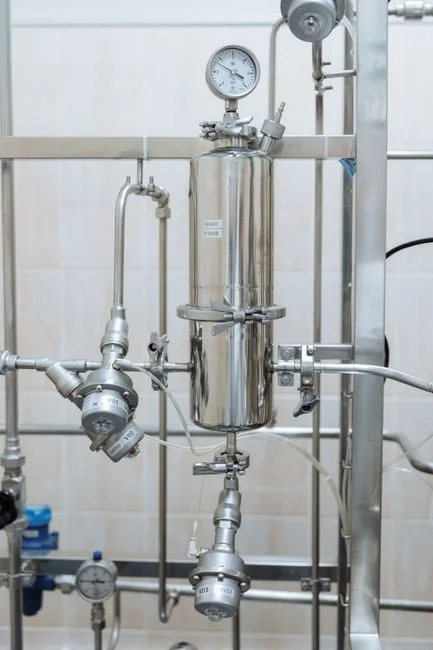
A 2026 cooling tower program is built from five core building blocks. The table below compares them on the parameters that drive Legionella control and biofilm management in hyperscale and mid-market data center service water.
| Technology | Legionella log-reduction (typical) | Biofilm control mechanism | ORP target (mV) | Free/total residual (mg/L) | Contact time | By-product profile | Compatibility with alkaline / scale-inhibitor chemistry | Relative capital cost |
|---|---|---|---|---|---|---|---|---|
| Chlorine / Bromine | 2-3 log (planktonic) | Oxidation of cell membrane; limited biofilm penetration | 650-750 | 0.5-1.0 free Cl2 | Minutes (basin contact) | THMs, HAAs | Poor above pH 8.0 (chlorine loses ~80% kill rate) | Low |
| Chlorine Dioxide (ClO2) | 3-4 log | Oxidation; penetrates biofilm matrix via selective reactivity | 600-750 | 0.1-0.5 total | Minutes | Chlorite, chlorate (EPA-regulated) | Strong across pH 7-9 | Moderate |
| Ozone | 3-5 log | Direct oxidation; strong biofilm disruption | 800-900 (sidestream) | 0.1-0.3 (residual dissipates) | Seconds (sidestream) | None persistent; bromate risk in high-bromide water | Strong; degrades some polymers | Moderate-high |
| UV side-stream | 2-4 log (effective vs. chlorine-resistant organisms) | DNA damage in passing cells; no residual | N/A (no residual) | None | Seconds (lamp exposure) | None (no DBPs) | Fully compatible | Low-moderate |
| Ultrafiltration (UF) side-stream | 3-4 log (physical removal of Legionella + amoebae hosts) | Physical removal of biofilm carriers and protozoan hosts | N/A | None | Continuous side-stream | None (concentrate stream) | Fully compatible | Moderate |
Three technology-specific notes matter when specifying equipment. An industrial-scale on-site chlorine dioxide generator in the 50-20,000 g/h range maintains efficacy across pH 7-9, where free chlorine loses roughly 80% of its kill rate above pH 8.0 — a meaningful advantage for data centers running alkaline scale-inhibitor programs at high cycles of concentration. A UV-C side-stream sterilizer is the standard chemical-free polish for chlorine-resistant organisms and produces no disinfection by-products. A 0.03 micron PVDF ultrafiltration side-stream physically removes Legionella-containing amoebae and biofilm carriers before they colonize fill media — and is the only barrier that takes organisms out of the loop entirely rather than killing them in place.
Non-oxidizing biocide rotation is the second leg of a defensible chemistry program. Rotate at least two chemistries — typically isothiazolone and DBNPA — on a 4-6 week cycle. Without rotation, biofilm populations rebound within roughly 30 days because the surviving community carries the resistance profile documented in the 2026 metataxonomic study. A PLC-controlled biocide and biodispersant dosing skid tied to conductivity and ORP signals makes rotation automatic rather than calendar-driven.
Matching the System to the Site: A Decision Framework by Data Center Size and Source Water
Selecting a treatment train without anchoring it to site size and source water is a common specification error. Use the tiered framework below as a starting point.
- Tier 1 — Edge and mid-market data centers (<5 MW) on municipal potable water: minimum spec is ClO2 or chlorine plus non-oxidizing biocide rotation, monthly Legionella qPCR testing, and a written ASHRAE 188 WMP. Cycles of concentration held at 4-6.
- Tier 2 — Hyperscale-adjacent facilities (5-50 MW) on blended or reclaimed source water: add side-stream ultrafiltration, continuous ORP monitoring at 650-750 mV, and quarterly heterotrophic plate count trending. The Dias-Souza et al. (2026) finding that lower-quality effluent produced higher bacterial richness applies here — multi-barrier is the only defensible posture.
- Tier 3 — Mega-scale AI training campuses (>50 MW) with high cycling and reclaimed water: add UV side-stream, automated biodispersant injection, on-site ATP testing for biofilm monitoring, and continuous Legionella qPCR on a defined schedule. Cycles of concentration may run 8-12 to reduce water consumption, which raises the stakes on biological control.
For broader facility-water context, the RO design parameter engineering guide covers makeup-water pretreatment for sites pulling from reclaim, and the data hall process wastewater treatment guide documents how sister facilities are managing compliance in regulated jurisdictions.
ASHRAE 188 Compliance: What the Written Water Management Plan Must Contain
ANSI/ASHRAE Standard 188 — Legionellosis: Risk Management for Building Water Systems — applies to virtually every data center with an open cooling tower (ChemREADY, 2026). Compliance requires a written Water Management Plan (WMP) with four documented elements: (1) a Legionella risk identification for each water system, (2) established control measures with defined control limits, (3) validation that those control measures are effective, and (4) records plus a designated responsible person.
For cooling towers, actionable control limits typically include pH 7.0-9.0, conductivity as the proxy for cycles of concentration, free residual oxidizer held at the chemistry-specific target, and heterotrophic plate count (HPC) as the biological trigger. When HPC exceeds the threshold defined in the WMP, ASHRAE 188 requires corrective action — typically an immediate biocide slug dose, system hyperchlorination, and a retest within 48 hours (ChemREADY, 2026). A documented WMP separates a defensible position from a liability exposure if Legionella is detected in an employee or contractor.
Cost and ROI: What a Managed Program Runs in 2026
A managed cooling tower water treatment program for a data center typically runs $800-$3,000 per month, covering chemical supply, monthly or bi-monthly field service visits, water analysis, and compliance documentation (ChemREADY, 2026). The range scales with system size, source water quality, and monitoring level.
Against that baseline, the cost of inaction is well quantified. A single heat exchanger failure runs $50,000-$200,000. Legionella remediation averages $30,000-$100,000. A 15% scale-driven efficiency loss on a 1,000-ton chiller adds $30,000-$60,000 per year (ChemREADY, 2026). The ROI on a managed program runs 5-50x depending on the facility size. The relevant framing for a CFO is uptime insurance, not facilities overhead.
Frequently Asked Questions
What is the minimum treatment program a US data center needs to control Legionella in 2026?
The minimum defensible program is an oxidizing biocide (chlorine, bromine, or chlorine dioxide) plus a non-oxidizing biocide rotation on a 4-6 week cycle, side-stream filtration, and an ASHRAE 188 Water Management Plan with documented control limits. A 2026 metataxonomic study confirmed that single-chemistry programs select for biofilm-resilient, antimicrobial-resistant populations, making multi-barrier treatment the standard (Dias-Souza et al., 2026).
How much does a managed cooling tower water treatment program cost per month?
A managed program typically runs $800-$3,000 per month, depending on system size, source water quality, and monitoring scope, and includes chemical supply, field service visits, water analysis, and compliance documentation (ChemREADY, 2026). This is roughly 1-4% of the cost of a single heat exchanger failure, which runs $50,000-$200,000 per event.