What a Tube Settler Is and Why It Works
Tube settlers are bundles of inclined (typically 55–60°) or essentially horizontal parallel-channel modules installed inside a sedimentation basin to apply shallow-depth settling theory. They increase effective settling area by more than 80% compared with conventional basins of equal flow capacity, and that single number is the reason they have displaced conventional rectangular clarifiers in most retrofits since the 1980s (JMS, 2026). Steeply inclined PVC modules dominate the commercial market, while horizontal configurations are governed by the Fadel Model with a 40% tube-depth sludge-storage safety factor.
The physics dates to Allen Hazen's 1904 finding that sedimentation is a function of basin surface area and is independent of detention time — a result that lets the designer substitute shallow settling depth for basin length (JMS, 2026). A tube settler capitalises on that by forcing the fluid to travel through a stack of narrow channels where particles have only centimetres to fall before striking a surface. The lower size limit a designer must accept is roughly 25 µm: particles finer than that do not settle effectively in tube modules because turbulence and viscous drag dominate over gravitational settling (per chemicalpackings.com, 2026). If your influent carries a significant fraction below 25 µm, you need coagulation, flocculation, or a pre-treatment step ahead of the settler, not a bigger tube module.
Horizontal vs Steeply Inclined Configurations
Iowa State University's Fadel Model research classifies tube settlers into two configurations: essentially horizontal and steeply inclined, with most commercial units on the market being steeply inclined (Iowa State, Fadel Model). The distinction is not cosmetic — it dictates sludge-handling logic, the angle of the support structure, and the inlet/outlet geometry your mechanical designer will draw.
Steeply inclined tubes (55–60°) use the tube wall as both a settling surface and a self-cleaning slide. Particles settle onto the underside of the inclined surface and slide down into a hopper, so sludge does not accumulate inside the tube during normal service. This is why inclined modules are the default in drinking-water plants and most industrial retrofits where sludge is removed continuously from the basin floor.
Horizontal tubes behave differently. The Fadel Model found that horizontal tubes can store sludge up to 40% of tube depth as a design safety factor; experiments showed no performance degradation up to 53% tube depth, but 40% is the recommended factor of safety (Iowa State, Fadel Model). That tolerance makes horizontal modules the right answer in basins with intermittent sludge removal, irregular bottom geometry, or in retrofit situations where the existing hopper layout cannot accept steeply inclined modules. The Fadel Model also proposes a specific inlet and outlet arrangement for horizontal tubes that the designer should reference directly when laying out a new basin.
Key Design Parameters and Sizing Inputs
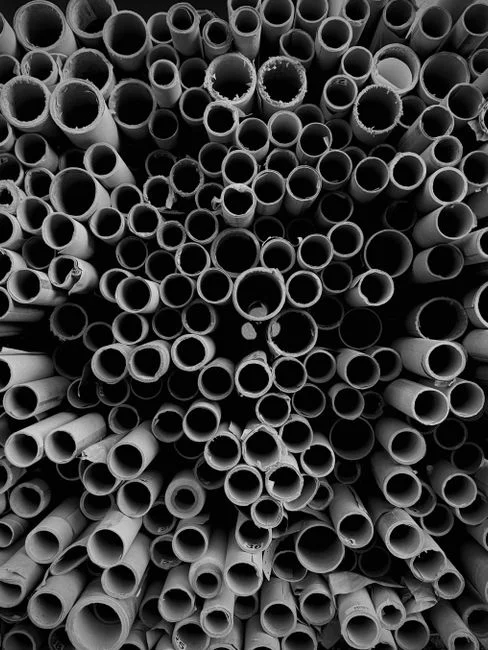
Six parameters govern tube-settler sizing: tube inclination angle, channel (hydraulic) distance, tube length, tube diameter (or equivalent cross-section), spacing, and projected surface area per unit volume (m²/m³). The LS50 reference module uses a 45 mm channel distance and delivers a projected surface area of 3.3–3.5 ft²/ft³, which is roughly 11 m²/m³ (per chemicalpackings.com, 2026). That projected-area-per-volume figure is the single number that converts a flow requirement into a physical module volume.
Off-the-shelf PVC tube modules cap out at 41 in (1.04 m) maximum vertical module height, and that physical limit sets a hydraulic ceiling of 3.5 gpm/ft² (about 8.5 m/h) on the application rate (per chemicalpackings.com, 2026). Once you exceed 3.5 gpm/ft² you have either specified the wrong module or you need to step up to a plate settler. Engineered lamella clarifier designs that combine flocculation and sludge recirculation with the inclined plates can sustain surface loading rates of 20–40 m/h — an order of magnitude higher than the off-the-shelf ceiling — and the HydropureWater high-efficiency sedimentation tank (lamella clarifier) is one example of that integrated approach.
| Parameter | Typical Value (LS50 reference module) | Engineering Note |
|---|---|---|
| Channel (hydraulic) distance | 45 mm | Sets Reynolds number regime for settling |
| Inclination angle | 55–60° | Self-cleaning slide; below 50° risks sludge hold-up |
| Maximum module vertical height | 1.04 m (41 in) | Off-the-shelf PVC ceiling |
| Projected surface area | 11 m²/m³ (3.3–3.5 ft²/ft³) | Converts area to module volume |
| Application rate (off-the-shelf) | 3.5 gpm/ft² ≈ 8.5 m/h | Hydraulic ceiling for stand-alone PVC modules |
| Surface loading (engineered lamella) | 20–40 m/h | Only with integrated flocculation + sludge recirculation |
| Lower particle size limit | ~25 µm | Below this, pre-treat or accept poor removal |
| Horizontal tube sludge storage safety factor | 40% of tube depth | Fadel Model recommendation (53% demonstrated) |
Sizing Worked Example: 3,785 m³/d Drinking Water Plant
Stokes' Law gives the settling velocity of a particle under laminar flow:
vs = (ρp − ρf) · d² · g / (18μ)
For a 50 µm sand particle with a 200 kg/m³ density difference relative to water, the calculated settling velocity is 1.67 m/h (per chemicalpackings.com, 2026). Real basins never operate at the theoretical velocity, so the standard engineering practice is to apply a safety factor of 2, giving an adjusted settling velocity of 0.835 m/h. That safety factor absorbs flow variation, particle–particle interaction, short-circuiting, and temperature swings in the feed.
With a design flow of 3,785 m³/d and the adjusted velocity of 0.835 m/h, the total projected settling area required is:
189 m² = 3,785 m³/d ÷ 0.835 m/h
Convert area to module volume using the LS50-class projected area of 11 m²/m³:
17.2 m³ = 189 m² ÷ 11 m²/m³
That 17.2 m³ of LS50-class modules is the figure you sanity-check against your basin dimensions. At a typical installed bulk density of around 40 kg/m³ for PVC modules, the dry shipping weight is roughly 700 kg, light enough to place with a two-person crew — which is one of the operational reasons tube settlers win most retrofits over plate settlers. Sanity-check the footprint: 17.2 m³ of modules at a 0.6 m installed pack height covers a projected footprint of about 28 m², well within the range of a small municipal basin.
Tube Settlers vs Plate Settlers: Choosing the Right Lamella
Both technologies deliver the >80% surface-area reduction against conventional basins (JMS, 2026), but the effective settling area differs between them, and tube application rates can be converted to an equivalent plate rate using projected surface area (per chemicalpackings.com, 2026). The decision between them is driven by basin depth, CAPEX, hydraulic load, and corrosion service — not by efficiency alone.
Capital cost is the first split. Plate settlers run roughly 2–3× the cost of tube settlers and require heavy lifting equipment at install; PVC tube modules are light enough for a two-person crew to carry into an existing basin (per chemicalpackings.com, 2026). Depth is the second. Tube modules are capped at 41 in (1.04 m) vertical height, so they hit the 3.5 gpm/ft² (≈8.5 m/h) ceiling regardless of basin depth. Plate settlers have no equivalent module-height limit, so they suit deeper basins and higher unit loads.
Footprint evidence from a real retrofit: the Bloomington, IN water treatment plant upgrade replaced a tube-settler basin with a plate-settler basin of only one-third the footprint when site space was the binding constraint, and the new basin achieved identical effluent quality (JMS, 2026). That case is the clearest published evidence that plate settlers win on footprint when basin depth and hydraulic load are not limiting.
The decision rule to put in a spec: choose tube settlers when basin depth is shallow (under about 4 m), CAPEX is constrained, and the 3.5 gpm/ft² application-rate ceiling is not exceeded; choose plate settlers when basin depth, hydraulic load, or corrosive industrial service demands it. For integrated packages that combine coagulation, flocculation, and sedimentation in one skid, the JY series integrated water purification system is one engineered option.
| Selection Criterion | Tube Settler (PVC) | Plate Settler |
|---|---|---|
| CAPEX relative to each other | Baseline (1×) | 2–3× higher |
| Module install method | Two-person crew, no crane | Heavy lifting equipment required |
| Module vertical-height limit | 1.04 m (41 in) | No fixed module-height limit |
| Application-rate ceiling | 3.5 gpm/ft² (≈8.5 m/h) | Higher; scales with basin depth |
| Footprint for same flow | Larger (Bloomington case: 3× larger) | Compact (1/3 the tube footprint) |
| Service life | 20–25 years (PVC) | Longer; stainless or FRP construction |
| Industrial / corrosive service | Limited; PP or FRP required for abrasive feeds | Better; stainless or FRP standard |
Materials, Service Life, and Abrasive-Service Failure Modes
Standard tube-settler materials are PVC, stainless steel, and fiberglass, with PVC the default for drinking-water and municipal service (per chemicalpackings.com, 2026). With proper maintenance, PVC modules last 20–25 years, and only the PVC itself needs replacement at end of life — the support structure stays in place. UV degradation is the standard PVC failure mode in uncovered basins, so specify UV inhibitors in the PVC formulation and add protective surface grating; both are stock options on most commercial modules (per chemicalpackings.com, 2026).
The municipal service-life number does not transfer to abrasive industrial feeds. Aqua Equip Technologies (AET) retrofitted a sedimentation basin for coal and sand removal where the prior PVC tube settlers were heavily damaged after only 5 years of operation because of high solids concentrations and abrasive particles, and were replaced with equidistant polypropylene modules (AET, 2026). The rule for a buyer writing a spec: switch to polypropylene or FRP whenever influent TSS is consistently high or contains sharp, angular particles — mining slurries, coal-handling sumps, sand-laden stormwater, and primary metal-finishing wastewater are the obvious cases. If you are also sizing dewatering downstream of the settler, the plate and frame filter press spec pairs naturally with the tube-settler envelope.
For a deeper look at retrofitting abrasive-service clarification in a mining context, the DAF or Clarifier for Mining Wastewater in York, US: 2026 Guide covers the DAF-vs-clarifier decision and the upstream/downstream equipment chain.
Installation Sequence and Common Commissioning Mistakes
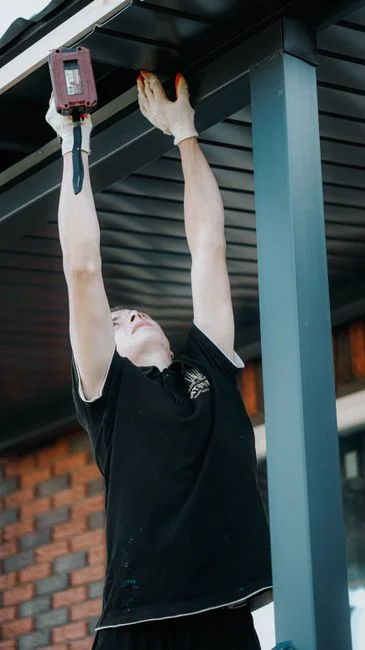
The seven-step install sequence drawn from the commercial install guide is: site survey, tools and materials preparation, bracket anchoring to the basin wall, module assembly, module mounting, level and angle calibration, inlet and outlet piping, and trial run (per chemicalpackings.com, 2026). The single most common error is modules not being levelled or the inclination angle not held to design tolerance, which short-circuits flow across the top of the pack and silently reduces effective settling area by 30–50%.
Inlet and outlet arrangements must distribute flow evenly across the projected area. For horizontal tubes, the Fadel Model inlet/outlet arrangement is the reference geometry (Iowa State, Fadel Model), and a designer who departs from it is implicitly accepting an unknown hydraulic penalty. Tube settlers are normally retrofitted into existing basins, and the basin is often kept in service for short windows during the change-out; sequence isolation and bypass pumping belong in the project schedule from day one, not as a field-level decision. For more on tying the tube settler into a broader retrofit package, the Disc Filter Retrofit and Upgrade in 2026: Engineering Guide covers a downstream filtration upgrade that often follows a settler retrofit.
Frequently Asked Questions
What does a tube settler actually do in a water treatment plant?
A tube settler increases the effective settling area of a sedimentation basin by more than 80% by forcing water through stacks of narrow, inclined or horizontal channels, allowing particles down to roughly 25 µm to settle out in a fraction of the footprint of a conventional basin (per chemicalpackings.com, 2026).
When should a designer choose tube settlers over plate settlers?
Choose tube settlers when basin depth is under about 4 m, CAPEX is constrained, and the design application rate stays under 3.5 gpm/ft² (≈8.5 m/h); choose plate settlers when basin depth, hydraulic load, or corrosive industrial service demands a heavier construction (per chemicalpackings.com, 2026; JMS, 2026).
What is the typical service life of a PVC tube settler?
PVC modules last 20–25 years in municipal drinking-water service with proper maintenance, with only the PVC media needing replacement at end of life, not the support structure (per chemicalpackings.com, 2026).
What material should be specified for abrasive industrial wastewater?
Specify polypropylene or FRP modules instead of PVC whenever influent TSS is consistently high or contains sharp, abrasive particles — mining, coal, sand, and primary metal-finishing service have all documented PVC failures inside 5 years under those conditions (AET, 2026).