What Makes a Level Sensor 'IIoT' in a Water Plant
An IIoT level sensor is a level-measurement element (radar, ultrasonic, submersible hydrostatic, or guided-wave) paired with an Industrial IoT edge gateway that publishes readings over IP-native protocols such as OPC UA, MQTT, or Modbus TCP to SCADA, historians, and cloud analytics. The gateway separates an IIoT device from a 4-20 mA analog transmitter that only reaches a local PLC. In practice, the bottleneck at most water utilities is data fragmentation—a lift station may have a Siemens S7-1200 on pump control, a Schneider Modicon on flow valves, and a Modbus RTU analyzer on chlorine residual, each locked in its own silo (per vNode's IIoT water utilities monitoring guide, 2025). Real-time, IP-published level data is operationally different from a periodic manual dip reading: the KETOS water-efficiency brief (2025) cites an average 9,400 gal/home/yr lost to leaks, a figure that only becomes actionable when levels and flows are published continuously to an analytics layer. Industrial sensors are specified for deterministic polling (typically 1-10 s), operating temperatures from -40 °C to +85 °C, and a 10+ year field lifecycle rather than the 2-3 year refresh cycle of a domestic smart device.
The Four Sensor Technologies Used in Plant Duty
Four measurement principles dominate water-plant specifications: 80 GHz FMCW non-contact radar, non-contact ultrasonic, submersible hydrostatic, and guided-wave radar (TDR). The following breakdown details how these technologies perform under specific plant conditions.
ABM Sensor's water and wastewater application note (2025) frames the three dominant categories as explosion-proof radar, non-contact ultrasonic, and submersible ultrasonic, with guided-wave radar sitting alongside for narrow-tank and agitated-vessel duty. The right choice depends on the application point, not on a vendor's flagship product. Non-contact 80 GHz radar is the default for chemical day tanks and clarifier sludge blankets because the narrow beam (~8° at 5 m) tolerates foam, vapors, and turbulence that would defeat an ultrasonic transducer; typical accuracy is ±2 mm at 10 m with a 0.5 m near-blank limitation. Non-contact ultrasonic remains the cheapest option for open-channel flow measurement and stormwater wet wells where the medium is clean, but it fails in heavy foam, vacuum, or above 70 °C and needs a stilling well for turbulent surfaces. Submersible hydrostatic probes (typically a 4-20 mA piezoresistive cell behind a stainless diaphragm) are the workhorse for pump-station wet wells, with ±0.25% FS accuracy over 0-10 m ranges, but the diaphragm clogs with rags—a routine failure mode at lift stations fitted with a rotary mechanical bar screen upstream. Guided-wave radar (TDR) shines in narrow chemical tanks and agitated reactors because the probe-guided pulse ignores foam entirely and resolves to ±5 mm over 6 m. Indicative unit price bands: ultrasonic $400-900, hydrostatic $300-700, 80 GHz radar $1,800-3,500, guided-wave radar $1,500-2,800 per measurement point.
| Technology | Typical accuracy | Max range | Foam / vapor tolerance | Best-fit application | Failure mode to watch |
|---|---|---|---|---|---|
| 80 GHz FMCW radar | ±2 mm @ 10 m | 30 m | High | Sludge blanket, chemical tank | < 0.5 m dead band |
| Ultrasonic (non-contact) | ±0.25% FS | 15 m | Low | Open channel, clean wet well | Vacuum, heavy foam, > 70 °C |
| Submersible hydrostatic | ±0.25% FS | 10 m | N/A (wetted) | Pump-station wet well | Ragging, diaphragm clog |
| Guided-wave radar (TDR) | ±5 mm | 6 m (probe) | Very high | Narrow / agitated chemical tank | Coating buildup on probe |
Plant Architecture: From Sensor to SCADA to Cloud

The signal path in a water-plant IIoT retrofit has four tiers: field sensor, IIoT edge gateway, SCADA/historian, and cloud analytics/ERP in parallel. Modern architectures leverage these tiers to bridge the gap between legacy hardware and modern data platforms.
The vNode IIoT water utilities reference architecture (2025) documents this layout, with a single gateway reading a Siemens S7-300, a Schneider Modicon, and Modbus RTU analyzers simultaneously, then publishing to SCADA, AWS IoT, and an ERP REST endpoint from one configuration. The protocols a water plant will encounter on day one are Modbus RTU/TCP on legacy sites, OPC UA on modern SCADA (WinCC, FactoryTalk), MQTT with Sparkplug B for cloud, PROFINET inside Siemens cells, and EtherNet/IP inside Rockwell cells. Picking a gateway that speaks all of them natively collapses the data silos that prevent centralized reporting. Store-and-forward buffering is the underrated feature. In vNode's 40-station / 200 km lift-station scenario, each site runs 4G cellular with regular weather-related dropouts; without local buffering every outage creates a regulatory data gap, manual historian patching, and missed alarms. With buffering, the gateway holds 24-72 h of process data on flash and replays it chronologically the moment the link returns. A worked example: one 1 Hz level tag at a wet well generates ~3.6 MB/day, so a 16 GB industrial SD card comfortably buffers 8-10 years of lift-station data even at full loss of uplink. On the dosing side, a PLC-controlled chemical dosing skid feeds the same gateway, so reagent flows and tank levels arrive at the historian on a single unified time series.
| Protocol | Typical layer | Where found in a water plant | Role in IIoT retrofit |
|---|---|---|---|
| Modbus RTU / TCP | Field / SCADA | Legacy analyzers, VFDs, flow meters | Lowest-common-denominator read |
| OPC UA | SCADA / MES | Modern WinCC, FactoryTalk, PCS 7 | Secure SCADA hand-off |
| MQTT / Sparkplug B | Cloud / analytics | AWS IoT, Azure IoT Hub, historians | Lightweight cloud publish |
| PROFINET | Cell network | Siemens S7 PLCs | High-speed controller I/O |
| EtherNet/IP | Cell network | Rockwell ControlLogix | High-speed controller I/O |
Cybersecurity: What Oldsmar Changed for Procurement
The February 2021 Oldsmar, Florida water treatment plant intrusion — where an operator's screen was remotely manipulated to raise sodium hydroxide dosing ~110× above normal — made OT cyber a board-level priority for water utilities (per vNode's 2025 IIoT water guide, citing CISA Water and Wastewater Systems Sector guidance). Procurement teams now enforce strict standards to mitigate these risks across all connected hardware.
Four procurement clauses are now baseline: network segmentation between OT and IT, MFA on any remote access, cryptographically signed firmware on all gateways and sensors, and a hard ban on default credentials in vendor documentation. The minimum topology that satisfies the CISA water-sector checklist is a level-sensor VLAN on its own /24 subnet, a historian VLAN with controlled east-west traffic, and corporate IT on a third VLAN, with the gateway acting as a unidirectional diode (or at minimum a stateful firewall with explicit allowlists) between them. The Sci Rep 2025 study "Secure IIoT architecture with blockchain-enabled anomaly detection for water distribution CPS" (europepmc.org/article/PMC/PMC13542164) shows that a permissioned blockchain plus LSTM-autoencoder hybrid model, validated on the BATADAL, WADI, and SWaT datasets, outperforms classical ML baselines on tamper detection of sensor telemetry. The near-term spec implication is that gateways should expose a verifiable-provenance log (hash-chained or PKI-signed) so that an LSTM-based anomaly detector downstream can distinguish a genuine level excursion from a forged reading. Until that is plug-and-play, the practical floor is: signed firmware, MFA, segmented VLANs, and a gateway that logs every configuration change to a write-once audit trail.
Where IIoT Level Sensors Earn Their Keep in 2026
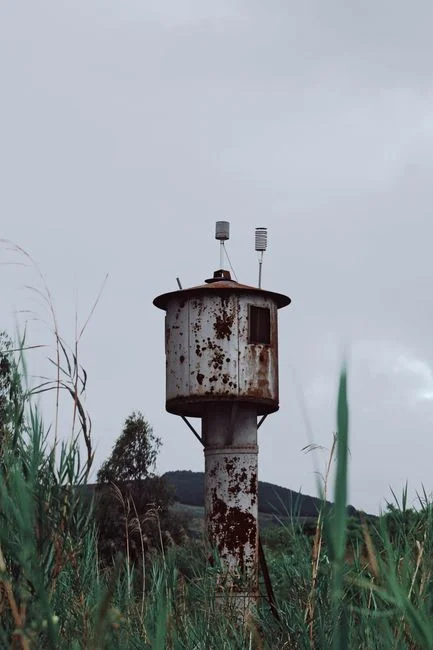
Five plant locations deliver immediate, measurable payback. Wet-well level drives pump runtime optimization and ragging alerts — KETOS's 9,400 gal/home/yr leak framing scales to a lift station's infiltration & inflow, where one stuck-float pump cycle can spill hundreds of gallons per hour. Clarifier sludge blanket uses 80 GHz radar with echo-curve diagnostics to detect bulking sludge before it washes over the weir, typically 2-4 hours earlier than a manual core sample. Chemical day tank uses guided-wave radar tied to a PLC-controlled chemical dosing skid for closed-loop reagent dosing, eliminating the day's last manual dip. RO feed tank uses a hydrostatic level sensor cross-checked against the feed flow totalizer — a rising level at constant flow is an early indicator of membrane biofouling on the upstream industrial RO system, and a useful companion read alongside the 2026 RO system design parameters guide. Potable water reservoir uses radar for compliance reporting under EPA Stage 2 rules and the EU Drinking Water Directive 98/83/EC, where the 20% efficiency ceiling reported by California agriculture (KETOS 2025) sets the realistic upper bound for utility-level gains. For inline monitoring of metals or nutrients alongside level, the online wastewater analyzer buyer's guide covers how analyzers sit on the same gateway VLAN.
Building the Business Case: Cost vs Avoided Incidents
The honest framing of an IIoT level-sensing retrofit is as insurance against overflow, dry-running, and regulatory non-compliance. Financial justifications for these projects rely on comparing installation costs against the high price of operational failures.
Order-of-magnitude CAPEX for a mid-size plant (10-30 measurement points, one site gateway, cloud analytics) lands at $40,000-120,000 in hardware plus 20-30% for installation and SCADA integration, against single-event avoided costs of $50,000-500,000 for a sanitary sewer overflow (SSO) consent-order fine, a fish-kill cleanup, or a single day of unmonitored discharge. The vNode 40-station, 200 km scenario (2025) is the scale at which store-and-forward buffering and unified data delivery start paying back vs custom SCADA programming, which typically runs $15,000-40,000 per interface. The one-line rule of thumb a finance counterpart will accept: one avoided SSO event typically costs more than the entire IIoT sensing retrofit on a mid-size plant, so the payback period is governed by the probability of an incident over the next 3-5 years rather than by efficiency savings. For plants already planning filter or screen upgrades, the disc filter retrofit guide shows how to bundle the gateway and VLAN work into a single capital window.
Frequently Asked Questions
What protocols should an IIoT level sensor gateway speak for a water plant?
An IIoT gateway in a water plant should speak Modbus RTU/TCP for legacy analyzers, OPC UA for modern SCADA hand-off, and MQTT with Sparkplug B for cloud publish; PROFINET and EtherNet/IP are added for Siemens and Rockwell cells (per vNode's 2025 IIoT water utilities guide).
Which level sensor type is best for a pump-station wet well?
A submersible hydrostatic probe with ±0.25% FS accuracy over
Frequently Asked Questions
What is the difference between an IIoT level sensor and a regular smart level sensor?
While a standard smart level sensor typically utilizes a 4-20mA analog signal or basic HART protocol for point-to-point communication with a local PLC, an IIoT level sensor is designed for direct-to-cloud or edge-to-enterprise data transmission. IIoT sensors incorporate embedded processing for local analytics and utilize wireless backhaul technologies like LoRaWAN, NB-IoT, or cellular LTE-M to bypass traditional local control loops, enabling real-time remote monitoring and predictive maintenance modeling.
Which level sensor technology is best for a wastewater wet well — radar or ultrasonic?
For wastewater wet wells, 80 GHz FMCW (Frequency Modulated Continuous Wave) radar is superior to ultrasonic technology. Ultrasonic sensors are prone to signal attenuation and false echoes caused by foam, vapor, and temperature gradients common in wet wells, whereas 80 GHz radar features a narrower beam angle and higher signal-to-noise ratio, allowing it to penetrate heavy foam and condensation without requiring frequent recalibration or cleaning.
What protocols do IIoT level sensors use to talk to SCADA?
IIoT level sensors typically bridge to SCADA systems using MQTT (Message Queuing Telemetry Transport) or OPC-UA (Open Platform Communications Unified Architecture). MQTT is favored for its lightweight publish-subscribe architecture, which is highly efficient for low-bandwidth cellular or satellite networks, while OPC-UA provides the necessary data modeling and encryption standards required for secure, interoperable communication between sensor gateways and centralized supervisory control systems.
How did the 2021 Oldsmar water plant hack change IIoT sensor cybersecurity requirements?
The Oldsmar incident accelerated the industry-wide adoption of the IEC 62443 cybersecurity standard for industrial automation and control systems. Post-2021 mandates now require IIoT sensors to feature hardware-based root of trust, mandatory multi-factor authentication (MFA) for remote configuration changes, and the disabling of all unnecessary physical ports or unencrypted protocols like Telnet. Furthermore, modern deployments require network segmentation, ensuring that sensor traffic is isolated from public-facing internet via encrypted VPN tunnels.
What is the typical payback period for retrofitting IIoT level sensing on an existing wastewater plant?
The payback period for retrofitting IIoT level sensors typically ranges from 18 to 30 months. This ROI is primarily driven by a 15-20% reduction in emergency vacuum truck call-outs due to overflow prevention, a 10% decrease in manual site inspection labor hours, and optimized pump runtime which lowers energy consumption. When accounting for the avoidance of regulatory fines associated with environmental non-compliance, many high-risk lift stations realize full cost recovery within the first two years of operation.