Why 2026 Biosolids Dewatering Selection Is a Logistics Problem, Not a Sticker-Price Problem
The most reliable biosolids dewatering methods in 2026 are plate-and-frame filter presses, decanter centrifuges, belt filter presses, and rotary presses, with plate-and-frame producing the driest cake at 25–35% solids versus 18–25% for centrifuges and belt presses. Selection is driven by the end-use route under 40 CFR Part 503, the cake-solids target, and the 20-year cost of hauling water — not purchase price. A 2026 peer-reviewed review (Pavez-Jara et al.) further confirms that conventional lab dewaterability indexes (CST, SRF) poorly predict full-scale performance, so procurement specifications should require centrifugation- or filtration-based bench testing plus pilot trials before final equipment selection.
U.S. POTWs generate roughly 0.16 lb of sewage sludge on a dry-weight basis per capita per day (Penn State Extension, 2025-08), which means a 300,000-person-equivalent plant produces tens of dry tons per day and a far larger wet tonnage that must be thickened, stabilized, dewatered, and routed to a legal end use. Every additional 5 percentage points of biosolids cake solids roughly halves the wet tonnage hauled to a landfill or applied to land, so the dewatering choice is dominated by transport and tipping-fee economics over a 20-year asset life — not by CAPEX.
Three end-use routes are legal in the U.S. under EPA's Standards for the Use or Disposal of Sewage Sludge: land application of biosolids, landfill surface disposal or co-disposal, and incineration in a sewage sludge incinerator (per 40 CFR Part 503). Each route imposes a different cake-solids target, a different pathogen reduction class (A or B), and a different compliance documentation burden. EPA collects Biosolids Annual Reports from approximately 2,350 facilities in 41 states, the District of Columbia, and the Tribes and territories where EPA is the permitting authority; nine states implement their own NPDES-authorized biosolids programs and are not in that count.
Raw combined primary, secondary, and tertiary sludge runs 1–4% total solids; thickening raises that to 5–6% solids; and mechanical dewatering at the end of the train produces cake in the 15–30% range, with plate-and-frame filter presses reaching 25–35% on well-conditioned feed (Penn State Extension, 2025-08). The thickening step is volumetric and precedes stabilization, while mechanical dewatering is the end-of-train step that determines wet tonnage hauled. A municipal sewage sludge treatment process designed backward from the end use — rather than forward from the headworks — is the procurement posture that survives a 20-year asset review.
The Four Phenomena That Decide Whether Any Dewatering Technology Will Hit Its Rated Cake Solids
Four critical phenomena occur during dewaterability: (1) mixing of sludge and conditioner, (2) suspension destabilization, (3) floc formation, and (4) compression and expression (Pavez-Jara et al., Reviews in Environmental Science and Bio/Technology, 2026-04). This four-phenomena framework is the lens a 2026 spec writer should use to judge every vendor's guarantee, because the same press can deliver 22% cake on one sludge and 32% on another depending on how those four phenomena play out at full scale.
Conventional lab indexes — capillary suction time (CST), sedimentation, specific resistance to filtration (SRF), and mixed dead-end techniques — only capture part of the dewatering process and generally fail to represent the compression and expression stages that determine the ultimate achievable solids concentration (Pavez-Jara et al., 2026-04). That is why a CST result of 12 seconds at bench scale can still produce a sticky, hard-to-release cake at full scale: the bench test under-represents the compression behavior of the actual sludge.
Sludge compressibility is the critical factor limiting the predictive capacity of conventional indexes (Pavez-Jara et al., 2026-04). The same review concludes that centrifugation, dead-end filtration, and combined centrifugation-filtration approaches are more suitable for laboratory-scale assessment because they better reproduce the compression behavior that determines final cake solids.
Implication for 2026 procurement specifications: require a bench test that simulates compression (centrifuge or dead-end filtration) plus on-site pilot trials before final selection, rather than relying on CST or SRF alone. Skipping the pilot stage is the most common reason a municipal sewage sludge treatment process underperforms its guaranteed cake-solids band in year one.
Plate and Frame Filter Press: Highest Cake Solids, Highest Batch Cycle
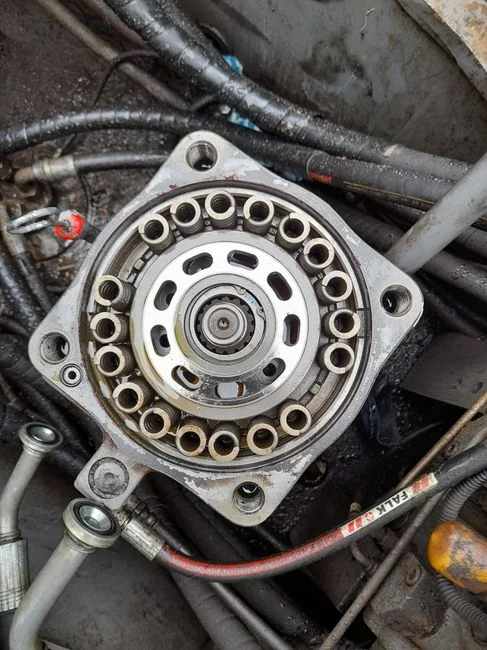
A plate-and-frame filter press for sludge dewatering typically uses 20 to 80 porous rectangular plates, a filter cloth with pore size under 0.1 mm, applied pressure of 7–20 bar over 1–2 hours, and a total cycle that can run up to 5 hours, producing 25–40 mm thick cake (WWD Magazine, 2025). Cake-solids output sits in the 25–35% band on well-conditioned feed — the highest of the four mechanical methods (Penn State Extension, 2025-08).
The technology is best fit where transport cost per ton of water removed dominates OPEX — long-haul landfill, long-distance land application, or feed to thermal dryers and incinerators. In each of these cases, a 5-point cake-solids swing is a wet-tonnage halving, and the hauling savings compound over a 20-year asset life.
The trade-off is real: batch duty, larger footprint, and higher CAPEX than centrifuges or belt presses. Polymer demand in the 5–25 lb active polymer per dry ton band is the dominant OPEX variable (Penn State Extension, 2025-08), and an automatic chemical dosing system for polymer conditioning is the single highest-leverage control loop on a plate-and-frame installation. The payback logic is straightforward: every additional 5% cake solids roughly halves the wet tonnage hauled.
For a 300,000 PE POTW with long-haul disposal, the plate and frame filter press is the technology that turns the 20-year logistics problem into a defensible dollar figure for procurement.
Decanter Centrifuge: Continuous Duty, Lower Cake Solids, Enclosed Operation
The solid-bowl decanter is the most common centrifuge for sludge dewatering, useful for heavy-oil sludge and municipal wastewater sludges, with an enclosed design that lowers operator exposure to contaminants and pathogens (WWD Magazine, 2025). Cake-solids output typically sits in the 18–25% band — lower than plate and frame but adequate for short-haul landfill or nearby land application (Penn State Extension, 2025-08).
Operating notes matter: experience is required to achieve optimal dewatering, and internal parts are prone to abrasive wear depending on interior design and sludge composition (WWD Magazine, 2025). Centrifuge performance is characterized by rotational speed and scroll geometry rather than gauge pressure, which is why the same unit can deliver 22% on one feed and 18% on another without any change in operating pressure. For engineers who need a deeper dive, the decanter centrifuge working principle guide covers scroll differential, pool depth, and beach-angle tuning.
Best fit for medium-to-large POTWs and industrial sites with continuous duty, footprint constraints, or strict operator-exposure requirements. A 5-point cake-solids penalty versus plate and frame is a wet-tonnage doubling — manageable when the landfill is 15 minutes away, punitive when the landfill is 90 minutes away.
Belt Filter Press and Rotary Press: Open Design, Low Energy, Moderate Cake
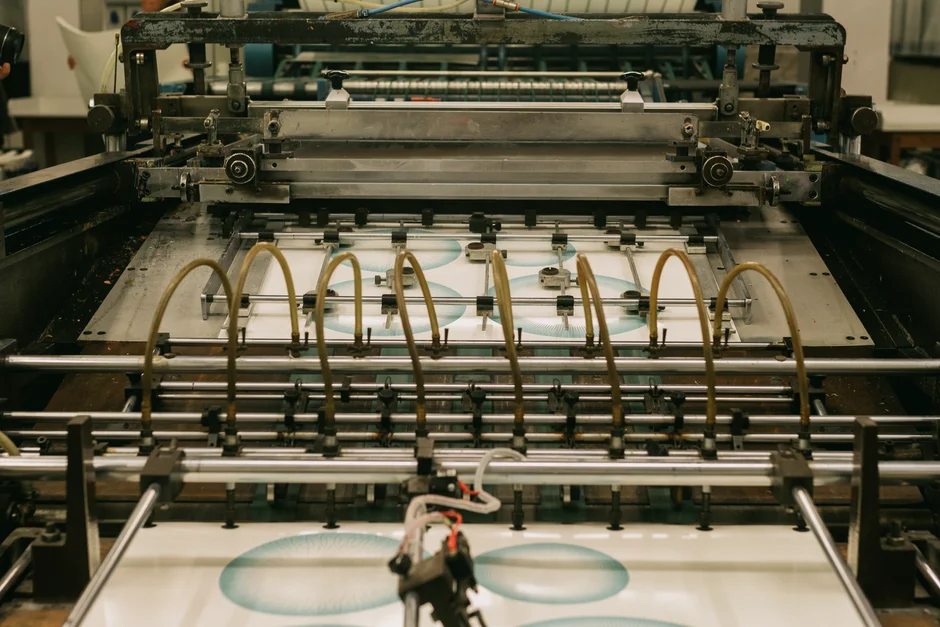
The belt filter press is the lowest-energy mechanical option: open design, simple maintenance, cake solids in the 18–25% range, and a CAPEX band well below plate and frame (Penn State Extension, 2025-08). It is widely deployed at small-to-medium POTWs and at industrial sites that prioritize ease of inspection and operator familiarity over minimum hauling weight.
The rotary press runs sludge between two circular screens inside a cylindrical vessel, with applied pressure of 0.1–0.5 bar plus shear forces from circular motion driving water through the porous walls (WWD Magazine, 2025). Both methods run continuously with lower CAPEX than plate and frame but typically exit at 18–25% cake solids, which is acceptable for short-haul applications and sites that do not penalize wet cake (Penn State Extension, 2025-08).
Best fit for small plants, decentralized sites, and operations prioritizing low OPEX and simple maintenance over minimum hauling weight. A 300,000 PE POTW with a short-haul landfill typically stays with the belt or rotary press — the 5-point cake-solids penalty versus plate and frame is a wet-tonnage doubling, but when the hauling distance is under 25 km, that doubling does not justify the plate-and-frame CAPEX premium.
Emerging Methods: Electro-Dewatering and Ultrasound as 2026 Conditioning Aids
Electro-dewatering applies electric current to disintegrate chemical bonds and drive water molecules toward the cathode; one scholarly study reported optimal dewatering at 40 V with a final water content of 63.3% in the dewatered sludge, and showed that the electric field damages cellular structure to release bound water (WWD Magazine, 2025).
Ultrasound disintegrates sludge flocs and releases tightly bound water, with an optimal ultrasonic energy density of 9.8 W for 30 seconds; higher energy or longer duration reduces effectiveness (WWD Magazine, 2025). Final dewatered-sludge water content depends on sludge composition, processes, and equipment, with reported values as low as 47.8% and 53.1% for municipal wastewater treatment plant sludge (WWD Magazine, 2025).
Best treated as 2026 pre-conditioning or polish steps integrated with mechanical dewatering, not stand-alone replacements. In a 2026 specification, electro-dewatering and ultrasound belong in the conditioning train upstream of a plate-and-frame or centrifuge, not as the primary solids-separation step.
2026 Decision Matrix: Matching Dewatering Method to End Use, Footprint, and OPEX
The single most defensible artifact a 2026 spec writer can bring to a procurement review is a side-by-side matrix that pairs cake-solids band, operating envelope, polymer dose, duty cycle, footprint, and best-fit end use for each method. The polymer dose band of 5–25 lb active polymer per dry ton is the shared OPEX row (Penn State Extension, 2025-08), and the cake-solids bands of 25–35% (plate and frame) versus 18–25% (centrifuge, belt, rotary) anchor the table (WWD Magazine, 2025; Penn State Extension, 2025-08).
| Method | Cake-solids band | Operating pressure / energy | Polymer dose band | Duty cycle | Footprint | Best-fit end use |
|---|---|---|---|---|---|---|
| Plate and frame filter press | 25–35% | 7–20 bar hydraulic; 1–2 h fill, up to 5 h cycle | 5–25 lb active / dry ton | Batch | Large | Long-haul landfill, land application, thermal dryer feed |
| Decanter centrifuge | 18–25% | Rotational speed and scroll geometry, not gauge pressure | 5–25 lb active / dry ton | Continuous | Small to medium | Medium-to-large POTWs, industrial sites, enclosed pathogen control |
| Belt filter press | 18–25% | Low mechanical pressure, gravity + shear | 5–25 lb active / dry ton | Continuous | Medium | Small-to-medium POTWs, short-haul disposal |
| Rotary press | 18–25% | 0.1–0.5 bar plus shear from circular motion | 5–25 lb active / dry ton | Continuous | Medium | Decentralized sites, low-OPEX operations |
| Electro-dewatering (conditioning aid) | Up to ~52% (47.8–53.1% reported) | Up to 40 V DC field; energy-intensive | No polymer required; electrical OPEX | Batch | Medium to large | Pre-conditioning upstream of mechanical dewatering, not a stand-alone |
The matrix makes the trade-off explicit: the highest cake dryness and the lowest logistics cost per dry ton are paired in the plate-and-frame column, while the lowest CAPEX and smallest footprint are paired in the centrifuge and belt-press rows. A 2026 spec writer who walks a reviewer down this table does not need to defend the choice on vendor reputation — the parameters do the work.
Worked Example: Dewatering Selection for a 300,000 PE POTW in 2026
Assumptions: 300,000 PE; 0.16 lb dry sludge per capita per day (Penn State Extension, 2025-08); therefore 48,000 lb dry solids per day, or about 24 dry tons per day. Combined with thickening to 5% solids and dewatering to either 20% (centrifuge) or 30% (plate and frame), the wet tonnage hauled per day is:
| Scenario | Cake solids | Wet tons / day | Wet tons / year (365 d) | Wet tons over 20 years |
|---|---|---|---|---|
| A: Decanter centrifuge | 20% | ~120 | ~43,800 | ~876,000 |
| B: Plate and frame filter press | 30% | ~80 | ~29,200 | ~584,000 |
| Delta (A − B) | 10 points | ~40 | ~14,600 | ~292,000 |
Over a 20-year asset life, the 10-point cake-solids difference between plate and frame and decanter centrifuge eliminates roughly 292,000 wet tons of hauling — more than 14,000 truck trips at 20 tons per load. Multiplied by a representative 2026 hauling and tipping-fee build (loaded-mile rate plus landfill tipping fee, varying by region and contract term), the annual logistics savings typically cover the CAPEX premium of the plate-and-frame installation within the first 5–10 years for a long-haul site. For a short-haul or footprint-constrained site, the same 10-point penalty costs the plant a manageable sum, and the centrifuge or belt press wins on net present value.
Procurement recommendation: choose a plate and frame filter press for long-haul biosolids, a centrifuge or belt press for short-haul or footprint-constrained sites, and require pilot trials plus a compressibility-aware bench test before any final selection (Pavez-Jara et al., 2026-04).
Frequently Asked Questions
What cake-solids percentage should a 2026 biosolids dewatering specification target?
Target 25–35% cake solids for plate-and-frame filter presses and 18–25% for decanter centrifuges, belt filter presses, and rotary presses (Penn State Extension, 2025-08). The end use under 40 CFR Part 503 sets the floor: land application, landfill surface disposal, and incineration each impose different cake-solids, pathogen reduction, and reporting requirements.
Why are CST and SRF no longer sufficient for 2026 procurement specifications?
Capillary suction time and specific resistance to filtration capture only the mixing, destabilization, and floc-formation stages of dewatering and generally fail to represent the compression and expression stages that determine final cake solids (Pavez-Jara et al., Reviews in Environmental Science and Bio/Technology, 2026-04). Specify a centrifuge-based or dead-end filtration bench test plus on-site pilot trials instead.
How much polymer does a mechanical dewatering step actually consume?
Polymer dose runs 5–25 lb active polymer per dry ton of sludge solids across the four mechanical methods (Penn State Extension, 2025-08), and is the single largest variable OPEX line on most dewatering installations. Pair the press or centrifuge with an automatic chemical dosing system for polymer conditioning to hold the dose at the lower end of the band.
Which dewatering method produces the driest cake for a long-haul landfill application?
Plate-and-frame filter presses deliver the highest cake solids in the 25–35% range on well-conditioned feed, applied at 7–20 bar over a 1–2 hour fill cycle (WWD Magazine, 2025). For long-haul biosolids, the plate and frame filter press is the technology that turns a 20-year hauling problem into a defensible dollar figure. For continuous-duty, smaller-footprint, or short-haul applications, a decanter centrifuge at 18–25% cake solids is the lower-CAPEX alternative.
Related Equipment
- lamella clarifier for sludge thickening and pre-dewatering — specifications, capacity range, and technical data