
Why the Environmental Permit Is a Day-One Risk, Not a Back-Office Item
A Rio Tinto acquisition of a Vietnam plant does not transfer the Giấy phép môi trường by operation of law — the new owner must re-file with the provincial DONRE within 30 days under LEP 2020 and Law 72/2020/QH14 Article 31, or discharge authorization lapses and production halts. The applicable envelope is QCVN 40:2011/BTNMT (binding through 31 December 2031) stacked with QCVN 13-MT:2015 for chemical-sector parameters, with a new EIA required only when Decree 08/2022/NĐ-CP capacity or pollutant-class triggers are crossed.
For a mid-sized mining or chemical operation, finished-goods inventory typically runs 5–15 days, putting Day-One loss exposure at USD 80,000–300,000 per day if discharge authorization is interrupted (HydropureWater field data, 2026). The 30-day DONRE filing window is therefore a binding closing-day constraint, not a 12-month remediation timeline. The macro enforcement backdrop reinforces this: Ho Chi Minh City is commissioning a 1.1 million m³/day MBBR plant in Thu Duc at USD 524 million — Southeast Asia's largest such facility — alongside the 480,000 m³/day Nhiêu Lộc–Thị Nghè basin plant targeting 2025 completion, and a USD 1.3 billion plan to construct six new plants and upgrade one existing plant (U.S. DOC / trade.gov, 2024). That capital signal correlates with intensified DONRE inspection frequency in Dong Nai, Binh Duong, and Hai Phong through 2024–2026. For a deal team benchmarking a Rio Tinto target against a peer acquirer, the same Day-One logic that appears in the Bayer Vietnam plant acquisition compliance guide applies, but with the mining-specific overlay creating a tighter envelope on acid-mine-drainage parameters that neither Bayer nor the Rivian Vietnam plant acquisition guide addresses.
Classifying the Rio Tinto Target: Event 1, Event 2, or Event 3
The single most consequential diligence question is whether closing triggers an administrative name change, a permit amendment under Article 42 of LEP 2020, or a full re-permitting with a new EIA under Decree 08/2022/NĐ-CP. The answer changes the closing timeline by months and the escrow sizing by a factor of three or more. The Rio Tinto-specific overlay is decisive: introduction of a new collector, frother, flocculant, or flocculant-aid reagent in a flotation circuit — or a change in lime/carbonate dosing in a copper or iron ore leach — can itself trigger Event 3 by introducing a "new pollutant class" under Decree 08/2022/NĐ-CP, even when hydraulic capacity is unchanged.
| Event | Trigger | DONRE dossier | Timeline | Cost band (USD) |
|---|---|---|---|---|
| 1 — Administrative update | Legal name change only; no project-profile change | Notification + updated business registration | 2–4 weeks | 5,000–15,000 |
| 2 — Article 42 amendment | Scale, technology, raw material, or product line change within existing envelope | Updated process description, current WWTP design, 12 months of self-monitoring | 30–45 working days (Art. 45 LEP 2020) | 60,000–150,000 |
| 3 — Full re-permitting + new EIA | Capacity +10% (Cat. I) or +25% (Cat. II); wastewater +30%; new pollutant class | New EIA report + consolidated permit application | 4–9 months (EIA rate-limiting) | 150,000–250,000+ |
Pre-2020 permits carry an additional risk. If the target's permit was issued under the pre-2020 regime and the new project profile differs, the old permit is invalid ab initio and the buyer operates under a 90-day temporary discharge exemption that often forces rushed EIA scoping (HydropureWater field data, 2026). For a Rio Tinto deal team, classifying the target on this three-event matrix in week one of diligence is the difference between a 45-day escrow and a 9-month escrow — and it must be reconciled against the JORC or SAMREC reserve-reporting calendar that governs disclosure of any material change to the mining schedule.
The QCVN Stack That Applies to a Mining Operation
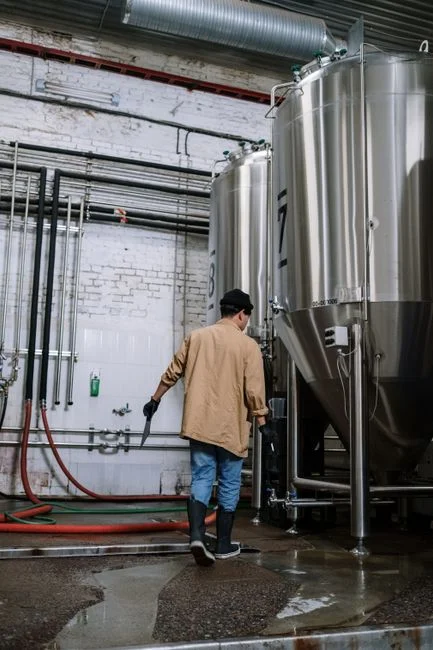
The deal team's engineer must benchmark every seller's self-monitoring report against two stacked envelopes. QCVN 40:2011/BTNMT is the national industrial wastewater baseline applying to plants in service before 1 September 2025 and remains binding through 31 December 2031 per Circular 05/2025/TT-BTNMT. The parameter envelope is: COD ≤150 mg/L, BOD₅ ≤50 mg/L, TSS ≤100 mg/L, pH 6–9, TN ≤40 mg/L, TP ≤6 mg/L, oil/grease ≤10 mg/L, plus Pb ≤0.5, Hg ≤0.05, Cd ≤0.1 mg/L (enviliance.com, 2025). New or expanded projects initiated after 1 September 2025 must meet QCVN 40:2025/BTNMT, which restructures discharge destinations into three categories (A, B, C), removes the Cmax calculation, and states limits directly in Tables 1 and 2 (enviliance.com, 2025).
| Envelope | Structure | Mining-relevant parameters | Binding through |
|---|---|---|---|
| QCVN 40:2011/BTNMT | A/B binary; Cmax multiplier on flow/destination | COD 150, BOD₅ 50, TSS 100, TN 40, TP 6, oil/grease 10 mg/L; Pb 0.5, Hg 0.05, Cd 0.1 mg/L | 31 Dec 2031 |
| QCVN 40:2025/BTNMT | A/B/C categories; limits stated directly in Tables 1/2 (Cmax removed) | Same conventional parameters, restated by receiving-water column | New/expanded projects from 1 Sept 2025 |
| QCVN 13-MT:2015/BTNMT | Chemical-sector stack on QCVN 40 | Sulfides, phenol, residual chlorine — binding for solvent extraction, electrowinning bleed, reagent carryover | Concurrent with QCVN 40 |
QCVN 13-MT:2015/BTNMT is the mining-specific lever that most generic Vietnam guides miss. It stacks on top of QCVN 40 for any chemical or hydrometallurgical discharge, adding sulfides, phenol, and residual chlorine as binding parameters — exactly the analytes that solvent-extraction organic carryover, electrowinning electrolyte bleed, and froth-flotation reagent residues will trigger. The AMD gap is critical: Vietnam does not publish numerical limits for Fe, Mn, sulfate, or low-pH influent characterization in QCVN 40, so influent characterization by ore type is mandatory during diligence. A copper or bauxite operation can run influent pH 2.5–4.5 with dissolved Fe 200–2,000 mg/L, Mn 20–500 mg/L, and sulfate 1,000–5,000 mg/L without a single QCVN number applying to those analytes at the discharge point — a fact the deal engineer must internalize before pricing the retrofit (HydropureWater field data, 2026).
Receiving-Waterbody Column Decision: A, B, or C
Per Circular 05/2025/TT-BTNMT (28 Feb 2025) and QCVN 14:2025/BTNMT, Column A applies to wastewater discharged into receiving waters used for domestic supply or meeting QCVN 08:2023/BTNMT Level A; Column B applies to waters targeted at Level B; Column C applies to all other receiving bodies (faolex.fao.org, 2025). The QCVN 14:2008→14:2025 cutover date is 31 December 2031, and any plant that obtained EIA approval or submitted a complete EIA/permit application before the effective date of the Circular may continue to apply QCVN 14:2008 (faolex.fao.org, 2025). A column-A-versus-column-B swing can change the biological-stage sizing by 20–30% because the tighter ammonia (4 mg/L at Column A versus 8–10 mg/L at Column B/C) and COD (50 mg/L versus 60–110 mg/L) targets force a higher MLSS and longer HRT. For a Rio Tinto operation in a DEEP C or Deep Hai industrial-zone tenant, the site-specific overlay is binding: tenants face QCVN 14:2008 column A total nitrogen at 15 mg/L, and the UNDP–DEEP C technical guideline (28 July 2026) frames ZLD pilots against QCVN 40:2014/BTNMT reuse limits. Confirm the discharge point at the final manhole — municipal sewer, industrial-park common ETP, or direct to receiving water — before sizing a single unit operation.
The Site-Specific Retrofit the Deal Team Must Price
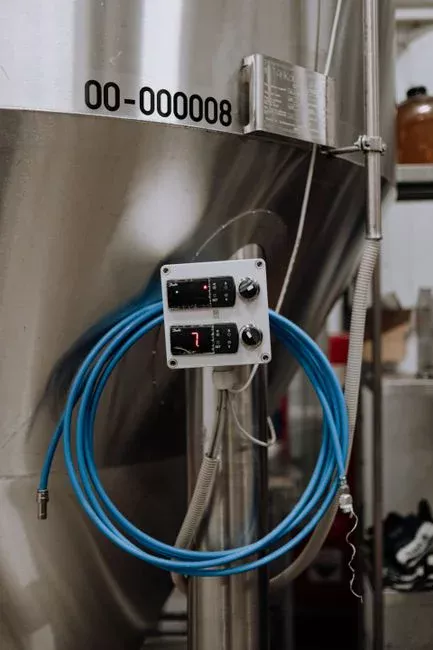
The retrofit scope is not a generic WWTP upgrade but a site-specific combination of equalization, DAF, biological polishing, sludge dewatering, and chemical dosing sized to the AMD and reagent carryover fingerprint. The treatment train a Vietnamese ETP supplier should quote for a copper, bauxite, or iron-ore operation is: a 24-hour equalization basin with pH correction (NaOH/H₂SO₄) and cooling for batch AMD and process bleed streams; a dissolved air flotation (DAF) system at 4–300 m³/h for oil/grease, suspended solids, floated colloidal matter, and floated reagent residue; a DF series PVDF flat-sheet MBR module at 32–135 m³/day per module for COD 150 / TN 40 mg/L polish on roughly 60% of conventional activated-sludge footprint; a plate-and-frame filter press at 1–500 m² for sludge dewatering when dry-cake output exceeds the 1.5–2.0 t/day threshold; and a PLC-controlled chemical dosing skid for pH correction, polymer for DAF, and nutrient N/P balancing for the biological stage.
| Unit operation | Specification | QCVN parameter addressed | Typical performance |
|---|---|---|---|
| Equalization basin | 24-hour buffer, pH correction, cooling | pH 6–9; flow/load dampening | COD variation ±15% at downstream inlet |
| DAF | 4–300 m³/h | Oil/grease 10 mg/L; TSS 100 mg/L (partial) | 90–95% oil removal; 70–85% TSS removal |
| MBR (DF series) | 0.1 µm PVDF, 32–135 m³/d per module | COD 150 mg/L; TN 40 mg/L | COD removal >95%; TN removal >80% |
| Plate-and-frame filter press | 1–500 m² | Sludge moisture target (QCVN 50:2013/BTNMT) | 60–70% dry cake for off-site disposal |
| Chemical dosing skid (PLC) | NaOH/H₂SO₄, polymer, N/P nutrients | pH, TSS, nutrient balance | Closed-loop ratio control |
Mining-specific sludge handling matters here: a target producing more than 1.5–2.0 tonnes/day of dry biological or AMD sludge should be benchmarked against tailings-management dam water quality, not just the QCVN 50:2013/BTNMT moisture target. The wastewater line and the tailings-water recycle line share the same water balance, and the retrofit capex that ignores the tailings circuit will understate the real cost by 30–50%.
Escrow, Indemnity, and Disclosure: Closing Mechanics for a Public Mining Major
Assume the target triggers an Event 2 amendment with USD 25 million EBITDA, a QCVN envelope gap estimated by the seller's engineer at USD 1.2 million of WWTP retrofit capex, and DONRE review running to the 45-day maximum (HydropureWater field data, 2026). A reasonable SPA structure is USD 150,000 cash escrow for filing and consultancy, plus a separate USD 1.4 million capex holdback (110% of the engineering estimate) released against remediation milestones, plus a 24-month indemnity for any pre-closing non-compliance surfaced by self-monitoring reports. Total ringfenced exposure is roughly USD 1.55 million against a Day-One loss band of USD 0.8–4.5 million at 10–15 days of forced shutdown (USD 80,000–300,000/day × 10–15 days).
For an Event 3 full EIA, ringfence the upper end of the USD 150,000–250,000+ envelope plus 4–9 months of carrying-cost risk, and structure the escrow as 12–18 months of compliance-remediation cost against the engineering estimate of the gap between the target's actual discharge quality and the QCVN envelope. Add a Rep & Warranty insurance carve-out for environmental matters — R&W insurers typically exclude pre-closing environmental liability, so a separate indemnity tranche is required, and a capex holdback against the retrofit gap is the cleanest structure because the buyer's downside is bounded by the actual remediation cost, not the seller's willingness to fund escrows (HydropureWater field data, 2026).
The dual disclosure clock is the closing-day mechanic that most generic guides miss. Under Circular 96/2020/TT-BTC and the HOSE/UPCOM Listing Rules, any permit suspension, discharge exceedance, or MONRE/DONRE administrative penalty triggers a 24-hour extraordinary-event disclosure — the clock starts on closing day, not on the date Rio Tinto first learns of the underlying issue. In parallel, ASX Listing Rule 3.1 requires immediate disclosure of any information that a reasonable person would expect to have a material effect on the price or value of Rio Tinto's securities. The two clocks must be word-aligned before signing. Pre-draft the disclosure template and the internal sign-off chain before closing so the 24-hour window is not spent on routing, and reconcile the HOSE filing with the JORC/SAMREC reserve-reporting calendar so a permit suspension does not collide with a half-year resource statement. Closing conditions must include: any self-monitoring report showing exceedance against the QCVN envelope, any unresolved administrative penalty, and any mismatch between the permit's approved capacity and actual production.
Frequently Asked Questions
Does the Giấy phép môi trường transfer automatically when Rio Tinto acquires a Vietnam plant?
No. Under LEP 2020 and Law 72/2020/QH14 Article 31, the consolidated Environmental Permit attaches to the operating legal entity, not to the asset. A share acquisition does not novate the permit; the new owner must file a re-issuance or amendment dossier with the provincial DONRE within 30 days of share transfer, or discharge authorization lapses and production halts (HydropureWater field data, 2026 — per LEP 2020). For a mid-sized mining or chemical plant, Day-One loss exposure is USD 80,000–300,000 per day.
When does a Rio Tinto acquisition trigger a new EIA in Vietnam?
A new EIA is required only when Decree 08/2022/NĐ-CP thresholds are crossed: capacity increases of ≥10% for Category I projects, ≥25% for Category II projects, wastewater volume increases of ≥30%, or introduction of a new pollutant class — which can include a new collector, frother, or flocculant in a flotation circuit. Below those triggers, a permit amendment under Article 42 of LEP 2020 is sufficient, with a 30–45 working day DONRE review window (per Decree 08/2022/NĐ-CP and LEP 2020).
What is the transition path from QCVN 40:2011 to QCVN 40:2025 for a mining operation?
Plants in service before 1 September 2025 that obtained EIA approval or submitted a complete EIA/permit application before that date may apply the QCVN 40:2011 envelope (plus QCVN 13-MT:2015 for chemical-sector parameters such as sulfides, phenol, and residual chlorine) until 31 December 2031. New or expanded projects initiated after 1 September 2025 must meet QCVN 40:2025/BTNMT, which uses a three-category A/B/C structure with limits stated directly in Tables 1 and 2 (per Circular 06/2025/TT-BTNMT and QCVN 40:2025/BTNMT).
How does the HOSE/SEC dual disclosure clock work on closing day for a Rio Tinto acquisition?
Under Circular 96/2020/TT-BTC and the HOSE/UPCOM Listing Rules, a permit suspension, a discharge exceedance, or a MONRE/DONRE administrative penalty triggers a 24-hour extraordinary-event disclosure. The clock starts on closing day, not on the date the new owner first learns of the underlying issue, so the disclosure template and sign-off chain must be pre-drafted before closing (per Circular 96/2020/TT-BTC). In parallel, ASX Listing Rule 3.1 requires immediate disclosure of any material information, and the two filings must be word-aligned with the JORC/SAMREC reserve-reporting calendar.
How should escrow be sized for an Event 2 permit amendment on a mid-sized mining target?
For an Event 2 amendment on a mid-sized mining target, ringfence USD 60,000–150,000 for legal, EIA consultancy, and DONRE filing fees, plus a capex holdback of 100–120% of the engineering estimate of the retrofit gap to the QCVN envelope, plus a 24-month post-closing covenant for pre-closing non-compliance. A worked envelope of roughly USD 1.55 million (filing escrow plus capex holdback) is reasonable against a Day-One loss band of USD 0.8–4.5 million at 10–15 days of forced shutdown (HydropureWater field data, 2026 — per LEP 2020 Art. 42 and Art. 45). Add a separate indemnity tranche for environmental matters, since R&W insurers typically exclude pre-closing environmental liability.