
What the deal actually triggers on Day 1
An acquisition closes on the SPA date, but the Environmental Permit (Giấy phép môi trường) issued under Law 72/2020/QH14 is attached to the operating legal entity rather than the physical asset. A change in the operating company voids the existing permit and necessitates a fresh application with no automatic succession. The seller's three to five years of wastewater monitoring records, sludge manifests, and any MONRE non-compliance notices transfer with the asset; consequently, every gap the seller left on its books becomes Rivian's liability from the moment of share-transfer or asset-transfer registration. The HydropureWater Vietnam hub documents this same legal mechanic across the Samsung SDI and WuXi AppTec Vietnam precedents, where buyers had to re-apply rather than novate. The day-one fix is environmental due diligence against the seller's most recent permit, the underlying EIA decision, and at least 24 months of composite-sampler results—conducted in parallel with legal due diligence. For a U.S.-listed acquirer, this evidence drives Form 8-A/10-K risk-factor language and, for any material Vietnamese subsidiary or material contract, a 24-hour continuous-disclosure filing to the Ho Chi Minh Stock Exchange (HOSE) under Circular 96/2020/TT-BTC. The disclosed risk and the MONRE filing must be word-aligned before signing. A useful cross-check on this dual-track mechanic is the 2026 Mexico compliance blueprint for a comparable pharma deal, where the foreign acquirer had to re-issue the Mexican equivalent permit in the same 30-day window and align its SEC disclosure with the local filing.
The 30-day permit-transfer clock and the EIA re-check
The Vietnamese permit has a statutory re-issuance window of 30 days, rather than a closing-date trigger. Article 31 of Law 72/2020/QH14 and the document list in Decree 45/2022/NĐ-CP are the controlling instruments; the timing matrix below outlines the five concurrent deadlines a deal team must manage.
| Step | Window | Action | Legal basis | Missed-deadline consequence |
|---|---|---|---|---|
| 1 — Entity characterisation | Day 0–7 | Confirm share-purchase vs asset-purchase structure; share purchases require MONRE notification, asset purchases require a fresh application | Law 72/2020/QH14 Art. 31 | Wrong filing route = deemed unpermitted discharge |
| 2 — Permit re-issuance dossier | Day 0–30 | File updated process description, wastewater flow, pollutant load, and discharge route | Law 72/2020/QH14 Art. 31; Decree 45/2022/NĐ-CP | Operating without a valid permit — Article 14 sanctions |
| 3 — EIA re-appraisal (if capacity rises ≥10% or a new wastewater stream is added) | Day 0–45 appraisal | Submit EIA report for Group II projects (most EV-battery plants) to MONRE | Decree 08/2022/NĐ-CP | Capacity expansion without EIA = administrative penalty + retro-fit demand |
| 4 — Listed-company disclosure | ≤24 hours from material liability identification | HOSE/SEC continuous-disclosure filing on environmental liability or non-conformity | Circular 96/2020/TT-BTC; SEC Reg FD | Selective-disclosure exposure under U.S. securities law |
| 5 — Interim operation | Day 30+ | Continue operating under the original permit and any interim MONRE direction | Law 72/2020/QH14 Art. 14 | Suspension order if MONRE finds non-compliance |
The 30-day window aligns with the HydropureWater 2026 Vietnam hub data for GM and Ford Vietnam compliance guides, and the EIA appraisal window of 45 working days is fixed by Article 34 of Decree 08/2022/NĐ-CP for Group II projects. If the re-issued permit is delayed past Day 30, the plant must continue to honor the original permit limits while MONRE processes the re-issuance; any post-30-day discharge that fails the original permit constitutes a fresh Article 14 violation in Rivian's name.
QCVN discharge limits that bind an EV-battery plant
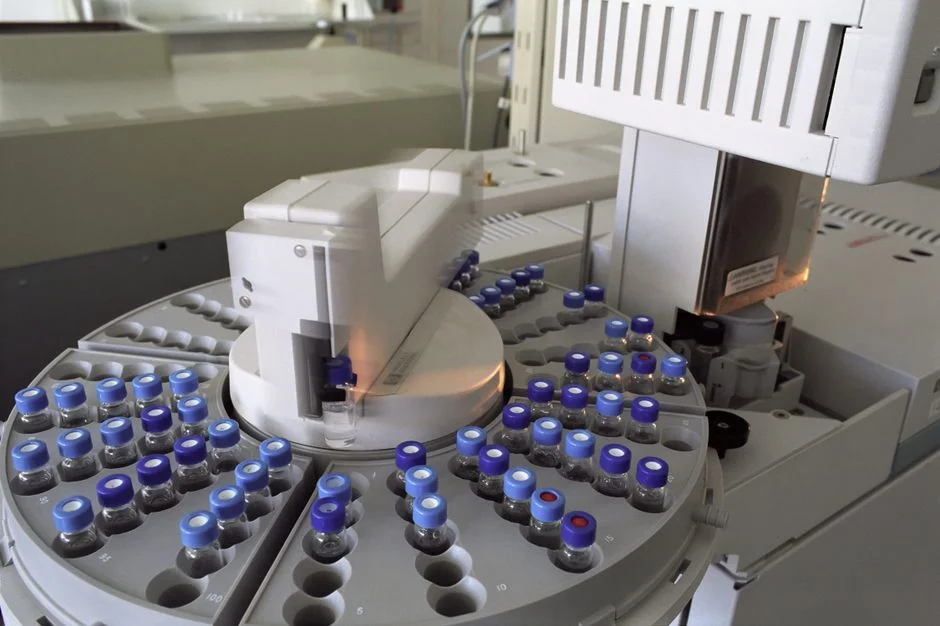
QCVN 40:2011/BTNMT serves as the primary regulatory envelope for industrial effluent in Vietnam and is the standard referenced for the Samsung SDI, GM, Ford, BMW, Pfizer, and WuXi AppTec precedents. The parameter table below consolidates the limits an EV-battery plant must meet at the final discharge manhole.
| Parameter | QCVN 40:2011/BTNMT (industrial effluent, A column) | Driver at a Rivian-class lithium-ion cell line | Likely fail mode on first sampling |
|---|---|---|---|
| COD | 150 mg/L | NMP solvent from cathode coating washwater; formation/aging streams | High — batch discharges spike 1,000–5,000 mg/L without equalisation |
| BOD5 | 50 mg/L | NMP biodegradability + anode binder (CMC/SBR) | Medium — biological stage loads shift with batch schedule |
| TSS | 100 mg/L | Graphite slurry from anode coating, black-mass fines | High — DAF underflow on DAF failure |
| Total nitrogen | 40 mg/L | NMP nitrogen + nitrate/nitrite from formation streams | High — A/O nitrification capacity |
| Total phosphorus | 6 mg/L | LiPF6 hydrolysis residue, phosphate-based binders | Low — biological P removal adequate |
| Fluoride | 10 mg/L | LiPF6 + LiBOB electrolyte hydrolysis produces F⁻ at 30–80 mg/L in raw wastewater | Very high — single biggest non-compliance risk |
| pH | 5.5–9 | Electrolyte hydrolysis acidifies; coating line alkaline | Medium |
| Oil and grease | 10 mg/L | Formation/aging oil baths, vacuum-pump oil | Medium |
| Lead / Nickel / Copper | 0.5 / 0.5 / 2.0 mg/L | Black-mass residue from scrap electrodes; current-collector dissolution | High if no heavy-metal precipitation stage |
QCVN 13-MT:2015/BTNMT governs office and cafeteria streams, while QCVN 28:2010/BTNMT applies to on-site clinics, following the pattern observed in the Novartis Vietnam acquisition guide. Tenants inside DEEP C and Deep Hai industrial zones additionally face the receiving-waterbody limit QCVN 14:2008/BTNMT column A for total nitrogen at 15 mg/L, and the UNDP–DEEP C technical guideline launched on 28 July 2026 frames ZLD pilots against QCVN 40:2014/BTNMT reuse limits. The phosphorus removal target matches engineering practice on RAS and WAS pump scheduling for activated sludge, where the wasting rate controls biological phosphorus uptake.
Designing the treatment train for Rivian's wastewater fingerprint
The treatment train below maps each unit operation to a specific QCVN parameter and represents the minimum configuration a Vietnamese ETP supplier should quote. Equalisation is the first step: a 24-hour buffer basin with pH correction and cooling brings batch discharges from electrode coating (COD 1,000–5,000 mg/L) and formation/aging streams into a steady feed. A industrial DAF for cathode-coating washwater at 4–300 m³/h strips oil, graphite slurry, and emulsified NMP; this unit is specified in the HydropureWater 2026 Vietnam ZLD guide for the same fingerprint. Biological polishing uses an anoxic/aerobic (A/O) or anaerobic + MBR for QCVN 40 COD and total nitrogen compliance with 0.1 µm PVDF flat-sheet modules at 32–135 m³/day each, hitting COD 150 mg/L and total nitrogen 40 mg/L on roughly 60% of the footprint of conventional activated sludge. Fluoride and TDS polishing uses ion exchange (calcium-defluorination columns) followed by industrial RO for fluoride and TDS polishing at up to 95% recovery, reducing F⁻ from 30–80 mg/L in electrolyte hydrolysis wastewater to ≤10 mg/L. Sludge handling uses a plate-and-frame filter press at 1–500 m² to dewater the DAF float and waste-activated sludge to <60% moisture for compliant disposal under QCVN 50:2013/BTNMT.
| Unit operation | Vendor / spec | Target QCVN 40 parameter | Typical performance |
|---|---|---|---|
| Equalisation + pH correction | 24-hr buffer basin, NaOH/H2SO4 dosing | pH 5.5–9 envelope | COD variation ±15% at downstream inlet |
| DAF | DAF line, 4–300 m³/h | Oil & grease 10 mg/L; TSS 100 mg/L (partial) | 90–95% oil removal; 70–85% TSS removal |
| A/O + MBR | DF-series flat-sheet, 0.1 µm PVDF, 32–135 m³/d per module | COD 150 mg/L; total nitrogen 40 mg/L | COD removal >95%; TN removal >80% |
| Defluorination + RO | Industrial RO, up to 95% recovery | Fluoride 10 mg/L; TDS reuse envelope | F⁻ to ≤5 mg/L; TDS reduction >95% |
| Sludge dewatering | Plate-and-frame filter press, 1–500 m² | QCVN 50:2013/BTNMT moisture target | Cake moisture <60% |
Day-1 to steady-state compliance checklist

The Vietnam EHS manager should implement a site-specific action plan immediately upon acquisition. First, confirm the discharge point—municipal sewer, industrial-park common ETP, or direct to receiving water—because the QCVN 40 column (A or B) and any zone-specific pretreatment contract depend on it; this framing appears in the HydropureWater 2026 Vietnam industrial wastewater treatment guide. Second, install a composite autosampler at the final discharge manhole and connect it to a flow-proportional pH/COD/total-nitrogen/fluoride logger, as auto-reporting to MONRE is now standard in HCMC industrial parks per trade.gov coverage of the Ho Chi Minh City wastewater programme. Third, re-baseline the wastewater characterization study within 60 days of permit re-issuance—including at least four seasonal sampling rounds covering NMP, fluoride, total nitrogen, and heavy metals—to support the next permit renewal cycle and to defend against retrospective complaints regarding the operating envelope.
Frequently Asked Questions
Does the Environmental Permit transfer automatically when Rivian buys a Vietnam plant?
No. The Giấy phép môi trường under Law 72/2020/QH14 is tied to the operating legal entity; a change in the operating company voids the existing permit, and the new owner must re-apply within 30 days under Article 31.
What QCVN limits apply specifically to lithium-ion battery effluent in Vietnam?
QCVN 40:2011/BTNMT column A sets COD 150 mg/L, total nitrogen 40 mg/L, and fluoride 10 mg/L—the three parameters most likely to fail on a LiPF6/NMP/black-mass stream without a DAF + MBR + RO train. Heavy metals from black-mass fall under the same envelope (lead 0.5 mg/L, nickel 0.5 mg/L, copper 2 mg/L).
When does Rivian have to make a 24-hour environmental disclosure to HOSE?
Within 2