
What an Effluent Treatment Plant in Hyderabad Actually Does
An effluent treatment plant in Hyderabad is a configured train — not a single tank — engineered to take a specific industrial wastewater from inlet to TSPCB-compliant discharge or to on-site reuse. The four stages are: (1) screening and flow equalisation, (2) primary physico-chemical treatment using coagulation, flocculation and a dissolved air flotation system or lamella clarifier to strip suspended solids, oils and heavy metals, (3) secondary biological treatment (activated sludge, MBBR, SBR or MBR) to break down dissolved organics, and (4) tertiary polishing — filtration, disinfection, and where required a ZLD train of RO followed by Multiple Effect Evaporator (MEE) and Agitated Thin Film Dryer (ATFD).
Process choice is not interchangeable across industries. A textile dye ETP at Bollarum looks nothing like a pharma API ETP at Patancheru — the former is high-COD, high-colour, high-TDS; the latter is high-COD with recalcitrant organics, solvents and variable pH. Long-documented surface- and groundwater contamination from Hyderabad's pharma production (Environmental Toxicology and Chemistry, 2009, doi:10.1897/09-073.1) is the reason TSPCB applies tighter scrutiny to the Patancheru–Jeedimetla–Bollarum–Nacharam cluster than to most Indian industrial belts. Membrane-based polishing of WWTP effluent is now a research frontier for plants targeting reuse — Schrader's PhD thesis at the University of Twente demonstrates direct nanofiltration as a route to agricultural or indirect-potable quality (University of Twente, 2020), which is directly relevant to Hyderabad pharma and food plants now piloting water-reuse loops.
Telangana PCB (TSPCB) Discharge Consents and Compliance in 2026
Every industrial wastewater treatment Hyderabad project must clear two consents before commissioning: Consent to Establish (CTE) and Consent to Operate (CTO), issued under the Water (Prevention and Control of Pollution) Act 1974 and the Air (Prevention and Control of Pollution) Act 1981. Applications are filed on the TSPCB-iPASS online portal.
Standard 2026 timelines are 30–60 days for Category-B (red/green) industries and 60–90 days for Category-A (orange) and for any project requiring CETP membership at Patancheru, Bollarum or Jeedimetla. The discharge envelope a Hyderabad ETP must hit is pH 6.5–8.5, TSS <100 mg/L, COD <250 mg/L, BOD <30 mg/L for general industry; pharma API effluents feeding the common CETP face tighter inlet norms, often COD <100 mg/L. The Hyderabad-specific wrinkle is groundwater protection: NGT-driven ZLD expectations in the legacy Patancheru and Bollarum clusters mean MEE+ATFD should be priced into the BOQ from day one, not added as a variation order. Tertiary polishing research continues to evolve — constructed wetlands for micropollutant removal are now being trialled as a low-Opex add-on at Hyderabad CETPs (Lei PhD, Wageningen 2024, WUR repository).
| Consent / Step | Authority | Typical 2026 Timeline | Trigger |
|---|---|---|---|
| CTE (Consent to Establish) | TSPCB via iPASS | 30–60 days (Cat-B), 60–90 days (Cat-A) | Before any civil work begins |
| CTO (Consent to Operate) | TSPCB via iPASS | 30–60 days post-commissioning | Before treated-water discharge starts |
| CETP membership / share | APIIC / IALA, Patancheru–Bollarum–Jeedimetla | Capital share paid pre-CTO | Cluster effluent routed to common drain |
| ZLD NGT compliance | NGT / TSPCB | Ongoing monitoring | Patancheru, Bollarum, ECIL-Nacharam zones |
Process Selection: MBR vs SBR vs Fenton vs Conventional Activated Sludge
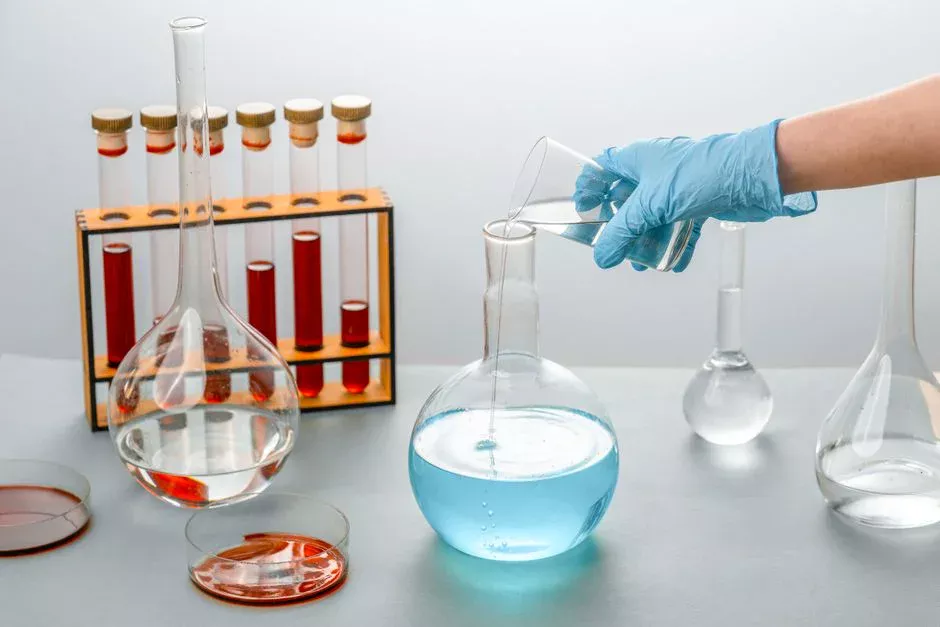
Use the matrix below to shortlist two or three trains before approaching vendors — and reject any quote that arrives without a stated process configuration. For pharma and food plants, an MBR wastewater treatment system for pharma and food plants delivers near-reuse-quality effluent with sub-1 μm filtration in roughly 60% of the footprint of CAS (HydropureWater MBR product data, 2026). The MBR segment is growing 5.3–7.75% CAGR globally in 2026 (HydropureWater market analysis, 2026), a useful proxy for technology maturity and aftermarket spares availability in India.
For high-COD chemical-park wastewaters — the bulk-drug and intermediate clusters around Patancheru — the proven train is Fenton oxidation plus UASB plus A/O plus ozone polishing, as documented in the Chemical-Park WWTP ~1,000 m³/day Fenton + UASB + A/O + Ozone — Engineering Record. For food and beverage effluent, the equivalent reference is the Food-Processing Plant 500 m³/day DAF+MBR Wastewater Treatment — Engineering Record, which pairs a dissolved air flotation system upstream of the MBR to strip fats, oils and grease before biological oxidation. For lower-strength textile or dairy loads where ZLD is not enforced, CAS or MBBR plus a lamella clarifier for primary clarification remains the lowest-CAPEX option. Where reuse to cooling tower or gardening is targeted, add UF/RO polishing — nanofiltration for WWTP effluent reclamation has been formally studied (Schrader, University of Twente).
| Process | Footprint | Effluent Quality (TSS / COD) | Relative CAPEX | Relative OPEX | Skill Required | Best-Fit Industry |
|---|---|---|---|---|---|---|
| CAS (Conventional Activated Sludge) | Large | <30 mg/L / <250 mg/L | Low (baseline) | Low | Moderate | Textile, dairy, low-strength effluent |
| SBR (Sequencing Batch Reactor) | Medium | <20 mg/L / <150 mg/L | Medium | Low–Medium | Moderate | Pharma, food, batch effluents |
| MBBR (Moving Bed Biofilm Reactor) | Medium | <20 mg/L / <150 mg/L | Medium | Low–Medium | Moderate | Textile, chemical, variable load |
| MBR (Membrane Bioreactor) | ~40% of CAS | <1 mg/L TSS / <50 mg/L COD | High (1.4–1.7× CAS) | Medium–High (membrane replacement) | High | Pharma, food, reuse-targeted plants |
| Fenton + UASB + A/O + Ozone | Medium | <100 mg/L / <150 mg/L | Medium–High | High (H₂O₂, Fe, ozone) | High | Bulk-drug, chemical parks, high-COD |
2026 ETP Cost in India: CAPEX and OPEX per KLD for Hyderabad
Sanity-check any vendor quote against the table below. The 2026 Indian market range for a 50–500 KLD plant is roughly ₹40 lakh to ₹3 crore across conventional biological trains, with MBR at the upper end and ZLD trains (RO + MEE + ATFD) at the top of the range — consistent with the broader global benchmark of US $50K–US $3.5M documented in the Effluent Treatment Plant Cost in 2026: CAPEX & OPEX Breakdown.
OPEX runs ₹150–450 per KLD per day for a conventional biological train and ₹600–1,200 per KLD per day once MEE+ATFD is added for ZLD — the energy penalty of thermal evaporation is the single biggest OPEX driver. Hyderabad buyers consistently underestimate four line items: TSPCB consent fees and consultant charges, CETP membership capital share, civil works (₹8–15 lakh for a 100 KLD civil package), and treated-water pumping if there is no reuse customer on site. The payback case is real: water-reuse savings of ₹30–60 per KLD against Hyderabad industrial-tanker rates of ~₹800–1,200 per 10,000 L (2026 market) put ZLD payback at 3–5 years for large pharma and food plants.
| Capacity (KLD) | CAPEX — CAS / SBR (₹ lakh) | CAPEX — MBR (₹ lakh) | CAPEX — ZLD (RO+MEE+ATFD) (₹ lakh) | Typical OPEX (₹ / KLD / day) |
|---|---|---|---|---|
| 50 | 40–55 | 55–75 | 120–160 | 150–300 (CAS) / 600–800 (ZLD) |
| 100 | 70–95 | 100–140 | 200–280 | 150–350 (CAS) / 700–950 (ZLD) |
| 250 | 140–200 | 220–300 | 450–650 | 200–400 (MBR) / 800–1,100 (ZLD) |
| 500 | 240–350 | 380–550 | 900–1,400 | 250–450 (MBR) / 900–1,200 (ZLD) |
How to Shortlist an ETP Manufacturer in Hyderabad
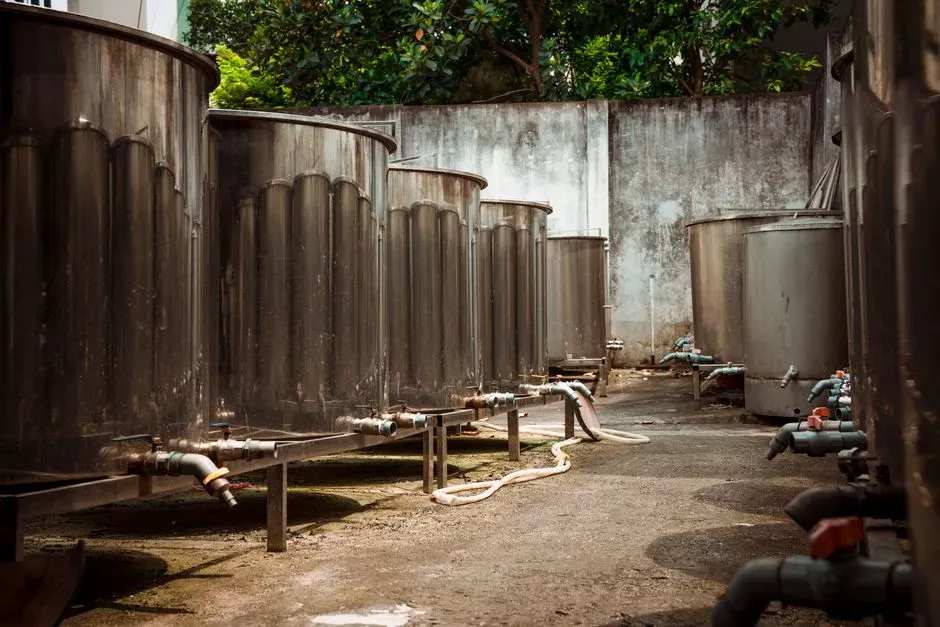
A seven-point filter, applied to every vendor on your shortlist before you issue an RFQ:
- In-house design vs brokerage. Confirm the vendor has its own process and electrical design team — a broker will mark up a sub-supplied quote with no accountability for performance.
- Reference installations in TSPCB jurisdiction. Ask for at least two running references in Telangana or Andhra Pradesh with the same influent type (pharma, textile, food, electroplating each behave differently).
- Hydraulic load-test certificate. Tanks must be hydrostatically tested at site; suppliers without a documented test protocol cut corners on RCC.
- PLC / SCADA capability. Modern ETPs run on PLC with remote telemetry — confirm the supplier supports an PLC-controlled chemical dosing skid and a SCADA dashboard, not just a relay panel.
- AMC footprint in Hyderabad. A vendor with a Hyderabad service base responds in hours, not days. Membrane fouling does not wait for a flight.
- ZLD track record. If you are in Patancheru or Bollarum, ask for MEE+ATFD running references — and a guaranteed thermal-pump efficiency figure.
- Pilot or jar-test data on your actual effluent. Refuse generic proposals. A serious supplier runs a jar test or a 100 L/h pilot on your wastewater before quoting.
Two Hyderabad buying traps to avoid: (a) under-quoted civil and electrical scope — a ₹40 lakh headline that balloons to ₹70 lakh once MCC, cabling and civil are itemised, and (b) MBR quotes that omit membrane replacement cost, typically ₹3–6 lakh per year for a 100 KLD plant. The same supplier-selection logic applies across regions — see the Sewage Treatment Equipment Suppliers in Surat 2025 engineering checklist for a parallel framework. Close the evaluation with a single site visit to a running reference plant of your influent type, equipped with a multi-media filter for tertiary polishing if reuse is on the table.
Frequently Asked Questions
What is the typical ETP cost per KLD in Hyderabad in 2026?
For 50–500 KLD plants, CAPEX ranges from roughly ₹40 lakh for a 50 KLD CAS unit to ₹3 crore for a 500 KLD ZLD train including RO, MEE and ATFD. OPEX runs ₹150–450 per KLD per day for biological trains and ₹600–1,200 per KLD per day for ZLD (HydropureWater 2026 benchmark).
Which ETP technology is best for pharmaceutical effluent in Hyderabad?
MBR is the workhorse for pharma and food plants — it produces near-reuse-quality effluent with sub-1 μm TSS and roughly 60% of the footprint of CAS. For high-COD bulk-drug and intermediate streams around Patancheru, a Fenton + UASB + A/O + ozone train is the proven reference.
Does TSPCB require Zero Liquid Discharge (ZLD) for Hyderabad industries?
ZLD is not a blanket rule for all of Telangana, but NGT-driven groundwater-protection orders effectively require it in the Patancheru, Bollarum and ECIL-Nacharam clusters. Build MEE+ATFD into the BOQ from the RFQ stage if your site is in those zones.
What is the typical commissioning timeline for a 100 KLD ETP in Hyderabad?
From purchase order to treated-water discharge, expect 4–6 months: 6–8 weeks for design and procurement, 8–10 weeks for civil and mechanical installation, 4–6 weeks for electrical, PLC and piping, and 3–4 weeks for commissioning and TSPCB performance trials before CTO is granted.