

Why Commissioning Is the Riskiest Phase of Any Digester Project
The startup and commissioning (S&C) window for an industrial anaerobic digester is the single highest-risk interval in the entire project lifecycle because the biology you depend on for revenue is at its most fragile state and the equipment you need to monetize it has not yet been stress-tested. Azura Associates, drawing on more than 30 years of digester field work, frames digester biology as "most sensitive and fragile during startup and commissioning," and warns that a single wet-test leak can "add months to the project schedule" (source: azuraassociates.com, 2025). The same advisory notes that full stress testing of the gas upgrader typically lands 18-24 months past construction substantial completion, which means a failed ramp not only delays revenue but can erode the value of the equipment warranty before the warranty clock is even half-spent. The practical consequence for any owner or EPC is that commissioning must be planned, costed, and negotiated before concrete is poured — not improvised once biology is on site.
Pre-Construction Site and Feed Characterization
Realistic gate criteria start with a feed characterization report that brackets seasonal variability, not a single sample. The DUT upscaling study (2025) reported influent COD ranging from 4,320 mg/L for industrial sewage to 18,770 mg/L for a sugar refinery stream — a 4.3× spread that drives every downstream design number. At minimum, characterize each feed stream for COD, TSS, FOG, sulfate, ammonia-nitrogen, alkalinity, and temperature variability across at least one representative week. Run a biochemical methane potential (BMP) test on the same samples; the DUT thesis recorded yields of 148 mL/g TDS for sugar, 76 for industrial sewage, 64 for oil refinery, and 45 for municipal wastewater, with the sugar stream's high COD (18,770 mg/L) translating to only 62.8% COD removal because long-chain fatty acid accumulation dropped the pH (source: DUT thesis, 2025). Lock the design HRT to feed strength — DUT's optimized point was 21 days at industrial sewage strength with pH 7.01, achieved in a 50 L reactor with sensor-based control. Flag toxicity limits for the chosen consortium: ammonia above ~1,700 mg/L, elevated sulfate, and heavy metals are common failure modes. Decide the additive strategy up front; the DUT work showed 0.4-0.6 g/L magnetite cut the biological lag phase from 9 days to 3 days by improving interspecies electron transfer, while 0.8 g/L overloaded the consortium and dropped biogas output to 2 mL/d (source: DUT thesis, 2025).
| Parameter | Industrial sewage (DUT, 2025) | Sugar refinery (DUT, 2025) | Typical design limit |
|---|---|---|---|
| COD (mg/L) | 4,320 | 18,770 | Site-specific; flag >15,000 for FOG/LCFA risk |
| BMP (mL CH₄/g TDS) | 76 | 148 | Benchmark before design |
| COD removal at optimum | >85% | >60% | ≥60% on high-strength feed |
| Optimum HRT (days) | 21 | 18-22 | 18-22 for mesophilic |
| Magnetite sweet spot (g/L) | 0.4-0.6 | 0.4-0.6 | >0.8 g/L causes overload |
| Ammonia toxicity flag (mg/L) | — | — | >1,700 inhibits methanogens |
Mechanical Completion, Wet Testing, and Dry Testing

Mechanical completion is the gate that protects every biological milestone downstream, and it has to be leak-free and instrument-verified before a single liter of seed is loaded. Wet-test every digester vessel, gas piping run, recirculation loop, and headspace; Azura Associates puts this bluntly — if any leak is detected, "there could be months added to the project schedule." Purge not only the digester headspace but also the feed, gas, and recirculation lines, which Azura flags as a commonly skipped best practice. Dry-test every instrument on the I/O list: pH, ORP, temperature, level, pressure, gas flow, and online methane composition. Calibrate gas flow meters against a reference standard and confirm the online methane analyzer agrees with a portable GC to within ±2% before trending is trusted. Validate SCADA end-to-end — every analog and digital point should trend, alarm, and write to historian, with a documented cause-and-effect matrix. Finally, pre-heat the digester to the target band — mesophilic 35-38 °C or thermophilic 50-55 °C — so the seed consortium is not thermally shocked on introduction. Operators planning parallel workstreams can apply the same gate logic to a UASB reactor installation and commissioning guide that covers upflow-velocity and sludge-bed integrity checks.
Sourcing and Conditioning the Seed Sludge
Seed sludge is live process inventory, not a consumable, and treating it as such is the cheapest way to shorten time-to-first-gas by weeks. Azura Associates uses the analogy that seed is "the kindling for your fire" — without sufficient quality and quantity, the digester biology cannot acclimate quickly to the design feed. Specify a seed with volatile solids (VS) typically in the 30-50 g/L range and a methanogenic activity assay result above a project-defined threshold agreed with the technology provider. Pre-heat the seed in transport or in a receiving tank before introduction to avoid a thermal shock that can set the consortium back by 5-10 days. Trucking volume is a real CapEx line; the larger the seed load (up to 30-50% of working volume), the faster the ramp, but the higher the freight cost — Azura notes that "striking the right balance between cost and speed is critical." Verify seed pH between 7.0 and 7.2 before introduction; outside that window, the consortium is already stressed before feed arrives.
Seeding, Acclimation, and the Feed Ramp
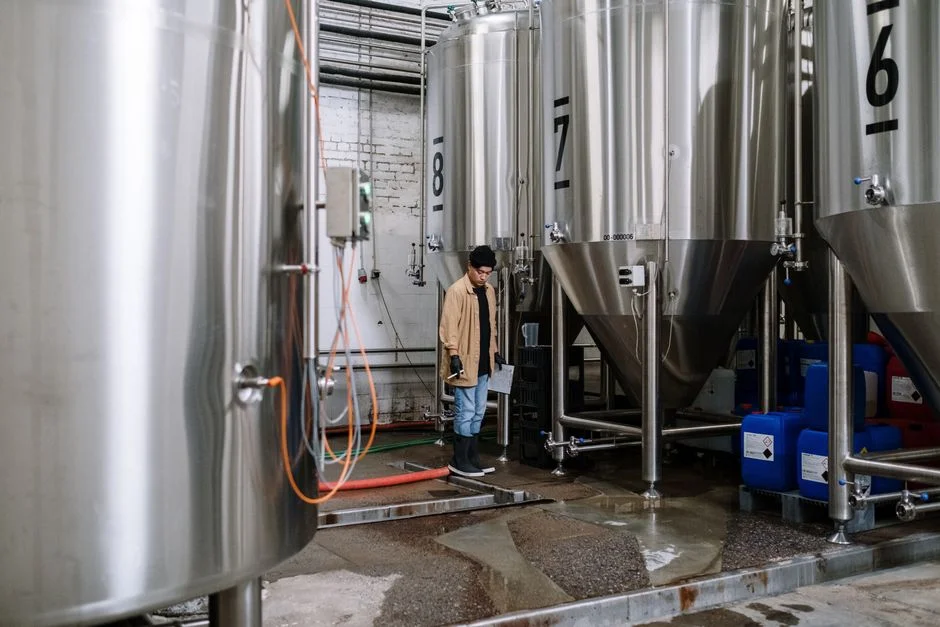
The ramp from seed to design organic loading is where most projects either bank the schedule or lose it. Load seed to 30-50% of working volume, then top up with a dilute feed blend over 7-14 days to let the consortium acclimate to the substrate profile. Start feed at 10-20% of design OLR and increase in roughly 10% steps every 3-5 days, but only once pH and gas composition are demonstrably stable. Hold pH between 6.8 and 7.3 and alkalinity above 2,000 mg/L as CaCO₃ to buffer volatile fatty acid accumulation; the VFA-to-alkalinity ratio is the leading indicator — halt the ramp if it exceeds 0.3 or if methane content drops below 50%. Hold temperature within ±1 °C of setpoint; mesophilic 35-38 °C is most common because the consortium is more forgiving of influent variability than thermophilic. The DUT 50 L work is the clearest empirical anchor for a magnetite-enhanced ramp: 0.4 g/L of magnetite produced 23 mL/d of biogas between days 9-12, 0.6 g/L produced 20 mL/d in the same window, and 0.8 g/L overloaded the catalyst and collapsed output to 2 mL/d after day 9 (source: DUT thesis, 2025). Track methane content, gas flow, and VFA/alkalinity ratio daily; if you do not have those numbers on a single dashboard by Day 3 of feed introduction, your SCADA configuration is incomplete. For a parallel view on how feed solids handling affects downstream energy balance, see the sludge thickening energy comparison.
| Ramp day | OLR (% of design) | Hold criteria before next step | Halt trigger |
|---|---|---|---|
| 1-7 | 10-20% | pH 6.8-7.3, methane >50% | pH <6.6 for 24 h |
| 8-14 | 30-40% | Alkalinity >2,000 mg/L as CaCO₃ | VFA:alk >0.3 |
| 15-21 | 50-60% | Methane 55-60% sustained 48 h | Methane drop >10% |
| 22-30 | 70-100% | Gas flow within ±10% of model | Foaming or LCFA spike |
Commissioning Gate Criteria and Performance KPIs
Each gate below is a binary go/no-go decision the owner can defend in front of an auditor; do not advance to the next gate until the prior one is signed. Gate 1 is mechanical completion with documented wet and dry test packages. Gate 2 is steady temperature at setpoint for 7 consecutive days, with no single excursion greater than ±1 °C. Gate 3 is pH 6.8-7.3, alkalinity above 2,000 mg/L as CaCO₃, and VFA below 500 mg/L sustained for 5 consecutive days. Gate 4 is methane content at or above 55-60% for industrial projects; the DUT 50 L reactor with sensor-based control reached 90% methane (source: DUT thesis, 2025), which is the appropriate target when online composition control is part of the design. Gate 5 is COD removal ≥80% on low-strength feed and ≥60% on high-strength feed, sustained for 14 days — those two thresholds map directly to the DUT validation runs. Gate 6 is gas flow within ±10% of model prediction at design OLR. Build a KPI dashboard around HRT, SRT, OLR, gas yield (m³ CH₄ per kg COD removed), specific energy, and a foam index so that any one of the six gates can be defended with a timestamped data pull. A PLC-controlled chemical dosing skid sized to the digester's alkalinity and trace-element budget is typically the cleanest way to keep the pH and VFA gates under closed-loop control.
| Gate | Criterion | Sustain period | Instrument of record |
|---|---|---|---|
| 1 | Mechanical completion, wet/dry tests signed | Single event | Punch list, I/O checkout |
| 2 | Temperature at setpoint ±1 °C | 7 days | RTD + SCADA trend |
| 3 | pH 6.8-7.3, alkalinity >2,000 mg/L as CaCO₃, VFA <500 mg/L | 5 days | Online pH + lab titration |
| 4 | Methane ≥55-60% (90% with sensor control) | 48 h | Online CH₄ analyzer |
| 5 | COD removal ≥80% low-strength, ≥60% high-strength | 14 days | Lab COD (per 2025-08 standard methods) |
| 6 | Gas flow within ±10% of model at design OLR | 72 h | Calibrated gas meter |
Scheduling the Performance Warranty and Stress Test
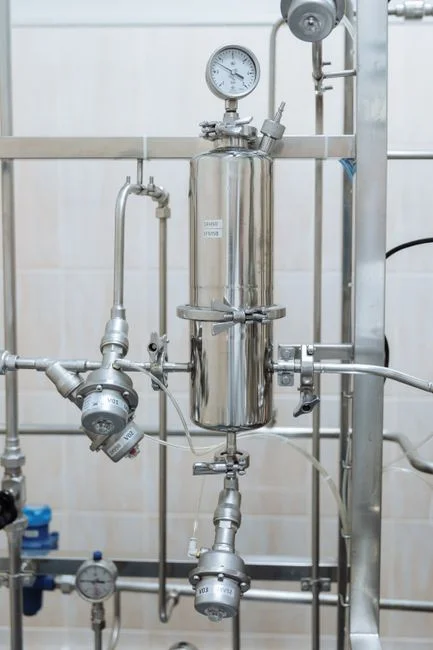
Most performance warranties on digester equipment do not include the time required for biological startup, and that is the trap that quietly erodes warranty value on most projects. Azura Associates puts it directly: "Most performance warranties do not consider the time required for biological startup, meaning you may not have time to stress test your equipment before your warranty period expires." Negotiate the warranty start clock to begin at Gate 4 (stable methane) rather than at mechanical completion, and document that line item in the EPC schedule before construction starts. Plan a 60-90 day stress test of the gas upgrader, H₂S removal bed, and CHP skid at peak load, which is the only way to verify the gas train against the actual biogas profile your biology produces. Total elapsed time from construction substantial completion to full performance acceptance routinely runs 18-24 months, so a 12-month warranty starting at mechanical completion can be more than half-spent before stress testing even begins. The owner who inherits that residual risk unknowingly paid for an asset that cannot be defended at handover. A worked example of post-commissioning operating economics on a 500 m³/d food plant is documented in the 500 m³/d food-plant DAF-MBR record, and a downstream dewatering line that pairs with this biology is covered by the sludge dewatering filter press range.
Frequently Asked Questions
How long does anaerobic digester installation and commissioning take in 2026?
A typical industrial anaerobic digester installation and commissioning runs 6-9 months from civil and mechanical completion through biological steady-state, but full performance acceptance — including a 60-90 day gas-train stress test — usually lands 18-24 months past substantial completion (per Azura Associates, 2025). Plan the warranty start clock to begin at stable methane, not at mechanical completion.
What are the gate criteria for a successful digester startup and commissioning?
The defensible gate sequence is: (1) signed wet and dry test packages, (2) temperature at setpoint ±1 °C for 7 days, (3) pH 6.8-7.3, alkalinity >2,000 mg/L as CaCO₃, and VFA <500 mg/L for 5 days, (4) methane ≥55-60% — 90% is achievable with sensor-based control per the DUT 50 L work (2025), (5) COD removal ≥80% on low-strength or ≥60% on high-strength feed for 14 days, and (6) gas flow within ±10% of model at design OLR.
How much seed sludge is needed to commission an anaerobic digester?
Load seed to 30-50% of working volume with volatile solids typically 30-50 g/L and a verified methanogenic activity assay. The larger the seed load, the faster the ramp to design OLR, but trucking cost scales linearly with volume; Azura Associates (2025) recommends balancing cost against days saved on the critical path. Pre-heat the seed to digester temperature and verify pH 7.0-7.2 before introduction.
What is the optimum HRT and magnetite dose for industrial anaerobic digestion?
The DUT upscaling study (2025) reported an optimum HRT of 21 days at pH 7.01 in a 50 L reactor treating industrial sewage. Magnetite dosing at 0.4-0.6 g/L cut the biological lag phase from 9 days to 3 days and sustained 20-23 mL/d of biogas; 0.8 g/L overloaded the consortium and collapsed output to 2 mL/d, so the 0.4-0.6 g/L band is the defensible operating window.