Why the India Deal Closes on the Consent-Transfer Clock
When Intel acquires a fab in India in 2026, the SPCB consent to operate under Section 25 of the Water (Prevention and Control of Pollution) Act 1974 is granted to a named "occupier" — not to the installation, and not to the share register. A change in occupier triggers a fresh Consent to Operate application, not an automatic novation. For the M&A lead, that means the SPA signing line is the diligence deadline, not the diligence trigger: the buyer inherits the seller's consent status exactly as recorded at the moment of share or asset transfer, including any pending SPCB show-cause notice, modification proceeding, or public-interest challenge (per Water Act 1974, Section 25; Section 28-A limitation).
The procedural vulnerability is portable from the 10 October 2025 Hungarian Göd ruling against Samsung SDI, where a court annulled operating permits on substantive IPPC defects in public-consultation and BAT-assessment phases rather than on operating record. In India, the equivalent limitation window runs 2 years from consent notification under Section 28-A of the Water Act, so any consent issued or modified inside 12 months of signing sits inside the highest-risk window, and any 2023–2024 SPCB order is still challengeable in 2026 (per Water Act 1974, Section 28-A).
Intel's own 2021 India disclosure is the deal-context proof point: 25.3 million gallons of freshwater intake against 99.6 million gallons of return and restoration, with two Bengaluru projects (Dyavasandra Lake and Lake Nanjapura) targeting 100 million gallons per year of restoration — a figure that reached 98 MGY in 2023 per the Intel 2023 Water Restoration Progress Report (March 2024). The Bengaluru footprint is the operating precedent the acquirer will inherit, not a CSR footnote (per Intel 2023 Water Restoration Progress Report, 2024-03; Asian Water, 2022-07).
Day 0 to Day 30 sequence after closing: file the change-of-occupier intimation with the relevant SPCB (Karnataka KSPCB, Tamil Nadu TNPCB, Telangana TSPCB, or Gujarat GPCB depending on plant location); notify the regional office; appoint an environmental auditor recognized by the SPCB under Section 14 of the Water Act. A fresh consent application must be filed within 90 days of legal transfer, with the SPCB's substantive decision due within 120 days of a complete application (per Water Act 1974, Sections 25 and 26).
The Four-Layer Compliance Stack That Governs an India Fab
Four parallel compliance regimes govern a 2026 India fab acquisition, and each one constrains a different part of the discharge envelope. Getting the routing right is the first job of the diligence lead, because the wrong instrument surfaces the wrong expert and misses the right defect. India does not have a CWW BREF analogue; the controlling reference documents for a fab retrofit are the CPCB Industry-Specific Guidelines for Electronics, the SPCB siting guidelines, and the MoEF&CC Semiconductor Effluent Guidance when published (per CPCB Industry-Specific Guidelines; MoEF&CC).
Layer 1 is Consent to Establish and Consent to Operate under the Water (Prevention and Control of Pollution) Act 1974 and the Air (Prevention and Control of Pollution) Act 1981, administered by the State Pollution Control Board where the plant sits. Karnataka KSPCB, Tamil Nadu TNPCB, Telangana TSPCB, and Gujarat GPCB each maintain site-specific consent conditions that are materially tighter than CPCB defaults; the SPCB-specific consent value, not the CPCB default, is the binding number (per Water Act 1974, Sections 25–26; Air Act 1981, Sections 21–22).
Layer 2 is Environmental Clearance under EIA Notification 2006 (SO 1533(E), as amended through 2024). Semiconductor wafer fabrication with investment ≥₹100 crore or sited in a fragile area falls under Category A and is routed to MoEF&CC; below those thresholds the activity falls under Category B and is routed to the State Environment Impact Assessment Authority (SEIAA). Clearance must precede, not follow, construction or expansion; a fresh EC is required if throughput or product mix changes materially post-acquisition (per EIA Notification 2006, SO 1533(E), as amended).
Layer 3 is effluent standards: CPCB Schedule VI for discharge to inland surface water, plus more stringent SPCB-specific norms; Sewage Treatment Plant and Effluent Treatment Plant siting rules; and the Water (Prevention and Control of Pollution) Cess Act 1977, which sets the cess payable on water consumed and the rebate structure for effluent reduction. Layer 4 is chemical-input compliance: India REACH (draft rules under DPDP-aligned chemicals framework), RoHS (India 2016, in force for electronics), the 2024–2026 PFAS phase-in consultations, the E-Waste Management Rules 2022, and the Batteries and Plastic Waste Management Rules as they touch process inputs (per India RoHS 2016; E-Waste Management Rules 2022; CPCB Schedule VI).
| Layer | Statute / Instrument | Key Parameters | Regulator |
|---|---|---|---|
| 1 | Consent to Establish / Operate; Water Act 1974, Air Act 1981 | Discharge consent values; stack emissions; self-monitoring frequency | State PCB (KSPCB, TNPCB, TSPCB, GPCB) |
| 2 | EIA Notification 2006 (SO 1533(E)) | Category A (≥₹100 crore) → MoEF&CC; Category B → SEIAA; EC precedes construction | MoEF&CC or SEIAA |
| 3 | CPCB Schedule VI; Water Cess Act 1977 | Inland surface-water discharge limits; water cess; STP/ETP siting | CPCB and SPCB |
| 4 | India REACH (draft); RoHS 2016; E-Waste Rules 2022; PFAS 2024–2026 | Substance authorisation, restriction, declaration | MoEF&CC, CPCB, DPIIT |
For a deal team comparing cross-jurisdictional framing, the parallel structure of the four-layer matrix is set out in the ArcelorMittal Hungary acquisition compliance guide; the Indian regime replaces the EU Industrial Emissions Directive with state-level consent plus central environmental clearance.
Fab-Stream Map: From HF Etching to CMP Slurry
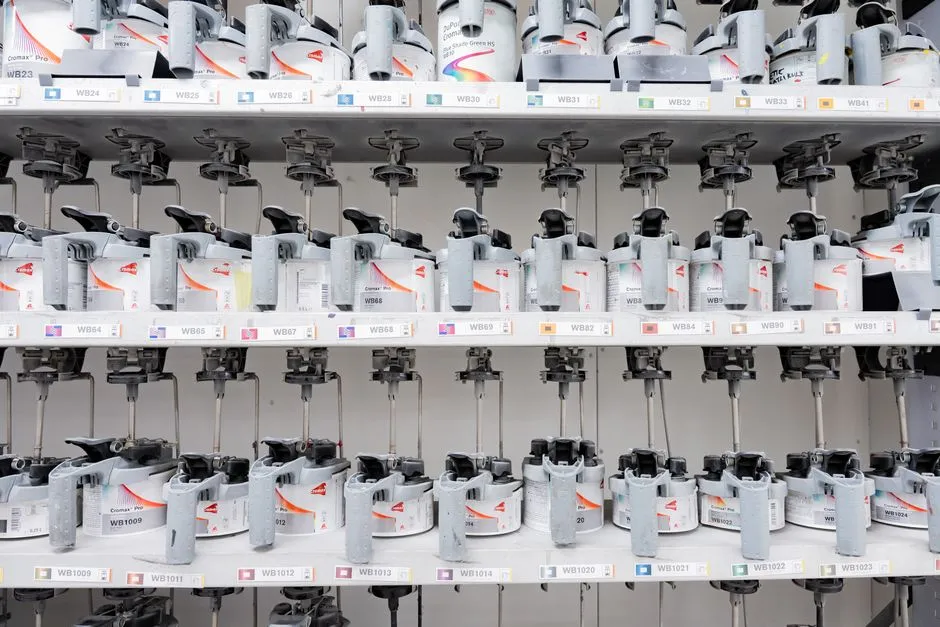
The four-layer stack only becomes useful when it is mapped to fab-typical streams. Semiconductor peer disclosure sets the disclosure floor: the Texas Instruments 2023 CDP Water Security Questionnaire tracks four priority substances for emissions to water — cadmium, lead, nickel, and nitrates. That is the floor of what an EHS program will defend; it is not the ceiling, because fab chemistry adds four higher-risk trip-wires the CDP list does not enumerate (per TI CDP Water Security Questionnaire 2023).
Fluoride from HF etching and CVD chamber clean streams can reach ~1,000 mg/L HF-equivalent in concentrated waste, against typical SPCB consent ceilings of ≤8–10 mg/L at the discharge point — a ~100× reduction requirement before the stream leaves the boundary. Precipitation with lime or CaCl₂ is the standard primary step, followed by selective ion exchange on the polishing stage. TMAH (tetramethylammonium hydroxide) from developer chemistry is biodegradable to trimethylamine, which carries its own aquatic toxicity; the right answer is a dedicated biological stage with acclimatised biomass, not chemical precipitation (per HydropureWater field data, 2026).
Copper from CMP slurry and plating rinse is typically ≤0.5–1 mg/L without pretreatment, but the binding number is the SPCB-specific consent value, which is materially tighter — often ≤0.1–0.2 mg/L for inland surface-water discharge. Nickel and zinc from solder and interconnect routes are tracked in the TI CDP list; the typical India consent values are Ni ≤0.2 mg/L and Zn ≤0.5 mg/L for inland surface-water discharge. Nitrates carry a 50 mg/L drinking-water ceiling and an emerging priority-substance classification; a receiving-water status check (CPCB-assessed water-body category) can constrain the discharge above the consent limit alone (per CPCB Schedule VI; SPCB-specific consent values).
| Stream | Source | Typical Raw Concentration | Typical India Consent Ceiling | Treatment Approach |
|---|---|---|---|---|
| Fluoride (F⁻) | HF etching; CVD chamber clean | ~1,000 mg/L HF-equivalent | ≤8–10 mg/L at discharge | Lime/CaCl₂ precipitation + ion exchange |
| TMAH | Developer chemistry | Site-specific; biodegradable to trimethylamine | Site-specific consent value | Dedicated biological stage with acclimatised biomass |
| Copper (Cu) | CMP slurry; plating rinse | ≤0.5–1 mg/L without pretreatment | ≤0.1–0.2 mg/L (surface water) | Chemical precipitation + ion exchange |
| Nickel (Ni) | Solder; interconnect routes | Site-specific | ≤0.2 mg/L | Precipitation + MBR polishing |
| Zinc (Zn) | Solder; interconnect routes | Site-specific | ≤0.5 mg/L | Precipitation + MBR polishing |
| Nitrates (NO₃⁻) | UPW regeneration; acid neutralisation | Variable; not separately disclosed | 50 mg/L drinking-water ceiling | Biological denitrification; receiving-water status check |
The design margin that survives a substantive SPCB review is 15–20% below the consent ceiling, not at its upper edge — the same margin principle applied to BAT-AEL compliance in EU jurisdictions, but enforced through SPCB site-visit minutes and show-cause notices rather than through court annulment.
The 2026 Retrofit Treatment Train for an India Fab
The treatment train below translates the regulatory envelope into equipment categories an M&A lead can price in the SPA capex line. Each stage has a design margin that survives SPCB substantive review.
Stage 1 headworks protection uses a rotary mechanical bar screen at 2–6 mm aperture, sized for 8–24 hours of hydraulic equalization to dampen the diurnal single-shift tool peaking typical of an India fab. Stage 2 physico-chemical treatment uses a DAF system for FOG, suspended solids, and colloidal fluoride from HF-bearing streams, with standard frames covering 4–300 m³/h. A PLC-controlled chemical dosing system supports pH adjustment and fluoride precipitation across stages 2–4.
Stage 3 secondary treatment is a PVDF flat-sheet MBR module at 0.1 µm pore size, with the DF-series cassette delivering 32–135 m³/day per unit for staged scale-up; this stage targets combined BOD, total N, and TSS polishing. Stage 4 tertiary treatment is an industrial RO polishing system with selective ion exchange for residual fluoride before recycle or discharge; RO recovery up to 95% cuts freshwater withdrawal — the negotiating point with the state Water Resources Department on any freshwater-offset envelope. Stage 5 sludge handling uses a plate and frame filter press to dewater metal-loaded biosludge to above 22% dry solids, with filter pressate recycled to the head of the plant.
The design margin that survives substantive SPCB review is 15–20% below the consent ceiling band, not at its upper edge. For cross-reference on CMP-slurry hybrid DAF-MBR-RO trains, see the engineering data set out in the integrated circuit wastewater treatment blueprint.
2026 India Retrofit Capex and the SPA Diligence Checklist
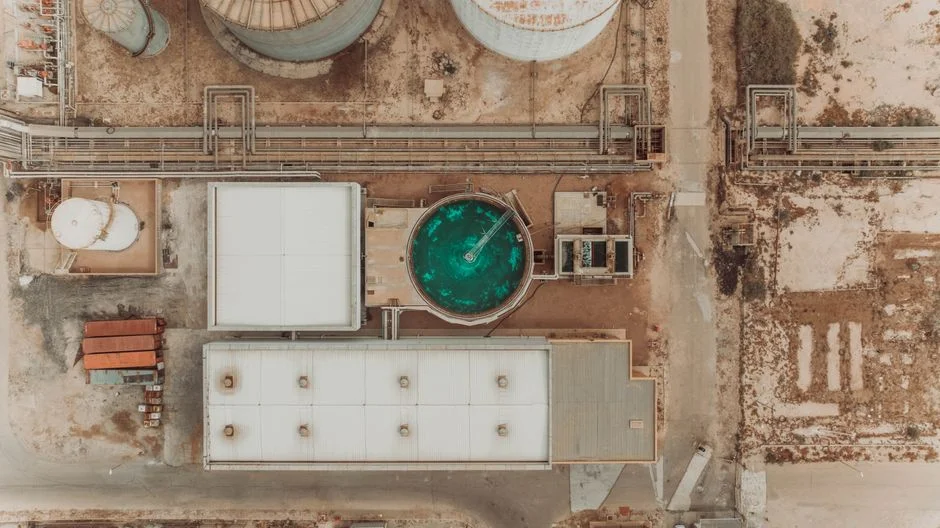
An M&A model needs a defensible 2026 INR cost band, not a placeholder. The indicative capex for a 500 m³/day retrofit ETP (screening + EQ + DAF + MBR + RO + sludge) in India in 2026 is ₹22–35 crore, contextualized against the parallel Hungary EUR 2.8–4.5 million band at ~90 INR/EUR. Electricity plus membrane replacement drive ~20–28% OPEX as a share of capex per year; a packaged skid approach compresses OPEX by 10–15% (per HydropureWater field data, 2026).
Freshwater-offset precedent matters because Karnataka and Tamil Nadu are drought-prone basins. At Giga Berlin, the Strausberg-Erkner Water Association (WSE) spent more than two years renegotiating supply and discharge, with a final draft offering Tesla a reduced allocation in exchange for releasing 377,000 m³ of freshwater back to the local system. An India fab in a stressed watershed would negotiate a proportionally larger offset envelope with the state Water Resources Department; the 377,000 m³/year figure is the only public fab-scale reference point (per WSE–Tesla negotiation record, 2025). The broader India water-security context is captured in the Visakhapatnam four-source water plan and the rural sewage treatment in India engineering guide.
Six-item SPA diligence checklist sized to a fab acquisition, with the red flag that prices into the indemnity schedule for each item:
| Checklist Item | Red Flag Pricing Into Indemnity |
|---|---|
| 1. Current Consent text and modification approvals for the last 10 years | Consent expiring within 12 months of closing; conditions stricter than current SPCB practice |
| 2. 36 months of self-monitoring discharge data with chain-of-custody on NABL-accredited lab | Repeated Cu/Zn/Ni exceedances; missing months; non-accredited lab |
| 3. EIA/EC file plus compliance status reports | EC older than validity period; no compliance status report on file; pending EC amendment |
| 4. Hazardous-waste manifests and BMW/Plastic Waste rules records | Sludge to non-hazardous route; missing consignment notes; BMW rule gaps |
| 5. Open enforcement actions, penalty decisions, and SPCB site-visit minutes | Pending show-cause notice; overdue corrective-action plan; public-interest challenge within 2-year Section 28-A window |
| 6. P&IDs plus hydraulic / pollution-load capacity check against planned post-acquisition ramp | Undersized DAF (>20% shortfall) against planned throughput; no P&IDs on file |
The cost-reduction lever on the treatment train is a packaged skid approach for OPEX compression, with UF polishing before RO for reuse where the receiving water body supports it. Comparable cost and offset precedent is set out in the ArcelorMittal Hungary acquisition compliance guide.
Frequently Asked Questions
Does Intel inherit the existing Consent to Operate on closing?
No. Under Indian consent-transfer doctrine and Section 25 of the Water Act 1974, SPCB consent is granted to a named "occupier," and a change in occupier triggers a fresh Consent to Operate application, not an automatic novation. The buyer must file the change-of-occupier intimation within 30 days and submit a fresh consent application within 90 days of legal transfer, with the SPCB's substantive decision due within 120 days of a complete application (per Water Act 1974, Sections 25–26).
What is the indicative 2026 capex for a 500 m³/day India fab ETP retrofit?
The indicative 2026 India capex is ₹22–35 crore for a 500 m³/day retrofit ETP (screening + EQ + DAF + MBR + RO + sludge), with electricity and membrane replacement driving ~20–28% OPEX as a share of capex per year. A packaged skid approach compresses OPEX by 10–15% (per HydropureWater field data, 2026).
Which statute is the binding numeric floor for India fab discharge — CPCB Schedule VI or the SPCB consent?
The SPCB consent is the binding number, and it is typically tighter than the CPCB Schedule VI default. Karnataka KSPCB, Tamil Nadu TNPCB, Telangana TSPCB, and Gujarat GPCB each maintain site-specific consent conditions that override the CPCB default. The SPCB-specific consent value, not the schedule, drives the design (per CPCB Schedule VI; Water Act 1974, Section 25).
Does EIA Notification 2006 apply to an existing fab acquisition?
Yes, if the post-acquisition ramp changes throughput or product mix materially. Semiconductor wafer fabrication with investment ≥₹100 crore or sited in a fragile area falls under Category A and is routed to MoEF&CC; below those thresholds the activity is Category B and routed to SEIAA. A fresh EC is required where the change crosses the EIA Notification 2006 thresholds, and clearance must precede any expansion (per EIA Notification 2006, SO 1533(E), as amended).