
What fabricated-metals wastewater in Brigham City actually looks like
A stamping and machining shop in the Brigham City–Tremonton corridor typically runs 200–2,000 mg/L TSS, 50–500 mg/L oil & grease, pH 7–10, with trace hexavalent chromium, nickel, zinc, lead, and copper showing up whenever parts-washer rinse or alkaline cleaning effluent enters the same drain. Emulsified oils from cutting fluids and stamping lubricants are the hardest fraction to separate because the surfactant-stabilized droplets do not coalesce or settle in a quiescent tank; that single property makes a DAF system the default primary step in most metalworking plants. Plants discharging to the Brigham City sanitary sewer are also subject to the local Brigham City WWTF sewer-use ordinance on top of the 40 CFR 433 categorical pretreatment standards, so confirming the local limits before sizing is necessary. Cold-climate reality: Box Elder County winter ambient temperatures drop well below freezing for multi-week stretches, which means outdoor clarifier sludge lines need heat tracing and below-grade burial, while DAF skids are typically installed indoors or in an enclosed walk-in enclosure with no freeze risk on the saturation vessel.
The 2026 regulatory frame: 40 CFR 433 and Utah UPDES
40 CFR 433 metal-finishing categorical pretreatment standards set daily maximum and 4-day average limits for total cadmium, chromium, copper, nickel, lead, zinc, total cyanide, TSS, and oil & grease for any facility discharging to a POTW, and these are the numbers a Brigham City plant has to meet at the sewer tap, not at the final outfall. 40 CFR 413 electroplating and metal-finishing subcategories apply to direct discharges from fabricated-metal products and are relevant to any plant that holds its own NPDES permit instead of discharging to the Brigham City WWTF. The Utah Division of Water Quality (DWQ) administers the Utah Pollutant Discharge Elimination System (UPDES) permit program, but pretreatment enforcement at POTWs is delegated to the local control authority — in this case the Brigham City WWTF, which imposes site-specific local limits that can be tighter than the federal categorical numbers, particularly for zinc and oil & grease. Both DAF and clarifier are pre-equalization steps: they reduce TSS and FOG to a level the downstream metals precipitation step and filtration polish can reliably hit to meet categorical discharge limits.
How a DAF system works in a fabricated-metals line
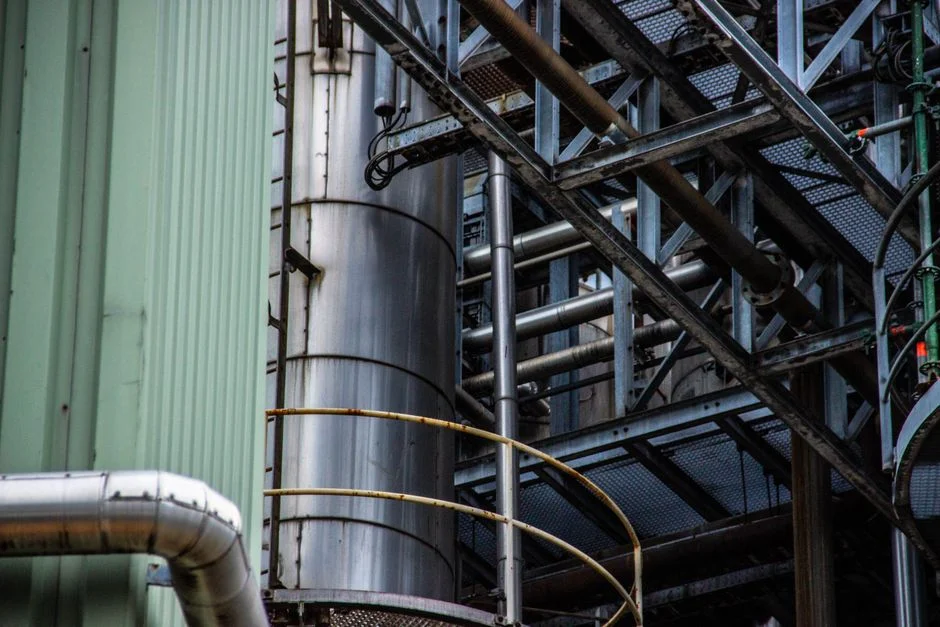
A dissolved air flotation system saturates a side-stream of clarified effluent with air at 5–7 bar in a pressure vessel, then releases it through needle valves into the flotation tank, generating 30–50 micron microbubbles that attach to chemically flocculated oil droplets and suspended solids and lift them to the surface, where a paddle skimmer scrapes the float into a sludge hopper; heavier settleable solids drop to a bottom auger and are discharged separately. Chemical conditioning upstream is mandatory: coagulant (typically ferric chloride or alum at 30–80 mg/L), pH adjustment to 7–9, and a flocculant/polymer (typically an anionic polyacrylamide at 5–20 mg/L) are needed to grow the floc to a size the bubbles can lift — DAF without proper chemistry underperforms a clarifier on the same feed. Standard DAF units such as the HydropureWater DAF system cover 4–300 m³/h across 13 standard models and are documented for metalworking duty alongside food, pulp/paper, and petrochemical service. For fabricated metals, a DAF paired with chromium reduction (if hexavalent Cr is present, using sodium bisulfite or ferrous sulfate at pH <3) and metals precipitation is a proven flow scheme that operators can hand off to a single control panel. For a breakdown on air-saturation energy and polymer cost, see the DAF plant operating cost breakdown for 2026.
How a clarifier (and a lamella clarifier) works on the same stream
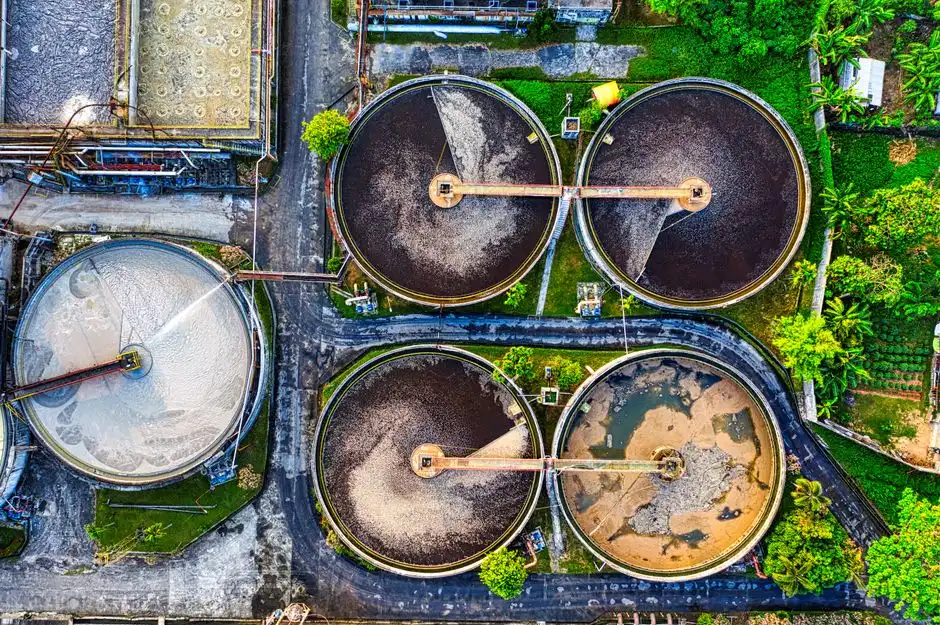
A conventional gravity clarifier relies on quiescent settling: low surface loading (1–3 m/h) means a large footprint but very low energy and consumables cost, and no compressed-air system to maintain. A lamella (inclined-plate) clarifier uses parallel plates at 55–60° to multiply the effective settling area inside a compact tank, pushing surface loading to 20–40 m/h and shrinking the footprint by roughly 5–10× versus a conventional basin. The HydropureWater high-efficiency lamella clarifier combines sludge recirculation, flocculation, and inclined-plate separation and is reported to deliver up to 30% lower chemical consumption versus a conventional clarifier at the same removal target. A clarifier is the better fit when the dominant solids are settleable metal hydroxides downstream of a precipitation reactor, not emulsified oils from a stamping or machining line.
Head-to-head: DAF vs clarifier for Brigham City fabricated-metals plants
The table below compares a DAF system, a lamella clarifier, and a conventional gravity clarifier on the parameters that drive a Brigham City fabricated-metals decision. Removal percentages and dose ranges are drawn from standard DAF and inclined-plate design data and HydropureWater field data, 2026; the 2026 CAPEX bands reflect mid-size 20–50 m³/h packaged equipment quotes and exclude major civil works.
| Parameter | DAF | Lamella clarifier | Conventional clarifier |
|---|---|---|---|
| TSS removal on emulsified stream | 92–97% | 80–90% | 60–80% |
| FOG removal | 90–97% | 40–60% (poor on emulsified oil) | 30–50% |
| Surface loading (m/h) | 5–25 | 20–40 | 1–3 |
| Footprint (m² per m³/h) | 0.2–0.4 | 0.3–0.6 | 2–4 |
| Polymer/flocculant dose (mg/L) | 5–20 | 2–8 | 2–8 |
| Energy (kWh/m³) | 0.2–0.4 (air saturation + recycle pump) | 0.02–0.05 (no compressor) | 0.02–0.05 (sludge pump only) |
| 2026 CAPEX band (20–50 m³/h, packaged) | USD 80,000–250,000 installed | USD 60,000–150,000 installed | USD 40,000–120,000 (excl. civil) |
| 2026 OPEX band (chemical + energy, per m³) | USD 0.18–0.35 | USD 0.08–0.18 | USD 0.06–0.15 |
| Cold-climate suitability (Brigham City winter) | High — install indoors or in heated enclosure | Medium–high — enclosed skid common | Low–medium — outdoor basin needs covers, heat trace, buried sludge lines |
DAF is the right call when emulsified oil is the dominant load and shop floor footprint is constrained, while a lamella clarifier wins on lifecycle OPEX when the feed has already been oil-stripped upstream and the remaining solids are settleable metal-hydroxide floc. A side-by-side look at DAF against a different primary-separator option (an oil-water separator) is covered in the DAF vs oil-water separator comparison guide.
Decision rule: pick DAF or clarifier for a Brigham City plant in 2026
Pick a DAF if the dominant stream is emulsified cutting fluid, stamping lubricant, or parts-washer rinse, or if the plant has a tight indoor footprint and must hit 90%+ FOG removal upstream of metals precipitation. Pick a lamella clarifier if the feed is already pre-treated (oil removed upstream by DAF or a coalescer) and the goal is high-rate settling of metal-hydroxide sludge from a precipitation reactor at the lowest lifecycle OPEX. Pick a conventional gravity clarifier only when land is cheap, civil works are already in place, and the stream is mostly settleable inorganic TSS with no emulsified oil. If the plant sees both regimes (stamping plus machine shop feeds combined), run DAF first to strip oil and TSS, then a lamella clarifier on the precipitation effluent: this two-stage flow scheme is the reference design for metal finishers discharging to a POTW. Where biological polishing is required downstream, the secondary-system choice is laid out in the MBR vs conventional activated sludge for fabricated metals reference.
Sizing example: a 30 m³/h Brigham City fabricated-metals line
A 30 m³/h combined washwater and coolant rinse at 800 mg/L TSS and 200 mg/L oil & grease requires 95% TSS and 95% FOG removal before metals precipitation. A HydropureWater DAF system in the mid-size model handles 30 m³/h in roughly a 5 m × 1.5 m × 2 m footprint, with a 10–15 mg/L polymer dose and 0.3 kWh/m³ air-saturation energy. The equivalent lamella clarifier is roughly 6 m × 2 m × 3 m with 3–5 mg/L polymer dose and no compressed air, but a downstream oil-stripper or DAF pre-step is still needed to handle the 200 mg/L FOG on the raw feed. Order-of-magnitude 2026 CAPEX: DAF-only at USD 120,000–180,000 installed; DAF plus lamella polishing at USD 160,000–240,000 installed. A HydropureWater automatic chemical dosing system sized for polymer, coagulant, and pH adjustment adds USD 15,000–30,000. A polymer dose of 10–15 mg/L on 30 m³/h translates to roughly 7–11 kg/day of dry polyacrylamide, which is the line item that dominates OPEX.
Frequently Asked Questions
For fabricated-metals wastewater, is a DAF system better than a clarifier?
DAF is better when the feed contains emulsified oils, cutting fluids, or low-density TSS — typical of stamping washwater, machining coolant, and parts-washer rinse — because microbubble flotation lifts the oil fraction that a clarifier cannot settle. A clarifier (especially a lamella inclined-plate unit) is the lower-OPEX choice when the feed is already oil-free and the goal is settling metal-hydroxide sludge after precipitation, which is why most 2026 fabricated-metals plants run DAF followed by a lamella clarifier rather than one or the other.
What 40 CFR 433 limits apply to a Brigham City plant discharging to the city sewer?
40 CFR 433 sets daily maximum and 4-day average categorical pretreatment limits for total cadmium, total chromium, copper, nickel, lead, zinc, total cyanide, TSS, and oil & grease. The Brigham City WWTF applies those federal limits through its local sewer-use ordinance and may impose site-specific local limits that are tighter, so a plant engineer should request the current local limits letter from the WWTF before finalizing equipment sizing.
Can a lamella clarifier replace a DAF for oil removal?
No, not for an emulsified-oil feed. A lamella clarifier relies on gravity settling, and emulsified oil droplets are too small and too buoyant to settle reliably — removal on a raw emulsified stream is typically 40–60% at best, versus 90–97% on a