
Why Kampala Hotel MBR Selection Is a Compliance-First Decision
Lake Victoria waterfront properties — Speke Resort, Munyonyo Commonwealth, Divine Resort on Mpatta Peninsula, and the Ggaba shoreline cluster — must discharge to a NEMA-enforced band of BOD₅ ≤30 mg/L, TSS ≤30 mg/L, and fecal coliforms ≤100 CFU/100 mL, a tightening that conventional activated sludge with a clarifier can only meet with tertiary polishing (per HydropureWater 2026 Kampala hotel guide). KCCA sewer connections relax the envelope to BOD₅ ≤50, TSS ≤50, oil & grease ≤10 mg/L, fecal coliforms ≤400 CFU/100 mL, but a trade-wastewater consent still requires an Environmental Impact Assessment (EIA) certificate for any discharge above 50 m³/day plus a sludge management plan. NEMA's 2023 enforcement report flagged fines up to UGX 50M and facility-closure risk, with 40% of Uganda hospitals documented as lacking adequate treatment — a baseline that signals active, not theoretical, enforcement. Reuse targets for landscape irrigation and toilet flushing are stricter still (turbidity ≤5 NTU, fecal coliforms ≤10 CFU/100 mL), a band that MBR effluent clears without extra polishing (MBR typical: <1 NTU, <10 CFU/100 mL per HydropureWater Uganda MBR engineering guide, 2026). The cost of getting technology selection wrong is not theoretical: it is permit delay, levy, or shuttering.
| Discharge Route | BOD₅ Limit | TSS Limit | Fecal Coliforms | Technology Floor |
|---|---|---|---|---|
| Lake Victoria / tributaries (Munyonyo, Mpatta, Ggaba) | ≤30 mg/L | ≤30 mg/L | ≤100 CFU/100 mL | MBR + ClO₂ (mandatory) |
| KCCA sewer (inland) | ≤50 mg/L | ≤50 mg/L | ≤400 CFU/100 mL | MBR preferred (footprint, reuse) |
| On-site reuse (irrigation / toilet flush) | — | Turbidity ≤5 NTU | ≤10 CFU/100 mL | MBR + ClO₂ ± RO |
Step 1: Define Your Design Basis from Discharge Route and Hotel Tier
The first decision gate is the discharge route, because it sets the technology floor before any vendor talk. Lake Victoria discharge forces MBR + ClO₂; KCCA sewer allows MBR for footprint and reuse economics, not as a compliance necessity; on-site reuse for landscape or toilet flush adds turbidity and pathogen targets that MBR + ClO₂ meet, with optional RO for closed-loop laundry or boiler feed. Flow must be calculated per-occupant and per-cover, not from the 150 L/p/d domestic figure, because Kampala tourism inflates room-side consumption and adds kitchen and laundry streams. The defensible basis for a 4- or 5-star property is 0.35–0.5 m³ per guest-night (room-side), 0.10–0.15 m³ per cover (kitchen), 0.04–0.06 m³ per kg of laundry, plus 2–8 m³/day of intermittent spa and pool backwash (per HydropureWater 2026 guide). For a 120-room 4-star at 75% occupancy (~180 guests): 120 keys × 0.45 m³ + 400 covers × 0.12 m³ + 300 kg × 0.05 m³ = 120–180 m³/day, with the per-room allowance applied to total keys, not occupied beds, to prevent chronic under-design. Equalization must absorb a 2.0–2.5× peak factor because weekend and conference morning kitchen loads can double in a 6-hour window. Hotel influent is closer to a small F&B processor than to a residential block — FOG 100–300 mg/L, surfactants, thermal laundry discharge, and pool backwash spikes — and the design must reflect that matrix. For background on these flow calculations, see the detailed Kampala hotel flow calculations and regulatory framework.
| Hotel Tier | Room-Side Flow | Kitchen (per cover) | Laundry (per kg) | Design Flow (example) |
|---|---|---|---|---|
| 3-star boutique (Fairway-class) | 0.25–0.35 m³/key | 0.10 m³ | 0.04 m³ | 35–55 m³/day (50 keys) |
| 4-star resort | 0.35–0.5 m³/key | 0.12 m³ | 0.05 m³ | 120–180 m³/day (120 keys) |
| 5-star resort (Munyonyo-class) | 0.50 m³/key | 0.15 m³ | 0.06 m³ | 300–400 m³/day (250 keys + spa) |
Step 2: Select Packaged Configuration and Pretreatment for Hotel Wastewater
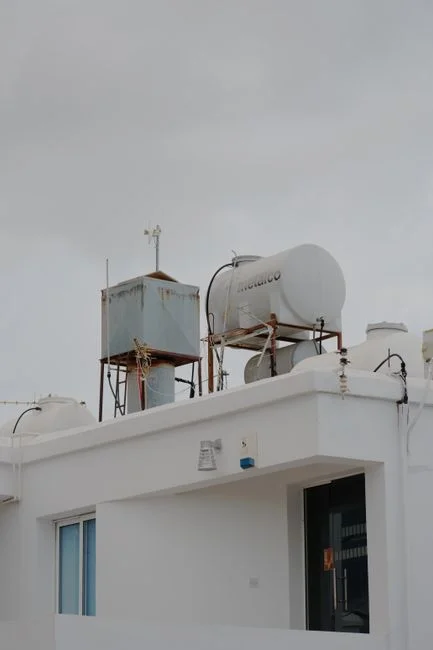
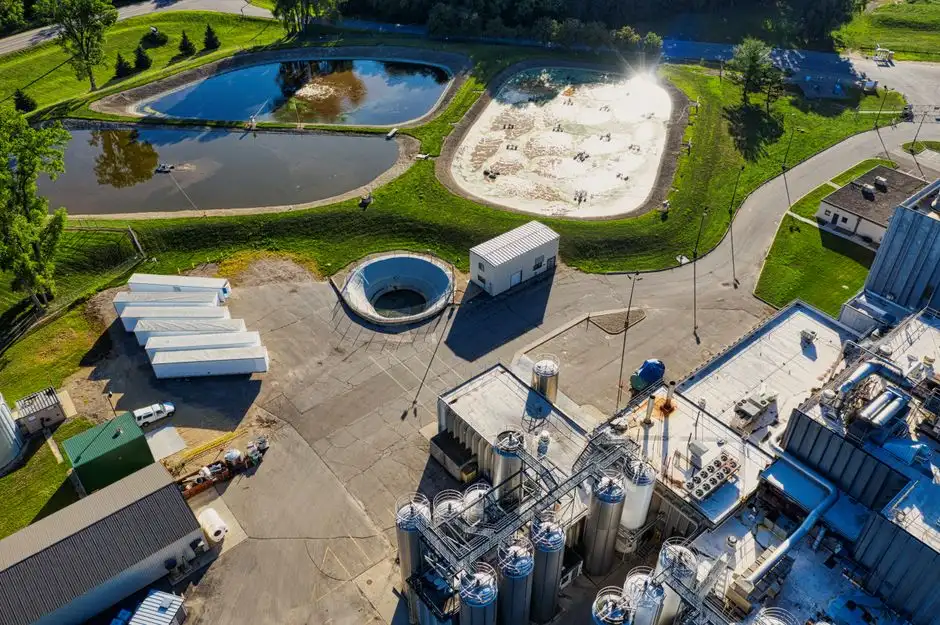
Packaged format is driven by site constraints: containerized units deploy fastest and can be relocated, skid-mounted systems are more customizable with lower per-unit freight for larger flows, and underground installations preserve landscape on tight Munyonyo or Mpatta parcels but complicate maintenance access. For hotel wastewater, pretreatment is not optional. Kitchen FOG at 100–300 mg/L will blind membranes within 90 days if only screening is fitted, so a DAF unit upstream of the biological stage is standard practice for any 3-star-plus property, paired with 2–3 mm fine screening to protect downstream pumps. A septic tank or basic bar screen is a defensible cause of membrane failure, not a defensible specification. MBR is the right biological format versus CAS, MBBR, or SBR because it collapses clarifier and media filter into a submerged cassette, operating at MLSS 8,000–12,000 mg/L (versus 2,000–4,000 for CAS) for stable nitrification under seasonal loading and roughly 60% less footprint (per HydropureWater MBR technical literature). Disinfection should be ClO₂ generated on-site, because UV struggles with hotel wastewater turbidity spikes and cannot reliably hold the Lake Victoria fecal coliform ≤100 CFU/100 mL envelope. To match these unit operations to a packaged train, the packaged MBR membrane bioreactor system forms the biological core, paired with a DAF pretreatment stage for hotel FOG removal and a ClO₂ generator for NEMA fecal coliform compliance.
| Technology | MLSS Range | Footprint vs. MBR | FOG Tolerance | Reuse-Ready Effluent? |
|---|---|---|---|---|
| MBR (submerged) | 8,000–12,000 mg/L | Baseline (1.0×) | High (with DAF upstream) | Yes (TSS <1, turbidity <0.5 NTU) |
| CAS + clarifier + tertiary filter | 2,000–4,000 mg/L | 1.4–1.6× larger | Moderate | Requires polishing |
| MBBR | 3,000–6,000 mg/L | 1.1–1.2× larger | Moderate | Requires clarification + disinfection |
| SBR (batch) | 3,000–5,000 mg/L | 1.2–1.3× larger | Moderate | Requires polishing for reuse |
Step 3: Power Source Decision — Grid, Solar, or Hybrid for 24/7 Operation
Uganda's grid reliability turns power source into a financial and operational decision gate, not an afterthought. Grid-only packaged MBR in the 10–50 m³/day band lands at USD 8,000–15,000 CAPEX, but OPEX is dominated by energy (30–40% of monthly cost, UGX 1.2M–2.5M per month), and a backup generator at USD 3,000–8,000 is mandatory for any hotel that cannot tolerate treatment failure during an outage (per HydropureWater Uganda MBR engineering guide, 2026). Solar MBR with battery storage runs USD 12,000–25,000 CAPEX plus USD 2,000–5,000 for 2–4 hours of autonomy, and cuts OPEX 60–70% — monthly energy drops to UGX 300K–700K. The 2024 Kampala hospital pilot demonstrated 7–8 m³/day of near-reuse-quality effluent at 60% energy savings using locally sourced components, a proof point for the hybrid configuration at higher reliability tiers. The decision rule is operational: if grid outages exceed 4 hours per day or diesel rises above UGX 5,000/L, solar hybrid pays back in 3–5 years; include quarterly panel cleaning because dry-season dust costs 15–20% of generation if neglected. For a deeper treatment of the CAPEX/OPEX bands, solar sizing logic, and Uganda-specific vendor criteria, the Uganda MBR solar integration, vendor checklist, and financing options guide covers the engineering calculations.
| Power Configuration | CAPEX (10–50 m³/day) | Monthly Energy OPEX | Outage Resilience | Payback vs. Grid-Only |
|---|---|---|---|---|
| Grid-only + backup generator | USD 8,000–15,000 | UGX 1.2M–2.5M | Generator-dependent | Baseline |
| Solar MBR + battery (2–4 hr) | USD 14,000–30,000 | UGX 300K–700K | 2–4 hr autonomy | 3–5 years (with reuse) |
| Hybrid (solar + grid backup) | USD 16,000–32,000 | UGX 500K–1.0M | High (grid failover) | 4–6 years |
Step 4: Vendor Evaluation Scorecard — Kampala-Specific Criteria
Technical fit matters, but Kampala projects are won or lost on local execution. On the technical side, PVDF flat sheet membranes in the 0.1 μm pore range are preferred for tropical fouling resistance; the DF Series offers 80–225 m² modules handling 32–135 m³/day each, with 10–20× lower energy than cross-flow designs thanks to lower trans-membrane pressure (per HydropureWater 2026 Uganda MBR guide). The compliance test is whether the vendor holds NEMA EIA certificates for projects above 50 m³/day in Uganda — not ISO 14001 or CE marks, but local Environmental and Social Impact Assessment approvals. Local support means Uganda-based technicians with under-48-hour response time and an in-country spare parts inventory covering membranes, blowers, and ClO₂ precursors. Logistics track record is the most commonly underestimated criterion: ask for the last three Kampala project bills of lading, Entebbe clearance timelines, and inland haulage records, because a vendor with no Uganda freight history is a 2–4 month permitting and delivery risk. Membrane warranty of 2–5 years and pump/blower warranty of 1 year is the market norm; membrane life of 5–7 years assumes quarterly CIP with NaOCl and citric acid, but Uganda tropics may shorten the cleaning cycle to 2–3 months. Training and remote monitoring are the closing items: PLC/SCADA manuals in English, on-site operator training, and remote diagnostics so your technical manager in Kampala can troubleshoot from off-site. To anchor the membrane selection, evaluate PVDF flat sheet membranes for tropical climate duty, and confirm the sludge-handling train includes a plate-frame filter press to meet the sludge management plan that NEMA requires for permit issuance.
| Criterion | Acceptance Threshold | Red Flag |
|---|---|---|
| Membrane type | PVDF flat sheet, 0.1 μm, 80–225 m² modules | Hollow fiber with no tropical track record |
| NEMA EIA proof | Certificates for ≥3 Uganda projects >50 m³/day | Only "international certifications" cited |
| Local support | Uganda-based technicians, <48 hr response | Foreign-only support, no in-country parts |
| Entebbe clearance | Last 3 BOLs + clearance timelines | No Uganda freight history |
| Warranty | 2–5 yr membranes, 1 yr pumps/blowers | <1 yr membranes, vague exclusions |
| Training / remote monitoring | On-site training, English PLC/SCADA, remote diagnostics | Manuals only, no remote access |
Step 5: Build the Business Case — CAPEX, OPEX, Reuse ROI, and Contingency
The defensible CAPEX band for a packaged MBR skid delivered and installed in Kampala in 2026 is USD 900–1,500 per m³/day of design capacity, equipment and install only, excluding buildings, generator, and civils (per HydropureWater 2026 guide). On a project basis, that means a 50-room boutique at 50 m³/day runs USD 60,000–120,000 all-in with 30% logistics contingency; a 200 m³/day 4-star mid-size project runs USD 195,000–390,000; a 300 m³/day 5-star (Munyonyo-class) runs USD 330,000–570,000. Monthly OPEX at full occupancy for a 300 m³/day system lands at USD 4,000–6,300, dominated by membrane aeration power, ClO₂ precursor chemicals, and a membrane-replacement reserve amortized over 5–7 years. Reuse for landscape irrigation and toilet flushing offsets freshwater and KCCA sewer charges, and pays back the MBR premium versus a basic CAS package in 4–6 years for any 4-star-plus property, shorter on waterfront sites where tankering or trade-effluent surcharges are the alternative. The line item that breaks budgets on Kampala hotel MBR projects is contingency: add 20–35% for Entebbe port clearance, inland haulage, on-site assembly, and monsoon-season commissioning delays, because every project that underestimated this line missed its handover date. Financing is available through Uganda Development Bank green loans at 12–15% over 5–7 years, and donor-funded windows (World Bank, AfDB) routinely support water reuse components.
| Project Size | Design Flow | CAPEX All-In (with 20–35% contingency) | Monthly OPEX at Full Occupancy | Reuse Payback |
|---|---|---|---|---|
| 50-room boutique (Fairway-class) | 50 m³/day | USD 60,000–120,000 | USD 700–1,200 | 5–7 years |
| 120-room 4-star | 150 m³/day | USD 165,000–290,000 | USD 2,000–3,200 | 4–6 years |
| 200 m³/day mid-size | 200 m³/day | USD 195,000–390,000 | USD 2,700–4,200 | 4–6 years |
| 250-room 5-star (Munyonyo-class) | 300 m³/day | USD 330,000–570,000 | USD 4,000–6,300 | 3–5 years |
Procurement Checklist and 3 Pitfalls That Derail Kampala Hotel MBR Projects
Attach to the purchase order: the NEMA EIA certificate (mandatory above 50 m³/day, UGX 2M–5M, 3–6 months to clear), the KCCA trade-wastewater consent application, a sludge management plan naming the disposal route and the filter press duty, ClO₂ generator sizing calc against peak fecal coliform load, and the solar/battery sizing calculation if hybrid is selected. Pitfall 1 is sizing on occupied beds rather than total keys — the per-room allowance must be applied to all keys to prevent chronic under-design once occupancy crosses 75%. Pitfall 2 is skipping DAF pretreatment: hotel kitchen FOG at 100–300 mg/L will clog MBR membranes within 90 days if only screening is fitted, and the membrane replacement cost will dwarf the DAF CAPEX. Pitfall 3 is awarding the contract to a vendor with no Uganda EIA track record — NEMA approval is a 3–6 month process, and a foreign vendor without a local partner adds 2–4 months to permitting, pushing handover past the tourism high season and the revenue window it was meant to capture.
Frequently Asked Questions
Can a septic tank meet NEMA standards for a Kampala hotel?
No. Standard septic effluent delivers TSS 80–150 mg/L and BOD₅ 100–200 mg/L, well above both the Lake Victoria band (30/30 mg/L) and the KCCA sewer band (50/50 mg/L). A packaged MBR with DAF pretreatment is the defensible specification for any commercial hotel STP above 35 m³/day.
What is the minimum MBR capacity for a 50-room boutique hotel?
A 50-room boutique at 60–70% occupancy generates 35–55 m³/day, so design the MBR train at 50 m³/day with a 2.0× equalization peak factor. Budget USD 60,000–120,000 all-in, including DAF pretreatment, ClO₂ disinfection, and a 30% Kampala logistics contingency for Entebbe clearance and inland haulage.
Does MBR effluent meet Lake Victoria discharge limits without tertiary treatment?
Yes. MBR effluent typically achieves BOD₅ <5 mg/L, TSS <1 mg/L, and fecal coliforms <10 CFU/100 mL, well within the NEMA Lake Victoria envelope of BOD₅ ≤30, TSS ≤30, fecal coliforms ≤100. Add ClO₂ disinfection to hold the fecal coliform target under variable loading, but no separate tertiary stage is required for discharge compliance.
How long does NEMA EIA approval take for a hotel MBR above 50 m³/day?
Plan on 3–6 months for NEMA EIA approval, at a cost of UGX 2M–5M. The EIA process must start before equipment procurement to avoid commissioning delays, and a vendor with no Uganda EIA history will add 2–4 months to the permitting window.
Is solar-powered MBR viable for a 200 m³/day Kampala resort?
Yes. A hybrid solar/grid configuration with 2–4 hours of battery autonomy cuts OPEX 60–70% versus grid-only, paying back the CAPEX premium in 3–5 years through water reuse savings and avoided NEMA non-compliance exposure. Budget USD 2,000–5,000 for battery storage, and schedule quarterly panel cleaning to prevent the 15–20% dry-season efficiency loss.