
Domestic Sewage Treatment in Darwin: 2026 Buyer's Guide
Domestic sewage treatment in Darwin in 2026 typically relies on packaged biological plants sized 1–80 m³/h because most outer suburbs, rural blocks, and remote communities are not connected to PowerWater sewer mains. The NT's reactive clay soils, high groundwater, monsoonal rainfall, and year-round 25–34 °C temperatures drive selection toward buried A/O or MBR package units (e.g., HydropureWater WSZ series) that deliver automated, licensed-compliant effluent without a daily operator.
Why Darwin properties can't rely on a basic septic system in 2026
Basic septic tank systems are generally insufficient for managing domestic wastewater in Darwin's unique environment due to challenging soil and climate conditions (source: BioCycle NT, 2026). Properties in areas like Howard Springs, Humpty Doo, Berry Springs, the rural blocks south of Palmerston, and most remote Top End communities fall outside the PowerWater sewer catchment, necessitating on-site treatment. The Northern Territory experiences reactive clay soils, which swell and shrink with moisture changes, high groundwater levels during the wet season, and monsoonal rainfall patterns that lead to saturated conditions (source: BioCycle NT, 2026). These factors severely impede the performance of conventional septic leach fields, which rely on stable soil absorption for effluent dispersal. Year-round ambient temperatures of 25–34 °C accelerate anaerobic decomposition within septic tanks, potentially leading to increased odour and more frequent pump-outs if not properly managed.
In the NT context, "domestic sewage" encompasses blackwater (toilet waste) and greywater (from sinks, showers, laundry) originating from single dwellings, small commercial premises, hotels/resorts, or communities up to approximately 200 Population Equivalent (PE). This differs from industrial wastewater, which may contain specific pollutants requiring specialised treatment. Decentralised biological treatment, such as vermifiltration or Aerated Treatment Units (ATUs), is a viable default in water-stressed, hot-climate regions where conventional sewerage is impractical (source: IntechOpen, 2022-05). Moving beyond passive septic systems to active biological treatment is the practical and compliant approach for managing wastewater on-site.
The three treatment technologies you'll be quoted in the NT
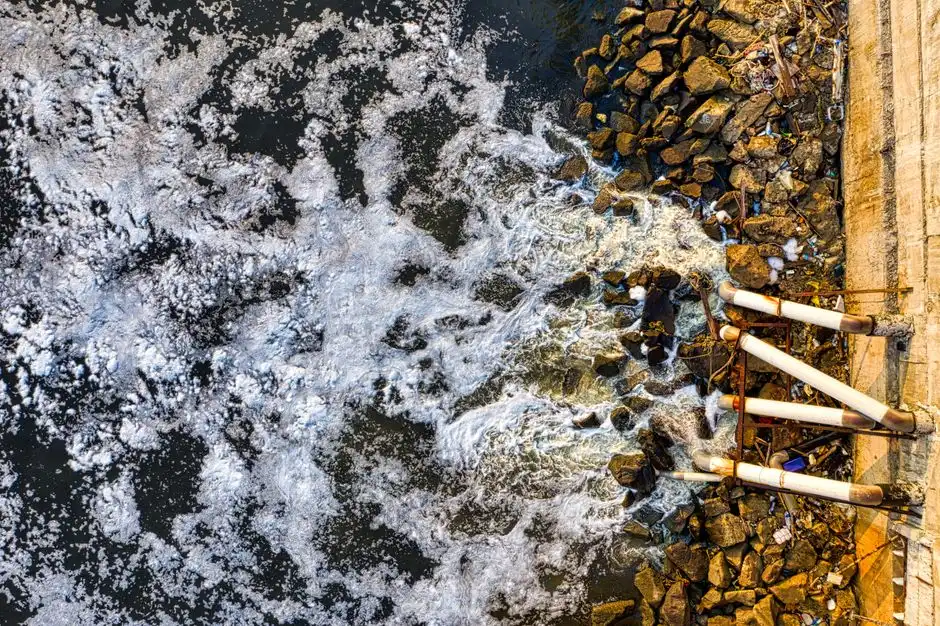
Packaged biological treatment systems, specifically A/O (anoxic/aerobic) contact oxidation and MBR (Membrane Bioreactor) technologies, represent the advanced options for domestic sewage treatment in the Northern Territory. The WSZ underground A/O package sewage plant employs a biological contact oxidation process, which integrates an anoxic zone for denitrification followed by an aerobic zone for biochemical oxygen demand (BOD) reduction and nitrification, all within a single buried skid (source: HydropureWater product catalog, 2026). This system uses sedimentation and disinfection, delivering an automated process that requires no daily operator intervention. The WSZ series handles flows from 1 to 80 m³/h and can be installed below grade with landscaping above, or mounted on a trailer for mobile deployment, a valuable feature for temporary mine camps or construction sites in the Top End (source: HydropureWater product catalog, 2026).
MBR systems combine conventional activated sludge treatment with submerged membrane filtration, typically using 0.1 µm PVDF flat-sheet membranes. This integration results in higher quality effluent, often near-reuse quality with <1 µm filtration, and a smaller footprint—up to 60% less than conventional activated sludge (CAS) systems for comparable capacity (source: HydropureWater MBR product specification, 2026). While MBRs offer superior effluent quality and footprint efficiency, they come with higher capital costs and increased aeration energy demands due to the higher mixed liquor suspended solids (MLSS) concentrations.
Aerated Treatment Units (ATUs) or vermifiltration systems are simpler, decentralised options. Vermifiltration, which utilises earthworms and filtration media, has demonstrated effective BOD and TSS removal (source: IntechOpen, 2022-05; Environment Systems & Decisions, 2009-01). These systems are characterised by slower kinetics and require larger land areas, making them viable only for single homes or very small commercial applications, typically below ~20 m³/day (source: Environment Systems & Decisions, 2009-01). Their footprint and lower nitrogen removal efficiency can be limiting factors for larger developments or sites with stringent discharge limits.
2026 technology comparison: A/O package vs MBR vs ATU/vermifiltration
Selecting the appropriate domestic sewage treatment technology in Darwin depends on site-specific constraints, effluent quality targets, and budget. The following table compares these technologies, as detailed in the 2026 buyer's guide to packaged MBR STPs for tropical hotels.
| Technology | Typical Capacity Range | Footprint (m² per m³/day) | BOD Removal | TN Removal | Effluent Class | Relative CAPEX | Operator Skill | Pick This If... |
|---|---|---|---|---|---|---|---|---|
| A/O Package (WSZ) | 1–80 m³/h (24-1920 m³/day) | 0.5–1.5 | 90–95% | 60–80% | Secondary Treated | Mid | Low (Automated) | You need reliable secondary treatment for sub-surface irrigation and automated operation. |
| MBR (Membrane Bioreactor) | 10–2,000 m³/day | 0.2–0.6 (60% smaller than CAS) | >98% | 80–95% | Near-Reuse Quality (<1 µm filtered) | High | Low (Membrane Cleaning 6-12 months) | You require high-quality effluent for irrigation reuse, have a tight footprint, or strict discharge limits. Explore submerged MBR vs CAS, MBBR and SBR comparison for more details. |
| ATU / Vermifiltration | Up to ~5 m³/day (residential) | 2.0–5.0 | 70–90% | <40% (often variable) | Primary/Secondary | Low | Low (Regular checks) | You have a single home, a large rural block, and lower effluent quality requirements. (Source: IntechOpen, 2022-05; Environment Systems & Decisions, 2009-01) |
The A/O package plant, like the WSZ series, is suitable for a broad range of applications from small communities to hotels, providing robust secondary treated effluent ideal for sub-surface irrigation. Its compact, buried design minimises visual impact. Integrated MBR membrane bioreactor systems offer superior effluent quality, making them ideal for sites where high-grade treated water for irrigation or other non-potable reuse is desired. For very small-scale residential applications, ATU or vermifiltration systems can be a lower-cost entry point, but their larger land footprint and lower nitrogen removal efficiency must be considered.
Sizing a domestic sewage plant for a Darwin site
Accurate sizing of a domestic sewage treatment plant for a Darwin site is critical to ensure compliance and prevent system failure, especially given the potential for wet-weather surges. A typical domestic load assumption in Australia is 150–200 Litres per person per day (L/person/day) for water usage and approximately 40 grams of Biochemical Oxygen Demand (BOD) per person per day (g BOD/person/day). For tropical NT conditions, it is prudent to use the higher end of the water usage range due to increased indoor water consumption for cooling and hygiene.
Worked example 1: Single 4-bedroom home
- Assume 5 occupants (a common design occupancy for a 4-bedroom home).
- Water usage: 5 persons × 200 L/person/day = 1,000 L/day, or 1.0 m³/day.
- Applying a peak factor of 1.5× for daily fluctuations yields 1.5 m³/day.
- For this flow, a WSZ-1 class unit, designed for 1 m³/h (equivalent to 24 m³/day maximum continuous flow), provides ample buffer capacity.
Worked example 2: 80-room Darwin resort
- Assume 2.5 persons per room at peak occupancy.
- Total occupants: 80 rooms × 2.5 persons/room = 200 persons.
- Average daily flow: 200 persons × 160 L/person/day = 32,000 L/day, or 32 m³/day.
- Applying a peak factor of 2.0× for commercial sites with fluctuating loads results in 64 m³/day.
- A WSZ class unit designed for approximately 35 m³/h (equivalent to 840 m³/day continuous flow) is suitable, or an integrated MBR membrane bioreactor if irrigation reuse is planned.
Remote community or mine camp applications require robust, modular equipment to handle variable loading and simplified maintenance schedules.
Related Equipment
- plate and frame filter press for sludge dewatering — specifications, capacity range, and technical data
Further Reading
Frequently Asked Questions
How much does a domestic sewage treatment plant cost in Darwin in 2026?
In 2026, the total cost for a domestic sewage treatment plant installation in Darwin typically ranges between $18,000 and $32,000. This price bracket accounts for the unit purchase, excavation, specialized bedding materials required for tropical soil conditions, plumbing integration, and electrical commissioning.
Variables influencing the final quote include the specific site topography, the depth of the water table, the necessity for a pump-out station, and the required hydraulic capacity to meet the household's daily flow rates as determined by AS/NZS 1547:2012.
Do I need a permit from the NT EPA to install a packaged sewage plant in Darwin?
For standard residential single-household systems, you generally do not require a direct permit from the NT EPA, as these fall under the jurisdiction of the Department of Health and local council development applications. However, you must obtain an Authority to Install from the NT Department of Health before commencement.
If your property is located in an environmentally sensitive zone or if you are installing a high-capacity system exceeding 2,500 liters per day, you may be required to submit a Notice of Intent or specific environmental management plans to the NT EPA for regulatory review.
What is the best sewage treatment system for a Darwin home on reactive clay soil?
For properties situated on the highly reactive clay soils common in the Darwin region, an Aerated Wastewater Treatment System (AWTS) utilizing a raised mound or a pressure-dosed subsurface irrigation field is recommended. These designs mitigate the risks of soil heave and seasonal waterlogging that can compromise standard absorption trenches.
Engineered systems that incorporate a sand-filter layer or geofabric-lined beds are preferred to manage the low permeability of clay, ensuring that hydraulic loading rates do not exceed the soil's percolation capacity, which is critical for preventing surface ponding during the wet season.
Can I reuse the treated effluent from a packaged sewage plant for garden irrigation in the NT?
Yes, treated effluent can be reused for garden irrigation, provided the system meets the "Advanced Secondary" standard of treatment, which requires a biological oxygen demand (BOD) of less than 20mg/L and suspended solids below 30mg/L. In the Northern Territory, irrigation must be strictly subsurface to comply with public health guidelines.
You must ensure that the irrigation area is sized according to the soil's hydraulic conductivity and that the effluent is not applied to vegetable gardens or fruit trees intended for human consumption. Furthermore, all irrigation lines must be clearly identified with purple-coded piping to prevent cross-connection with potable water supplies.
How often does an underground A/O package plant like the WSZ need servicing in the Top End?
Underground Anoxic/Oxic (A/O) systems in the Top End require mandatory servicing at least once every three months, or four times per year, by a licensed service provider. This frequency is necessary to ensure the aerobic and anaerobic chambers are functioning correctly amidst the high ambient temperatures that accelerate biological activity.
Technicians must verify the performance of the air blowers, inspect the sludge accumulation levels, and test the final effluent quality to ensure it remains compliant with NT health standards. Failure to adhere to this quarterly schedule can result in premature failure of the media filters and potential discharge of untreated wastewater into the surrounding environment.