Why Durban Hotels Are Specifying Packaged MBR Over Conventional Sewage Plants
Packaged membrane bioreactor (MBR) systems have moved from "premium option" to default specification for new mid-to-upscale hotel builds in eThekwini because three pressures now converge: South Africa's water-stress profile, the Department of Water and Sanitation (DWS) compliance threshold, and Durban's Eskom tariff structure. South Africa is a water-scarce country, and MBR permeate — filtered through membranes rated at 0.1–0.4 μm — routinely meets reuse standards for irrigation, cooling, and toilet flushing, which means a hotel can offset 30–60% of its municipal water demand (source: za.ionexchangeglobal.com, 2025). MBR effluent also clears stringent discharge limits via direct membrane filtration of suspended solids, bacteria, and pathogens, removing the clarifier-and-chlorine train a conventional activated-sludge plant needs (source: za.ionexchangeglobal.com, 2025).
For Durban hotels specifically, the driver is no longer just "pass the discharge test." Green-building rating tools, DWS water-consumption targets, and the cost of treated potable water in eThekwini have pushed developers to specify reuse from day one. The South African MBR market is still described as "incipient," but point-source treatment of domestic effluent at hotel scale is the lead application — meaning specifiers who build local reference data now capture a first-mover advantage (source: DUT thesis on immersed MBR, openscholar.dut.ac.za). Where a conventional sewage plant produces a TSS-rich supernatant that needs tertiary polish, an integrated MBR system delivers a single-step effluent ready for either sewer discharge or landscape irrigation.
Sizing a Packaged MBR for a Durban Hotel: The Peak-Factor Method
Suppliers who quote average daily flow will undersize a hotel plant — and undersizing is the single most common reason MBR installations fail their first 12 months on duty. Durban hotels have extreme morning-peak simultaneity (guests showering between 06:30 and 08:30, kitchen ramping up, laundry shift start), and the design flow has to capture that, not the 24-hour average. Use the four-step method below; it is defensible against a DWS or eThekwini reviewer because every input is a measurable parameter, not a vendor assumption.
Step 1 — Average daily flow from occupancy. Rooms × occupancy rate × guests per room × litres per guest-night. For a 3–4 star coastal Durban hotel, use 200–300 L/bed/day as the engineering assumption; verify against eThekwini Water & Sanitation by-laws for the specific tariff area before signing a purchase order.
Step 2 — Apply the peak factor. Multiply the average by 2.5–3.0× to capture morning shower, kitchen, and laundry simultaneity. Anything below 2.5× is unsafe for a hotel; anything above 3.0× tends to over-specify a packaged unit and burn civil budget on balancing tank volume that an MBR can absorb.
Step 3 — Add F&B and laundry load. Restaurant seats at roughly 50 L/seat/day, plus on-site laundry at 40–60 L/kg of linen. Fats, oils, and grease (FOG) from kitchens drive the need for a grease trap or DAF unit for FOG and food waste removal upstream of the MBR — FOG that reaches the membranes fouls them within weeks, not months.
Step 4 — Worked example. 120 rooms × 70% occupancy × 2.0 guests × 250 L/bed = 42 m³/day average. Peak at 3.0× = 126 m³/day. Round up to a packaged MBR unit of 130–150 m³/day capacity to leave headroom for one-off events (conferences, weddings) and for the 10–20% organic loading creep that occurs in years two and three.
Why this matters mechanically: submerged flat-sheet MBRs operate at MLSS of 6,000–12,000 mg/L — roughly four to eight times the solids concentration of a conventional activated-sludge plant (source: sigmadafclarifiers.com, 2025). Higher MLSS means a smaller tank volume for the same load, which is what lets a 150 m³/day unit ship in a single 40 ft ISO container. The high-MLSS envelope is the design choice that makes the packaged format physically possible.
| Parameter | Value / Range | Source / Note |
|---|---|---|
| Water use, 3–4 star coastal Durban hotel | 200–300 L/bed/day | Engineering assumption; verify with eThekwini by-laws |
| Peak factor (hotel duty) | 2.5–3.0× | Captures morning shower, kitchen, laundry simultaneity |
| F&B load | ~50 L/seat/day | Add to room-based flow |
| On-site laundry load | 40–60 L/kg linen | Add to room-based flow |
| Submerged MBR MLSS | 6,000–12,000 mg/L | 4–8× conventional activated sludge (sigmadafclarifiers.com, 2025) |
| Worked example: 120-room, 70% occ., 2 pax | 42 m³/day average → 126 m³/day peak → 130–150 m³/day unit | Round up for event/loading headroom |
DWS and eThekwini Compliance: Discharge to Sewer vs Irrigation Reuse
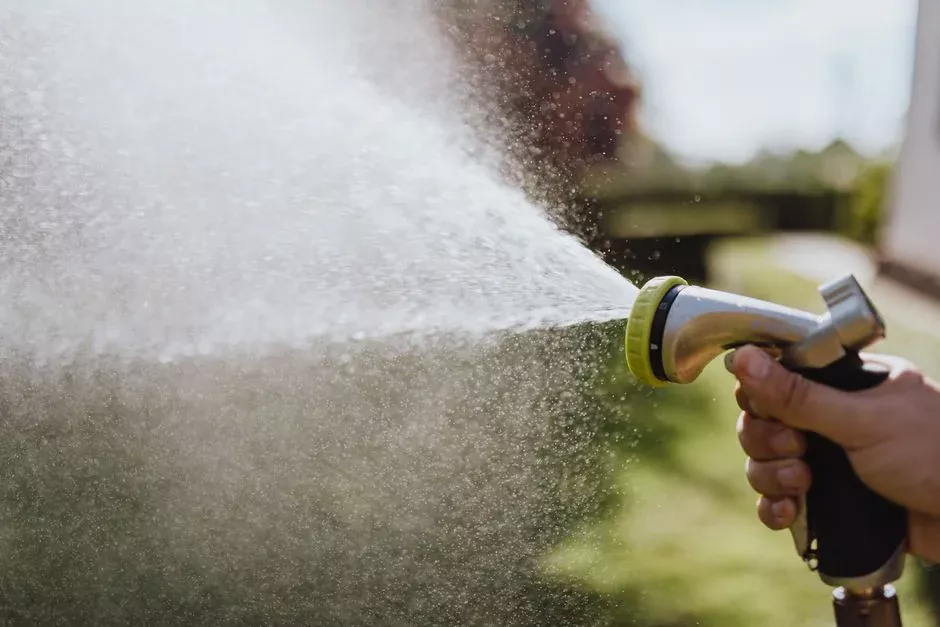
South African hotel projects have two effluent paths, and the choice between them drives both the MBR spec and the permit timeline. Path A: discharge to municipal sewer under eThekwini Water & Sanitation by-laws, with a Water Use Licence (WUL) triggered if the daily volume crosses the Section 21 threshold. Path B: on-site irrigation reuse under a DWS General Authorisation (GA) — a simpler registration route for smaller volumes — or a full WUL under Section 21 of the National Water Act for larger flows or non-irrigation reuse. MBR effluent quality typically clears the bar for either route, which is why compliance is consistently named as the primary MBR driver in the local market (source: za.ionexchangeglobal.com, 2025).
Out of the box, a submerged flat-sheet MBR will produce permeate in the range of TSS <10 mg/L, turbidity <1 NTU, and E. coli counts well below 1,000 CFU/100 mL — numbers that map to DWS GA irrigation thresholds. Confirm the current 2026 figures with the client's compliance consultant or directly with the DWS regional office before procurement, because GA limits are revised periodically. The single most Durban-specific wrinkle is the eThekwini trade-effluent by-law: any commercial discharge above 2 m³/day, or any discharge above domestic-strength thresholds, requires formal trade-effluent consent. The MBR must demonstrably meet those limits through on-site testing during commissioning — being "designed to meet spec" is not the same as being consented to discharge.
Containerised vs Skid-Mounted vs Underground: Choosing the Right Packaged Format
Format selection is dominated by plant-room geometry and visual-impact constraints, not by treatment performance — at the same daily duty, all three formats can run the same membrane and biology. Containerised (ISO 20 or 40 ft) is the fastest to install and the easiest to expand: the unit ships factory-tested, clears Durban port, and is trucked to site, with the bulk of build hours happening before the unit leaves the factory (source: sigmadafclarifiers.com, 2025; optimawater.co.in, 2025). Skid-mounted is the most flexible layout for mid-size hotels in the 50–200 m³/day range: it splits across standard double doors, can be lowered into a basement on a service lift, and avoids the visual mass of a shipping container in a hotel service yard. Underground packaged — the WSZ-style build — is the choice when the developer will not accept any above-grade visual impact, particularly on heritage or beachfront Durban sites.
For a 130 m³/day Durban coastal hotel, containerised is usually the lowest-risk procurement path on a tight construction programme; skid-mounted wins when the plant-room envelope is irregular or split-level; underground packaged wins when the architectural brief explicitly forbids a service-yard container, with the trade-off being 20–40% higher civil cost and more complex membrane retrieval at service intervals. If underground fits the site brief, evaluate a WSZ underground packaged STP against the civil contractor's pricing before committing.
| Format | Footprint | Install time on site | Civil cost | Membrane access | Best fit |
|---|---|---|---|---|---|
| Containerised (ISO 20/40 ft) | Largest single envelope; needs crane lift | Days after delivery | Lowest (factory-built) | Good — top-access hatches | Fast-track new builds, sites with crane access |
| Skid-mounted | Modular; fits through double doors | 1–2 weeks | Moderate | Good — frame access | Mid-size hotels, constrained plant rooms, basement installs |
| Underground packaged (WSZ) | Buried; zero above-grade visual impact | 3–5 weeks (tied to civils) | Highest (excavation, slab, reinstatement) | Harder — requires man-entry / retrieval plan | Heritage / beachfront sites, architectural restrictions |
Process Configuration: Anoxic Pre-Chamber, Pretreatment, and Sludge Handling
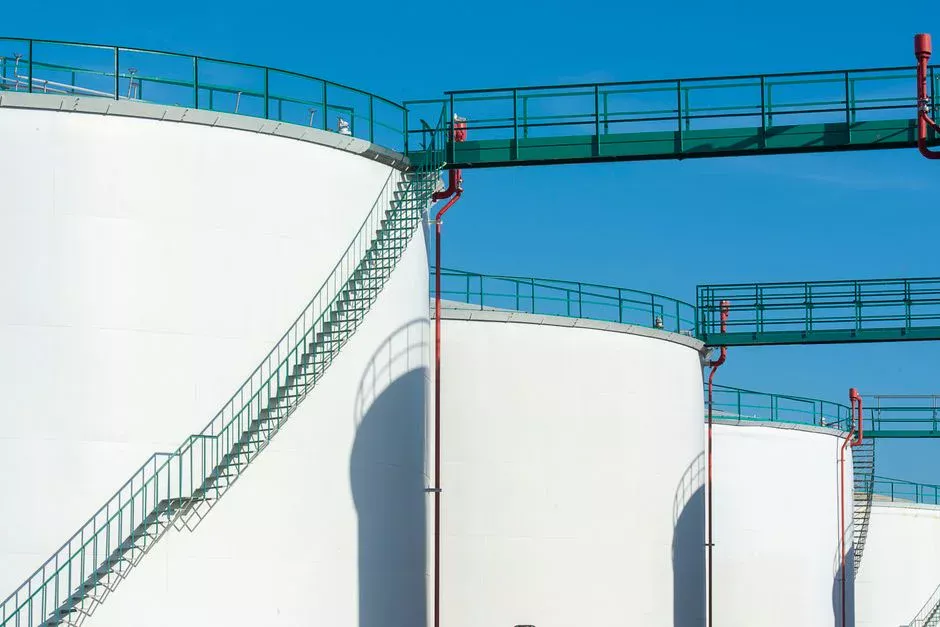
An MBR is a unit, not a system — what you put around it determines whether the plant hits DWS limits in year one and still hits them in year five. For Durban hotels with on-site laundry and kitchen waste, total nitrogen in the raw influent regularly exceeds 40 mg/L, which means a standard MBR (aerobic-only) will discharge above the nitrate limits many authorities apply. The fix is a modified MBR with an anoxic pre-chamber upstream of the aeration tank, enabling simultaneous COD removal and nitrification-denitrification (source: sigmadafclarifiers.com, 2025).
Upstream pretreatment is non-negotiable for hotel duty. The chain is: a rotary bar screen for headworks to capture rags and plastics, a grit chamber, FOG removal via a grease trap or DAF unit, and a flow-balancing tank to damp the morning peak before the MBR. Hair and lint from on-site laundry and grease from kitchens are the two foulants that destroy flat-sheet membranes fastest; both must be removed upstream. Downstream, a UV polish is the standard safeguard for hotel irrigation reuse — protecting grounds staff and guests from any coliform breakthrough during a membrane integrity event.
Sludge handling is a quiet advantage of MBR at hotel scale. MBR waste sludge runs at the same 6,000–12,000 mg/L as the mixed liquor and is produced at roughly 30–50% of the volume of a conventional activated-sludge plant of the same duty, so a small plate-and-frame press handles weekly offload for a 130 m³/day hotel in a single half-day operation. Specify the press for the actual MLSS, not for the average influent — the higher solids concentration is what changes the press sizing.
CapEx and Opex Reality Check for a Durban Hotel MBR
CapEx for a 130 m³/day packaged MBR typically breaks down roughly as: the MBR unit itself 50–60%, civil and plumbing 20–25%, electrical and MCC 10–15%, with the remainder covering permits, commissioning, and contingency. Rand figures are project-specific and date-sensitive, so present the share split to the hotel owner rather than a single number — the owner needs to see which line items are negotiable (civil scope) and which are fixed (the MBR unit).
Opex is dominated by energy, and the single largest opex lever is the membrane format. For submerged flat-sheet MBRs, aeration accounts for roughly 20% of the energy bill; for pumped cross-flow systems the comparable share is closer to 90% (source: DUT thesis, openscholar.dut.ac.za). On Eskom's Durban tariff structure, that gap is the difference between a plant that runs economically and one that the owner questions every month. Always specify submerged flat-sheet for a hotel duty.
Membrane replacement is the second opex line to budget. PVDF flat-sheet modules — such as the DF series flat-sheet PVDF membrane module in 0.1 μm pore size and 80–225 m² configurations — typically run 5–8 years before replacement, which equates to roughly 10–15% of CapEx over a 10-year lifecycle. For local benchmarking, a woven-fibre microfiltration (WFMF) membrane was developed at Durban's Veolia Southern Works specifically to reduce opex versus imported modules (source: DUT thesis, openscholar.dut.ac.za); if a supplier offers a local-assembly or WFMF option, ask for the side-by-side opex comparison rather than accepting the imported default. A useful cross-reference is the broader MBR hotel wastewater design guide for full 2026 cost and spec detail.
Supplier Due-Diligence Checklist Before You Sign the PO
The cheapest quote is rarely the lowest TCO, and the only way to confirm that is a structured supplier scorecard before the purchase order is signed. Demand a factory acceptance test (FAT) report on the actual unit being supplied — not a generic brochure and not a previous project's data, both of which are common shortcuts (source: optimawater.co.in, 2025). Confirm the membrane type, pore size, and replacement-part lead time in writing; Durban import lead times of 4–8 weeks are typical, and a membrane failure with no local stocking will shut the hotel down for the duration.
Ask for a process-performance guarantee with liquidated damages tied to specific effluent parameters (TSS, COD, E. coli, total nitrogen) at a defined loading — not the vague "meets specification" wording that is unenforceable. Verify the commissioning model: containerised units are routinely commissioned remotely with on-site plumbing and electrical by the buyer, while larger custom installs need a supplier engineer on site for at least the biological seeding and permeate-quality sign-off (source: optimawater.co.in, 2025). Finally, ask for at least two reference sites in KZN or coastal South Africa on similar hotel, resort, or guesthouse duty — a municipal reference at 10 MLD does not validate a 130 m³/day hotel install. If a supplier cannot produce that, treat it as a red flag, not a paperwork delay. For projects where the MBR is replacing an older packaged STP rather than a greenfield install, the MBR retrofit and upgrade guide covers the specific integration risks of converting an existing tank farm.
Frequently Asked Questions
How do I size a packaged MBR for a Durban hotel?
Use rooms × occupancy rate × guests per room × 200–300 L/bed/day for the average flow, then multiply by a peak factor of 2.5–3.0× to capture morning shower, kitchen, and laundry simultaneity. For a 120-room, 70%-occupied coastal Durban hotel at 250 L/bed/day with 2 guests per room, the average is 42 m³/day and the peak is around 126 m³/day — round up to a 130–150 m³/day packaged MBR unit to leave headroom for events and year-two loading creep.
Does a packaged MBR meet DWS and eThekwini discharge rules?
Yes — a submerged flat-sheet MBR operating at 6,000–12,000 mg/L MLSS will typically produce permeate with TSS below 10 mg/L, turbidity below 1 NTU, and E. coli well under 1,000 CFU/100 mL, which clears the DWS General Authorisation thresholds for irrigation reuse and the eThekwini trade-effluent by-law discharge limits. The plant must still be consented by eThekwini for any discharge above 2 m³/day, and the MBR must demonstrate compliance through on-site commissioning tests, not just design specification.
Containerised, skid, or underground MBR — which is best for a hotel?
Containerised (ISO 20/40 ft) is best for fast-track new builds with crane access and adequate service-yard space; skid-mounted is best for mid-size hotels (50–200 m³/day) with constrained plant rooms or basement installs where a shipping container will not fit; underground packaged is best for heritage or beachfront Durban sites where the developer will not accept any above-grade visual impact, with the trade-off being 20–40% higher civil cost and more complex membrane retrieval. Treatment performance is identical across the three formats — the choice is driven by site geometry, programme, and architectural brief.
How does a Durban hotel MBR compare to a conventional activated-sludge plant on operating cost?
A submerged flat-sheet MBR uses roughly 20% of its energy on aeration, versus about 90% for a pumped cross-flow MBR and a comparable or higher share for a conventional activated-sludge plant with a clarifier and tertiary polish (source: DUT thesis, openscholar.dut.ac.za). On Eskom's Durban tariff, that aeration share is the single largest opex lever and the reason submerged flat-sheet is the default specification for hotel duty; MBR waste sludge volume is also roughly 30–50% of the equivalent conventional plant, reducing haulage cost.