Why Hotel Sewage Treatment Is the Long Pole in a Riyadh Build
The sewage treatment plant (STP) drives plot size, civil work, and authority approval on a Riyadh hotel project long before the rooms are fitted out. Get the STP wrong and the operator inherits 10+ years of inflated power bills, membrane swaps, and rejected effluent samples. Get it right and the rest of the building program moves. The Saudi reference plant is no longer a Western import — it is the ACWA Emirates MBR at Saudi Aramco's Shaybah oil field, a 750 m³/day submerged unit returning 99% of the influent for landscape irrigation in the Empty Quarter desert (WaterWorld, 2016). That 99% benchmark has effectively become the design target every consultant in the Kingdom is now asked to defend.
Riyadh's hospitality pipeline is on the critical path of Saudi Vision 2030. Diriyah Gate, NEOM-adjacent developments, and the Riyadh Season hotel clusters all need treated effluent for irrigation — potable water at SAR 2–5/m³ makes reuse a financial as well as a regulatory question. The three things the engineer on the project actually has to deliver in the next two weeks are: (1) a defendable sizing number keyed to room count and peak factor, (2) an effluent profile that satisfies the local authority and the irrigation reuse spec, and (3) a packaged skid the contractor can install in 6–8 weeks so the rooms are not held up by civil work. This blueprint walks through all three, with Riyadh-specific numbers at every step.
Step 1: Characterize Riyadh Hotel Flow and Peak Loads
The design anchor for a Riyadh hotel STP is 0.20–0.30 m³ per available room-night, built up from 200 L/guest-day plus 50 L/staff-day plus 50–80 L/room-day laundry load for a full-service property. For a 200-key hotel that produces 50–80 m³/day of average dry-weather flow — well below the 750 m³/day Shaybah unit, but the same technology class.
Average flow is the wrong number to design a biological plant against. Riyadh hotel duty is dominated by three surges: morning showers (06:00–09:00), lunch service with full laundry and kitchen load (12:00–14:00), and the evening turn-down peak (19:00–22:00). A peak factor of 3.0–4.0× average flow is the right envelope — a 50 m³/day average design therefore needs 150–200 m³/day of instantaneous hydraulic capacity in the equalization tank and forward-feed pumps. Add a 10% contingency for ballroom events, conference peaks, and Ramadan surge occupancy, when Riyadh hotel occupancy can exceed 90% in season.
Set the influent basis of design at BOD₅ 250–400 mg/L, COD 500–800 mg/L, TSS 200–350 mg/L, oil & grease 30–80 mg/L from kitchen flows, and temperature 25–35°C at the STP inlet (hotter in summer after sun-warmed collection tanks). These are the parameter ranges a packaged MBR expects to see from a hotel; the supplier cannot hit reuse-grade effluent on lower-strength sewage without overspecifying the membranes.
| Parameter | Design Value | Notes |
|---|---|---|
| Average flow (200 keys) | 50–80 m³/day | 0.20–0.30 m³/room-night |
| Peak factor | 3.0–4.0× average | Buffer EQ + forward feed |
| Hydraulic capacity | 150–200 m³/day | Instantaneous design |
| Contingency | +10% | Events, Ramadan, conferences |
| Influent BOD₅ | 250–400 mg/L | Hotel sewage range |
| Influent COD | 500–800 mg/L | Hotel sewage range |
| Influent TSS | 200–350 mg/L | Hotel sewage range |
| Oil & grease | 30–80 mg/L | Kitchen flow contribution |
| Influent temperature | 25–35°C | Hot climate, summer peak |
Step 2: Set the Effluent Target Before You Pick the Membrane
Reuse target, not technology, should drive the equipment choice. Saudi Arabia's Draft 2010 Water Act and the 9th Development Plan (2010–2014) push treated wastewater toward agricultural and landscape reuse, but a 2017 KAUST study found the country still has limited mandatory virus LRV thresholds for irrigation-grade effluent — California Title 22 levels are not yet enforced (MDPI, 2017). For a Riyadh hotel landscape-irrigation duty, a working envelope of BOD₅ ≤30 mg/L, TSS ≤30 mg/L, and fecal coliform ≤200 CFU/100 mL is the realistic target; these are typical MENA reuse parameters, not a single Saudi hotel mandate.
When reuse is the goal, a submerged MBR with 0.1–0.4 µm PVDF membranes is the only packaged option that reliably hits both TSS and turbidity for drip irrigation. The KAUST plant — a submerged MBR with 0.4 µm pore-size microfiltration and 4-hour HRT — produces 4,000 m³/day of irrigation-grade effluent, with the study recording a 1.7-log reduction in enterovirus copy numbers and up to 4-log reduction in overall viral load across the MBR + chlorination train (MDPI, 2017). Pure Aqua's 10,000 GPD (~38 m³/day) MBR unit shipped to Saudi Arabia reports 98% BOD₅ removal, complete nitrification, and near-total TSS removal using Toray submerged membrane technology.
If the local authority confirms the line can go to municipal sewer with no irrigation mandate, a buried A/O package plant is acceptable and cheaper — defer the membrane decision until that confirmation is in writing. The cost of an MBR only pays back when the saved potable water has a real irrigation use.
Step 3: Match the Package Configuration to Site Constraints
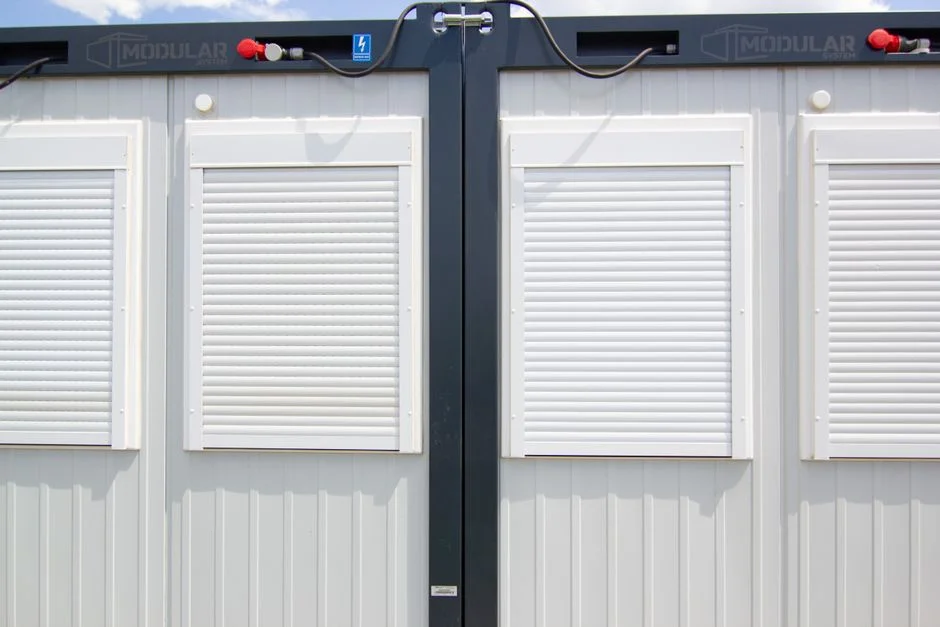
Plot, soil, and water table decide whether the unit sits in a 20-ft ISO container, on a surface pad, or buried under the lawn. A containerized packaged MBR — an integrated packaged MBR system on a 20-ft or 40-ft ISO skid — is the fastest install path, typically 6–8 weeks from PO to commissioning, and the only option for hotels with no below-grade space or a high water table in northern Riyadh. Skid arrives pre-piped, pre-wired, and tested at the factory; civil work reduces to a concrete pad and a 3-phase power drop.
Buried or integrated A/O packages (WSZ-type) save 30–40% on civil work and disappear once landscaped, but they need at least 1.2 m of cover depth and competent soil bearing. Wadi-margin plots with collapsible fill or shallow rock will eat that saving on excavation and shoring. Surface-mounted packaged MBR on a concrete pad is the middle path for 80–200 m³/day hotels and simplifies membrane replacement — the crane lifts the cassette off the pad rather than the crew excavating it out of a buried tank.
Riyadh ambient design temperature is the silent line item. Summer ambient routinely exceeds 45°C, which forces blower upsize by roughly 15–20% versus temperate-climate ratings, derates UV lamps, and pushes the diffuser selection toward fine-bubble disc diffusers with documented performance at 50°C+. Specify summer design at 45–50°C and winter at 5–10°C; do not let the supplier run a 25°C "standard" sizing.
| Configuration | Best fit | Civil work | Install time | Riyadh caveat |
|---|---|---|---|---|
| Containerized MBR skid (20/40-ft ISO) | 50–200 m³/day, no basement, high water table | Pad + power only | 6–8 weeks | Color/UV reflective coating |
| Surface-mounted MBR on pad | 80–200 m³/day, easy membrane access | Pad + crane hardstand | 8–10 weeks | Shade structure recommended |
| Buried/integrated A/O package (WSZ) | ≤20 m³/day, good soil, aesthetic priority | Excavation + cover | 10–14 weeks | Check collapsible soil |
Step 4: Specify the Membrane Module and Aeration Package
With the configuration set, the supplier RFQ needs a defensible component spec — not a brand wish-list. Membrane: submerged PVDF flat-sheet or hollow-fiber modules, 0.1–0.4 µm pore size, individually replaceable elements. As a concrete spec, DF-series PVDF flat-sheet MBR cassettes typically ship at 0.1 µm nominal pore, 80–225 m² of membrane area per cassette, and 32–135 m³/day per cassette depending on the model. Flat-sheet gives easier field inspection; hollow-fiber gives higher packing density.
MLSS target 8,000–12,000 mg/L — roughly 3–4× a conventional activated-sludge plant running at 2,000–4,000 mg/L. Higher MLSS shrinks the reactor volume but raises oxygen demand; specify dissolved-oxygen control at 2.0 mg/L in the MBR tank with a dissolved-oxygen probe and VFD-driven blower. Blower sizing rule: 0.3–0.5 Nm³ of air per m³ of permeate for membrane scour plus biological oxygen demand. Use positive-displacement or high-efficiency turbo blowers with VFD — fixed-speed blowers at 50°C ambient will trip on motor overload through July and August.
Pretreatment needs a rotary fine bar screen at ≤3 mm and a small equalization/digestion tank upstream. In Riyadh's heat, specify submerged mixers in the EQ tank rather than surface aerators — surface aeration drives evaporation and odor complaints from the guest-room wing. Disinfection downstream of the MBR should be UV disinfection for reuse irrigation rather than chlorine; UV controls chlorine-resistant organisms without forming DBPs and is the standard MENA reuse practice. Control: PLC with remote telemetry (SCADA or 4G gateway) is non-negotiable for an unstaffed hotel utility room — the duty engineer is not on site at 02:00 when a membrane train faults.
Step 5: Screen Suppliers Against a Saudi Track Record
Build a 5-criterion shortlist rather than buying on price. Ask for at least one reference plant in the GCC above 200 m³/day running for ≥3 years — SPERTA's 2024 KSA supplier roundup names Toray, Kubota, Newterra, ACWA Emirates, FK & Partner, Dynatec, A3 Water Solutions, and Pure Aqua (10,000 GPD unit in KSA) as the working shortlist. Demand a documented membrane warranty (typically 5 years), a local service partner, and a 6-month O&M training package — ACWA's Aramco contract included exactly this structure for Shaybah (WaterWorld, 2016).
Verify membrane origin and replacement lead time. Cassettes shipped from Japan or China to Riyadh can run 6–10 weeks; stock one spare cassette on site from day one. Require an effluent guarantee tied to a liquidated-damages clause in the supply contract — this is the only practical lever if the plant underperforms in the July–August peak when the membranes foul fastest and the authority inspector visits. The Shaybah MBR is the reference benchmark: 99% recovery, 20-month build, full O&M handover (WaterWorld, 2016). Anything you specify should be capable of running to that envelope in a Saudi summer.
Packaged MBR vs Buried A/O Package: When to Switch
Technology choice reduces to a single decision rule. Below roughly 20 m³/day — a boutique hotel of ≤80 keys, or staff housing — the WSZ buried A/O package plant is typically 30–40% cheaper on CAPEX, easier to operate without a full-time attendant, and adequate when the effluent target is BOD ≤30 mg/L discharge to municipal sewer. Above roughly 30 m³/day, or whenever reuse irrigation is mandated by the developer or the authority, the MBR's smaller footprint, higher MLSS, and reuse-grade effluent justify the ~1.5–2.0× CAPEX premium.
MBR is also the right answer for retrofit of an overloaded hotel where the civil footprint cannot grow — submerged cassettes slot into a fraction of the conventional activated-sludge volume (see our MBR retrofit engineering guide for the conversion math). WSZ underground integrated package remains a fit for staff housing, hospital extensions, and rural lodges where the discharge line is the final destination. For a similar temperate-climate comparison methodology on a different waste stream, see the MBR vs conventional activated sludge comparison from our 2026 series.
| Criterion | Packaged MBR | WSZ Buried A/O |
|---|---|---|
| Flow range | 30–500 m³/day | ≤20 m³/day typical |
| CAPEX (planning band) | 1.5–2.0× of A/O | 30–40% lower for small flows |
| Effluent TSS | ≤5 mg/L | ≤30 mg/L |
| Reuse-ready | Yes — drip irrigation | No (unless add sand filter + UV) |
| Footprint vs CAS | ~40% of CAS volume | ~70% of CAS volume |
| Operator skill | Trained technician, membrane CIP | Basic, mostly sludge wasting |
| Best fit | 200-key full-service, reuse mandate | Staff housing, ≤80 keys, discharge to sewer |
Cost, Footprint and ROI: What to Put in the Budget
For a 50–200 m³/day Riyadh hotel, packaged MBR CAPEX lands in a planning band of USD 800–1,500 per m³/day installed — the lower end for repeat containerized skids, the upper end for buried concrete tanks with custom architectural screening. Treat this as a planning band, not a quote, since the final figure depends on civil work, effluent polish, and authority fees. OPEX is dominated by power at roughly 1.5–2.5 kWh/m³ treated (blowers, recirculation pumps, control) plus membrane replacement amortized over 5–8 years.
Footprint rule: packaged MBR takes about 60% of the equivalent conventional activated-sludge plant footprint. For a 100 m³/day hotel that typically means a 60–80 m² fenced skid yard rather than a 150 m² aeration tank plus clarifier — a meaningful land saving on a tight urban plot. The ROI lens is straightforward: at Riyadh potable tariffs (planning figure ~USD 1.0–1.5/m³), the saved irrigation water typically pays back the MBR CAPEX premium versus a buried A/O package within 4–6 years. For a sister-project benchmark in a cooler climate, our sister buyer's guide for Lisbon hotels walks through the same cost logic on European tariffs.
Frequently Asked Questions
What peak factor should I use for a Riyadh hotel STP?
Use a peak factor of 3.0–4.0× average dry-weather flow. A 50 m³/day average design therefore needs 150–200 m³/day of instantaneous hydraulic capacity in the equalization tank and forward-feed pumps to absorb morning shower, lunch, and evening turn-down surges without losing biomass from the MBR.
How many liters per room per day should I size a hotel MBR against?
Size at 0.20–0.30 m³ per available room-night. This builds from 200 L/guest-day plus 50 L/staff-day plus 50–80 L/room-day laundry load for a full-service hotel. A 200-key property therefore lands in the 50–80 m³/day average range, which is the right envelope for a single packaged MBR skid.
What effluent quality does a submerged MBR deliver for hotel landscape irrigation?
A submerged MBR with 0.1–0.4 µm PVDF membranes reliably produces BOD₅ ≤5 mg/L, TSS ≤5 mg/L, and near-zero turbidity — suitable for drip irrigation. The KAUST submerged MBR (4-hour HRT, 4,000 m³/day) recorded up to 4-log viral reduction across the MBR plus chlorination train, providing a Saudi operating data point for the reuse case (MDPI, 2017).
Is a buried A/O package plant ever the right answer for a Riyadh hotel?
Yes, for boutique hotels under ~20 m³/day (≤80 keys) where the authority allows discharge to municipal sewer and irrigation reuse is not required. The WSZ-type buried A/O package is typically 30–40% cheaper on CAPEX and can run with a part-time operator; it loses on footprint, effluent quality, and reuse eligibility above that threshold.
What ambient design temperature should I specify for a Riyadh STP?
Specify summer design at 45–50°C and winter at 5–10°C. The 45°C+ summer ambient forces a 15–20% blower upsize versus temperate-climate ratings, derates UV lamps, and pushes diffuser selection toward fine-bubble discs with documented 50°C+ performance. A supplier running 25°C "standard" sizing will under-deliver in July and August.