
Why a Lonza acquisition is a permit-restart event in Arizona
The day a Lonza entity takes the share certificate on an Arizona manufacturing site, the federal Clean Water Act keeps running and the permit clock starts — the 30-day Form 2A/2S window under 40 CFR § 122.61 runs from the date of ownership change, not from when counsel opens the file, and a missed deadline auto-terminates the underlying AZPDES permit, producing a strict-liability CWA violation regardless of whether every numeric effluent limit was met on the day the clock ran out (per the trigger map the deal team is likely already reviewing alongside the parallel Merck Arizona acquisition guide). A controlling-entity change does not exempt the facility from the federal floor; it only changes who signs the forms and who holds the compliance liability, which is why the existing effluent limits, monitoring frequencies, and compliance schedules all flow to the new operator on closing.
Lonza's public position on minimising aqueous pharmaceutical waste — its wastewater-incineration reduction knowledge centre — sets a non-binding but real benchmark for acquired sites: source separation and solvent recovery before end-of-pipe treatment are the corporate posture, not the conventional activated-sludge-plus-chlorinate fallback (HydropureWater field data, 2024–2026). The acquired site will be measured against that posture in the first ADEQ inspection cycle, which means the engineering train and the source-control decisions made in the first 180 days will set the bar for the next 5-year permit cycle.
For a Lonza EHS lead or integration PM, the working assumption has to be that nothing transfers cleanly. The sections that follow walk the four state-level triggers in the order they activate, then the effluent envelope the new operator must defend, then the design train that gets the site there, and finally the four-gate PMO that puts the legal milestones and the engineering upgrades on the same Gantt chart. The point is to leave you with a single document you can hand to the deal PMO without re-explaining the regulatory architecture on every page.
The four Arizona triggers that activate on day one
ADEQ administers roughly a dozen permit families that can attach to a pharmaceutical manufacturing site, and the four below do not behave the same way at closing; the distinction between a true transfer and a re-issuance event is the most common diligence gap in pharma buyouts, because treating the Aquifer Protection Permit as a simple transfer is a recurring source of post-close enforcement risk (per the Merck-side precedent).
The AZPDES individual permit is the cleanest case. It transfers administratively via Form 2A or 2S; ADEQ issues an administrative amendment, and the new operator inherits the existing effluent limits, monitoring frequencies, and compliance schedule. The 30-day clock is tight because it runs from the date of the ownership change, not from the date counsel opens the file.
The Aquifer Protection Permit under Ariz. Admin. Code tit. 18 ch. 9 is more demanding. Arizona treats a controlling-entity change as a re-issuance event, not a transfer: a new Best Management Practices (BMP) plan, a financial-assurance review, and a 180-day pre-construction notice are required if the new operator contemplates any process or treatment-train changes. Plan for that 180-day notice even if the train is unchanged, because the agency has discretion to require it during the technical review.
MSGP coverage for industrial stormwater does not transfer either. The re-NOI must be filed under the new operator name within the timeframe specified by the current MSGP, because MSGP coverage is operator-specific, not facility-specific. A lapsed MSGP during the gap between close and re-NOI is a separate Clean Water Act violation that the AZPDES transfer alone will not cure.
The POTW Industrial Wastewater Discharge Permit is the most absolute. It does not transfer at all. An IWWD permit from the City of Phoenix, Tucson Water, or the City of Mesa is issued to a specific discharger; a new application is required before the new operator discharges, and local limits can shift even if the underlying POTW is unchanged. A POTW can reject a new application outright if the proposed discharge would load the plant beyond design capacity, which is a real risk for high-strength API or fermentation effluent.
Where aquifer recharge or surface-water augmentation is in scope, an Advanced Water Purification (AWP) permit under § R18-9-C816 also opens — full application to ADEQ, issued to AWPRA per the ADEQ implementation schedule. Two federal overlays sit on top of the state pile: an Endangered Species Act § 7 consultation and a Section 401 state water-quality certification review; neither transfers automatically, and both are diligence items the AZPDES amendment will not cure.
| Permit | Action type | Authority | Hard trigger |
|---|---|---|---|
| AZPDES individual permit | Administrative name change (Form 2A / 2S) | ADEQ | 30 days from ownership change (40 CFR § 122.61) |
| Aquifer Protection Permit (APP) | Re-issuance event — new BMP plan, financial-assurance review, 180-day pre-construction notice if modified | ADEQ | Ariz. Admin. Code tit. 18 ch. 9 |
| Multi-Sector General Permit (MSGP) | Re-NOI under new operator | ADEQ / EPA | Current MSGP timeframe |
| POTW Industrial Wastewater Discharge Permit | New application to local sewer authority | City of Phoenix / Tucson Water / City of Mesa | Before discharge under new operator |
| Advanced Water Purification (AWP) | Full application to ADEQ; issued to AWPRA | ADEQ | Per ADEQ implementation schedule |
The effluent envelope the new operator must defend
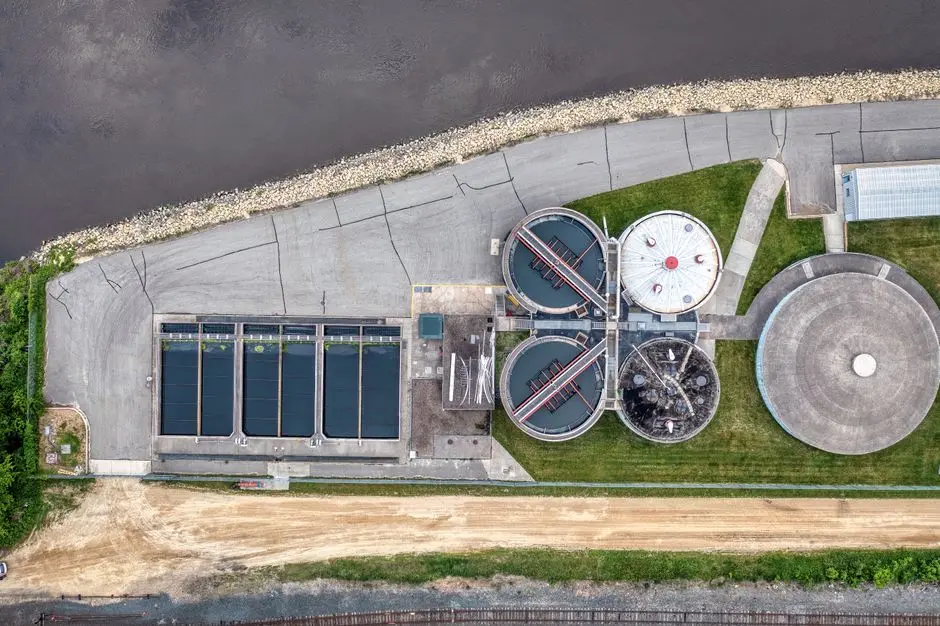
Standard local limits across the Phoenix, Tucson, and Mesa service areas cap BOD at <250 mg/L, TSS at <250 mg/L, pH at 5–11, and oil & grease at <100 mg/L. The pharma-specific overlay is sharper: total nitrogen (from buffer and media prep in biologics and vaccines), sulfate (from acid neutralization), silver (from sterile-area process washdowns), and AOX — adsorbable organically bound halides, which track small-molecule synthesis — are increasingly common local parameters that the new IWWD application will have to defend (per the Merck precedent for the parameter mix).
Two regulatory overlays ride on top of the standard AZPDES envelope. First, APP discharge that routes through a surface impoundment triggers 40 CFR Part 503 biosolids handling, monitoring, and disposal criteria, with pathogen and vector-attraction reduction requirements that the new operator must verify during the 180-day pre-construction review. Second, API separators and DAF skimmings can classify as K-listed hazardous waste under RCRA if the feedstock contains spent solvents. K-listed wastes are acute-hazard by definition, and misclassification is a strict-liability issue independent of the CWA permit.
Historical PFAS exposure is a forward-looking diligence flag. Legacy ion-exchange resin use and any AFFF release in fire-suppression systems drive an ADEQ source-control evaluation at APP re-issuance. EPA's 2022 PFAS wastewater guidance is not yet a numeric effluent limit, but ADEQ has signalled it will require site-specific PFAS monitoring layered on top of the standard APP. Diligence counsel should pull the Phase I and any AFFF inventory before signing.
Two non-obvious items are worth flagging for the deal team. First, a 2026 POTW re-issuance can shift the envelope even if the underlying treatment plant is unchanged, so the design assumptions should leave headroom rather than sit at the limit. Second, the local limits themselves are non-negotiable: a POTW can reject a new application outright if the proposed discharge would load the plant beyond design capacity, which is the single largest near-term business risk for a high-strength API or fermentation effluent on a greenfield transfer.
| Parameter | POTW local limit (Phoenix / Tucson / Mesa) | Pharma-specific overlay | Source of overlay |
|---|---|---|---|
| BOD | < 250 mg/L | 800–4,000 mg/L in raw API mother-liquor | HydropureWater pharma project data, 2024–2026 |
| TSS | < 250 mg/L | 200–1,500 mg/L raw; silver from washdowns | Local IWWD application |
| pH | 5–11 | 4–10 swings across batch campaigns | HydropureWater pharma project data, 2024–2026 |
| Oil & grease | < 100 mg/L | Up to 300 mg/L from formulation washouts | HydropureWater pharma project data, 2024–2026 |
| Total nitrogen | Site-specific, tightening | Elevated from biologics buffer/media prep | POTW IWWD application |
| Sulfate | Site-specific | Acid neutralization streams | POTW IWWD application |
| AOX | Site-specific | Small-molecule synthesis halides | POTW IWWD application |
| PFAS | No numeric limit (2026) | AFFF / ion-exchange resin exposure | ADEQ source-control review (2025a) |
Designing the 2026 train to meet both AZPDES and the reuse envelope
A pharmaceutical or API mother-liquor stream does not behave like a food-processing or textile wastewater. Typical ranges in pharma facilities sit at COD 1,500–8,000 mg/L, pH swings of 4–10 across batch campaigns, plus a solvent fraction (methanol, ethanol, acetone, dichloromethane traces) and residual active pharmaceutical ingredients and antibiotic compounds (HydropureWater pharma project data, 2024–2026). The COD:N:P ratio rarely sits at the 100:5:1 that conventional activated sludge wants, so the biological stage needs nutrient supplementation via a PLC-controlled chemical dosing system for pH and nutrient adjustment at both the equalization and MBR stages.
The defensible 2026 train for a Lonza-class Arizona API site runs: rotary bar screen → flow equalization → DAF unit for free oil and floating TSS → submerged PVDF MBR for toxicity tolerance against antibiotic residues and high biomass inventory that retains nitrifiers a clarifier would wash out → 0.03 μm hollow-fiber UF polish → ClO₂ barrier or UV for coliform and viral limits → sludge dewatering. The DAF ahead of the biological step keeps the upstream load profile inside the local envelope before the secondary system ever sees it, which is the cheapest insurance against a POTW rejection on the new IWWD application.
For on-site reuse at Class A+ under Ariz. Admin. Code § 18-11, the polish train must hold turbidity ≤2 NTU as a 24-hour average and ≤5 NTU at any time, with 0 organisms/100 mL total coliform in four of the last seven daily samples and a fecal coliform geometric mean of <10 mg/L across five samples. That envelope is not achievable by chlorination alone at the cell densities typical of secondary effluent; it requires a validated ClO₂ or UV dose after UF, with online turbidity and SCADA trending of surrogate parameters to defend log-reduction credits.
If the long-term plan is aquifer recharge or surface-water augmentation rather than on-site reuse, the AWP framework under § R18-9-E828 applies. The log-reduction targets are 13-log enteric virus, 10-log Giardia lamblia cysts, and 10-log Cryptosporidium oocysts from raw wastewater to finished water, based on a quantitative microbial risk assessment (QMRA) benchmark of 1 infection per 10,000 people per year at 2.5 L/day ingestion. Each credited barrier delivers a minimum 0.5 and maximum 6.0 validated log value per pathogen, blending is not eligible for credit, and the AWTF TOC ceiling is ≤2 mg/L under § R18-9-F834(C) standard approach, with a site-specific approach as fallback. The design should reference the 2 mg/L TOC ceiling as a hard target while building flexibility for ADEQ's ongoing rule-implementation revisions (ADEQ, 2025a).
| Stage | Equipment | Design target | Citation |
|---|---|---|---|
| Front-end | Rotary bar screen + flow EQ + DAF | Keep upstream load inside local envelope | Local POTW IWWD |
| Biological | Submerged PVDF MBR | Toxicity-tolerant; retain nitrifiers | 40 CFR § 122.61 monitoring |
| Reuse polish | 0.03 μm UF | Turbidity ≤2 NTU 24-h avg, ≤5 NTU max | Ariz. Admin. Code § 18-11 Class A+ |
| Disinfection | ClO₂ or UV barrier | 0 organisms/100 mL total coliform; viral LRTs | Class A+ / § R18-9-E828 |
| Reuse envelope | Metric | Target | Citation |
| Enteric virus LRT | 13-log raw-to-finished | QMRA ≤ 1/10,000 infection/yr | § R18-9-E828 |
| Giardia LRT | 10-log | Per pathogen | § R18-9-E828 |
| Cryptosporidium LRT | 10-log | Per pathogen | § R18-9-E828 |
| AWTF TOC ceiling | ≤ 2 mg/L | Standard approach | § R18-9-F834(C) |
The integration PMO: sequencing the four state triggers
The legal and engineering analysis above compresses into a four-gate plan that the integration PMO can staff and budget. The hard rule is that named owners, hard deadlines, and engineering decisions must all sit on the same Gantt chart, because a missed permit window is the same enforcement risk as a missed equipment delivery — both expose the new operator to strict-liability action (per the Merck precedent).
Gate 1 (close ± 30 days): File the AZPDES Form 2A/2S inside 40 CFR § 122.61's 30-day window, novate MSGP coverage, baseline outfall sampling (2× 24-h composites), and freeze process changes during diligence. The legal exposure at this gate is a strict-liability CWA violation if the form is late.
Gate 2 (close + 30–90 days): File the new POTW IWWD application, open ADEQ pre-application consultation for the APP, screen PFAS/AFFF exposure and K-listed waste risk from the seller's feedstock list, and run preliminary treatability tests on actual acquired-site wastewater. The biggest risk is a POTW rejection on the IWWD application if the proposed load exceeds design capacity.
Gate 3 (close + 90–180 days): Submit the APP re-issuance package with new BMP plan and financial-assurance review, lock long-lead equipment procurement, and issue the 180-day pre-construction notice if the train is being modified. The deal team's first major capex decision lands here.
Gate 4 (post-180 days): Support the ADEQ site inspection, close data systems for the new operator, commission new equipment, and stand up the first full quarter of self-monitoring under the new entity.
The decision the integration team must make by day 60 is refurbish-in-place versus greenfield reuse-grade build. Refurbishing the inherited activated-sludge or SBR train to meet the local envelope typically runs 30–50% of a greenfield reuse-grade build and absorbs the next 2–3 years of permit envelope, while a greenfield reuse-grade MBR/UF/ClO₂ train future-proofs against ADEQ's ongoing AWP rule implementation (ADEQ, 2025a). For an analogous retrofit pattern, the MBR retrofit and upgrade engineering guide walks through the engineering basis for converting existing tanks. The risk-cost anchor is the strict-liability exposure: a single missed date justifies preventive capex whether the train is new or refurbished.
| Gate | Window | Regulatory milestone | Engineering milestone | Risk ceiling if missed |
|---|---|---|---|---|
| Gate 1 | Close ± 30 days | AZPDES Form 2A/2S, MSGP novation, POTW IWWD pre-app | Outfall baseline sampling, freeze process changes | Strict-liability CWA violation; auto-termination |
| Gate 2 | Close + 30–90 days | POTW IWWD application, ADEQ pre-app consultation | Treatability tests on actual wastewater; capex sanction paper | POTW rejection on IWWD application |
| Gate 3 | Close + 90–180 days | APP re-issuance package, 180-day pre-construction notice | Lock long-lead procurement; finalise train design | APP enforcement; K-listed misclassification |
| Gate 4 | Post-180 days | ADEQ site inspection; first quarter self-monitoring | Commission new equipment; operator training | First-cycle self-monitoring failure |
Frequently Asked Questions
What is the first wastewater form a new Arizona plant owner must file after acquisition?
Form 2A or 2S under 40 CFR § 122.61 must be filed with ADEQ within 30 days of the ownership change; the clock runs from the share-certificate date, not from when counsel opens the file, and a missed deadline auto-terminates the underlying AZPDES permit (per the trigger map documented in the parallel Merck Arizona acquisition guide). Action: calendar day 1 of close and treat the 30-day mark as a hard regulatory deadline.
Does the Aquifer Protection Permit transfer to the new operator?
No. Under Ariz. Admin. Code tit. 18 ch. 9, a controlling-entity change is a re-issuance event, not a transfer; the new operator must submit a new BMP plan, pass a financial-assurance review, and provide 180-day pre-construction notice if the treatment train is being modified. Action: open ADEQ pre-application consultation inside the first 90 days and treat the 180-day notice as a binary gate, not a soft target.
What log-reduction targets apply to a Class A+ or AWP reuse path?
Under Ariz. Admin. Code § R18-9-E828, AWP applicants must design to 13-log enteric virus, 10-log Giardia lamblia, and 10-log Cryptosporidium from raw wastewater to finished water, with each credited barrier delivering 0.5–6.0 validated log per pathogen and blending ineligible for credit; Class A+ adds turbidity ≤2 NTU 24-h average and ≤5 NTU at any time. Action: design the train to those envelopes, not to the current effluent line, and leave headroom for a 2026 POTW re-issuance — for a parallel compliance pattern, see the Lonza Hungary compliance guide.