Why EGSB Maintenance Is the Cheapest Line on the Spreadsheet
A single granular sludge washout event costs $3,000–$8,000 in seed sludge alone, plus 2–6 weeks of recovery time during which effluent COD spikes to 3,000–5,000 mg/L — a permit risk on any tight discharge site (HydropureWater field data, 2026). That single line is larger than most plants spend on scheduled spares in two full years, which is why maintenance belongs on the OPEX spreadsheet as a controllable lever, not a sunk cost.
An EGSB (Expanded Granular Sludge Bed) reactor is an upflow anaerobic sludge blanket operated in expansion, sized for a 10–15 m vessel height and 6–12 h HRT at 5–10 m/h Vup, achieving 80–95% COD removal on soluble brewery and food streams. On a 50–500 m³/day plant, routine OPEX runs $0.018–$0.072 per m³ treated, and the recirculation pump plus biogas compressor together consume 55–65% of that figure (HydropureWater field data, 2026). At industrial power tariffs of $0.08–$0.12/kWh, the energy line alone is $0.010–0.045/m³ — so pump and compressor maintenance is the highest-leverage spend on the sheet.
Compare that to scheduled spares: $1,200–$3,800 per year for 50–200 m³/day units. Stocking the BOM is roughly half the cost of one avoided washout, and it shortens recovery from weeks to days when something does fail. The protocol below turns that math into a daily, weekly, monthly, and annual checklist tied to specific setpoints, failure symptoms, and a shelf-ready parts list. For the full cost taxonomy, see the EGSB OPEX and 5-year TCO breakdown.
Parameter Setpoints You Need to Hold Every Shift
Vup, bed expansion, pH, and temperature are the four variables that decide whether an EGSB stays within permit or washes out. Pin the table below next to the HMI and treat any excursion as a maintenance event, not a "watch and see."
| Parameter | Operating range (gas-lift EGSB) | Alarm / trip | Why it matters |
|---|---|---|---|
| Upflow velocity (Vup) | 5–10 m/h in the reaction zone | Alarm >10 m/h; trip >12 m/h | Vup excursion correlates directly with granule washout |
| Bed expansion ratio | 1.2–1.4× settled bed height | Alarm >1.5× or <1.1× | Drift signals flow imbalance or toxic slug |
| HRT (soluble brewery/food) | 6–12 h | Alarm <4 h | Short HRT starves methanogens before acidogens |
| Influent pH | 6.8–7.4 | Trip <6.5 or >7.6 | Out-of-band pH is the precursor to acid crash |
| Reactor temperature | 30–38°C mesophilic; 15–26°C demonstrated for microaerobic EGSB variants only (IEEE 2011) | Warn <20°C on brewery streams | Cold brewery effluent stalls mesophilic kinetics |
| Trace nutrients (N/P/Fe) | 0.5–1.5 mg/L each | Alarm on dosing skid low-level | Deficiency limits granular growth and COD removal |
| Biogas CH₄ | 60–70% at separator header | Alarm <55% | Drop signals water in the line or H₂S corrosion |
Two operating notes that don't fit in a row. First, the microaerobic EGSB window (15–26°C, 2.2–2.9 m/h Vup, 3.9–4.8 h HRT, 2.5–3.1 L·h⁻¹ flow) reported for domestic wastewater at ambient conditions is not a recommendation for a standard anaerobic gas-lift EGSB on brewery or food duty — cite it only when comparing design envelopes (IEEE 2011, doi 10.1109/rsete.2011.5966020). Second, pH and temperature interlocks must be live before any feed above 4,000 mg/L COD is introduced; the seed ramp is the most common place to skip this and pay for it later (HydropureWater 2026 commissioning guidance).
Daily and Weekly Tasks: The Operator's Checklist

The shift operator's job is to catch parameter drift before it becomes a washout. The list below is the minimum viable daily routine on a 50–500 m³/day gas-lift EGSB; everything else is a paper log.
- Log every shift: Vup (m/h), bed expansion ratio, pH, reactor temperature, biogas flow (m³/h), and gas composition (% CH₄). Anything outside the table above is an alarm, not a "data point."
- Visual on the three-phase separator sight glass: foam carryover at the gas-liquid interface is the first visible sign of organic overload or insufficient biogas draw.
- Recirculation pump mechanical seal: check for weep. A seal that drips today fails catastrophically next week, and seal failure collapses Vup, which is the direct path to washout.
- Biogas header pressure and composition: 60–70% CH₄ is normal. A drop below 55% signals water in the line or H₂S attack on compressor heads.
- Weekly sludge bed profile: sample at 3–5 heights, compare to the 1.2–1.4× baseline, and recalibrate the bed-expansion sensor against the manual reading.
- Weekly pH and DO probe calibration: against buffer; a 0.2-unit pH drift is the difference between a stable reactor and an acid crash on the next organic slug.
- Weekly compressor walk-by: listen for rhythmic miss (diaphragm fatigue) and run a pressure-decay test on the check valves.
Run the mass balance at least weekly. With a yield of 0.04–0.10 kg VSS per kg COD removed (HydropureWater field data, 2026), a 200 m³/day plant removing 6,800 mg/L COD will produce 54–136 kg VSS/day exiting the bed. If the wasted sludge drifts outside that range, the biology is upset before any online parameter shows it. Nutrient and pH trim on the dosing skid is best handled by an automatic chemical dosing skid for nutrient and pH trim, which cuts the labor line by 30–40% versus manual dosing. For a deeper walk-through of failure symptoms and their root causes, see the EGSB troubleshooting field guide.
Monthly and Quarterly Tasks: The Reliability Layer
Daily checks catch drift. Monthly and quarterly tasks catch the slow failures: separator fouling, probe drift, gasket fatigue, and the H₂S pitting that lives quietly inside compressor heads until a diaphragm ruptures. Skipping this layer is how plants go from "running fine" to "unplanned shutdown" inside one quarter.
Monthly tasks. Pull and inspect the three-phase separator's gas-liquid interface; clean the sight glass; and check the EPDM gaskets for compression set. A biogas odor at the separator top is a gasket leak until proven otherwise — it costs nothing to verify and everything to ignore. Pull the sludge-yield vs. COD-removed mass balance and recalibrate chemical dosing for trace nutrients (N/P/Fe 0.5–1.5 mg/L) and pH trim (NaOH to 6.8–7.4). On a 200 m³/day plant, this monthly reconciliation should land within 10–15% of the design yield; outside that band, the biology is the suspect, not the math.
Quarterly tasks. Run vibration analysis on the recirculation pump and biogas compressor, thermography on the electrical cabinets, and a full safety-valve and pressure-relief test on the biogas line. Replace compressor diaphragms on a calendar at 6–9 months rather than at failure — a diaphragm rupture at full load is an unplanned shutdown, while a planned swap is two hours of downtime on a quiet morning. Inspect compressor heads and separator internals for H₂S pitting; on high-sulfate brewery condensate, this inspection is the one that prevents the $5,000 surprise.
Annual Tasks and the Spare-Parts BOM
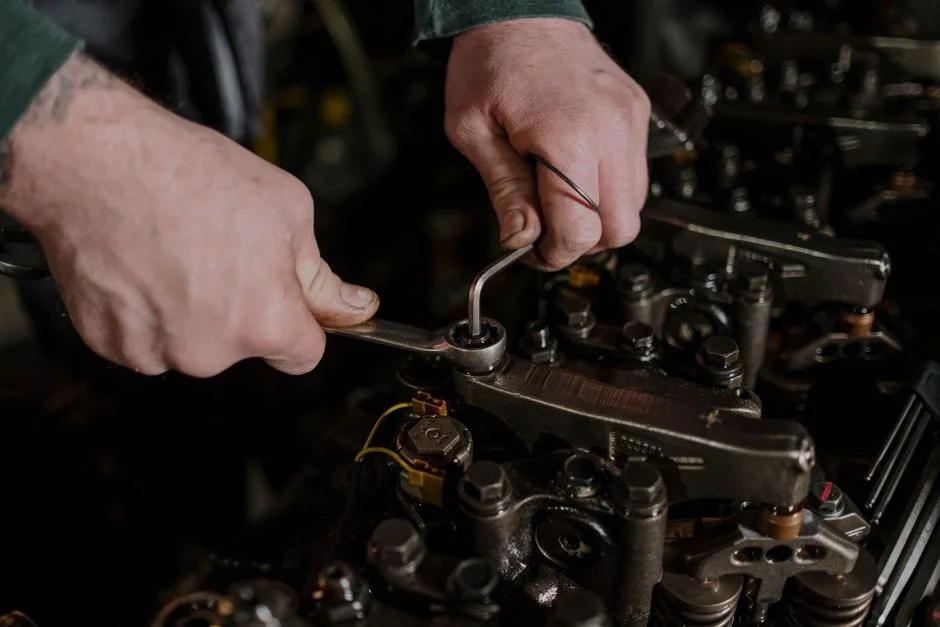
The annual work is what the maintenance manager signs off on, and it is also what procurement needs to budget. Two items dominate the schedule: the three-phase separator internal inspection (the single most expensive scheduled line item) and the recirculation pump bearing and seal replacement with an impeller clearance check. Both are full-day jobs on a 200 m³/day gas-lift EGSB and should be scheduled into a planned low-load window, not into a reactive outage.
The table below covers roughly 80% of annual maintenance spend on a 50–200 m³/day gas-lift EGSB in 2026. Stock the first three rows on the shelf; the last row you hope never to need. Total scheduled budget: $1,200–$3,800 per year (HydropureWater field data, 2026).
| Component / part | Annual cost (USD) | Failure symptom it prevents |
|---|---|---|
| Three-phase separator inspection / replacement | $400–$1,200 | Biogas breakthrough into effluent, granule washout |
| EPDM gaskets + sight-glass seals | $150–$400 | Odor, biogas losses, vacuum collapse |
| Biogas compressor diaphragms + check valves | $300–$900 | Compressor capacity loss, H₂S corrosion of heads |
| Recirculation pump mechanical seal + bearings | $200–$700 | Pump seizure, Vup collapse, washout event |
| pH / temperature probes + DO sensors | $150–$500 | False readings → acid crash or foaming |
| Granular sludge reseed stock (post-washout) | $3,000–$8,000 per event | 2–6 weeks of lost removal performance |
Anchor each row to a specific failure mode so the maintenance manager can defend the budget line by line. The three-phase separator row covers biogas breakthrough, which is the most common scheduled failure. The compressor row covers capacity loss, which on a 200 m³/day plant shows up as rising separator backpressure. The recirculation pump row is the one that links directly to washout: seal failure collapses Vup, and Vup collapse is the direct path to a $3,000–$8,000 reseed event. Hold the BOM against a EGSB spare parts inventory program and audit it quarterly — a BOM on a spreadsheet is not the same as a BOM on a shelf.
Preventing Granule Washout: The Failure That Wrecks the Budget
Granule washout is the single highest-impact failure mode on a gas-lift EGSB, and it almost always traces to one of three root causes: a sudden Vup excursion, a temperature shock, or a toxic slug in the influent (HydropureWater 2026 commissioning guidance). All three are preventable with a protocol, which is why this section is its own protocol rather than a paragraph in the checklist.
Countermeasure 1 — 21-day seed ramp. During commissioning, ramp influent COD from 1,000 mg/L to 8,000 mg/L over 21 days. Shortcuts here show up three months later as a bed that won't hold setpoint. Pair the ramp with gas-lift commissioning at 50% design Vup for the first 14 days, then 75% on day 15, and 100% on day 30. Do not skip the hold days.
Countermeasure 2 — Vup interlocks tied to bed expansion. The alarm in the parameter table (>10 m/h, trip >12 m/h) is a hard interlock in the PLC, not a dashboard color. Wire it to the recirculation pump VFD so an over-speed event auto-throttles. The bed-expansion sensor should also be live in the interlock chain — a 1.5× reading is a stop condition, not a "let's see what happens." Calibrate the bed-expansion sensor every 6 months; a 10% sensor drift is the difference between a controlled shutdown and a washout.
Countermeasure 3 — return-sludge inventory. The cheapest insurance against a 2–6 week recovery window is a small inventory of healthy return sludge from a sister reactor. On a multi-reactor site, this is essentially free; on a single-reactor site, it means a one-time capital purchase that pays for itself the first time it is used. The permit angle is non-negotiable: during washout recovery, effluent COD at 3,000–5,000 mg/L is a violation risk on a permit-tight site, and no maintenance budget is large enough to make that go away.
Frequently Asked Questions
How often should an EGSB reactor be maintained in 2026?
A tiered protocol runs daily parameter logging and visual checks, weekly probe calibration and bed-profile sampling, monthly separator and gasket inspection, quarterly vibration and thermography, and an annual separator internal with pump bearing and seal replacement. Skipping the monthly layer is the most common path from "running fine" to an unplanned shutdown (HydropureWater field data, 2026).
What Vup setpoint should a gas-lift EGSB hold on brewery or food effluent?
Operate at 5–10 m/h in the reaction zone, with 6–8 m/h as the typical steady-state target on a 200 m³/day plant. Alarm at >10 m/h and trip at >12 m/h, because Vup excursion correlates directly with granule washout.
What is the single biggest cause of unplanned EGSB downtime?
Granular sludge bed washout, almost always triggered during commissioning or after a Vup or temperature excursion. Prevention is a 21-day seed ramp, Vup interlocks tied to bed-expansion sensors, and a 6-month sensor calibration cycle.
What does the annual spare-parts budget look like for a 50–200 m³/day EGSB?
$1,200–$3,800 per year for scheduled parts, dominated by three-phase separator, EPDM gaskets, and biogas compressor diaphragms. Unplanned granular sludge reseeding adds $3,000–$8,000 per washout event on top of the scheduled line (HydropureWater field data, 2026).
When does an EGSB actually need a reseed, and how long is recovery?
A reseed is triggered when bed expansion collapses below 1.1× settled height and Vup cannot be restored, or when effluent COD holds above 2,000 mg/L for more than 7 days. Recovery runs 2–6 weeks depending on the COD shock load; permit-tight sites should treat any extended excursion as a reseed decision rather than a "wait it out" decision.