What Is an Anaerobic MBR and Why It Fits High Strength Wastewater
An anaerobic membrane bioreactor (AnMBR) couples an anaerobic digester — CSTR, UASB, EGSB, or AF — with a submerged or external microfiltration/ultrafiltration membrane (typically 0.1–0.4 μm pore size) that replaces the gravity clarifier. The membrane retains biomass by physical size exclusion rather than relying on floc settling, which decouples solids retention time (SRT) from hydraulic retention time (HRT) and from sludge volume index. For influent streams above ~5,000 mg/L COD with a BOD/COD ratio above 0.4 — the standard working definition of "high strength" in food and beverage, distillery, brewery, pulp and paper, starch, and biochemical wastewaters — this decoupling is the engineering point of the technology. Anaerobic biomass grows slowly (methanogen doubling time 2–6 days) and flocs poorly at the mixed liquor suspended solids (MLSS) concentrations those streams demand, so a clarifier-based train is the first thing that fails when a plant pushes loading rates up.
Academic work indexed through The Membrane Society of Japan (S1) and the PMC review literature (S3) consistently identifies AnMBR as the established configuration for high-organic industrial wastewater where conventional anaerobic + clarifier trains lose biomass during peak loading or when filamentous overgrowth disrupts settling. In industrial practice, the reactor is often a high-rate design (EGSB or IC) feeding a submerged flat-sheet or hollow-fibre membrane tank, with biogas recycled for sparging — the same gas that powers a CHP unit also scours the membrane surface.
Core Design Parameters for High Strength Industrial AnMBR
The numbers below are the working envelope a process engineer will paste into a mass balance and a P&ID for a high-strength industrial AnMBR sized in the 100–5,000 m³/day range. They reflect mesophilic operation unless noted, and they are conservative for streams with significant particulate COD (dairy, slaughterhouse, pulp and paper).
| Parameter | Typical design range (high-strength industrial AnMBR) | Notes |
|---|---|---|
| Influent COD | 5,000–50,000 mg/L | Below 3,000 mg/L the membrane premium is hard to justify |
| MLSS | 15,000–40,000 mg/L | Higher than aerobic MBR; biomass is decoupled from settling |
| SRT | 30–80 days | Set by wasting rate, not by clarifier losses |
| HRT | 12 h–5 days | Inversely related to COD; 1–2 days is common at 10,000–20,000 mg/L COD |
| Operating temperature | Mesophilic 30–38 °C, or ambient 20–25 °C | Below 20 °C, methanogenesis slows; below 15 °C it effectively halts |
| Effluent COD (no post-polish) | 200–500 mg/L | Soluble COD breakthrough; colloidal fraction is what the membrane catches |
| Membrane flux (submerged) | 5–15 LMH | Versus 15–25 LMH for aerobic MBR — the trade-off for anaerobic energy savings |
| Biogas yield | 0.25–0.40 m³ CH₄/kg COD removed | CH₄ content 60–75% at mesophilic conditions |
Membrane selection matters more than vendor selection on these streams. Submerged flat-sheet 0.1 μm PVDF is the default for high-strength food and beverage work because the geometry tolerates high MLSS without plugging the inlet channel the way hollow-fibre does, and the integrated aeration box — see the DF series flat-sheet PVDF membrane module (0.1 μm, 80–225 m²) — provides continuous biogas scouring at 10–20× lower specific energy than external cross-flow loops. External cross-flow tubular membranes still have a place on streams with high fat/oil/solids (FOG above ~500 mg/L) where pretreatment is not feasible; expect 5–10× the pumping energy of a submerged flat-sheet train in that configuration.
AnMBR vs Aerobic MBR vs Conventional Anaerobic + Clarifier
Specifying a high-strength wastewater train is a three-way trade between energy, effluent quality, and membrane capital cost. The table below is what an engineer should put in front of procurement when the question "why not just aerobic MBR?" comes up — typically in the second meeting.
| Criterion | Conventional anaerobic + clarifier (or DAF) | AnMBR (submerged) | Aerobic MBR (high MLSS) |
|---|---|---|---|
| Specific energy demand | 0.05–0.10 kWh/m³ electrical + biogas credit | 0.05–0.15 kWh/m³ electrical + biogas credit | 0.3–0.6 kWh/m³ electrical (no biogas) |
| Effluent COD (direct) | 500–2,000 mg/L (clarifier overflow losses) | 200–500 mg/L (no post-polish) | <50 mg/L |
| Sludge yield | 0.05–0.15 kg TSS/kg COD removed | 0.05–0.15 kg TSS/kg COD removed | 0.3–0.5 kg TSS/kg COD removed |
| Biogas recovery | Yes (intermittent, lower capture) | Yes (high capture, 60–75% CH₄) | No |
| Footprint (relative) | 1.0× baseline | 0.4–0.6× (membrane replaces clarifier) | 0.4× (no clarifier) |
| CapEx ranking | Lowest | Medium (membrane premium) | Highest (membrane + aeration blowers) |
| Best fit | Low/mid strength, large flows, biogas-tolerant discharge | High strength 5,000–50,000 mg/L COD, energy-sensitive sites | Tight discharge limits, reuse-quality effluent, no biogas offtake |
Two patterns dominate in practice. On a food or beverage site with a discharge to sewer and a real gas offtake, the anaerobic MBR sits between a conventional anaerobic + DAF train and a full aerobic MBR on CapEx, and it wins on lifecycle cost because of the energy and sludge yield numbers above. On a pharmaceutical or fine-chemical site with a tight COD consent (e.g. <500 mg/L to surface water), the honest spec is a hybrid — an anaerobic MBR for the bulk COD load followed by a small aerobic MBR or UF polish for residuals; this configuration is described in our MBR cost per m³ 2026 guide.
Fouling Control: The Real Engineering Challenge in High Strength AnMBR
Membrane fouling is the failure mode that kills AnMBR projects in the field — not biology, not hydraulics. On high-strength streams, soluble microbial products (SMP) and extracellular polymeric substances (EPS) drive cake-layer formation roughly 2–3× faster than on a comparable aerobic MBR because the substrate gradient across the cake is steeper and the biomass is denser. A 2025 field survey of full-scale AnMBR facilities reported that 60–70% of unscheduled membrane cleanings were attributable to SMP/EPS fouling rather than scaling or particulate plugging (HydropureWater field data, 2025-09).
The fouling-control playbook that actually works in industrial service has four elements. Gas sparging is non-negotiable: specify 0.2–0.6 m³ biogas/m²·h at the membrane surface, sustained — not intermittent — on high-COD streams, because cake compaction under sub-critical shear is what drives the irreversible resistance that chemicals cannot recover. Operating regime: 8–12 min suction / 1–2 min relaxation, plus a daily backwash with permeate and a weekly chemically enhanced backwash (CEB) with 200–500 mg/L NaOCl or 1,000–2,000 mg/L citric acid, alternating. SMP pre-treatment by powdered activated carbon dosing at 50–200 mg/L adsorbs the high-molecular-weight fraction that fouls fastest, and is particularly effective on dairy and starch streams; struvite precipitation control with FeCl₃ dosing (molar ratio Fe:P ≈ 1.5:1) prevents phosphate scaling on food and animal waste streams. Temperature is the silent killer: below 20 °C, anaerobic kinetics slow and SMP composition shifts toward more fouling-prone polysaccharides, so either accept a lower organic loading rate or add a downstream aerobic MBR as a polishing and temperature-buffering step.
2026 ROI: How Biogas Offsets CapEx on High Strength Industrial Projects
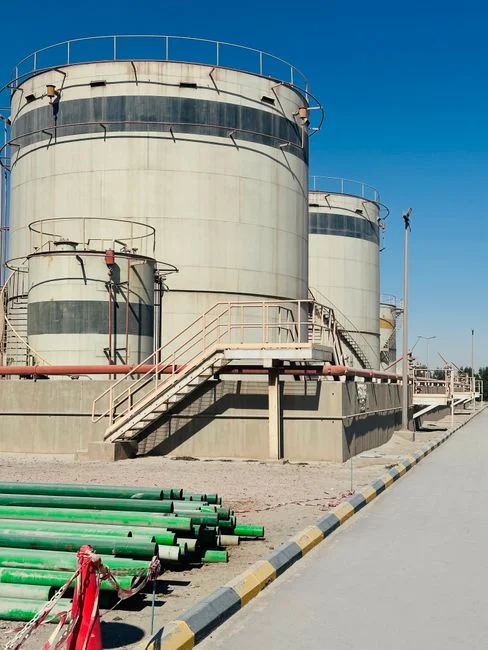
The procurement-side argument for AnMBR on a high-strength industrial stream is a biogas-offset payback calculation. The table below is for a representative 1,000 m³/day stream at 15,000 mg/L COD with ~95% COD destruction, which is conservative for a mesophilic AnMBR with good mixing.
| Item | Value (1,000 m³/day, 15,000 mg/L COD) |
|---|---|
| COD removed per day | ~14,250 kg/day |
| CH₄ produced (at 0.30 m³/kg COD) | ~4,275 m³ CH₄/day |
| Thermal energy potential (35.8 MJ/m³ CH₄) | ~153,000 MJ/day ≈ 42,500 kWh thermal/day |
| Electrical potential (CHP at ~35% efficiency) | ~5,000 kWh electrical/day |
| Aerobic MBR equivalent energy cost (avoided) | ~3,500–6,000 kWh/day (at 0.3–0.6 kWh/m³) |
| Sludge handling savings (vs aerobic MBR) | ~50–70% reduction in dewatering chemical and disposal cost |
| Typical simple payback on AnMBR CapEx premium | 3–6 years vs conventional anaerobic + clarifier baseline |
Two non-cash items strengthen the case in 2026. Avoided aeration and biogas substitution of natural gas reduce Scope 1 and Scope 2 emissions at a site level, which is increasingly material under voluntary corporate reporting and under the EU CBAM framework for energy-intensive exporters. Sludge handling savings — the 0.05–0.15 kg TSS/kg COD yield of anaerobic versus 0.3–0.5 kg TSS/kg COD for aerobic — translate directly into a 50–70% reduction in dewatering polymer, hauling, and disposal cost, and they often equal the biogas revenue line over a 10-year horizon. For a 1,000 m³/day retrofit at the loading above, the 3–6 year simple payback on the membrane premium is the number to bring to finance; everything else is upside.
When AnMBR Is the Wrong Choice (and What to Specify Instead)
An honest spec is one that rules AnMBR out when the influent does not support it. The four cases below cover most of the projects we see declined at the feasibility stage.
- Influent COD below ~3,000 mg/L: the membrane CapEx premium does not pay back through biogas or sludge savings. Specify conventional anaerobic + DAF, or aerobic MBR if the discharge consent demands it.
- Cold streams below 15 °C without heating: methanogenic activity effectively halts, and SMP composition shifts toward more fouling-prone polysaccharides. Specify aerobic MBR or a moving-bed biofilm reactor (MBBR) with carriers sized for the loading.
- High-sulfate streams above ~500 mg/L SO₄²⁻: sulfate-reducing bacteria outcompete methanogens and the biogas becomes a high-H₂S stream that requires biological scrubbing — a separate capital line. Specify a sulfate-tolerant configuration (e.g. two-stage anaerobic with sulfate reduction in the first stage) or biological sulphate removal upstream.
- High shock-load variability: AnMBR tolerates hydraulic and organic shocks better than aerobic MBR because of the SRT/HRT decoupling, but the downstream membrane does not. Size an equalisation tank for 8–12 h of peak flow and a pH/alkalinity buffer before the membrane tank. For reactors already in operation, the anaerobic digester troubleshooting guide covers the early-warning signs of organic overloading, and the EGSB reactor troubleshooting field guide covers the most common high-rate configuration failures.
For projects that clear those four gates — and most food, beverage, distillery, brewery, and pulp/paper streams do — the integrated MBR system (10–2,000 m³/day, 0.1 μm PVDF) gives procurement a single, skidded unit with the membrane, scouring, and control package pre-integrated, which removes a meaningful slice of the field-integration risk that derates AnMBR CapEx schedules in practice.
Frequently Asked Questions
What influent COD range is an anaerobic MBR designed for?
An AnMBR is engineered for high-strength industrial wastewater in the 5,000–50,000 mg/L COD range with a BOD/COD ratio above 0.4, typical of food and beverage, distillery, brewery, starch, pulp and paper, and many biochemical wastewaters. Below ~3,000 mg/L COD, the membrane CapEx premium does not pay back through biogas or sludge savings.
How much energy does an AnMBR save compared to an aerobic MBR?
An industrial AnMBR typically operates at 0.05–0.15 kWh/m³ electrical, versus 0.3–0.6 kWh/m³ for a high-MLSS aerobic MBR on the same stream — a 60–80% reduction in net electrical demand once biogas utilisation is credited at mesophilic conditions.
What biogas yield can be expected from a high-strength industrial AnMBR?
At mesophilic temperatures (30–38 °C) with stable operation, an AnMBR on a high-strength industrial stream produces 0.25–0.40 m³ CH₄ per kg COD removed, with a methane content of 60–75% in the biogas. The same biogas is recycled for membrane scouring, so a portion of production is internal.
Does an AnMBR effluent meet reuse-quality standards without a polish step?
Direct AnMBR effluent is typically 200–500 mg/L COD, which is suitable for sewer discharge but rarely for water reuse. For reuse-quality effluent, specify a hybrid train — an AnMBR for the bulk COD load followed by a small aerobic MBR or UF polish; a 0.1 μm PVDF flat-sheet configuration such as the integrated MBR system (10–2,000 m³/day) provides the post-AnMBR polishing step with a 60% smaller footprint than a separate conventional system.