Adelaide's Sewerage Catchment Map in 2026
Domestic sewage treatment in Adelaide in 2026 is regulated by SA Water for network-serviced suburbs and by the SA Environment Protection Authority for on-site systems. Most metropolitan allotments connect to SA Water's Glenelg, Bolivar, or Christies Beach water-reclamation plants, while unsewered Hills and peri-urban properties use SA Health-approved septic or packaged biological treatment plants sized to 150–250 L per person per day.
Three SA Water water-reclamation plants (WRPs) carry the metropolitan load. Bolivar WRP serves the northern suburbs and the bulk of the northern Adelaide Plains. Glenelg WRP receives flow from the south-west corridor including the City of Mitcham, the City of West Torrens, and most of Holdfast Bay. Christies Beach WRP treats the southern catchment, including the City of Onkaparinga, the City of Marion south of the Sturt River, and the rapidly growing Mount Barker district after the recent pipeline augmentation. Each WRP has a defined service boundary, and the connection-point fee is set by the distance from the nearest live sewer within your property's drainage catchment. Properties within 40 m of a 150 mm gravity main pay the minimum contribution, while lots more than 100 m from the main can expect a five-figure augmentation charge.
Where a sewer main is within reach, connection is mandatory under the SA Water Building Over/Adjacent to Sewers and Section 67 requirements. The "point of connection" rule is straightforward: if a 100–150 mm diameter gravity main is accessible within the allotment's natural fall contour, the property owner must connect, and the on-site system is not an option. Outside the serviced catchments — the Adelaide Hills, parts of Stirling, Uraidla, and Mount Barker, the rural-residential belt around One Tree Hill and Kersbrook, and the peri-urban fringe north of Gawler and around Two Wells — the SA Water sewer typically stops at the subdivision boundary, and on-site treatment is the default. SA Water's wastewater networks page is the authoritative starting point for any developer checking connection availability, but council Development Plan overlays and the SA Health On-site Wastewater Systems Code 2013 carry equal weight in determining what gets approved. Buyers in these fringe areas should request a sewerage servicing report before signing a contract, because retrofitting an approved on-site system to a steep or rocky allotment can add $20,000–$35,000 to the build cost.
Who Regulates What: SA Water, EPA SA, SA Health, and Council
EPA SA administers the Environment Protection (Water Quality) Policy 2015 and the on-site wastewater design criteria embedded in it. Any system above the Code threshold — broadly, more than 10 equivalent persons (EP) or more than 5,000 L/day average dry-weather flow — triggers an on-site wastewater approval from EPA SA, not SA Health. The trigger is on flow and load, not on the number of dwellings: a 30-lot subdivision can fall under SA Health if each lot is sized under the threshold, while a single 200-bed hotel above 5,000 L/day sits in the EPA SA approval track from day one. EPA SA approvals are also required for non-prescriptive sites — for example, allotments with impermeable clay subsoils, high water tables, or buffer distances shorter than the Code default of 100 m to a waterway.
SA Health regulates small on-site systems under the SA Health On-site Wastewater Systems Code (2013, with the current revision still in force as of 2026-02). Septic tanks, aerobic wastewater treatment systems (AWTS), and greywater systems below the EPA threshold are signed off by the local council acting as the consent authority, with a referral to SA Health for any design that departs from the prescriptive Code provisions. SA Water enters the picture only for trade waste — a commercial activity discharging to sewer, including commercial kitchens, laundries, and food-and-beverage tenancies in a residential development. For a single dwelling, SA Water is rarely involved; for a mixed-use building with a café or hair salon, a trade waste application is mandatory before opening. Trade waste consents are graded by SA Water from category 1 (low-strength, like an office) up to category 4 (high-strength food and beverage), and each grade has its own pre-treatment requirement, sampling regime, and annual fee.
| Authority | Statutory Basis | Trigger | Decision Maker |
|---|---|---|---|
| SA Health | On-site Wastewater Systems Code 2013 | ≤10 EP, ≤5,000 L/day, prescriptive design | Council as consent authority, SA Health referral |
| EPA SA | EP (Water Quality) Policy 2015 | >10 EP or >5,000 L/day, or non-prescriptive site | EPA SA on-site wastewater approval |
| SA Water | Water Industry Act 2012, Trade waste by-law | Connection to sewer OR commercial discharge to sewer | SA Water engineering and trade waste teams |
| Local council | Development Act 1993 / Planning, Development and Infrastructure Act 2016 | Any new building or change of use | Council Development Assessment, with referral to SA Health or EPA SA |
Council acts as the primary contact point for developers seeking wastewater approval. City of Adelaide, City of Onkaparinga, City of Burnside, and Adelaide Hills Council all run wastewater referrals through the same plumbing — a Development Application triggers an internal council referral to SA Health or EPA SA, and the wastewater design must accompany the DA, not follow it. Once the Planning, Development and Infrastructure Act 2016 transition is complete for each council area, this referral runs through the SA Planning Portal rather than a paper lodgement, but the underlying triggers and information requirements are unchanged. Builders should allow a minimum of 28 days for an SA Health referral and 6–10 weeks for an EPA SA approval, and should not pour footings until the wastewater consent is in writing.
How Domestic Sewage Is Treated: Process Options Compared
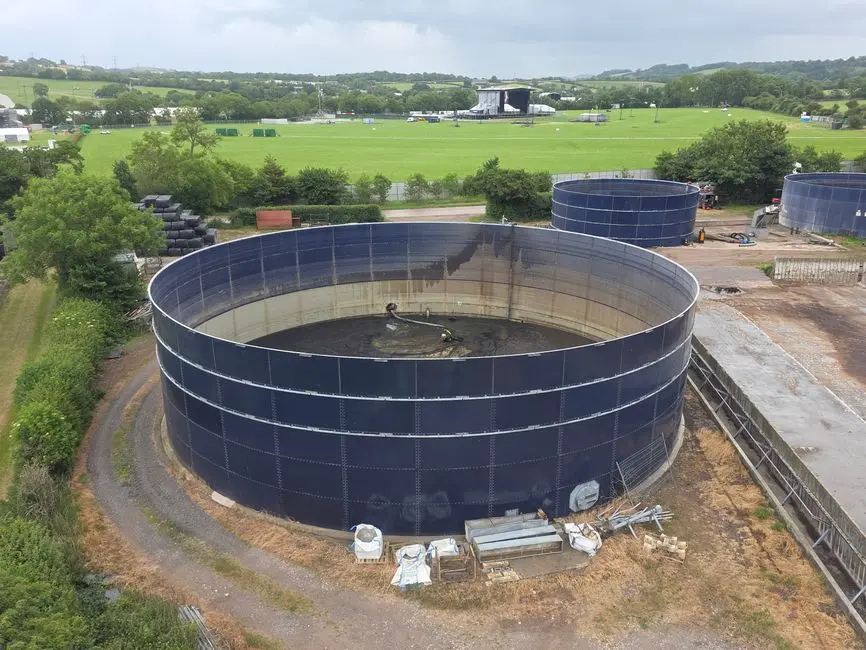
Three process trains cover almost every Adelaide domestic site: septic + subsurface irrigation, packaged anoxic/oxic (A/O) biological treatment, and membrane bioreactor (MBR). The choice is driven by flow, soil, buffer distance, and reuse intent.
Septic + subsurface irrigation is the SA Health baseline for unsewered sites under ~10 EP with adequate soil and a 100 m setback to waterways (Kyriienko 2018). Flow is gravity-driven, there is no electricity at the tank, and the treated effluent is disposed of through a drip or sub-surface irrigation field. The limits are well known: clay or shallow-rock Hills sites fail the percolation test, winter groundwater can saturate the irrigation field, and the effluent quality (typically 30–50 mg/L BOD5, 30–50 mg/L TSS) rules out any reuse beyond subsurface drip. A correctly sized septic system on a sandy loam site can run for 20–25 years before the soakage field needs rejuvenation, but on reactive clay the field can block within 5–7 years, particularly under heavy kitchen-waste loading or where a dishwasher or food disposal unit discharges to the tank.
Packaged A/O biological contact oxidation, in the configuration used by the WSZ underground packaged A/O sewage treatment plant, runs anoxic and aerobic zones in series inside a single buried unit, followed by sedimentation and chlorination. The plant is fully automated, needs no on-site operator, runs at 1–80 m³/h (per the WSZ product catalog), and is rated for residential communities, hotels, hospitals, and rural subdivisions. It can be buried with landscaping above or skid-mounted. Effluent typically lands at 10–20 mg/L BOD5 and 10–20 mg/L TSS, which is adequate for sub-surface irrigation and many discharge-to-watercourse consents where a UV polish is added. Power draw for the 1–10 m³/h residential sizes is typically 0.4–0.8 kWh per m³ treated, and the buried footprint is small enough to sit under a domestic driveway slab when the cover rating is specified accordingly.
MBR, delivered as a containerised or skid-mounted package like the MBR membrane bioreactor integrated system, adds submerged PVDF ultrafiltration membranes with a nominal pore size below 1 μm. Solids and most bacteria stay in the reactor, foot-
Adelaide's Sewerage Catchment Map in 2026 Who Regulates What Process Options Compared Sizing for Adelaide Reuse & Irrigation Decision Framework FAQRelated Equipment
- UV sterilizer for effluent polishing — specifications, capacity range, and technical data
- chlorine dioxide generator for residual disinfection — specifications, capacity range, and technical data
Further Reading
- domestic sewage treatment in Melbourne 2026 engineering guide
- how does MBR work process explainer
- MBBR moving bed biofilm reactor guide
- water reuse technology trends 2026
Frequently Asked Questions
Do I have to connect to SA Water if a sewer is available in Adelaide?
Under the Water Industry Act 2012 and local council development regulations, property owners are generally required to connect to the SA Water sewer network if the property boundary is within 30 metres of an available sewer main. Exceptions are rare and typically limited to situations where the topography or technical constraints make gravity connection impossible without significant pump infrastructure.
What is the difference between a septic tank and a packaged sewage treatment plant in South Australia?
A traditional septic tank acts as a primary treatment system, relying on anaerobic digestion to settle solids, which must then be discharged to an effluent disposal trench or sand filter. In contrast, a packaged sewage treatment plant (STP) utilizes aerobic processes, often including aeration and clarification, to produce high-quality effluent that meets SA Health requirements for secondary treatment, typically achieving a BOD5 of less than 20mg/L and suspended solids below 30mg/L.
Which Adelaide council areas allow on-site wastewater treatment systems in 2026?
On-site wastewater systems are permitted in Adelaide council areas where reticulated sewerage is unavailable, primarily in the Adelaide Hills Council, Mount Barker District Council, and outer metropolitan fringes of the City of Onkaparinga and City of Playford. Approval is subject to site-specific soil assessment reports confirming the land capability to manage the hydraulic load in accordance with the SA Health On-site Wastewater Systems Code.
What size treatment plant do I need for a 200-dwelling residential development in Adelaide?
For a 200-dwelling development, assuming an average occupancy of 2.5 persons per dwelling and a daily flow rate of 150-200 litres per person, the system must be designed for a total hydraulic capacity of approximately 75,000 to 100,000 litres per day. Engineering designs must comply with AS/NZS 1547:2012 standards, requiring modular or centralized aerobic treatment units capable of handling peak diurnal flow variations and robust nutrient removal processes.
Can treated domestic sewage be used for garden irrigation in South Australia?
Yes, treated domestic sewage can be used for surface or subsurface irrigation provided it meets the quality standards specified in the SA Health "Requirements for the Use of Reclaimed Water." For subsurface irrigation, secondary-treated effluent is generally acceptable, while surface irrigation requires tertiary treatment, including disinfection (e.g., UV or chlorination) to ensure E. coli levels are below 10 cfu/100mL to mitigate public health risks.