
Why an SK On India Acquisition Changes the Wastewater Scope
India is the world's second-largest water and wastewater treatment market by opportunity, according to a 2022 Frost & Sullivan study. That market scale is exactly why an SK On plant acquisition in 2026 cannot be filed under a generic "auto components" SPCB consent. A lithium-ion cell line generates at least four wastewater streams that do not exist on a conventional automotive shop floor: N-methyl-2-pyrrolidone (NMP) solvent from cathode coating, LiPF6 electrolyte wash water from formation and aging, black-mass processing leachate from cathode scrap recycling, and humidification/dehumidification condensate from dry-room ventilation. Each one lands in a different SPCB consent schedule, and a single cathode-coating line can shift a site's characterization from "red" to "orange" category under the revised EIA Notification 2006 industrial classification.
Under Indian law, the acquirer, not the seller, inherits legacy contamination liability once the share purchase closes. This deal term makes a Phase II environmental site assessment non-negotiable. If the prior occupant ran an open-loop cooling-water discharge or stored cobalt sulfate in unlined bays, the buyer writes the cheque for remediation under the Public Liability Insurance Act 1991 and the National Green Tribunal's directions on "polluter pays" (Frontiers, S3). Addressing these liabilities early is essential for project continuity.
Institutional Map: Who Regulates What in India in 2026
Four institutions sign documents the acquirer cannot close without, and they do not always align on requirements. The Ministry of Environment, Forest and Climate Change (MoEFCC) administers the EIA Notification 2006 framework and grants Environmental Clearance (EC) for projects above the 2020 threshold (Category A: ≥5,000 MWh/yr Li-ion cell capacity for SK On's typical 30-60 GWh gigafactories, after the 2020 amendment). MoEFCC also approves Terms of Reference (ToR) for the EIA consultant's scope. The Central Pollution Control Board (CPCB) drafts the national effluent standards under the Water (Prevention and Control of Pollution) Act 1974, organized by industry sector and the Designated Best Use (DBU) classification of the receiving water body.
Day-to-day enforcement sits with the State Pollution Control Boards (SPCBs) operating the Consent to Establish (CTE) and Consent to Operate (CTO) regime under Section 25/26 of the Water Act and Section 21 of the Air Act 1981 (Frontiers, S3). CTE confirms that the proposed effluent treatment plant matches the discharge claim; CTO is the operational permit, valid 5-15 years depending on state, and is not automatically transferred on share sale. The Ministry of Jal Shakti, created May 2019, consolidates water policy and drives treated-wastewater reuse mandates through the Jal Jeevan Mission (rural) and Namami Gange, and now influences industrial reuse expectations even outside Ganga basin states (trade.gov).
For a plant drawing more than the state-notified threshold (typically 50-100 m³/day), the acquirer also files a groundwater NOC with the Central Ground Water Authority (CGWA). Expect MoEFCC EC and SPCB CTE/CTO in parallel — total elapsed time 90-180 days for clean sites, longer where NGT directions apply.
CPCB and SPCB Discharge Limits That Apply to Battery Plants
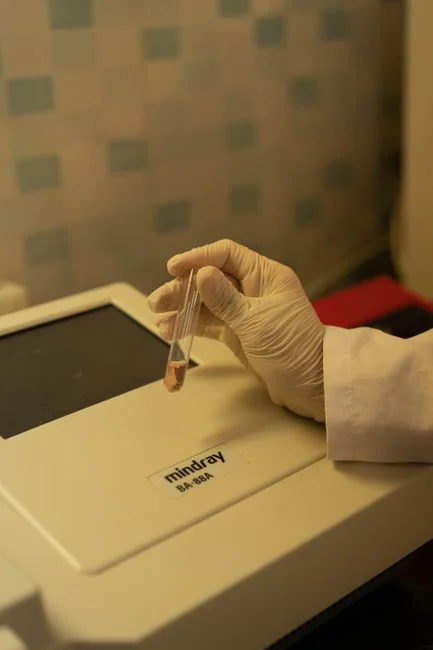
The CPCB general effluent standards (Schedule VI, as last consolidated) serve as the regulatory floor, but site-specific SPCB consent conditions are tighter, especially for COD, TDS, fluoride, and heavy metals. The historical baseline numbers are the Royal Commission on Sewage Disposal 1898-1915 limits of 20 mg/L BOD and 30 mg/L TSS that still anchor Indian effluent norms today (Frontiers, S3). For an EV battery plant, the parameters that actually drive design are COD, total nitrogen, fluoride (from LiPF6 hydrolysis), and the heavy-metal suite Ni, Co, Mn, Li.
For NMP and organic solvent streams, expect monitoring for BOD, COD, and TOC; specific solvent loadings are not always itemized in the public schedule, so pull the SPCB consent order text during due diligence. Tamil Nadu and Gujarat SPCBs have moved faster on heavy-metal and fluoride parameters than inland states, mirroring their desalination leadership and the high density of lithium-ion investment in those two states (trade.gov). ZLD is now the expected endpoint for new industrial projects in water-stressed districts; design the RO concentrate management and brine recovery from day one rather than retrofitting at CTO stage.
| Parameter | CPCB Schedule VI floor (typical inland surface water) | Typical SPCB site-specific tightening (TN / GJ) | Driver for EV battery plant |
|---|---|---|---|
| pH | 5.5-9.0 | 6.5-8.5 | Neutralization of NMP and HF-bearing streams |
| BOD (3-day, 27 °C) | 30 mg/L | ≤20 mg/L | Biological oxidation of NMP, glycols |
| COD | 250 mg/L | ≤150 mg/L | High-strength cathode-coating wastewater |
| TSS | 100 mg/L | ≤30 mg/L | Slurry carryover, black-mass fines |
| TDS | 2,100 mg/L | ≤1,000 mg/L (ZLD recycle loop) | RO concentrate volume |
| Fluoride (F⁻) | 2.0 mg/L | ≤1.0 mg/L | LiPF6 hydrolysis → HF |
| Heavy metals (Ni+Co+Mn+Li, total) | 3.0 mg/L (inland) | ≤1.0 mg/L (sum) | Cathode active material loss |
| Oil & grease | 10 mg/L | ≤5 mg/L | Formation / electrolyte carryover; see oil and grease discharge limits in India 2026 |
Numbers above are framed as CPCB schedule ranges and typical SPCB site-specific tightening rather than single values, because consent conditions vary by receiving-water DBU class (A-E) and state.
EV Battery Wastewater Treatment Train for a 2026 Indian Plant
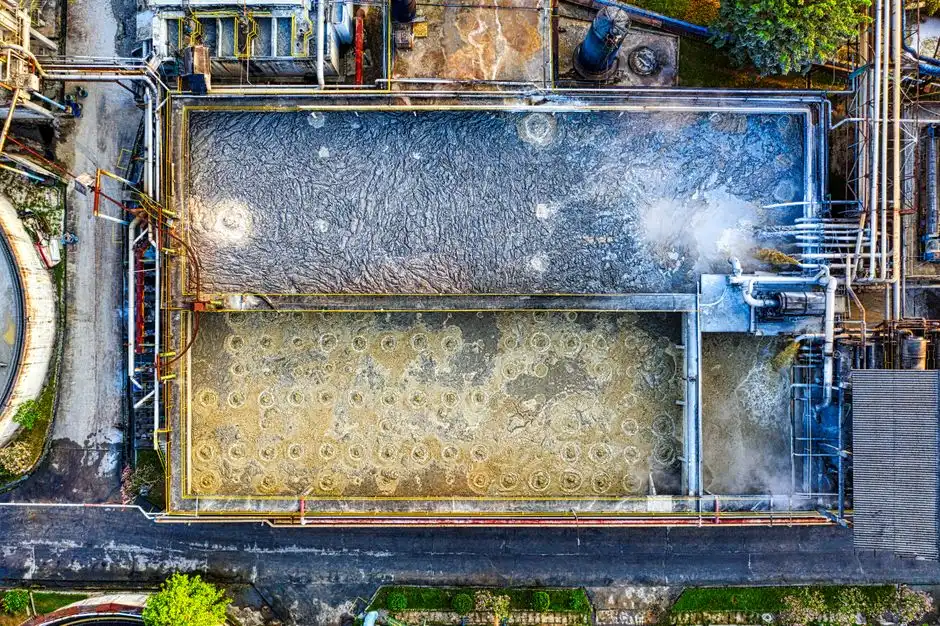
Treatment trains for a 30 GWh-class Li-ion plant in India typically employ UASB as the primary biological tech (Frontiers, S3) and MBR as the standard for new EV and specialty-chemical sites. Front-end: equalization + DAF for oil/grease and colloidal suspended solids before any biological step — this protects downstream membranes from fouling by formation-stage electrolyte carryover. Biological step: MBR or SBR for the high-strength organic load from cathode coating; UASB remains an option for the high-temperature, high-strength fraction, but MBR is preferred for new EV builds due to its smaller footprint and tighter effluent. Polish and recycle: RO polishes MBR permeate to non-contact reuse quality; the concentrate goes to a brine concentrator and thermal ZLD. Sludge line: a plate-and-frame filter press or screw press dewaters the mixed biological/chemical cake to ≥22% DS for compliant TSDF disposal. Discharge occurs only after SPCB consent order parameters and any MoEFCC EC conditions are met.
| Stage | Unit operation | Typical influent / operating range | Outlet target |
|---|---|---|---|
| Headworks | Equalization + industrial DAF unit for battery plant headworks | SS 500-2,000 mg/L; O&G 50-300 mg/L | SS ≤100 mg/L; O&G ≤10 mg/L |
| Biological | MBR membrane bioreactor for EV battery wastewater | COD 1,500-5,000 mg/L; HRT 18-36 h; MLSS 8,000-12,000 mg/L | COD ≤150 mg/L; BOD ≤20 mg/L |
| Tertiary / Recycle | industrial RO polish for ZLD concentrate management | Recovery 70-90% (single-pass); up to 95% with two-pass | Permeate TDS ≤100 mg/L for non-contact reuse |
| Concentrate | Brine concentrator + thermal ZLD (crystallizer) | Concentrate 5-8% TDS → crystal | Zero liquid discharge |
| Sludge | filter press for mixed chemical and biological sludge | Feed DS 1-3% | Cake DS ≥22% |
RO recovery, HRT, and MLSS values represent engineering ranges for new Indian EV/specialty-chemical installations; verify these against the specific SPCB consent order and pilot data.
Acquisition Due Diligence Checklist for SK On's India Site
- Phase I — Document pull (weeks 1-3 of the deal): Last 5 years of SPCB inspection reports, show-cause notices, returns under the Hazardous Waste Rules 2016, and any National Green Tribunal orders naming the site. Cross-check Form-IV returns and the CTO validity dates against the share-purchase agreement's closing date.
- Phase II — Site assessment (weeks 4-10): Commission an ESA to baseline soil and groundwater. The acquirer inherits legacy contamination liability under Indian law, including pre-2009 spills that pre-date the current owner's records. Test for fluoride, Li, Co, Ni, Mn, and total petroleum hydrocarbons; the suite is different from a standard Phase II because of Li-ion manufacturing history.
- Permit transferability review: SPCB consents are not automatically transferable on share sale. Budget 90-180 days for a fresh CTE/CTO application in the buyer's name, plus parallel MoEFCC EC transfer / amendment under the 2006 Notification. Build this into the closing-condition schedule so the deal does not sign before the consent-to-operate path is in writing.
- Stakeholder map: Identify state-level Jal Shakti exposure, Special Investment Region / Industrial Park master-planner constraints (Tamil Nadu SIPCOT, Gujarat GIDC, Karnataka KIADB), and community CSR expectations that may become operating constraints under the Companies Act 2013, Section 135.
Equipment and Service Shortlist for the 2026 Build-Out
Procurement for a 2026 Indian EV battery plant typically requires four core equipment categories. An MBR membrane bioreactor for EV battery wastewater handles the high-strength organic load from cathode coating and formation wastewaters at the 10-2,000 m³/day scale. An industrial DAF unit for battery plant headworks removes fats, oils, grease, and colloidal load upstream of the biological stage, protecting MBR membranes from premature fouling. An industrial RO polish for ZLD concentrate management polishes MBR permeate to recycle-grade water with up to 95% recovery, a prerequisite for the ZLD endpoint now expected by Gujarat and Tamil Nadu SPCBs. A filter press for mixed chemical and biological sludge dewaters the combined cake to ≥22% dry solids for compliant TSDF disposal.
Frequently Asked Questions
What permits does SK On need before operating an acquired plant in India in 2026?
At minimum: Consent to Establish (CTE) and Consent to Operate (CTO) from the relevant State Pollution Control Board under Sections 25/26 of the Water Act 1974 and Section 21 of the Air Act 1981, an Environmental Clearance (EC) from MoEFCC under EIA Notification 2006 where the gigafactory's Li-ion cell capacity exceeds the Category A threshold, and a groundwater NOC from the
Frequently Asked Questions
Does SK On need a fresh environmental clearance to acquire and operate a battery plant in India?
Yes, under the Environmental Impact Assessment (EIA) Notification of 2006, a change in ownership or transfer of an existing environmental clearance (EC) requires a formal amendment application to the Ministry of Environment, Forest and Climate Change (MoEFCC) or the State Level Environment Impact Assessment Authority (SEIAA). If the acquisition involves capacity expansion or technology changes beyond the original EC parameters, a fresh EC process is mandatory.
Which Indian ministry or board issues wastewater consent for a lithium-ion battery plant?
The State Pollution Control Board (SPCB) within the specific state of operation is the primary regulatory body responsible for issuing Consent to Establish (CTE) and Consent to Operate (CTO) under the Water (Prevention and Control of Pollution) Act, 1974. These boards operate under the guidance of the Central Pollution Control Board (CPCB), which sets the national effluent standards for the battery manufacturing sector.
What is Zero Liquid Discharge and is it mandatory for battery plants in India in 2026?
Zero Liquid Discharge (ZLD) is a wastewater management strategy that requires the treatment of all industrial effluent and the recycling of all water back into the manufacturing process, resulting in no liquid waste discharge outside the plant boundaries. As of 2026, ZLD is mandatory for all large-scale lithium-ion battery gigafactories in India, as they are classified under the "Red Category" of highly polluting industries by the CPCB.
How long does it take to get a Consent to Operate from an SPCB in India?
The statutory timeline for processing a Consent to Operate application is generally 120 days from the date of submission of a complete application, as per the Water Act. However, processing times vary by state and depend on the successful completion of on-site inspections by SPCB officials to verify that the Effluent Treatment Plant (ETP) meets the mandated discharge parameters.
Are there special wastewater rules in Tamil Nadu or Gujarat for new EV battery investments?
Both Tamil Nadu (TNPCB) and Gujarat (GPCB) enforce stricter localized norms for industrial zones, often requiring mandatory ZLD for any unit generating chemical-heavy effluent. In Gujarat, the GPCB mandates specific compliance with the Common Effluent Treatment Plant (CETP) membership requirements, while Tamil Nadu enforces stringent Total Dissolved Solids (TDS) limits for effluent discharge to protect local water bodies and agricultural groundwater reserves.