What an Effluent Treatment Plant Does in a Perth Industrial Context
An effluent treatment plant in Perth is an engineered system that treats industrial process wastewater — not domestic sewage — to meet discharge or reuse limits set by the Department of Water and Environmental Regulation (DWER) under Part V of the Environmental Protection Act 1986. Because each industry generates a different effluent signature (food acids, metal-finishing cyanides, mining brines, refinery phenols), the treatment train must be custom-engineered rather than selected from a catalogue. Perth's industrial geography shapes the engineering problem: Kwinana hosts alumina, nickel, and petrochemical operations with high-temperature, high-TDS waste; Kewdale and Welshpool run logistics and light manufacturing with variable trade-waste; Malaga, Wangara, and Canning Vale concentrate food, beverage, and metal-finishing effluent; and Pilbara mine sites produce brackish, mineral-laden streams hundreds of kilometres from any municipal sewer. As of September 2026, RevenueBase identifies 76 ETP construction companies in Australia, with Perth-headquartered options including PPS Water Group and Iconic Water Solutions, plus Wangara-based PR Water and Malaga-based MAK Water (source: revenuebase.ai, checked 2026-09-15). For cross-jurisdictional comparison, the Melbourne ETP engineering guide maps the equivalent EPA Victoria framework.
DWER Licensing, Works Approvals, and EPA WA Discharge Limits
Before any tank is installed in WA, a proponent must clear a three-step regulatory pathway that typically consumes 6–12 months and $25,000–$80,000 in consultant fees. Step one is the Prescribed Premise Category determination — Category 54 covers sewage, 57 covers battery manufacture and metal finishing, and 85 covers mineral processing and ore handling, each with its own throughput threshold. Step two is the Works Approval application, which forces a public advertising period and a 60-day public submission window before DWER can issue a decision. Step three is the Operating Licence, which sets site-specific discharge limits and monitoring frequency. Typical EPA WA numeric targets for Perth metro sites discharging to sewer or irrigation are BOD ≤20 mg/L, TSS ≤30 mg/L, total nitrogen ≤10 mg/L, and oil & grease ≤10 mg/L; sites discharging to the Swan River or Cockburn Sound face tighter limits, often BOD ≤10 mg/L and TN ≤2 mg/L. A common buyer assumption — that a containerised ETP shipped from overseas bypasses this pathway — is incorrect: DWER assesses the proposed treatment train regardless of where the skid was fabricated, and an overseas supplier without a WA-based engineer of record will struggle to sign the compliance documents. For tighter reuse or nitrogen limits, nanofiltration or reverse-osmosis polishing is typically added as a tertiary step, as documented in the University of Twente's direct-nanofiltration research (Schrader, 2021).
| Prescribed Premise Category | Typical Activity | Throughput Trigger | Lead Time |
|---|---|---|---|
| Category 54 | Sewage treatment | ≥20 m³/day | 60–120 days |
| Category 57 | Battery / metal finishing | Any volume with metals | 90–180 days |
| Category 85 | Mineral processing / ore handling | ≥1,000 t/year | 90–180 days |
| Category 12 | Petrochemical / hydrocarbon processing | Any volume | 120–240 days |
Core Process Stages in an Industrial ETP
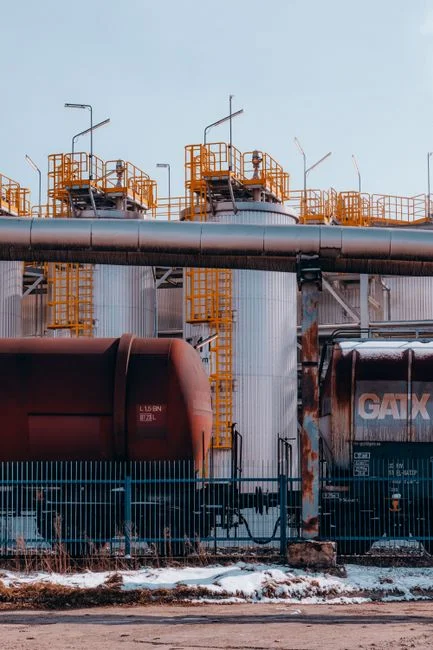
A correctly specified industrial ETP follows a four-stage logic: screening and flow equalisation, physico-chemical primary treatment, biological secondary treatment, and tertiary polishing. Screening removes rags, grit, and plastics that would damage downstream pumps; equalisation buffers the 2–4× diurnal swings common in batch-process factories and protects biological kinetics from shock loads. Physico-chemical treatment pairs coagulation, flocculation, and dissolved air flotation (DAF) to strip suspended solids, emulsified oils, and colour — the HydropureWater DAF covers 4–300 m³/h across 13 standard models and is widely specified for FOG and metal-bearing streams. Biological secondary treatment is where the genuine engineering decision sits: MBR (membrane bioreactor) delivers reuse-quality effluent, tolerates higher MLSS (8,000–12,000 mg/L), and shrinks the footprint by 30–50%, while SBR (sequencing batch reactor) cuts CAPEX by roughly 25% for flows under 500 m³/day and is simpler to operate. HydropureWater MBR systems in the 10–2,000 m³/day range dominate Pilbara and Kwinana bids. Tertiary polishing — sand filter, UF, RO, or constructed wetlands — strips residual BOD/TSS, total nitrogen (via denitrification or RO), and pathogens. Constructed wetlands have been shown to remove micropollutants from WWTP effluent (Lei, Wageningen University PhD, 2023) and are a viable polish for sites with ≥0.5 ha of spare land.
| Stage | Typical Equipment | Removes | Design Parameter |
|---|---|---|---|
| Screening / equalisation | Bar screens, buffer tanks | Rags, grit, flow spikes | HRT 6–12 h |
| Physico-chemical | DAF, lamella clarifier | TSS, FOG, heavy metals | Hydraulic loading 5–25 m³/m²·h |
| Biological secondary | MBR, SBR, UASB | BOD, COD, NH₃-N | MLSS 4,000–12,000 mg/L |
| Tertiary polish | Sand filter, UF, RO, UV, AOP | Residual solids, TN, pathogens | Flux 15–25 LMH (RO) |
Three Supply Models: Containerised Export, Local Skid, Civil Build
Perth buyers typically shortlist across three procurement routes, each with distinct cost, timeline, and risk profiles. Model A — containerised export (exemplified by Indian and Chinese fabricators shipping ISO-containerised packages) delivers CAPEX 25–40% below local skid equivalents for flows of 5–50 m³/day, with 4–8 weeks of shipping plus remote commissioning. The trade-off is no WA-based service crew, slower spares, and a heavier burden on the buyer's own operators during commissioning. Model B — local skid-mounted (PR Water, Iconic Water Solutions, MAK Water per RevenueBase 2026-09-15) runs 30–50% higher CAPEX but offers Perth-based commissioning, fast spares, and a much smoother DWER Works Approval because the responsible engineer is local and accountable. Model C — civil build (PPS Water Group, large turnkey contractors) is the only realistic option above 500 m³/day or for sites requiring seismic-rated bunding, mine-specification, or structural buildings; expect 6–12 month schedules and AUD $3M+ CAPEX. The decision rule is straightforward: Model A for <50 m³/day, non-hazardous effluent, and tight CAPEX; Model B for 50–500 m³/day, hazardous or variable influent, or any site where DWER licence risk matters; Model C for >500 m³/day, Pilbara remote sites, or process water reuse at refinery scale.
| Parameter | Model A — Containerised Export | Model B — Local Skid | Model C — Civil Build |
|---|---|---|---|
| Flow range | 5–50 m³/day | 50–500 m³/day | >500 m³/day |
| CAPEX vs. Model B | −25 to −40% | Baseline | +150 to +300% |
| Lead time | 4–8 weeks shipping + remote commissioning | 8–16 weeks | 6–12 months |
| Service footprint | Overseas, remote | Perth-based | Perth + site-based |
| DWER approval ease | Lower (foreign engineer of record) | High | High (but slowest) |
| Best fit | Non-hazardous, budget-constrained | Variable / hazardous influent | Refinery, mine, large F&B |
CAPEX, OPEX, and Payback Ranges for Perth ETPs
Budget realism is what separates a board-approved project from a stalled one. For a small 5–20 m³/day containerised ETP handling non-hazardous trade waste, CAPEX lands at AUD $80,000–$250,000 with OPEX of $0.8–$1.5/m³ treated; payback is 18–36 months for sites currently paying $0.5–$2.0/L cartage to a liquid-waste contractor. Mid-sized 50–200 m³/day local skid MBR systems run $400,000–$1.2M CAPEX and $0.5–$1.0/m³ OPEX, with 24–48 month payback once reuse credits for recovered wash-water or irrigation are netted against potable purchase. Large 500–2,000 m³/day civil builds with RO polish are a different investment class at $3M–$15M CAPEX and $0.3–$0.7/m³ OPEX, with payback typically above 5 years and only justified by zero-discharge compliance, regulatory risk avoidance, or capacity expansion. The hidden line item most buyers miss is the DWER Works Approval package — consultant fees of $25,000–$80,000 and a 6–9 month lead time that can push commissioning into the next financial year. The cross-reference for international cost benchmarking is the BOD and TSS discharge limits by country compared table, which gives context for the EPA WA targets.
| Plant Size | CAPEX (AUD) | OPEX ($/m³) | Typical Payback | Best Trigger |
|---|---|---|---|---|
| 5–20 m³/day containerised | $80,000–$250,000 | 0.8–1.5 | 18–36 months | Cartage cost avoidance |
| 50–200 m³/day skid MBR | $400,000–$1.2M | 0.5–1.0 | 24–48 months | Reuse credit + compliance |
| 500–2,000 m³/day civil + RO | $3M–$15M | 0.3–0.7 | >5 years | Zero-discharge mandate |
| DWER approval & consultant | $25,000–$80,000 | — | — | Add 6–9 months lead time |
Industry-Specific Treatment Trains for Perth Sites
The correct treatment train is dictated by the effluent, not the flow rate. Kwinana petrochemical and alumina refineries route wastewater through an API oil/water separator first, then a DAF to strip emulsified hydrocarbons, equalisation, biological MBR, and an activated-carbon polish; the high TDS of refinery wastewater (often 3,000–8,000 mg/L) typically forces an RO step with concentrate management via evaporation or crystallisation. Perth food and beverage plants in Malaga, Canning Vale, and Wangara commonly run screening → DAF for FOG and protein → SBR or MBR → UV or chlorine-dioxide disinfection, with the polish step targeting reuse for irrigation or CIP wash water. Kewdale and Balcatta metal finishing operations are bound by heavy-metal limits rather than BOD: the train starts with cyanide destruction via alkaline chlorination (pH >10, ORP >650 mV), chromium reduction with metabisulphite, hydroxide precipitation and clarification, sand filter, then ion exchange or RO; a lamella clarifier is the workhorse for the metal-sulphide sludge step. Pilbara mining camps face the inverse problem: high-TDS brackish influent that requires clarification, RO, and either an evaporation pond or a mechanical crystalliser for the concentrate; the sewage stream is handled separately by a containerised MBR in the 10–2,000 m³/day range, with an industrial UV steriliser providing the final pathogen barrier. For mining process-water reuse, the comparative case is laid out in MBR vs activated sludge for mining wastewater.
| Perth Industry / Precinct | Influent Signature | Recommended Train | Binding Constraint |
|---|---|---|---|
| Kwinana petrochemical / alumina | High TDS 3,000–8,000 mg/L, oil | O/W separator → DAF → MBR → AC → RO | RO concentrate disposal |
| Malaga / Canning Vale F&B | BOD 1,500–5,000 mg/L, FOG | Screen → DAF → SBR/MBR → UV | Reuse pathogen limit |
| Kewdale / Balcatta metal finishing | CN⁻, Cr⁶⁺, Ni, Zn | Alkaline chlorination → Cr reduction → precip → IX/RO | Heavy-metal ≤1 mg/L |
| Pilbara mining camp | TDS 5,000–40,000 mg/L brackish | Clarification → RO → evap pond / crystalliser | Brine volume, zero discharge |
Frequently Asked Questions
How much does an effluent treatment plant cost in Perth in 2026?
A small 5–20 m³/day containerised ETP in Perth runs AUD $80,000–$250,000 CAPEX with OPEX of $0.8–$1.5/m³; a 50–200 m³/day local skid MBR is $400,000–$1.2M; a 500–2,000 m³/day civil build with RO polish is $3M–$15M. Add $25,000–$80,000 for a DWER Works Approval consultant (source: industry CAPEX ranges, 2026).
Do I need a DWER Works Approval for a containerised ETP?
Yes. Any ETP handling prescribed premises — Categories 54 (sewage), 57 (metal finishing), 85 (mineral processing), or 12 (petrochemical) under Part V of the Environmental Protection Act 1986 — requires a Works Approval and Operating Licence regardless of where the equipment was fabricated. Lead time is 60–240 days depending on category.
What discharge limits does EPA WA set for industrial effluent?
Typical EPA WA targets for Perth metro sites discharging to irrigation or sewer are BOD ≤20 mg/L, TSS ≤30 mg/L, total nitrogen ≤10 mg/L, and oil & grease ≤10 mg/L. Sites discharging to the Swan River or Cockburn Sound face tighter limits of BOD ≤10 mg/L and TN ≤2 mg/L.
Should I choose a containerised ETP from overseas or a local Perth skid?
Choose containerised export for flows under 50 m³/day with non-hazardous effluent and tight CAPEX (25–40% cheaper). Choose a local Perth skid for 50–500 m³/day, hazardous or variable influent, or any project where DWER licence risk matters — local engineering sign-off and Perth-based commissioning typically save 6–9 months of approval pain.
Which Perth industries use an MBR versus an SBR?
MBR dominates Kwinana refineries, Pilbara mines, and metal finishing where reuse-quality effluent and a small footprint justify the higher membrane cost. SBR is preferred for Perth food and beverage plants under 500 m³/day where lower CAPEX and simpler operation outweigh the larger tankage.