What Thermal Hydrolysis Does to Sewage Sludge
Thermal hydrolysis for sludge treatment heats thickened sewage sludge (typically 15-18% dry solids) to 140-180°C at roughly 6 bar for 20-40 minutes before anaerobic digestion, then flash-depressurizes it. The process ruptures microbial cell walls, releases intracellular organics into solution, and converts a feed that digester bacteria would otherwise attack slowly into a substrate they can consume in hours rather than weeks. Mesophilic digester biogas output rises by up to approximately 50%, dewatering cake solids improve by under 10 percentage points, and the product meets Class A biosolids criteria with no pathogen regrowth (Barber, 2016; Cambi, accessed 2026).
Think of the reactor as a pressure cooker, but the cook is followed by an explosive decompression. Live steam injection raises the sludge to reaction temperature and saturates the pressure; the residence hold completes the hydrolysis of the macromolecular carbohydrate and protein matrix. The steam-explosion mechanism is what actually disintegrates floc structure, not the temperature alone: when the reactor discharges to the atmospheric flash tank, the sudden pressure drop shears the cells that the heat has already weakened. Both effects are required; heat without flash gives you pasteurization, flash without sufficient heat gives you a homogenizer (Barber, 2016; Cambi, accessed 2026).
It is worth distinguishing THP from thermal drying or incineration. THP is a pretreatment positioned upstream of the digester, not a solids-disposal step. The reactor does not reduce volume in any meaningful way; the reactor changes the physical and chemical state of the sludge so that downstream digestion and dewatering do more work per unit of input. Volume reduction happens later, in the digester (as biogas) and in the dewatering device (as cake solids), not in the THP reactor itself (Barber, 2016).
The 160-180°C Operating Window and Why Going Higher Backfires
The peer-reviewed critical review converges on an optimal operating band of 160-180°C for 20-40 minutes residence time, drawing on Haug (1977, 1978), Stuckey and McCarty (1984), Li and Noike (1992), Neyens and Baeyens (2003), and Bougrier et al. (2006, 2008). The wider experimental envelope in the literature spans 60-275°C and 10-180 minutes, but the 160-180°C / 20-40 min band is where biogas yield, dewaterability, and refractory-organics formation are simultaneously optimized (Barber, 2016).
The trade-off is well quantified. Increasing reaction temperature up to the optimum improves digestibility, decreases apparent viscosity, lifts carbohydrate and protein solubility, has negligible effect on lipid solubility, and reduces average particle size. Beyond the optimum, digestibility falls, refractory COD, colour, and nitrogen formation accelerate, and biogas yield collapses. Stuckey and McCarty (1984) measured gas production at 27% above the untreated control at 175°C, approximately equal to the control at 250°C, and below the control above 250°C, which is the single most cited demonstration that hotter is not better (Barber, 2016).
Commercial trains sit slightly below the academic optimum for practical reasons. The table below compares the two settings.
| Parameter | Academic optimum (Barber, 2016) | Cambi commercial train (Cambi, accessed 2026) |
|---|---|---|
| Temperature | 160-180°C | 140-165°C |
| Pressure | ~6-10 bar (saturated steam at temperature) | ~6 bar |
| Residence time | 20-40 min | 20-30 min per batch |
| Reactor count per train | Not specified | 2-5 reactors in parallel |
| Inlet dry solids | 15-18% DS | 16-18% DS |
| Tested range in literature | 60-275°C, 10-180 min | — |
The commercial envelope is conservative because the cost of overshooting the optimum is asymmetric: a 5°C upward miss drives refractory-organics formation, a 5°C downward miss costs a small fraction of biogas yield. Designers therefore bias toward the lower end of the academic window (Barber, 2016; Cambi, accessed 2026).
Where THP Fits in the Sludge Train
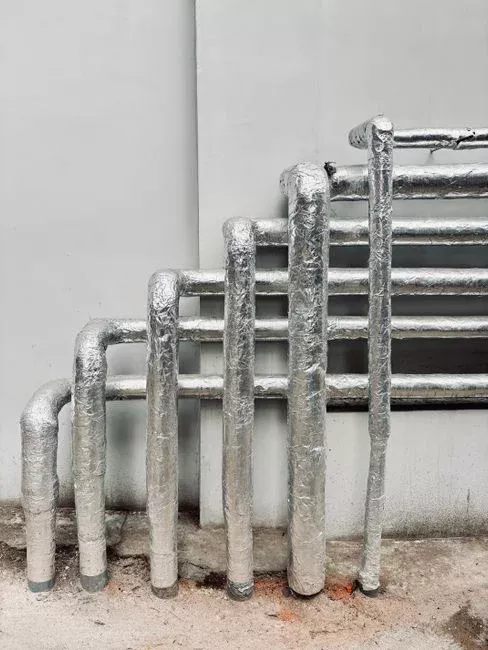
THP slots between thickening and mesophilic anaerobic digestion. Raw primary and secondary sludge is first thickened (mechanical or gravity) to 15-18% DS, then fed to a pulper that homogenizes the feed and preheats it to approximately 100°C using steam recovered from the downstream flash tank. The warm sludge flows into a sealed reactor train, where live steam injection brings it to 140-165°C at roughly 6 bar for 20-30 minutes per batch. The reactor then discharges to an atmospheric flash tank; the pressure drop disintegrates the floc and the released flash steam returns to the pulper to preheat the next batch. Heat exchangers cool the sterilized sludge to digester temperature before it enters the anaerobic digester, and the digested biosolids proceed to mechanical dewatering for cake production and final reuse or disposal (Cambi, accessed 2026).
The heat integration between the flash tank and the pulper is what makes the energy balance workable. Without flash-steam recovery, heating 15-18% DS sludge from 20°C to 165°C would consume more steam than the incremental biogas is worth. With recovery, net thermal demand falls to the point where the additional biogas roughly offsets the steam input, provided the digester gas is used to fire the boiler (Barber, 2016).
The digester-side impact is large. By pre-breaking the rate-limiting hydrolysis step, THP allows roughly three times the volumetric loading on the same digester asset, which is the strongest single argument for retrofit on a hydraulically or organically loaded plant. If you are diagnosing chronic digester underperformance, the patterns in our anaerobic digester troubleshooting guide overlap directly with the symptoms THP is designed to fix.
Which Sludge Compositions Actually Benefit
Thermal hydrolysis is not feed-agnostic. The critical review is explicit: THP is best suited to materials with high carbohydrate and protein content, and has little influence on lipids, which is why it is more suited to activated (waste activated sludge, WAS) than primary sludge (Barber, 2016). The mechanism is straightforward; the cell walls of floc-forming bacteria are carbohydrate- and protein-rich, and that is exactly the matrix THP is designed to break.
Primary sludge tells a different story. It responds less strongly on digestion metrics but liberates substantially more volatile fatty acids (VFAs) from the breakdown of unsaturated lipids, which makes the hydrolysate useful as an external carbon source for biological nutrient removal upstream. A plant with strong primary clarification and a high-lipid primary sludge is therefore looking at THP primarily as a carbon-source generator; a WAS-dominant plant is looking at THP primarily as a digestion booster. The two value propositions are different and should not be conflated in a feasibility study (Barber, 2016).
| Sludge type | THP effect on digestion | THP effect on hydrolysate composition | Strongest value proposition |
|---|---|---|---|
| WAS (waste activated) | Strongest biogas uplift; rate-limiting hydrolysis step pre-broken | High carbohydrate and protein solubilization | Increased digester capacity and biogas yield |
| Primary sludge | Modest digestion uplift | High VFA yield from unsaturated lipid breakdown | External carbon source for biological nutrient removal |
| Mixed primary + WAS | Intermediate; weighted by feed fraction | Intermediate | Combined capacity and carbon-source benefits |
There is a documented European trend away from combined primary+WAS THP toward separate processing of WAS, which changes the optimum configuration for plants considering retrofit. The rationale is that primary sludge, with its lipid content, generates more odour and operational issues inside the THP reactor than WAS does, and separating the streams lets each be processed at its own optimum (Barber, 2016). This is consistent with broader industrial wastewater treatment design principles covered in our industrial sludge treatment guide.
Performance You Can Plan Around
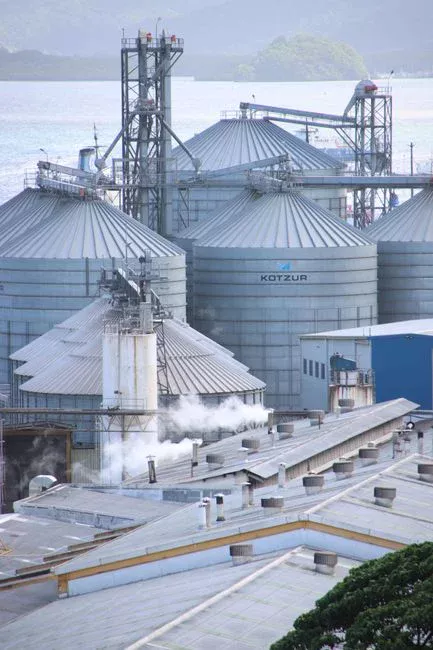
The performance envelope is now well-defined enough to put in a feasibility memo. The headline numbers from the commercial and academic literature converge: biogas uplift of up to approximately 50% during mesophilic anaerobic digestion, digester volumetric throughput roughly tripling on the same asset because the rate-limiting hydrolysis step is already complete when the sludge enters the digester, and volatile solids (VS) destruction still capped at 60-65% even with THP pretreated, which matters for mass-balance work because it sets the floor on biosolids yield (Barber, 2016; Cambi, accessed 2026).
Dewatering improvement is more modest than vendor decks suggest. The critical review concludes that THP improves dewatering by less than 10 percentage points of cake solids, irrespective of which downstream dewatering device is used. That number is the most defensible figure in the literature and is the one to use when sizing downstream cake handling, trucking, and reuse logistics (Barber, 2016).
Pathogen kill is the cleanest outcome. The 140-180°C / 20-30 min hold produces Class A biosolids with no pathogen regrowth, which unlocks land-application, drying, pyrolysis, and incineration routes that are restricted or closed for Class B material (Cambi, accessed 2026). For the dewatering step that follows digestion, a plate-and-frame filter press is the typical pairing because it captures the high-end of the cake-solids window THP unlocks.
2026 Cost and ROI Framework for Mid-Size WWTPs
CapEx for a THP retrofit on a mid-size municipal plant (50,000-200,000 population equivalents) is dominated by the reactor train, the flash tank, and the heat-recovery heat exchangers, and is site-specific. Treat any quoted number as a feasibility estimate pending a formal engineering study, but the realistic envelope is multi-million-dollar scope before integration with thickening, digester, and dewatering upgrades. The order of magnitude is set by the reactor pressure-vessel fabrication and the steam-boiler capacity, not by the controls package.
OpEx on a net-energy basis is roughly neutral, because the additional biogas produced by the digester offsets the steam required to heat the sludge, but only if the digester gas is actually used to fire the boiler. Plants that flare digester gas break the energy balance and should not model THP as energy-neutral. With gas utilization in place, the net thermal penalty is small and the dominant OpEx shifts to maintenance of the pressure-vessel train and the steam system (Barber, 2016; Cambi, accessed 2026).
The revenue and avoided-cost stack is what defends the case to procurement: (1) avoided sludge transport and disposal cost from less volume, drier cake, and Class A status opening lower-cost outlets; (2) renewable-energy revenue from incremental biogas via CHP, biomethane grid injection, or vehicle fuel; (3) deferred digester CapEx because the existing asset handles up to roughly three times the loading; and (4) deferred landfill or incineration capacity plus a smaller trucking footprint. The 2026 sensitivity is that PFAS-in-biosolids pressure is tightening landfill and land-application routes, which tilts the math further toward Class A solutions.
Integrating THP with Downstream Dewatering Equipment
The downstream dewatering choice matters because THP unlocks a cake-solids lift of under 10 percentage points; the device that captures the high end of that window captures the most value. A plate-and-frame filter press is the standard pairing in commercial THP installations because it operates at high solids capture and tolerates the higher feed viscosity of THP-treated biosolids. The hydraulic or PLC-automatic operating range, with filtration areas from 1-500 m², covers the duty envelope typical of post-THP dewatering on mid-size municipal plants.
Decanter centrifuges are the alternative and are common in plants that already own them. The cake-solids delta from THP is similar in absolute terms but the baseline is lower, so the relative improvement is smaller. Plant owners with existing centrifuges often retain them and accept the lower absolute cake solids in exchange for lower operating labour; plant owners building greenfield or replacing end-of-life dewatering kit typically select plate-and-frame to capture the full cake-solids window.
Decision Framework: Is THP Right for Your Plant in 2026?
Four questions, in order, will resolve roughly 80% of retrofit cases.
- Is your digester hydraulically or organically loaded to its limit? If yes, THP triples effective capacity on the same asset, and that is the strongest single case. If no, the digester is not the bottleneck and THP solves a problem you do not have.
- Is your feed WAS-heavy rather than primary-heavy? If yes, THP delivers the most digestion benefit per ton of dry solids. If your feed is primary-dominant, model the value proposition around VFA generation for nutrient removal, not digester capacity.
- Do you have an end-use route for Class A biosolids (land application, drying, pyrolysis) or for the incremental biogas (CHP, biomethane)? If yes, the revenue stack is positive. If no, the avoided-disposal value shrinks and the case weakens.
- Are you facing 2026 regulatory pressure on biosolids (PFAS in land-applied biosolids, tighter Class A criteria, landfill diversion mandates)? If yes, THP becomes a compliance asset, not just an OPEX play, and the CapEx conversation moves from discretionary to mandatory.
The 2026 regulatory trigger is real. PFAS-in-biosolids pressure is closing land-application routes in multiple jurisdictions, and the EPA's 2024 risk evaluation framework for PFAS has put biosolids programs on a multi-year tightening trajectory. Class A status, paired with pyrolysis or thermal-reuse outlets, is the defensible long-term position. THP is the most mature route to that status at scale, which is why the technology is becoming more, not less, attractive as 2026 progresses.
Frequently Asked Questions
What temperature and residence time define the optimal thermal hydrolysis window?
The peer-reviewed critical review converges on 160-180°C for 20-40 minutes residence, with a wider tested range of 60-275°C and 10-180 min. Commercial trains typically operate at 140-165°C, ~6 bar, and 20-30 min per batch to bias against refractory-organics formation (Barber, 2016; Cambi, accessed 2026).
How much does thermal hydrolysis improve biogas yield from anaerobic digestion?
Biogas yield increases by up to approximately 50% during mesophilic anaerobic digestion of THP-pretreated sludge, and digester volumetric throughput roughly triples because the rate-limiting hydrolysis step is already complete when sludge enters the digester (Barber, 2016; Cambi, accessed 2026).
Does thermal hydrolysis produce Class A biosolids?
Yes. The 140-180°C / 20-30 min hold destroys pathogens and the resulting biosolids meet Class A criteria with no pathogen regrowth, which unlocks land application, drying, pyrolysis, and incineration outlets (Cambi, accessed 2026).
Which dewatering equipment pairs best with thermal hydrolysis?
Plate-and-frame filter presses are the standard commercial pairing because they capture the high end of the cake-solids window THP unlocks. Decanter centrifuges are the alternative; the absolute cake-solids lift is similar but the baseline is lower, so the relative improvement is smaller (Barber, 2016).
What is the typical dry solids concentration fed to a THP reactor?
Both the critical review and the commercial process specify thickened sludge at 15-18% DS as the THP feed. Lower DS inflates the steam duty because the water fraction dominates the heating load, and higher DS is limited by the rheology of thickened sludge (Barber, 2016; Cambi, accessed 2026).