What an Effluent Treatment Plant in Brisbane Actually Does in 2026
An effluent treatment plant in Brisbane in 2026 is a licensed industrial wastewater system sized to your site flow and pollutant load, designed to satisfy the Department of Environment, Science and Innovation (DESI) Environmentally Relevant Activity (ERA) licence triggers and Brisbane City Council's Water-RWQMP trade-waste pre-treatment rules. Typical trains combine screening, DAF or lamella primary clarification, biological treatment (MBR or activated sludge), and tertiary polishing via UF, RO or constructed wetlands, with all discharges to sewer or land monitored under a negotiated trade-waste agreement.
Three terms get conflated in Brisbane engineering conversations and the distinction matters before any equipment is specified. A true industrial ETP handles process wastewater from food, brewing, metal finishing or transport wash bays and is engineered for the specific pollutant load of that stream. A packaged sewage treatment plant — for example the WSZ underground packaged unit, rated 1–80 m³/h with A/O + sedimentation + disinfection — is built for domestic-strength sewage in un-sewered or low-density sites. An on-site domestic system designed under AS1547-2012 (per QLD Plumbing and Wastewater Code) is a septic tank or absorption trench serving a single dwelling, sized by soil percolation and setback distances (AussieSoil, 2026).
Most Brisbane industrial ETPs follow a four-stage logic regardless of vendor: screening → primary clarification → secondary biological → tertiary/disinfection. Primary clarification typically uses a dissolved air flotation system rated 4–300 m³/h across 13 models, where micro-bubbles attach to suspended solids and fats, and an auto-skim removes the float layer. Secondary biological treatment commonly uses an integrated MBR membrane bioreactor rated 10–2,000 m³/day with sub-1 µm membrane filtration — quoted to deliver roughly 60% smaller footprint than conventional activated sludge. Tertiary polishing with UF, RO, chlorine dioxide, or constructed wetlands is where 2026 Brisbane designs gain or lose value: tertiary is the step that determines whether effluent is discharged, reused on-site, or recycled. Membrane polishing of WWTP effluent to reusable standards is a peer-reviewed and commercially demonstrated option (Schrader, Univ. of Twente PhD, 2015), and constructed wetlands have been studied for tertiary micropollutant removal (Lei, Wageningen PhD, WU thesis 8189).
When Brisbane Regulations Force You to Build an ETP
Crossing the DESI ERA threshold is the moment a Brisbane site converts from "nice-to-have pre-treatment" into a licensed ETP obligation. The Department of Environment, Science and Innovation administers the Environmentally Relevant Activity framework under the Environmental Protection Act 1994, and the activities most likely to trigger a Brisbane industrial ETP in 2026 are ERAs 53 (organic chemicals manufacturing), 54 (petrochemical storage and handling above threshold volumes), 55 (other chemical processes), and 61 (intensive animal feedlotting or waste-water-related processing) — with food, beverage and metal-finishing sites typically captured by ERA 53/55 depending on throughput. ERA thresholds are expressed as design capacity or daily throughput, so a small bakery that falls below the threshold sits on the domestic side of the line while a 200 m³/day brewery sits firmly on the ERA side.
Brisbane City Council's trade-waste regime is the second gate. Council applies the Water Services Association of Australia Risk-Based Wastewater Management Planning (Water-RWQMP) framework, which classifies non-domestic discharges into categories with limits on pH (typically 6.0–10.0), temperature (≤38 °C), BOD (≤600 mg/L for Category 4 trade waste), TSS, oil and grease (≤200 mg/L), ammonia, and metals. A site that discharges to sewer above the agreed category limits is required to install pre-treatment to bring the discharge within permit, and any discharge to land or waters triggers additional ERA-specific environmental authority conditions. For on-site systems in non-sewered areas, the QLD Plumbing and Wastewater Code and AS1547-2012 remain the design basis (AussieSoil, 2026).
| Discharge destination | Triggering instrument | Key 2026 obligations |
|---|---|---|
| Sewer (Brisbane Water) | Trade Waste Permit under Water-RWQMP | Category-based limits on pH, BOD, TSS, O&G, ammonia, metals; flow metering; sampling |
| Land / irrigation (on-site reuse) | DESI recycled-water approval + Council | Reuse quality criteria; cross-connection control; logbook; scheme-specific monitoring |
| Waters (creek, stormwater, bay) | DESI ERA environmental authority | Site-specific discharge limits; receiving-water monitoring; annual reporting |
| On-site disposal (un-sewered) | QLD Plumbing Code + AS1547-2012 | Soil/perc testing; setback distances; disposal-area design |
ERA thresholds and RWQMP categories are updated periodically. Buyers should confirm the current DESI ERA schedule and the Brisbane Water trade-waste category applicable to their discharge before committing to a process train, because the destination (sewer, land, or waters) drives both the design envelope and the cost band.
Choosing the Right Process Train for Your Brisbane Wastewater
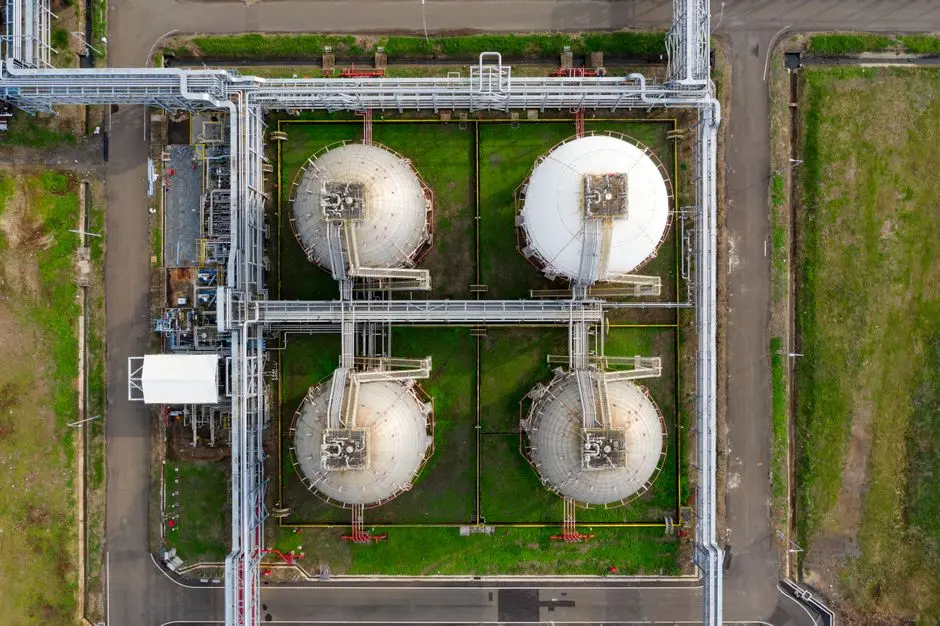
Process-train selection is the highest-leverage decision in any Brisbane ETP project. The influent stream — not the marketing literature — dictates the train. Brisbane's industrial mix (food and beverage, brewing, dairy, metal finishing, transport wash, landfill leachate, slaughterhouse) produces distinct pollutant signatures, and the table below maps each to a defensible primary / secondary / tertiary / sludge-handling combination.
| Brisbane influent | Primary | Secondary | Tertiary / polishing | Sludge handling | Reuse option |
|---|---|---|---|---|---|
| Food & beverage (high FOG, high TSS) | DAF (4–300 m³/h) | MBR or SBR | UF + ClO₂ | Plate press (PF series) | Washdown, irrigation |
| Brewery (variable organics, high BOD) | DAF + balancing | MBR | UF (0.03 µm PVDF) | Plate press | Boiler feed (with RO) |
| Dairy (high fat, protein, lactose) | DAF + balancing | MBR | UF / RO | Plate press | Cooling tower make-up |
| Metal finishing (heavy metals, low BOD) | Physico-chemical precipitation | Not required | Ion exchange / RO | Cake to licensed waste | Rinse-water reuse |
| Transport wash (oils, detergents, TSS) | DAF or lamella | MBR (compact) | UF + ClO₂ | Plate press | Wash reuse |
| Landfill leachate (high ammonia, refractory COD) | DAF (air-stripping pre-stage) | MBR with nitrification/denitrification | RO | Plate press | Limited; usually discharge |
| Slaughterhouse (high protein, blood, FOG) | Screening + DAF | MBR | UF + ClO₂ | Plate press + digester | Irrigation under scheme |
For high-FOG and high-TSS streams — the typical Brisbane food and brewing site — DAF is the workhorse primary. The dissolved air flotation system uses micro-bubble flotation and an auto-skim to lift fats, oils and floatable solids; hydraulic recovery is normally 90–95% of float. For variable organics with ammonia or strict reuse targets, an integrated MBR membrane bioreactor is the standard 2026 answer; see the How Does MBR Work engineering guide for the biology and membrane detail. MBR footprints run roughly 60% smaller than conventional activated sludge at the same load, and the effluent is consistently below 5 mg/L TSS and 1 NTU turbidity — which is why reuse trains are usually MBR + UF + ClO₂ or MBR + RO. A UF ultrafiltration system rated 2,000–40,000 L/h on 0.03 µm PVDF membranes is the typical polishing step for washdown or irrigation reuse, with RO added when dissolved solids or salts are also a target. Sludge handling should be designed in from the start: a plate-and-frame filter press (PF series, 1–500 m² filtration area) drops sludge moisture from ~95% to 60–65% cake, which is the single biggest lever for keeping haulage off the OPEX ledger.
2026 CAPEX and OPEX Bands for Brisbane ETPs
Planning-grade cost bands let a Brisbane procurement lead filter proposals before going to tender. The figures below are 2026 indicative ranges assembled from publicly available Australian ETP project data and equipment vendor catalogues; every site needs a site-specific quote, but the bands are tight enough in 2026 to differentiate a packaged plant from a custom industrial ETP and to screen vendors on price realism.
| Plant size band | Typical flow | Indicative 2026 installed CAPEX ($/m³/day) | Indicative 2026 OPEX ($/m³ treated) | Main OPEX drivers |
|---|---|---|---|---|
| Packaged small | 1–20 m³/day | $180–$700 | $0.45–$0.85 | Sludge haulage, servicing visits, power |
| Packaged / light industrial | 20–200 m³/day | $500–$1,000 | $0.30–$0.65 | Aeration energy, chemical dosing, labour |
| Custom industrial | 200–2,000 m³/day | $700–$1,400 | $0.25–$0.55 | Aeration, MBR cleaning chemicals, sludge |
| Industrial-scale | >2,000 m³/day | $900–$1,400+ | $0.20–$0.45 | Energy optimisation, on-site sludge handling |
Three cost-impact modifiers move the bands above. First, a constructed-wetland or UF/RO tertiary step adds roughly 10–25% to CAPEX but reduces chemical OPEX and can justify itself on reuse revenue or trade-waste surcharge avoidance. Second, buried vs skid-mounted configuration changes the civils cost — buried packaged plants (WSZ series) save footprint and visual impact but add excavation and access costs. Third, sludge handling is a hidden OPEX multiplier: a site that skips plate-press dewatering typically pays 3–5× more in liquid-sludge haulage per dry tonne than a site with on-site pressing. Across all bands, aeration energy and chemical dosing dominate OPEX for biological plants, while energy-optimised blowers and MBR cleaning-chemical recovery are the standard 2026 efficiency levers.
How to Shortlist Brisbane ETP Vendors in 2026
Converting the engineering framework into a shortlist the procurement team can act on this quarter requires four hard filters. The Australian ETP construction market is competitive — RevenueBase identified 82 ETP construction companies headquartered in Australia as of September 2026 — so a Brisbane buyer is choosing from a deep field, not a captive one (RevenueBase, 2026-09).
| Filter | Why it matters in 2026 | What to ask for in writing |
|---|---|---|
| Proven SEQ design-and-construct track record | Confirms local hydraulic, soil and climate familiarity | 3 reference plants in SEQ ≤ 5 years old, with flow and influent data |
| ERA-licence familiarity | DESI ERA conditions and reporting are the high-risk approval path | Named ERA numbers the vendor has commissioned; agency liaison contacts |
| Brisbane-based commissioning and after-sales | Travel time kills response SLAs and warranty response | Local office address; named commissioning engineer; 24–72 h service SLA |
| Documented after-sales and O&M capability | Orphan plants are a 2026 market risk when overseas EPCs exit | Commissioning & O&M manual template; remote-monitoring option; spares holding |
Use the RevenueBase 2026 database as a starting list of Brisbane-confirmed and SEQ-active ETP construction vendors — MAK Water, Aerofloat, Hydroflux Group, LC Water, LIQUITEK, Factor UTB, Innaco, Aqua Metro Services, ACO Halgan and Aquacell are all identified in the September 2026 snapshot (RevenueBase, 2026-09). This is a vendor-identification list, not an endorsement. Apply a five-step evaluation sequence: (1) desk research against the four filters, (2) capability questionnaire (RFI), (3) site visit to a live reference plant matched to your influent type, (4) pilot or trial scope if the influent is variable, and (5) negotiated performance warranty with KPI table. Confirm in writing that the vendor will provide a Commissioning, Operations and Maintenance Manual and offer either remote monitoring or on-site service in SEQ — the documented-SLA test is what protects a Brisbane site from inheriting an orphan plant if the vendor is acquired or exits the Australian market.
Frequently Asked Questions
Do I need a licence for an effluent treatment plant in Brisbane?
Yes, if your activity triggers a DESI ERA — most commonly ERAs 53, 54, 55 or 61 for Brisbane food, brewing, metal finishing and intensive animal sites — or if your discharge to sewer exceeds the agreed domestic-equivalent strength under Brisbane Water's Water-RWQMP trade-waste category rules. An on-site system sized under AS1547-2012 for a non-sewered property is a separate pathway under the QLD Plumbing and Wastewater Code.
How much does an industrial ETP cost in Brisbane in 2026?
Planning-grade installed CAPEX is roughly $180–$1,400 per m³/day depending on size and complexity — packaged plants sit at the lower end, custom industrial ETPs at the upper end. OPEX runs $0.25–$0.85 per m³ treated, dominated by aeration energy, chemical dosing, sludge haulage and labour.
MBR or conventional activated sludge for a Brisbane food plant?
MBR delivers reuse-quality effluent, a roughly 60% smaller footprint, and stable operation on variable loads; conventional activated sludge is cheaper up front if reuse is not required and the discharge is to sewer under a standard trade-waste category. For Brisbane food and beverage sites targeting on-site reuse, MBR is the 2026 default.
Can I reuse my treated effluent on-site in Brisbane?
Yes, under a recycled-water scheme approved by the regulator and Brisbane Water. Reuse generally requires MBR + UF or RO plus disinfection to reliably meet the agreed scheme quality criteria, and a cross-connection control plan is mandatory.
How do I find a Brisbane ETP contractor in 2026?
Start with the SEQ vendors identified in the RevenueBase 2026 database, then filter on ERA-licence experience, in-SEQ servicing, and documented after-sales capability. Apply a five-step evaluation — desk research, RFI, site visit, pilot if needed, and a negotiated performance warranty with KPI table — before signing.
Related Equipment
- WSZ underground packaged sewage treatment plant — specifications, capacity range, and technical data