
Why Underground Sewage Treatment Systems Are Specified in 2026
Underground sewage treatment system design criteria in 2026 combine hydraulic sizing (typically 150–250 L per capita per day, peaking at 2–2.5×), organic loading (BOD 200–400 mg/L, COD 400–800 mg/L for domestic sewage), biological stage design (A/O or MBR with HRT 6–12 h, SRT 10–30 days), structural and buoyancy resistance for burial depth 1.5–4 m, and discharge compliance to local standards such as EPA 40 CFR Part 503, EN 12255, or GB 50015. Packaged buried units such as the WSZ underground package sewage treatment plant series cover 1–80 m³/h in a single buried envelope integrating anoxic/aerobic contact oxidation, sedimentation, and disinfection.
Land scarcity is the dominant 2026 driver across dense residential, hospitality, and healthcare developments: a buried unit frees the surface for car parks, playgrounds, or amenity green space, and removes the visual impact of an open aeration tank. Aesthetic and odour pressure from neighbouring receptors — hotels near guest blocks, hospitals adjacent to wards, residential towers within 10 m of property lines — push designers toward enclosed biological reactors with forced, carbon-filtered venting rather than open surface basins. Quantitatively, US sanitary sewer systems collect roughly 62.5 billion gallons per day across approximately 16,000 publicly owned treatment works (per the US sanitary sewer flow reference in Sewage and Wastewater Sludge-to-Power, plasmacombustion.org), a volume large enough that decentralised buried units now handle a meaningful share of new capacity in master-planned communities, resorts, and industrial parks where extending trunk sewer is uneconomic. This article covers the factory-built, packaged, buried class — not site-built municipal tunnels or concrete civil structures — because the design criteria differ in load assumption, access, and commissioning.
Defining the Underground Sewage Treatment System: What the Design Criteria Apply To
An underground sewage treatment system, in the sense used in 2026 design specifications, is a factory-built, factory-tested biological treatment unit installed partially or fully below finished grade, integrating at least primary clarification, biological oxidation, secondary clarification, and disinfection inside one welded or moulded shell. The canonical example is the WSZ-class envelope: anoxic and aerobic contact oxidation zones, a sedimentation compartment, and a chlorination or UV contact chamber in a single buried tank, fully automated with no on-site operator, rated for 1–80 m³/h (per HydropureWater product data, 2026).
The definition matters because criteria are not transferable across categories. A surface-mounted packaged plant sees no soil load, no groundwater uplift, and no confined-space access duty, so its structural and ventilation criteria are not conservative for a buried unit. Conversely, a site-built cast-in-place concrete underground tank (typical of municipal civil works) uses different load, joint, and waterproofing criteria than a factory-welded steel or FRP shell. The buried package STP also has no primary digester, no biogas handling, and no sludge-to-power train, so the design basis is concentrated on hydraulic, biological, structural, and envelope performance — not on energy recovery. Setting that boundary up front keeps every later criterion anchored to the right equipment class.
Hydraulic Design Criteria: Flow, Peaking, and Retention
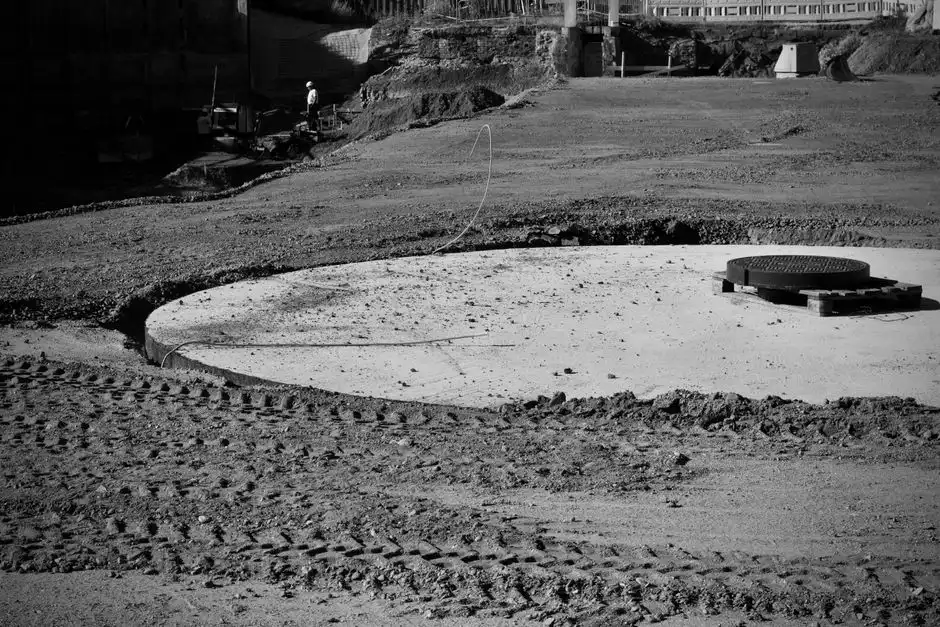
Hydraulic design is the first number an engineer needs. Domestic sewage per-capita flow for residential communities falls in the 150–250 L/capita/day band; for hospitals, hotels, and schools with higher fixture density, expect 250–400 L/capita/day. Apply a peak factor of 2.0–2.5× average daily flow for interceptor and biological stage hydraulic design; a lower factor of 1.5× is normally sufficient for disinfection contact tanks because the contact-time requirement is set against instantaneous peak rather than daily average.
Hydraulic retention time (HRT) at average flow is 6–12 h for A/O contact oxidation and 2–4 h for the sedimentation stage; chlorination contact typically uses 30–60 min (described as typical 2026 design practice under GB 50015 and EN 12255, not a statutory figure). Add a 10–20% margin in tank volume for sludge storage and peak inflow events; account for inflow/infiltration only if the unit receives upstream building sewer flow rather than a dedicated building drain. A worked example: 500 residents at 200 L/c/day = 100 m³/day average = 4.17 m³/h, so a 5 m³/h WSZ-class unit is the appropriate selection with a small margin for the 2.0–2.5× peaking window.
| Parameter | Residential | Hotel / Hospital / School | Notes |
|---|---|---|---|
| Per-capita flow (L/c/day) | 150–250 | 250–400 | Use upper bound for 24-h facilities |
| Peak factor (biological stage) | 2.0–2.5× | 2.0–2.5× | ADWF × factor = PDWF |
| Peak factor (disinfection) | 1.5× | 1.5× | Set against instantaneous peak |
| HRT — A/O contact (h) | 6–12 | 8–12 | Average flow basis |
| HRT — Sedimentation (h) | 2–4 | 2–4 | Average flow basis |
| HRT — Chlorination contact (min) | 30–60 | 30–60 | At peak instantaneous flow |
| Tank volume margin | 10–20% | 10–20% | For sludge storage & peaks |
Organic and Hydraulic Loading Criteria: BOD, COD, TSS, NH₃-N
Typical 2026 domestic influent for community, hotel, and hospital flows is BOD 200–400 mg/L, COD 400–800 mg/L, TSS 200–350 mg/L, NH₃-N 20–50 mg/L, and total phosphorus 4–8 mg/L. FOG-bearing streams from commercial kitchens require a preceding grease trap or a DAF pretreatment unit; DAF-class pretreatment is mandatory upstream when influent FOG exceeds 100 mg/L, because free oil coats biomass and destroys the contact-oxidation stage. Aerobic contact-oxidation volumetric loading runs 0.3–0.8 kg BOD/m³·day for standard A/O, dropping to 0.1–0.3 kg BOD/m³·day for MBR at the same envelope — the MBR rate is lower because the membrane retains biomass at mixed liquor suspended solids of 8,000–12,000 mg/L rather than the 2,000–4,000 mg/L typical of conventional A/O.
Target effluent for discharge to municipal sewer or surface water in 2026 is BOD ≤30 mg/L, SS ≤30 mg/L, and NH₃-N ≤15 mg/L — typical municipal sewer acceptance criteria applied across most local POTW ordinances, including the ordinance framework in S5 that defines discharge limits and pretreatment standards. Where local limits are tighter (e.g., for reuse or for direct surface-water discharge), specify MBR and add UV or RO polishing rather than trying to push a contact-oxidation unit past its design envelope.
| Parameter | Influent (mg/L) | A/O Effluent (mg/L) | MBR Effluent (mg/L) |
|---|---|---|---|
| BOD₅ | 200–400 | ≤30 | ≤5 |
| COD | 400–800 | ≤60 | ≤30 |
| TSS | 200–350 | ≤30 | ≤1 |
| NH₃-N | 20–50 | ≤15 | ≤5 |
| TP | 4–8 | 2–4 | 1–2 |
| Volumetric BOD loading | — | 0.3–0.8 kg/m³·d | 0.1–0.3 kg/m³·d |
Process Selection Inside the Buried Envelope: A/O, MBR, or SBR
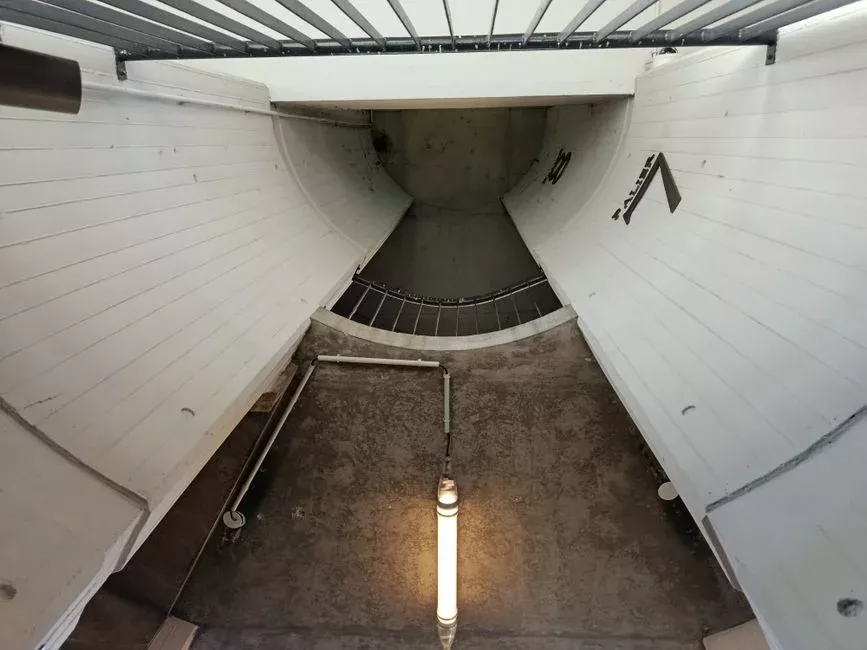
A/O contact oxidation inside a buried package is the default for 1–80 m³/h domestic and light-institutional flows, delivering greater than 90% BOD removal and SS ≤30 mg/L (per HydropureWater WSZ product data, 2026). MBR retrofit — submerged PVDF membranes at 0.1 μm nominal pore — is the right choice when the project targets reuse, handles hospital effluent, or operates under tight footprint constraints; per HydropureWater MBR product data, MBR cuts the envelope footprint by approximately 60% versus conventional activated sludge at the 10–2,000 m³/day flow class. SBR (sequencing batch reactor) suits intermittent flows such as resorts or weekend campuses, but it requires an equalisation volume that can drive a larger burial pit and deeper excavation.
Decision rule of thumb: pick A/O for BOD-only discharge to a municipal sewer where the receiving POTW accepts ≤30 mg/L BOD; pick MBR for reuse, hospital, or tight-effluent applications where COD ≤50 mg/L and turbidity ≤1 NTU are required; pick SBR for highly variable loads where the equalisation benefit outweighs the larger burial footprint. For 2026 hotel projects in hot climates, the packaged MBR STP sizing guide for hotels walks through the same logic with a flow-class worked example; for projects where OPEX dominates selection, the SBR OPEX breakdown for 2026 is the right reference.
| Criterion | A/O Contact Oxidation | MBR (submerged) | SBR |
|---|---|---|---|
| Best-fit flow class | 1–80 m³/h | 10–2,000 m³/day | 5–500 m³/day |
| BOD removal | ≥90% | ≥98% | ≥95% |
| Effluent SS (mg/L) | ≤30 | ≤1 | ≤20 |
| Footprint vs CAS | ~70% | ~40% | ~80% |
| Reuse-ready | No | Yes (with UV) | Partial |
| Load variability tolerance | Moderate | Moderate–High | High |
| Burial envelope | Single tank | Tank + membrane cassette | Tank + equalisation |
For an integrated MBR membrane bioreactor system with a replacement MBR membrane module rated for buried service, the envelope stays within the same 1.5–4 m burial depth window that governs the A/O design.
Structural, Buoyancy, Venting, and Access Criteria for the Buried Envelope
These checks are unique to buried systems and are the differentiator from surface-plant design references. The tank shell must be reinforced for soil load plus a live surcharge — typically burial depth 1.5–4 m, with vehicle load up to 10 t where the unit sits under a driveway or service yard, and a groundwater level that may sit above the tank base for parts of the year. The anti-buoyancy check is non-negotiable: when the tank is empty for maintenance, the displaced water weight must exceed uplift by a safety factor of 1.2–1.5; where it does not, specify a concrete ballast slab or a hold-down slab tied to the tank base. Corrosion protection is rated for buried, damp, H₂S-exposure service: factory-welded steel with epoxy or HDPE lining, FRP, or HDPE throughout the wetted envelope.
Forced venting of the aerobic chamber through a carbon-filtered exhaust routed at least 1 m above any opening window or air-handling intake controls both odour and H₂S to the receptor level required by neighbouring buildings. Access: minimum 600 mm manways over each chamber, locked covers rated for the same surcharge load as the surrounding slab, and a dedicated sampling port on the effluent line so the operator can pull a compliance sample without entering a confined space. Where access is over a trafficked area, specify a Class B or Class D cover to EN 124 rather than a non-rated lid.
Sludge, Disinfection, and Effluent Disposal Criteria
Sludge production from a buried domestic STP runs 0.5–1.0 kg dry solids per m³ of sewage treated; design the sludge storage zone for 6–12 months of accumulation before pump-out, and connect to a mobile dewatering service or, where site space allows, a small plate and frame filter press for sludge dewatering. Do not assume anaerobic digestion inside the buried envelope — the volume, retention time, and gas handling are not compatible with a packaged buried unit. Disinfection uses either a chlorine dioxide generator (rated 50 g/h to 20,000 g/h) or a UV steriliser; chlorine dosing remains acceptable where the receiving POTW requires a residual.
Effluent disposal options for a 2026 buried package STP, in order of frequency: discharge to the municipal sewer (most common for WSZ-class units, since the receiving POTW applies the ordinance framework in S5), on-site irrigation where local code allows and subsurface soil conditions are suitable, or RO polishing if the design intent is reuse for toilet flushing or landscape irrigation. For projects specifying reuse, the effluent treatment plant buyer's guide covers the polishing train and reuse-permit steps in more detail.
Compliance, Monitoring, and Documentation Requirements
Compliance in 2026 rests on three layers: the local POTW discharge permit (or its equivalent where no public sewer is available), the national wastewater standard (EPA 40 CFR Part 503 for biosolids in the US, GB 50015 in China, EN 12255 in the EU, IS 2470 in India), and any state or provincial environmental code that overlays stricter limits. For private subsurface systems, the S5 ordinance structure provides a defensible template: written permit before construction, inspection on completion, and a minimum lot size of 20,000 sq ft before a subsurface soil-absorption system can be permitted — adapt the thresholds to the reader's jurisdiction rather than copying them verbatim.
Monitoring intensity: influent and effluent BOD, COD, and SS monthly for the first 12 months of operation, then quarterly once performance is established; continuous flow metering is recommended for plants above 50 m³/h so that mass-load reporting to the POTW is auditable. Documentation that the 2026 buried STP will be expected to carry: a design basis memorandum with the numbers from this article, as-built drawings, the factory O&M manual, a sludge pump-out log, and a calibrated sampling plan that names the sampling points, the methods, and the laboratory. None of this is exotic; all of it is what the regulator and the receiving POTW will ask for at the next inspection.
Frequently Asked Questions
What is the standard per-capita flow used to size a buried sewage treatment plant in 2026?
For residential communities, 150–250 L per capita per day; for hospitals, hotels, and schools with higher fixture density, 250–400 L per capita per day. Apply a peak factor of 2.0–2.5× for biological stage design and 1.5× for disinfection contact tanks.
How deep can a buried package STP be installed, and what is the anti-buoyancy safety factor?
WSZ-class buried package units are designed for burial depths of 1.5–4 m, with vehicle load up to 10 t where the envelope sits under a service yard. The anti-buoyancy check requires displaced water weight to exceed uplift by a safety factor of 1.2–1.5 when the tank is empty for maintenance; otherwise, specify a concrete ballast or hold-down slab.
When should an MBR be selected instead of standard A/O contact oxidation inside a buried envelope?
Select MBR when the project targets reuse, handles hospital effluent, or operates under tight effluent limits such as COD ≤50 mg/L and turbidity ≤1 NTU. MBR cuts envelope footprint by approximately 60% versus conventional activated sludge at the 10–2,000 m³/day flow class, per HydropureWater MBR product data, 2026.
What HRT and SRT values apply to the biological stage of a buried A/O contact-oxidation unit?
Hydraulic retention time is 6–12 h at average flow for A/O contact oxidation and 2–4 h for the sedimentation stage; solids retention time is typically 10–30 days. Add 10–20% tank volume margin for sludge storage and peak inflow events.