Why Rural Australia Cannot Rely on Centralised Sewerage
Rural sewage treatment in Australia relies on on-site systems—septic tanks, Aerated Wastewater Treatment Systems (AWTS), package biological plants, or MBR units—because centralised sewerage is uneconomic outside towns. Process selection in 2026 is driven by flow (1–80 m³/h for typical package plants), soil class, council requirements, and AS/NZS 1546 compliance, with typical installed costs from about A$8,000 for a basic septic to A$60,000+ for a packaged AWTS or MBR serving a small community.
Trunk mains and pump stations scale linearly with distance and drop sharply in viability below roughly 20–30 dwellings per km², the density band covering most hobby farms, rural-residential subdivisions, and remote worker camps. Australian installers describe these economics as "expensive and impractical" to build and maintain (Taylex, 2026). Three estate conditions dominate the rural reality: townships below the reticulation threshold, hobby farms and homesteads on lots from 0.5 to 40 ha, and remote communities or mine/construction camps that need containerised or trailer-mounted capacity.
Engineered treatment is required to prevent environmental degradation, as documented in Australian literature. Bowmer & Laut (1992) showed that uncontrolled land spreading of effluent in inland Australia historically caused phosphorus enrichment of surface waters and heavy nitrate loading of groundwater, with salt accumulation degrading soil structure. Three decades later, nutrient, salt, and pathogen loadings must be reduced at the source rather than diluted into a paddock. This policy logic pushes every off-grid system from a basic septic toward secondary or tertiary treatment.
The Four Treatment Tracks Used Off-Grid
Four technology tracks are in routine 2026 use across Australian rural sites, and selecting the correct option depends on flow, soil, and discharge targets.
Septic tank + soil absorption. Wastewater flows into a buried tank where gravity separates solids, oils, and grease from the liquid phase; anaerobic bacteria reduce the organics, and the clarified effluent discharges to a leach field where soil acts as the final polishing medium (Taylex, 2026). Septic delivers primary treatment only—typically BOD 100–200 mg/L going to the soil—and depends on stable, well-draining soil with adequate setbacks from waterways and bores.
AWTS — Aerated Wastewater Treatment System. This system adds forced aeration and a disinfection stage (chlorination or UV) to the septic envelope, producing secondary-treated effluent of generally BOD <20 mg/L and TSS <30 mg/L when well maintained. AWTS is the standard residential choice on blocks where soil class rules out a conventional leach field.
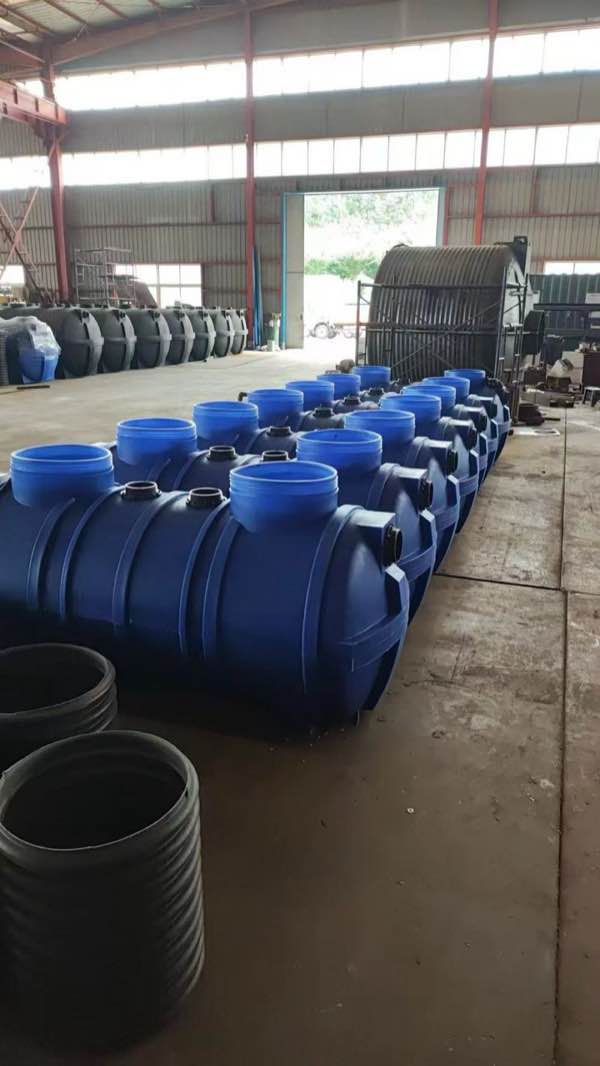
Package biological plant. A buried, integrated anoxic/aerobic (A/O) contact-oxidation unit combines biological treatment, sedimentation, and disinfection in a single factory-built skid. Units such as the WSZ underground package sewage treatment plant cover 1–80 m³/h, operate automatically without on-site staff, and can be trailer-mounted for mobile deployment to worker camps or temporary sites.
MBR — membrane bioreactor. This process couples activated-sludge biology with submerged PVDF ultrafiltration at typically <1 μm pore size, producing near-reuse quality effluent (BOD <5 mg/L, TSS <1 mg/L) suitable for irrigation, toilet flushing, or restricted reuse. The MBR membrane bioreactor system range covers 10–2,000 m³/day at roughly 60% of the footprint of an equivalent conventional plant because secondary clarification is replaced by the membrane cassette.
Process Comparison: Septic vs AWTS vs Package Plant vs MBR
Matching flow, soil, and budget to a process is the pivot of this guide. The table below compares the four tracks against parameters most often requested in council pre-lodgement meetings and supplier RFQs.
| Process | Typical flow range | Effluent BOD / TSS (design) | Footprint | Indicative CAPEX 2026 (A$) | Best for |
|---|---|---|---|---|---|
| Septic + soil absorption | 0.5–3 m³/day (residential) | Primary only — BOD 100–200 mg/L, TSS 50–100 mg/L going to soil | Large irrigation area (≥200 m² for a 4-bedroom home) | 8,000–15,000 | Stable, well-draining soils, low-density homesteads |
| AWTS (secondary) | 1–5 m³/day typical; up to 20 m³/day clustered | BOD <20 mg/L, TSS <30 mg/L (secondary envelope) | Small surface tank + sub-surface irrigation (40–80 m²) | 18,000–35,000 | Residential blocks with poor soil or setback constraints |
| Package biological plant (WSZ A/O) | 1–80 m³/h (≈24–1,920 m³/day) | BOD <20 mg/L, TSS <30 mg/L with disinfection | Single buried unit; landscaping above | 40,000–80,000 (10 m³/day equivalent) | Communities, hotels, schools, worker camps, rural-residential clusters |
| MBR (membrane bioreactor) | 10–2,000 m³/day (standard range) | BOD <5 mg/L, TSS <1 mg/L (near-reuse) | ~60% of conventional activated-sludge footprint | 80,000–180,000 (10 m³/day equivalent) | Tight sites, reuse targets, sensitive receiving waters |
The decision rule is straightforward: septic for light soil and load, AWTS where soil fails but subsurface irrigation is viable, package biological plants for community-scale flows, and MBR for high effluent quality or small footprints. For a detailed selector walkthrough, see the rural and small community sewage treatment process guide.
Australian Compliance Map for 2026
Approval anxiety is the primary cause of project delays in rural Australia. The compliance map for 2026 is layered, and each requirement must be addressed before a supplier quote is finalized.
AS/NZS 1546 (On-site domestic wastewater management) is the base standard for any septic, AWTS, or package system in Australia and is the primary reference for council health officers. Plumbing and drainage upstream of the tank is governed by the National Construction Code (NCC) Part 3.2. State-level licensing requirements include:
- NSW: Protection of the Environment Operations (POEO) Act plus local council Septic Safe program sign-off.
- VIC: EPA Victoria septic guidelines (Code of Practice for On-site Wastewater Management), with council as the consent authority.
- QLD: Standard Plumbing and Drainage Regulation plus local council plumbing assessment.
- WA: Department of Health regulatory framework for on-site systems, delegated to local government.
Between 2020 and 2023, eastern-state regulators tightened secondary-treatment expectations for new rural dwellings, particularly in nutrient-sensitive catchments. New dwellings on lots <2 ha in peri-urban zones are now expected to deliver secondary-treated effluent.
Systems discharging more than 5,000 L/day, or discharging to a waterway rather than subsurface irrigation, require state EPA approval in addition to council sign-off. For a 10 m³/day community system, this threshold is exceeded, making the EPA pathway mandatory.
2026 Costs: CAPEX, OPEX and the 10 m³/day Worked Example
Cost is typically analyzed as a CAPEX range plus an OPEX split, sized against a design point. The CAPEX range below is for an equivalent 10 m³/day design duty, indicative 2026, Australia-wide, installed and commissioned, excluding land-application irrigation.
| Process | Indicative CAPEX 2026 (A$) | Main cost drivers |
|---|---|---|
| Basic septic + soil absorption | 8,000–15,000 | Tank size, soil class, irrigation area earthworks |
| AWTS (residential secondary) | 18,000–35,000 | Aeration package, irrigation area, power supply run |
| Package biological plant (WSZ A/O) | 40,000–80,000 | Model size, disinfection, civil works, telemetry |
| MBR (membrane bioreactor) | 80,000–180,000 | Membrane cassette, building/enclosure, replacement membrane schedule |
OPEX is dominated by energy and consumables. Across a typical 2026 community-scale installation, energy comprises 25–40% of OPEX, chemicals (chlorine or antiscalant, polymer for sludge) 10–20%, with the balance covering sludge handling, servicing, and membrane replacement—a breakdown consistent with the figures in the wastewater OPEX breakdown.
Worked example — 10 m³/day homestead cluster on a WSZ package plant: Design energy draw of 0.6–1.0 kWh/m³ equates to roughly 2,200–3,650 kWh/yr, or about A$550–900 at 2026 small-business tariffs. A desludging cycle of 3–5 years at a typical 30–80 L of sludge per 1,000 L treated amortises to roughly A$600–900/yr. Routine servicing, chlorination, and consumables add a further A$1,200–2,000/yr, totaling A$2,500–4,000/yr excluding operator time.
While Australia lacks a federal program equivalent to the US EPA's 2026 Clean Water Act technical-assistance funding, state-level equivalents exist. Programs such as NSW's Safe & Secure Water Program and various state drought-and-community water grants co-fund rural wastewater upgrades; 2026 is an opportune year to engage with these programs before design finalization.
Sludge, Reuse and the 2026 Outlook
Sludge management is often under-engineered, leading to operational difficulties. Generation rates depend on the process: primary-only systems (septic) produce 30–80 L of sludge per 1,000 L treated, AWTS produce less due to biological oxidation, and MBR systems produce the least because biomass is retained in the reactor. A 3–5 year desludging cycle is a standard planning assumption for a residential-scale package plant (Taylex, 2026), and operators of larger plants should plan to use a plate and frame filter press to dewater sludge before transport off-site.
Biosolids carry a calorific value of around 12 MJ/kg—comparable to low-grade coal (International Plasma Technology Center, 2024)—representing an energy opportunity for rural plants with on-site digesters or thermal sludge-reduction. The salt and nutrient warnings from Bowmer & Laut (1992) remain relevant: controlled irrigation of treated effluent is acceptable, but uncontrolled land-spreading of primary-only effluent will cause phosphorus and salt damage.
Three 2026 trends are recommended for inclusion in RFQs:
- Solar-hybrid aeration for AWTS and small package plants, sized to drive the duty cycle through daylight hours with grid or battery back-up.
- Containerised MBRs for worker camps and emergency deployments, provided as drop-on skids with integral disinfection.
- Telemetry-enabled package plants, which simplify ongoing compliance reporting under tightened state frameworks.
Frequently Asked Questions
What is the cheapest compliant sewage system for a rural Australian home in 2026?
A basic septic tank with soil absorption remains the lowest-CAPEX option at roughly A$8,000–15,000 installed, though it is only viable where soil class
Frequently Asked Questions
What is the cheapest way to treat sewage on a rural property in Australia?
The most cost-effective method remains a traditional septic tank and absorption trench system, provided the site has suitable soil permeability and sufficient land area. Installation costs typically range from $8,000 to $15,000, depending on excavation requirements and local soil conditions.
However, this system is only viable if the property meets Australian Standard AS/NZS 1547:2012 criteria for effluent disposal. If the soil is heavy clay or the water table is high, the cost of installing required drainage mounds or transpiration beds can quickly exceed the price of an Aerated Wastewater Treatment System (AWTS).
Do I need council approval to install an AWTS in rural Australia in 2026?
Yes, all rural sewage treatment installations require formal approval from your local government authority. You must submit a "Permit to Install" application, which includes a site-specific wastewater report prepared by a qualified geotechnical engineer or environmental consultant.
The application must demonstrate compliance with the local Council’s On-site Sewage Management Strategy and relevant state health regulations. Following installation, an authorized inspector must certify the system before you receive a "Permit to Operate" and are legally allowed to discharge effluent.
How much does a package sewage treatment plant cost in Australia?
A standard Aerated Wastewater Treatment System (AWTS) typically costs between $12,000 and $20,000 for the unit itself. Total project costs, including installation, electrical connection, plumbing, and council application fees, usually range from $18,000 to $30,000.
Ongoing operational expenses should also be factored in, as regulations require quarterly servicing by a licensed technician. These maintenance contracts generally cost between $350 and $600 per year, excluding the cost of desludging the primary tank, which is typically required every 3 to 5 years.
What is the difference between an AWTS and a septic system?
A septic system is a passive, anaerobic process that relies on gravity and bacterial breakdown within a buried tank, followed by soil absorption. It requires no electricity but is limited in its ability to treat high-strength wastewater and is prone to failure in poor soil conditions.
An AWTS is an active, aerobic system that uses mechanical aeration to oxygenate the effluent, significantly accelerating the breakdown of organic matter. This process produces a higher quality effluent that can be safely dispersed via surface irrigation or sub-surface drippers, making it suitable for smaller blocks or sites with restricted soil drainage.
Can a rural sewage treatment plant produce water for garden irrigation in Australia?
Yes, modern AWTS units are specifically designed to treat wastewater to a standard suitable for garden irrigation. The treated effluent is typically disinfected through chlorine or ultraviolet (UV) light before being pumped to a dedicated irrigation area.
You must adhere to strict guidelines regarding the location of irrigation zones, which must be kept away from vegetable gardens, swimming pools, and rainwater tanks. In most jurisdictions, the irrigation area must be clearly marked with signage indicating "Recycled Water - Do Not Drink," and the system must be managed to prevent surface ponding or runoff into neighboring properties.