Why Palmyra Chemical Plants Are Reconsidering Their Aeration Basins
Palmyra, PA specialty chemicals and pharmaceutical intermediate plants are running on aeration basins designed in an era of looser discharge limits, and the math is breaking. Influent to a typical CAS train on this corridor lands at COD 800–5,000 mg/L, with intermittent solvent slugs, pH swings between 4 and 10, salinity 2–15 g/L from neutralization salts, and a biorefractory fraction that does not respond to conventional biology (HydropureWater field data, 2026). When a deflocculation event hits the clarifier, the plant either dumps to equalization or watches TSS bleed through to the receiving stream — neither outcome is acceptable under the Susquehanna River watershed expectations embedded in PA DEP's 2024–2026 Clean Water Plan revisions.
Research on membrane bioreactor viability confirms what plant engineers already see in the OUR trend: biomass activity rises with organic loading rate (Cv) and parallels oxygen uptake rate, which is why holding more active biomass in the tank changes everything (per the 2012–2014 Montpellier AOXMBR hydrodynamic study, archived in the French thesis repository, 2026). The central question for 2026 capital planning is no longer "is MBR proven?" but "retrofit the existing CAS basin or add an MBR train alongside it?"
What Makes Chemicals Wastewater Different from Municipal or Food Streams
Generic CAS-versus-MBR comparisons assume a biodegradable, low-toxicity influent — and they collapse the moment you feed them a real chemical plant stream. Four stressors define this matrix: high salinity and inorganic load (2–15 g/L TDS from acid neutralization and process salts), inhibitory solvents (aromatics, glycols, ketones, residual methanol or toluene), refractory organics that pass through conventional biology largely untouched, and pH shocks that swing 4 to 10 on a single batch discharge.
CAS floc separation fails intermittently under these stressors. Bulking filament growth, pin floc, and deflocculation are the everyday vocabulary of operators running a conventional basin on chemical influent — for a structured response, see the activated sludge bulking troubleshooting field guide. MBR sidesteps the settling problem entirely because there is no clarifier: a DF series PVDF flat sheet MBR membrane module rated at 0.04–0.2 μm retains bacteria and viruses almost completely, which decouples solids retention time from hydraulic retention time (per the Montpellier AOXMBR thesis, 2026). That decoupling lets slow-growing, specialized consortia acclimate to recalcitrant compounds that wash out of a CAS basin at 5–25 day SRT. Upstream of either technology, expect equalization, pH adjustment, and often a DAF or air stripper for toxics reduction.
How Each Technology Works: CAS vs MBR in Side-by-Side Process Detail
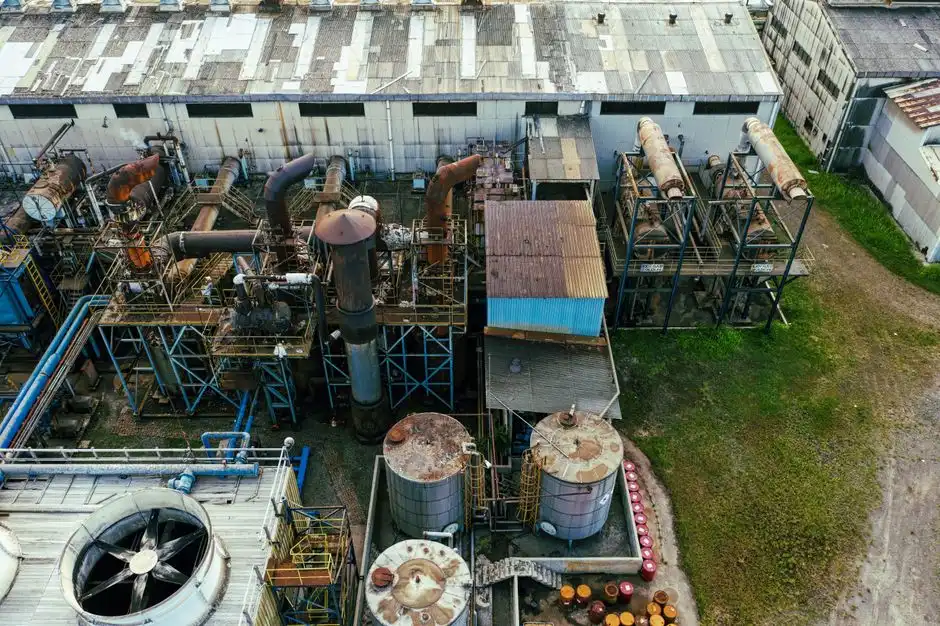
A conventional activated sludge train is an aerobic basin followed by a secondary clarifier with a return/waste activated sludge loop. Biomass is separated by gravity settling; SRT typically runs 5–25 days, MLSS 2,000–4,000 mg/L, and HRT 6–24 hours depending on loading. A well-tuned CAS on biodegradable influent is a forgiving, low-skill system.
An MBR replaces the clarifier with a submerged ultrafiltration module — a HydropureWater integrated MBR system with submerged PVDF membranes in the standard configuration. Permeate is pulled through the membranes under suction; no settling step exists. SRT extends to 20–60+ days, MLSS sits at 8,000–12,000 mg/L, and HRT drops to 4–8 hours. The hydrodynamic design matters: in an airlift oxidation-ditch MBR, the same air supply that drives oxygen transfer also circulates mixed liquor by airlift and scours the membrane surface — three functions from one blower (per the Montpellier AOXMBR thesis, 2026). Effluent from a properly designed MBR is essentially TSS-free and coliform-reduced without a separate disinfection step, because the 0.1 μm cutoff physically excludes bacteria and most viruses.
| Parameter | Conventional Activated Sludge (CAS) | Membrane Bioreactor (MBR) |
|---|---|---|
| Biomass separation | Gravity settling in clarifier | Submerged UF membrane (0.04–0.2 μm) |
| MLSS (mg/L) | 2,000–4,000 | 8,000–12,000 |
| SRT (days) | 5–25 | 20–60+ |
| HRT (hours) | 6–24 | 4–8 |
| Clarifier required | Yes | No |
| Scouring aeration | Process only | Process + membrane scour (combined) |
| Effluent TSS | 10–30 mg/L | <5 mg/L (typically <1) |
Head-to-Head Comparison: Effluent Quality, Footprint, Energy, Sludge
For procurement readers, this is the table to bookmark. The MBR delivers a markedly tighter effluent: BOD under 5 mg/L and COD under 50 mg/L versus 10–30 mg/L BOD and 50–150 mg/L COD for a well-run CAS (consistent with the May 2026 JCHR comparative evaluation). TSS collapses from 10–30 mg/L to under 5 mg/L because there is no clarifier overflow to fail. That is the difference between meeting a categorical standard and meeting it with margin for upset conditions.
Footprint is where MBR is most decisive on space-constrained Palmyra sites: roughly 60% smaller than an equivalent CAS train because the clarifier, sludge holding, and most of the equalization volume drop out (HydropureWater product catalog, 2026). Energy swings the other way — CAS draws 0.3–0.6 kWh/m³ while MBR draws 0.6–1.2 kWh/m³ because of the dedicated scouring aeration across the membrane surface (consistent with the 2026 JCHR review noting higher MBR energy demand). Sludge production favors MBR at long SRT, with 20–40% lower waste activated sludge volume, which reduces downstream dewatering cost. Reliability profiles are opposite: CAS is vulnerable to bulking and shock loss, while MBR is vulnerable to membrane fouling — and fouling remains the determining deployment problem per the Montpellier AOXMBR work (2026). Operator skill requirement is higher on MBR (CIP, integrity testing) and lower on CAS.
| Metric | CAS | MBR |
|---|---|---|
| Effluent BOD (mg/L) | 10–30 | <5 |
| Effluent TSS (mg/L) | 10–30 | <5 |
| Effluent COD (mg/L) | 50–150 | <50 |
| Footprint | Baseline (100%) | ~40% of CAS |
| Energy (kWh/m³) | 0.3–0.6 | 0.6–1.2 |
| WAS production | Baseline | 20–40% lower |
| Primary failure mode | Bulking, shock loss | Membrane fouling |
| Operator skill required | Lower | Higher |
Palmyra Compliance Picture: 40 CFR, PA DEP, and Local Sewer Authority Limits

Three compliance layers stack on a Palmyra chemical plant, and the technology choice must clear all three. At the federal level, 40 CFR Part 414 governs organic chemicals, plastics, and synthetic fibers, while 40 CFR Part 459 covers pharmaceutical manufacturing — both set categorical pretreatment standards for BOD, TSS, and in some subcategories chemical oxygen demand that any plant discharging to a POTW or directly to surface water must meet. PA DEP Chapter 92a implements the National Pollutant Discharge Elimination System (NPDES) permitting program and, under the 2024–2026 Clean Water Plan revisions, has tightened expectations for facilities in the Susquehanna River watershed — including narrative biology and nutrient language that constrains conventional secondary effluent quality.
The third layer is local: the Palmyra-area sewer authority's Significant Industrial User (SIU) permit can impose limits tighter than the federal categorical standards, particularly for heavy metals, sulfides, and ammonia. Always pull your specific SIU permit and most recent compliance inspection report before sizing either system — generic numbers do not substitute for the actual local limit. MBR effluent clears all three layers with margin; CAS may need a downstream DAF, sand filter, or polishing stage to hit the tightest local ammonia or TSS numbers.
When CAS Still Wins — and When MBR Is the Only Realistic Answer
An honest decision framework preserves CAS as the right answer in real scenarios, and a Palmyra engineer should not let MBR enthusiasm override good process economics. CAS still wins when land is available, influent is highly biodegradable (BOD/COD ratio above 0.5, no recurring inhibitory slugs), discharge limits are moderate (BOD/TSS in the 30 mg/L range with no reuse mandate), and the existing basin has 10+ years of mechanical life remaining. Retrofitting the aeration grid, adding fine-bubble diffusers, and tightening the clarifier can often buy another decade of compliant operation at a fraction of MBR CAPEX.
MBR becomes the only realistic answer when space is constrained, effluent must meet under 10 mg/L TSS or low COD for water reuse, influent contains recalcitrant or inhibitory compounds that need long-SRT biology to acclimate, or the plant faces tightening effluent limits that CAS cannot reliably hit. The hybrid option frequently is the Palmyra retrofit sweet spot: keep the existing CAS basin, add a downstream MBR polish stage on a slipstream or full flow. This recovers a portion of the CAPEX, gives MBR-quality water for reuse or discharge, and lets the CAS absorb shock loads that would otherwise foul a standalone MBR. For a parallel regional case with similar matrix, see the MBR vs conventional activated sludge for chemicals wastewater in Lafollette, TN comparison.
2026 Cost Model: CAPEX, OPEX, and Payback for a Palmyra Retrofit

The numbers a CFO will want to see. CAPEX for a CAS retrofit in 2026 runs roughly $150–$300 per m³/day of hydraulic capacity, dominated by aeration upgrades, clarifier refurbishment, and blower replacement. MBR CAPEX lands at $350–$700 per m³/day, driven by membrane modules, skid integration, and the larger blowers required for scouring aeration — these ranges track 2026 industry benchmarks, but site-specific vendor quotes are required before any final number reaches a board paper. For background on MBR cost drivers, the foundational MBR explainer with 2026 cost and selection data covers the methodology.
OPEX is where the comparison gets interesting. MBR runs higher energy and membrane replacement (membranes typically last 5–8 years before replacement); CAS runs lower energy but higher sludge-handling cost. Net OPEX often converges within 10–20% once both systems are normalized. The decisive line item is reuse value: MBR permeate is suitable for cooling tower makeup, scrubber feed, or rinse water, and industrial water purchase displaced at $1.50–$5.00/m³ (per mid-Atlantic 2026 industrial rate sheets) typically drives a 3–6 year payback when reuse is credited. Sludge dewatering downstream is required for both — a plate and frame filter press for sludge dewatering is the standard pairing.
| Cost Line | CAS Retrofit | MBR Install |
|---|---|---|
| CAPEX ($/m³/day) | $150–$300 | $350–$700 |
| Energy (kWh/m³) | 0.3–0.6 | 0.6–1.2 |
| Membrane replacement | N/A | Every 5–8 years |
| Sludge handling | Higher | 20–40% lower WAS volume |
| Reuse potential | Limited | Cooling tower / scrubber / rinse |
| Typical payback (with reuse credit) | N/A | 3–6 years |
Selecting an MBR Vendor in 2026: The 8-Point Checklist
Whether you evaluate HydropureWater or any other MBR supplier in 2026, the technical questions are the same. Verify membrane material — PVDF is preferred for chemical resistance over PES or PVC — and confirm pore size sits in the 0.1 μm range. Confirm the scouring aeration design: airlift or dedicated blower, and the specific air demand per m² of membrane area, because under-aerated modules foul fast on chemical influent. Ask for guaranteed flux (LMH), cleaning CIP frequency, and expected membrane life written into the proposal — not just typical values.
Request reference plants running on chemical or pharmaceutical streams of similar matrix; a municipal reference does not validate performance on your influent. Check skid integration: blowers, permeate pumps, CIP skids, PLC, and SCADA from a single vendor reduces interface risk during commissioning. Confirm compliance documentation — NSF/ANSI 61 if any potable reuse is on the table, factory testing certificates, and full O&M manuals. For a deeper engineering walkthrough, the submerged MBR engineering specs and selection guide covers the specification language to put in your RFP.
Frequently Asked Questions
What effluent COD can a Palmyra chemical plant realistically hit with MBR versus CAS in 2026?
MBR routinely delivers under 50 mg/L effluent COD on chemical-pharma influent, with under 5 mg/L BOD and under 5 mg/L TSS, consistent with the May 2026 JCHR comparative evaluation. CAS on the same matrix typically lands at 50–150 mg/L COD and may require polishing to meet tightening Susquehanna watershed expectations under PA DEP Chapter 92a. Recommendation: specify MBR if reuse or tight discharge is on the roadmap.
How does 40 CFR Part 414 affect the MBR vs CAS decision for organic chemicals plants?
40 CFR Part 414 sets categorical pretreatment standards for BOD, TSS, and cCOD that apply to organic chemicals, plastics, and synthetic fibers manufacturers discharging to a POTW. Both CAS and MBR can meet the federal floor, but local Palmyra sewer authority SIU limits often run tighter, which is where MBR's margin matters. Recommendation: pull your SIU permit and confirm local limits before sizing either system.
What is the realistic 2026 payback for an MBR retrofit on a Palmyra chemical plant?
With reuse credit, MBR retrofits typically pay back in 3–6 years when industrial water purchase displaced at $1.50–$5.00/m³ is credited, based on 2026 industry benchmarks. Without reuse credit, simple payback stretches beyond 8 years and the CAPEX case weakens. Recommendation: build the reuse scenario into the financial model before ruling MBR out on cost.
Can I keep my existing CAS basin and add MBR as a polish step?
Yes — the hybrid CAS-then-MBR configuration is often the Palmyra retrofit sweet spot because the existing basin absorbs shock loads while the MBR delivers tight effluent for reuse or discharge. CAPEX is lower than a full MBR build, and the CAS provides hydraulic buffering. Recommendation: model both standalone MBR and hybrid CAS-MBR configurations before committing.