
Start With the Pune Hotel Decision: Reuse, Discharge, or Both
Pune's per-capita water availability has dropped below 600 m³/year, well under the 1,000 m³/year national water-stress threshold, which is why MPCB's standard consent conditions push every commercial STP toward maximum recycle. A Pune hotel typically has three disposal routes: (1) discharge to the PMC sewer network, (2) on-site reuse for horticulture, toilet flushing, and cooling-tower makeup, or (3) zero-liquid-discharge with tanker out — the most expensive option and rarely chosen for hotels. The route you pick locks the effluent quality target and therefore the technology, the civil footprint, and the consent paperwork. If the treated water is going to a PMC sewer, the STP only has to meet discharge-into-sewer norms; if any portion feeds a cooling tower, a garden sprinkler line, or a flush tank, the system must hit reuse-grade numbers on BOD, TSS, and fecal coliform. Hotels with landscaped gardens and central AC have the strongest reuse case — the same water can offset a meaningful share of freshwater draw for toilet flushing (typically 30–40% of a hotel's total consumption) and cooling-tower makeup (15–25%), with the magnitude depending on star rating and F&B mix. Spec the disposal route first; everything downstream — MBR versus WSZ, sizing, vendor shortlist, MPCB consent schedule — falls out of that decision.
Sizing the STP: Per-Bed Loading, Occupancy, and Peaking Factors
The defensible hotel sewage generation figure is 150 L per bed per day at full occupancy, anchored on the same benchmark used in HydropureWater's 2026 Mumbai and Hyderabad hotel STP guides and consistent with CPHEEO's domestic sewage norm of 135–200 L/cap-day. Add 50 L per cover if the property runs a banquet hall, all-day dining, or food court, since F&B flow carries higher organic load and grease. Apply a peaking factor of 1.5–2.0 to absorb weekend full-house surges stacked against simultaneous laundry and kitchen discharge — a hotel that runs near-100% on Saturday with two banquets live will briefly hit 1.7–1.9× the average day. Proper sizing is the primary defense against compliance failures during peak operations.
Worked example for an 80-key, 128-equivalent-bed property with F&B: 128 × 150 L = 19.2 m³/day base flow. At 1.8 peaking the design flow becomes ≈35 m³/day, which is the figure a vendor must size against, not the average. Always size the MBR modules on the peaked flow, and confirm the upstream grease trap is rated for the kitchen sub-stream — Pune's MPCB consent reviews kitchen waste separately and undersized grease traps are a common consent-condition trigger. Designers should also retain 20% hydraulic headroom above the calculated peak for future room-count expansion or banquet additions.
| Parameter | Value / Range | Source |
|---|---|---|
| Hotel sewage per bed | 150 L/bed/day (range 135–200) | CPHEEO / HydropureWater 2026 hotel guides |
| F&B / banquet allowance | 50 L/cover | HydropureWater field data, 2026 |
| Peaking factor | 1.5–2.0 (use 1.7–1.9 for banquet hotels) | CPHEEO manual on sewerage |
| Design margin above peak | ≥20% | HydropureWater field data, 2026 |
| 80-key worked example | 128 beds × 150 L = 19.2 m³/day; ×1.8 peak ≈ 35 m³/day | Worked example |
Packaged MBR vs Underground Package STP (WSZ) for a Hotel Site
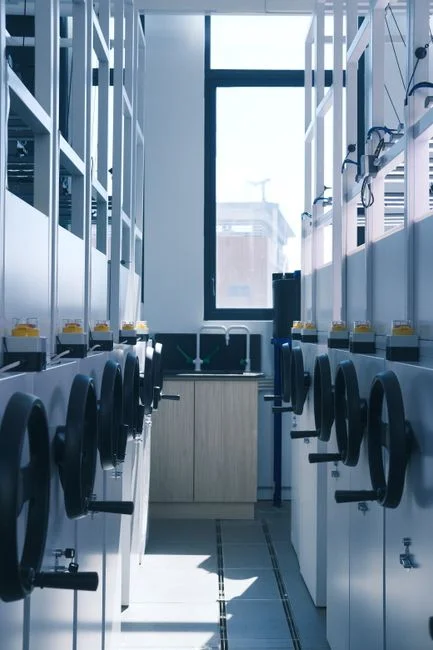
A packaged MBR is a factory-built skid that combines activated-sludge biology with submerged PVDF membranes at <1 μm pore size, delivering reuse-grade effluent in roughly 60% of the footprint of a conventional activated-sludge plant. A WSZ underground package STP is a fully buried anoxic/aerobic contact-oxidation plant with sedimentation and disinfection, sized 1–80 m³/h, designed to run unattended with no full-time operator. Both are valid choices for a Pune hotel, depending on your disposal route and site constraints.
| Dimension | Packaged MBR (submerged PVDF) | WSZ Underground Package STP |
|---|---|---|
| Effluent quality | Reuse-grade (BOD ≤10, TSS ≤20 mg/L) | Discharge-grade (meets sewer-discharge norms) |
| Footprint | Compact; ~60% of conventional activated sludge | Larger for same load; all buried |
| Civil profile | Above-grade skid or partial basement; needs service hatch and lifting provision for modules | Fully buried; only manhole covers visible |
| Typical CAPEX band | Higher (membrane modules, blowers, controls) | Lower (no membrane replacement line) |
| OPEX line items | 0.4–0.8 kWh/m³ aeration; CIP chemicals; membrane replacement 5–7 yr | 0.2–0.4 kWh/m³; no membrane line |
| Best fit | Reuse planned, basement/rooftop siting, tight footprint | Open landscaped area, sewer-only discharge, no reuse |
Choose the packaged MBR wastewater treatment system when reuse is in scope or the building footprint is tight; choose a WSZ underground packaged sewage treatment plant when open ground is available and only sewer discharge is needed. For an MBR in a basement, insist on a service hatch above each membrane cassette and a monorail or lifting beam rated for the cassette weight — membranes must come out for chemical cleaning, and any design that buries them permanently is a future shutdown waiting to happen. The DF series flat sheet MBR module suits hotel duty cycles because flat sheets tolerate the intermittent, variable-strength influent of a hospitality site better than hollow-fibre bundles, which foul faster on grease and lint from laundry and kitchen sub-streams.
MPCB and CPCB Effluent Standards a Pune Hotel STP Must Meet
Every hotel STP serving 20+ keys in Pune requires an MPCB consent to operate under the Water Act, 1974, and a PMC NOC for any sewer connection. The commonly cited discharge and reuse thresholds for hotel/domestic sewage are BOD ≤10 mg/L, TSS ≤20 mg/L, COD ≤50 mg/L, fecal coliform ≤100 MPN/100 mL, and pH 6.5–7.5 — verify these against the latest MPCB consent schedule before locking a vendor proposal, because site-specific consent conditions can tighten any of these limits. The coliform target is met by a polishing step downstream of the membranes, typically a UV sterilizer for water treatment for reuse lines or a chlorine dioxide generator for sewer-discharge polishing. Packaged MBR systems integrate this at the outlet as a single skid. Sludge from the MBR is dewatered (typically on a plate and frame filter press for sludge dewatering) and disposed of through an MPCB-authorized handler; consent conditions also require monthly effluent analysis reports and stack/odour control confirmation for any above-grade plant near a property boundary.
| Parameter | Reuse / Discharge Threshold (commonly cited) | Notes |
|---|---|---|
| BOD | ≤10 mg/L | Reuse and discharge-into-sewer |
| TSS | ≤20 mg/L | Reuse and discharge-into-sewer |
| COD | ≤50 mg/L | Often tighter in consent schedule |
| Fecal coliform | ≤100 MPN/100 mL | Drives disinfection choice (UV vs ClO₂) |
| pH | 6.5–7.5 | Verify against latest MPCB schedule |
What to Ask a Packaged MBR Vendor in Pune
Use this list during vendor meetings to move the conversation from general pricing to technical verification.
- Membrane module type and pore size. Confirm submerged PVDF flat sheet at 0.1 μm (DF series). Flat sheet tolerates the grease and lint load of a hotel's kitchen and laundry sub-streams better than hollow fibre, which fouls faster and consumes more air for scouring. Cross-flow designs, by contrast, draw 10–20× the energy of submerged flat sheet for the same duty.
- Membrane area and replacement interval. Ask for a per-module capacity curve — DF series typically delivers 32–135 m³/day per module depending on cassette size — and a written replacement cycle of 5–7 years subject to documented air-scour and relax cleaning. Anything shorter than 5 years should be a red flag on either influent pre-treatment or air-scour design.
- Guaranteed aeration energy. Get a kWh/m³ number at design load, in writing. A well-designed hotel MBR runs 0.4–0.8 kWh/m³; a number above 1.0 kWh/m³ usually means oversized blowers or a poorly matched diffuser grid.
- PLC/SCADA and remote monitoring. Confirm the panel ships with a colour HMI, Modbus/Ethernet uplink, and remote-viewer access so your engineering team can see the plant from Pune without a site visit.
- Local service. Ask for a 24-hour Pune service commitment with a named engineer and a response-time SLA. National vendors with no Pune bench typically take 48–72 hours, which is the difference between a clean recovery and an MPCB show-cause on your next inspection cycle.
- Civil scope. Get the packaged MBR skid dimensions, weight, and the inlet screen, sludge dewatering, and chemical dosing interfaces in writing. Confirm whether underground tank work, the rotary mechanical bar screen upstream, the plate and frame filter press for sludge dewatering, and the automatic chemical dosing system sit inside or outside the vendor's scope — this is where most CAPEX surprises hide.
- References and consent list. Ask for at least two operating Pune or Maharashtra hotels of comparable size, and a list of plants currently operating under a valid MPCB consent. Call the references and ask specifically about membrane life actually achieved versus the brochure number.
Review the engineering logic and SLA frameworks in performance-based wastewater O&M contracts before signing any vendor's standard AMC.
Frequently Asked Questions
How do I calculate STP capacity for a hotel in Pune?
Start at 150 L per bed per day and add 50 L per cover if the property runs banquet or all-day-dining F&B. Multiply the daily total by a peaking factor of 1.5–2.0 to capture weekend full-occupancy plus simultaneous laundry and kitchen discharge. An 80-key, 128-equivalent-bed hotel therefore lands near 35 m³/day design flow, which is the figure a packaged MBR vendor must size against, not the 19 m³/day average.
Is MBR better than SBR or conventional activated sludge for a hotel?
Yes, on three counts that matter for a hotel: footprint (MBR is roughly 60% smaller because the membrane replaces the secondary clarifier), effluent quality (MBR reliably hits BOD ≤10, TSS ≤20 mg/L versus 20–30 mg/L TSS for a well-run SBR), and reuse compatibility (MBR effluent is directly polishable for toilet flushing and cooling-tower makeup, which an SBR typically is not).