What the Hyundai Metaplant America Case Teaches an Indian Acquirer
Georgia EPD's April 25, 2025 consent order against Hyundai Motor Group Metaplant America closed at a $30,000 fine against a $7.15 million statutory maximum — a $50,000-per-day rate applied across 143 days of alleged discharge to the City of Savannah's Travis Field facility without an industrial pretreatment permit (per S2, The Current GA, 2025-05). The two alleged violations were procedurally simple and operationally expensive: discharge of industrial wastewater to a publicly owned treatment works without a pretreatment permit, and continued use of a sewage holding tank for non-sanitary construction waste after the construction phase ended (per S2). Savannah stopped accepting flow on Sept. 26, 2024 after copper and zinc exceedances; the city spokesman confirmed that "flow has not resumed" (per S2).
For an Indian acquirer, the Georgia episode is not a US case study — it is a one-to-one map of the most common ETP enforcement pathway Hyundai will inherit under the Water (Prevention and Control of Pollution) Act, 1974 and the Hazardous and Other Wastes (Management and Transboundary Movement) Rules, 2016. A Hyundai target sending wastewater to a Common Effluent Treatment Plant (CETP) or a third-party TSDF without the correct Consent to Operate or HW authorisation triggers the same enforcement chain: a stop-flow notice, a 143-day violation window, and a fine scaled to per-day statutory maximums. The Savannah incident also previews what an Indian SPCB does with serial non-compliance — it revokes consent, blocks the transfer, and forces a reapplication cycle that pushes the closing date past the synergy horizon (per S3, 2026).
The Indian Permit Stack a Hyundai Acquirer Must Transfer
Indian acquisitions do not transfer a plant; they transfer a layered CPCB/SPCB/MoEFCC permit stack, and every layer has a different lead time, a different transfer mechanism, and a different risk of revocation. The deal team should treat the following five authorisations as a Day 1-30 data-room checklist.
| Authorisation | Statutory basis | Transfer mechanism in 2026 | Lead time |
|---|---|---|---|
| Consent to Operate (water + air) | Water Act §25; Air Act §21 | Fresh application by new operating entity; SPCB site inspection | 90-180 days (per 2026 CPCB guidance) |
| Hazardous-waste authorisation | HW Rules 2016 | Reissue by SPCB in new entity's name | 60-120 days |
| Environmental Clearance | EIA Notification 2006 | Required if capacity expansion or product-mix change crosses threshold; not transferable | 120-365 days with MoEFCC/SEIAA |
| CGWA groundwater NOC | CGWA guidelines 2020 | Re-NOC if extraction exceeds 100 m³/day; recharge obligations binding | 60-180 days |
| ZLD compliance status | State-level mandate (TN, GJ, RJ, PB, HR) | Verification pre-signing; retrofit obligation if status is non-compliant | Retrofit capex 12-24 months if non-compliant |
The Cto transfer under Section 25 of the Water Act, 1974 and Section 21 of the Air Act, 1981 is the longest-pole item: the SPCB must inspect the site under 2026 CPCB guidance, and the application must be in the new operating entity's name (per S3, 2026). Hazardous-waste authorisation covers plating sludge, used oil, and spent solvents and must be reissued by the SPCB rather than novated. EIA Notification 2006 screening is independent of the Cto — if the target's capacity expansion or product-mix change crosses the threshold, a fresh Environmental Clearance from MoEFCC or SEIAA is required, and the SPA must condition closing on it. The CGWA NOC is binding at 100 m³/day of extraction under the 2020 guidelines, with recharge obligations that the deal team must price. State-level ZLD mandates in Tamil Nadu, Gujarat, Rajasthan, Punjab, and Haryana require zero liquid discharge for new and expanding industrial units; verify the target's ZLD status before signing, not after (per S3, 2026).
Matching the Automotive Effluent Signature to Indian Consent Limits
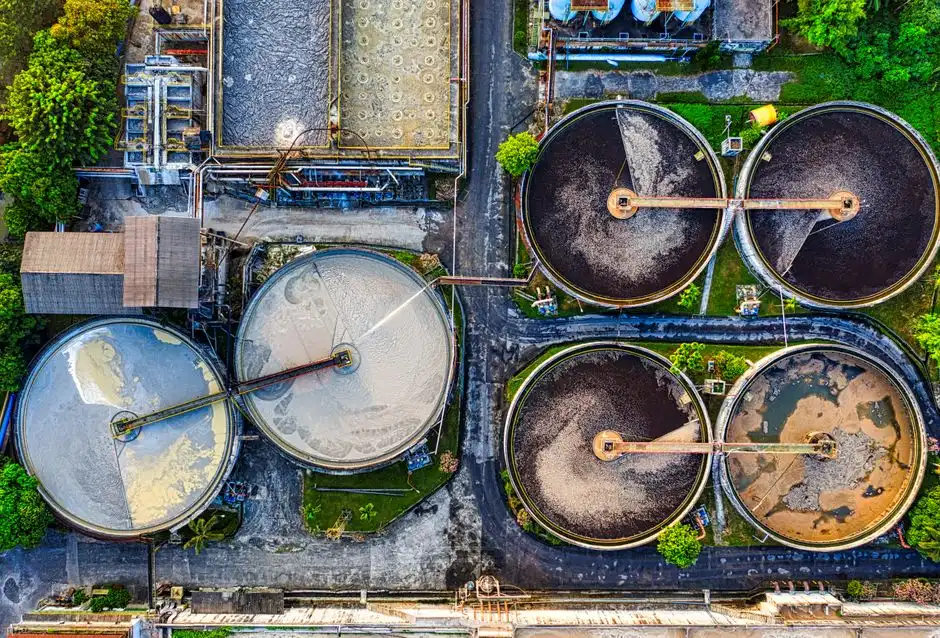
Automotive targets bring four distinct wastewater streams, each with a characteristic loading and a characteristic SPCB failure mode. The Phase II analytical scope should be commissioned against this matrix before the SPCB site inspection is scheduled.
| Stream | Influent loading (typical) | Key contaminants | Indian SPCB consent ceiling (typical surface discharge) |
|---|---|---|---|
| Paint-shop solvent washwater | COD 8,000-25,000 mg/L | VOCs, resin, suspended solids | COD 250 mg/L to CETP; 100 mg/L to surface water |
| Stamping lines | Oil & grease 500-3,000 mg/L | Emulsified oil, tramp grease | Oil & grease 10 mg/L to surface water |
| Plating rinse water | Ni, Zn, Cr(VI) at mg/L scale | Heavy metals, cyanide | Ni 3 mg/L; Zn 5 mg/L; total Cr 2 mg/L |
| Legacy AFFF (pre-2010) | PFOS/PFOA in concrete | PFAS, not sampled by ASTM E1527-21 | CPCB PFAS guidance, developing in 2026 |
Paint-shop solvent washwater requires equalization and DAF pre-treatment before biological systems can handle the COD loading; without a DAF, the MBR cassette absorbs the resin shock load and the cassette replacement cycle collapses from 5-8 years to 18-30 months (per S3, 2026). Stamping-line emulsified oil overloading drives DAF nozzle wear and is the most common hidden-capex item in the upstream O&M budget. Plating rinse water triggers EU IED recast BAT-AELs, US EPA TCLP thresholds, and KECO heavy-metal ceilings simultaneously, and Indian SPCB parameters for Ni, Zn, and total Cr are tight by global comparison. A legacy AFFF system in stamping, paint storage, or battery rooms is the single most under-sampled liability: PFOS/PFOA persists in concrete, ASTM E1527-21 explicitly excludes PFAS from the hazardous-substance definition, and the CPCB PFAS guidance for industrial sites remains a developing but high-profile enforcement priority (per S3, 2026).
Transfer Matrix: India vs Korea, US, and China
The Indian pre-signing application is the longest of Hyundai's four major target geographies and the one most likely to set the signing date. The deal team should size the bid calendar around the SPCB lead time, not around the SPA negotiation.
| Workstream | India (SPCB) | Korea (KECO/MOE) | US (EPA NPDES) | China (provincial EEB) |
|---|---|---|---|---|
| Pre-signing application lead time | 90-180 days; site inspection required | 60-120 days | 30-90 days; Form 3510 name-change | 90-180 days |
| Parameter renegotiation trigger | ZLD category expansion; CETP overload; CPCB draft tightening | K-REACH update; KECO BAT-AEL refresh | Effluent Guidelines revision | GB 8978-2025 integrated electroplating |
| Permit-revocation risk on transfer | High if grandfathered consent pre-dates ZLD or current heavy-metal limits | Moderate; pending NOVs restart clock | Low for NPDES; high for RCRA Part B | High if grandfathered GB 8978-1996 |
| Stays with operating entity / blocks transfer? | Stays with operating entity; blocks transfer | Stays with operating entity; blocks transfer | NPDES name-change succeeds; RCRA novates | Stays with operating entity; blocks transfer |
Indian targets operating under a grandfathered consent that pre-dates the current ZLD or heavy-metal limits face the highest revocation risk; the Cto transfer is rarely automatic, and the SPCB uses the site inspection window to renegotiate parameters to current limits (per S3, 2026). A target in Tamil Nadu, Gujarat, Rajasthan, Punjab, or Haryana sits on a state-level ZLD mandate that can convert a routine transfer into a forced retrofit. CETP overload is a separate renegotiation trigger — if the receiving CETP is hydraulically loaded, the SPCB will not issue a fresh consent to a new discharger without a flow-allocation letter from the CETP operator.
The 90-180 Day Pre-Signing Application Sequence
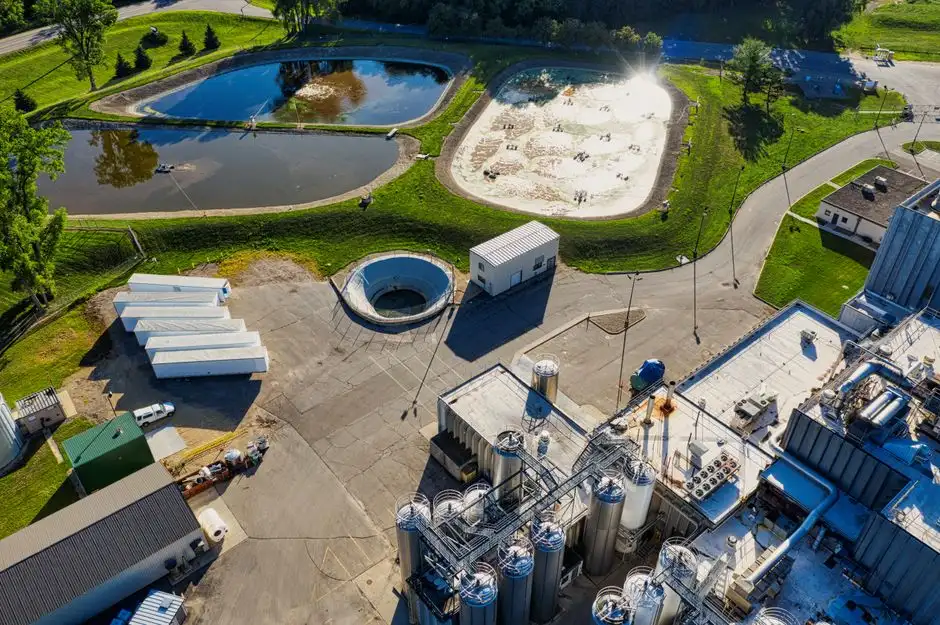
File the Cto transfer before signing, not after. A post-closing reapplication cycle adds 18-24 months and pushes revenue synergies past the bid model's horizon (per S3, 2026). The Day 1-90 sequence below is engineered to keep the SPCB site inspection inside the exclusivity window.
- Day 1-30: Verify current consent number, issuing SPCB, expiry date, permitted versus actual daily flow over the last 12 months, and any open Notice of Violation on the SPCB online dashboard. Cross-check the CPCB dashboard and the state ECHO equivalent for historic non-compliance (per S3, 2026).
- Day 30-60: Commission a Phase I ESA per ASTM E1527-21 plus a separate PFAS Phase II scope item — ASTM E1527-21 explicitly excludes PFAS from the hazardous-substance definition, and the AFFF release points in stamping, paint storage, and battery rooms are the single largest hidden-liability line item. Use the 47-question ETP M&A checklist to anchor the data-room request (per S3, 2026).
- Day 60-90: File the Cto transfer application to the SPCB and the hazardous-waste authorisation reissue in the new operating entity's name. Reserve the SPCB site inspection window inside the exclusivity period; treat it as a closing condition.
- Day 90 to signing: Condition the SPA on SPCB site inspection clearance. The Cto transfer is a closing condition, not a post-closing workstream — this is the most common reason Indian ETP DD slips, and the technical workstream with the longest calendar dependency must drive the signing date rather than the other way around (per S3, 2026).
Reserve Sizing and ZLD Retrofit Capex for an Indian Paint-and-Plating Target
The 80th-percentile reserve formula converts documented non-compliance into a steering-committee-ready number. Worked example for a 500 m³/day paint and plating target with 3 years of BOD and Ni exceedances: 80th percentile of a $4M ETP upgrade = $3.2M; probability of exceedance based on 3 years of permit history = 60%; reserve = $3.2M × 0.6 × 3 ≈ $5.8M (per S3, 2026).
| Cost line | 2026 range | Driver | Indian context |
|---|---|---|---|
| Basic ETP upgrade (parameter compliance) | $2M-$6M | Civil + electromechanical; no major process change | Driven by current SPCB consent parameters |
| MBR cassette replacement + BOP | $1.5M-$4M | Cassette age, supplier, balance-of-plant rebuild | 5-8 year service life; cassettes >7 yr are near-term liability |
| Hazardous sludge removal and disposal | $80-$450/tonne | Characterisation, transporter class, regional TSDF | Indian TSDF pricing sits at the upper end (CPCB-regulated transporter classes) |
| Full ZLD retrofit (MEE/RO/evaporator) | $5M-$15M | Influent characterisation; discharge destination; recoverable byproducts | 2026 PCB hybrid ZLD benchmark: 99.8% copper recovery |
Sludge lagoon working-capital swings the total reserve by $16K-$900K on a 200-2,000-tonne range at $80-$450/tonne (HydropureWater field data, 2026); Indian hazardous-waste disposal pricing sits in the upper end because of CPCB-regulated transporter classes and state-specific TSDF availability. A full ZLD retrofit runs $5M-$15M in 2026, and the 2026 PCB hybrid ZLD case achieving 99.8% copper recovery is the reference number to argue from in the bid model (per S3, 2026). The industrial RO system is the high-cost line on the ZLD path, and the plate and frame filter press drives the sludge-disposal working-capital line down by reducing volume 70-85% before haul-off. An MBR membrane bioreactor with cassettes older than 7 years is a near-term replacement liability that does not appear in the seller's maintenance budget.
SPA Architecture for an Indian ETP-Heavy Acquisition
Technical findings only protect the acquirer if they survive into the SPA's contract architecture. The seven clauses below address Indian regulatory mechanics directly rather than relying on EU IED or GB 8978-2025 language ported from other geographies (per S3, 2026).
- Environmental R&W survival of 5+ years for ETP-heavy Indian targets, well beyond the standard 12-18 months.
- Specific indemnity for pre-closing non-compliance with the Water Act, Air Act, and Hazardous Waste Rules, not a general basket-and-cap claim.
- Escrow at 10-15% of purchase price held 24-36 months to cover ZLD retrofit capex and any post-closing SPCB NOV.
- Regulatory change cost-sharing clause for post-closing tightening of SPCB consent parameters or fresh ZLD mandates issued after closing — an Indian-specific mechanism the acquirer cannot source from EU IED or GB 8978-2025 precedents.
- Phase II ESA bring-down condition as a closing condition, with a purchase price adjustment if PFAS or hexavalent Cr results exceed agreed thresholds.
- Permit-transfer cooperation covenant with seller obligations through the transfer date, including access to historic self-monitoring reports.
- No MAE carve-out for environmental findings identified pre-signing; the seller cannot argue that a documented SPCB NOV is a future event.
The 2026 trend is specific environmental indemnities displacing basket-and-cap general indemnities for industrial targets, because the basket-and-cap approach exposes the acquirer to the seller's insurance limits and deductible erosion from non-environmental claims (per S3, 2026). For an Indian paint-and-plating target, the regulatory change cost-sharing clause is the single most-negotiated item: state-level ZLD expansion in Tamil Nadu, Gujarat, and Haryana has historically added $5M-$15M of retrofit capex within 24 months of a new mandate, and the seller will resist a one-sided indemnity. The 47-question ETP M&A checklist provides the workstream anchors for both this article and the parallel BMW Germany acquisition guide structure; the same item set scales to Indian targets with the SPCB-specific clauses above substituted for the KECO items.
Frequently Asked Questions
How long does a Consent to Operate transfer take in India for a Hyundai plant acquisition?
A Consent to Operate transfer under Section 25 of the Water Act, 1974 and Section 21 of the Air Act, 1981 typically requires 90-180 days, including a site inspection by the SPCB under 2026 CPCB guidance (per S3, 2026). The application must be filed in the new operating entity's name and treated as a pre-signing closing condition.
What is the working reserve for an Indian paint-and-plating ETP under documented non-compliance?
For a 500 m³/day paint and plating target with 3 years of BOD and Ni exceedances, the 80th-percentile reserve formula yields $3.2M × 0.6 × 3 ≈ $5.8M, before the sludge lagoon working-capital line at $80-$450/tonne swings the total by $16K-$900K (per S3, 2026). Model at the upper end of the 2-8% of enterprise value band for heavy-metal exposures.
Does ASTM E1527-21 cover PFAS from legacy AFFF systems in an Indian automotive target?
No. ASTM E1527-21 explicitly excludes PFAS from the hazardous-substance definition, so PFAS from pre-2010 AFFF in stamping, paint storage, and battery rooms must be commissioned as a separate Phase II scope item (per S3, 2026). Sample at foam system test headers, fire-pump room floor drains, and the concrete pad beneath any decommissioned foam storage tank.
What ZLD retrofit capex should Hyundai's bid model assume for an Indian target in 2026?
Full ZLD retrofits run $5M-$15M in 2026 depending on influent characterisation, discharge destination, and recoverable byproducts, with the 2026 PCB hybrid ZLD case at 99.8% copper recovery as the benchmark (per S3, 2026). The industrial RO system is the high-cost line; a plate and frame filter press reduces sludge-disposal working capital by 70-85% before haul-off.
Can a Hyundai SPA rely on a general environmental indemnity for an Indian ETP-heavy target?
No. The 2026 trend is specific environmental indemnities displacing basket-and-cap general indemnities for industrial targets, because basket-and-cap exposure bleeds into the seller's insurance limits and deductible erosion (per S3, 2026). For Indian paint-and-plating targets, push for a 5+ year R&W survival, a specific Water Act/Air Act/HW Rules indemnity, and a 10-15% escrow held 24-36 months.
Related Equipment
- dissolved air flotation system — specifications, capacity range, and technical data