Why York-Area Indirect Discharges Face a Two-Layer Compliance Stack
Pulp and paper plants near York, PA that discharge to a POTW satisfy two stacked federal layers: the National Pretreatment Program at 40 CFR Part 403 and the categorical effluent limits at 40 CFR Part 430, with the 1998 toxic-pollutant amendment adding AOX, chlorinated organics, and color to bleached kraft and dissolving subparts. On top of that, the receiving POTW layers site-specific local limits developed under 40 CFR 403.5(c), which are typically stricter than Part 430 for zinc, copper, lead, sulfides, and oil/grease (per EPA Effluent Guidelines, 2026). EPA promulgated the Pulp, Paper, and Paperboard effluent guidelines in 1974 and 1977, amended them in 1982 and 1986, and added the 1998 toxic-pollutant amendment that covered AOX, chlorinated organics, and color — the cluster-rule step that is still the binding number for any bleached line (per EPA, 2026).
Under 40 CFR 403.3(p), pass-through is a discharge that exits the POTW in quantities or concentrations that cause a violation of the POTW's own NPDES permit; interference is a discharge that inhibits or disrupts the POTW's treatment processes, sludge processes, or sludge disposal. Either trigger independently gives the POTW enforcement authority against the industrial user. In the York context, that matters: local receiving waters are Codorus Creek and the Susquehanna River, both under Chesapeake Bay nutrient and TMDL scrutiny, which is why York-region POTW pretreatment officers tend to enforce tighter numbers than the federal categorical baseline. For the full federal map, see our full U.S. pretreatment reference guide.
Identifying the Right Subpart Before Any Equipment Is Selected
40 CFR Part 430 is divided into twelve subparts, and the subpart a mill lands in drives the regulated parameter set, the categorical limits, and ultimately the unit-operation train. The subparts are: A — dissolving pulp at kraft; B — bleached papergrade kraft and soda; C — bleached kraft market pulp, paperboard, tissue, and fine paper; D — unbleached kraft, NSSC cross-recovery, and combined mills; E — dissolving sulfite (nitration, viscose, cellophane, acetate); F — papergrade sulfite (blow pit and drum wash); G — semi-chemical (ammonia or sodium base); H — groundwood, chemi-mechanical, TMP, newsprint, and fine paper; I — non-wood chemical pulp; J — deink and secondary fiber; K — fine and lightweight papers from purchased pulp; L — tissue, filter, non-woven, and paperboard from purchased pulp (per EPA Effluent Guidelines, 2026).
York-region recycled-paper, tissue, and paperboard mills will most often land in Subparts C, J, or L. Subpart C (bleached kraft market pulp, paperboard, tissue, fine paper) is the one that carries the AOX, color, and chlorinated-organic limits from the 1998 amendment; Subpart J (deink mills producing fine papers, tissue, or newsprint) is dominated by TSS, ink, fillers, FOG, and BOD; Subpart L (tissue, filter, non-woven, and paperboard from purchased pulp) sits between the two. DAF and MBR datasheets often quote "paper-mill service" generically — a buyer in York should declare the subpart before the equipment proposal is finalized, because the parameter envelope (and the polishing burden) changes materially between Subpart C and Subpart L.
| Subpart | Mill type | Dominant regulated parameters |
|---|---|---|
| A | Dissolving pulp at kraft | AOX, color, BOD, TDS |
| B | Bleached papergrade kraft and soda | AOX, color, chlorinated organics |
| C | Bleached kraft market pulp / paperboard / tissue / fine paper | AOX, color, chlorinated organics, high BOD |
| D | Unbleached kraft, NSSC cross-recovery, combined | TSS, BOD, sulfides |
| J | Deink and secondary fiber (fine, tissue, newsprint) | High TSS, ink, fillers, FOG, BOD |
| L | Tissue, filter, non-woven, paperboard from purchased pulp | TSS, BOD, FOG, color (if bleached) |
Raw Wastewater Parameter Envelope for York-Area Mills
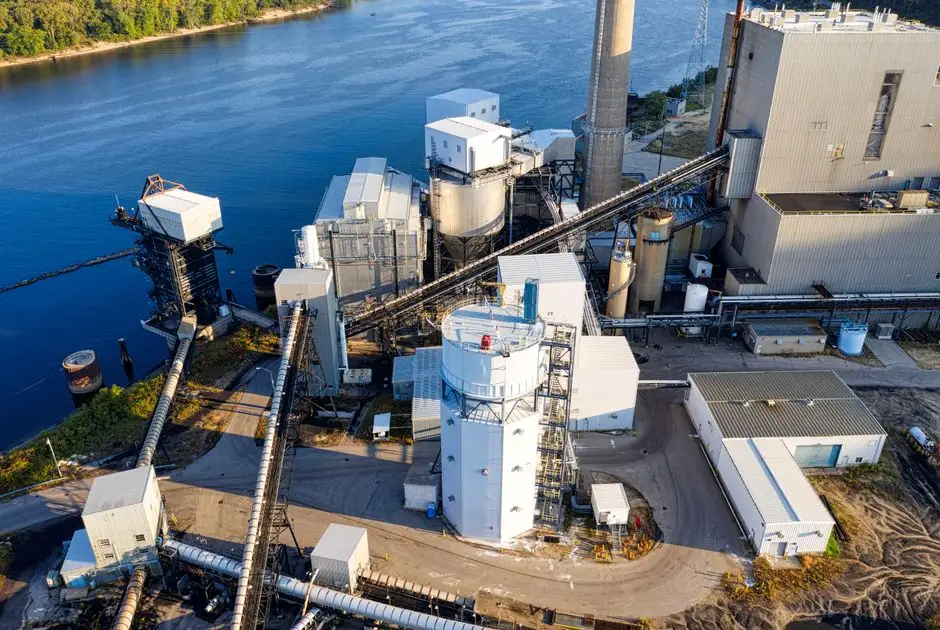
The influent envelope for a pulp and paper mill is wide and subpart-specific, but a few well-documented numbers anchor any design. Chemical pulping processes generate more than 40% of poorly biodegradable organics in the total organic load of the effluent (Dahlman et al. 1995, via BioResources). Older integrated lines produce up to 70 m³ of wastewater per metric ton of paper, although the industry has cut water use by about 95% per tonne over the last 30 years (Blanco et al. 2004; Rintala & Puhakka 1994, via BioResources). AOX content is generally proportional to chlorine consumption in bleaching, and the industry has reduced AOX emissions by more than 80% since 1990 (Savant et al. 2006; Friere et al. 2003, via BioResources) — which means a York-area mill still running a legacy bleach sequence carries a much higher AOX baseline than a modern ECF or TCF line.
The practical design implication is the BOD/COD ratio: it tells the engineer what fraction of the load is biologically treatable and therefore how aggressive the secondary stage must be. Low-ratio streams (heavy chemical-pulp effluent) push the design toward anaerobic pre-treatment followed by aerobic polishing; high-ratio streams (recycled-fiber tissue) usually settle in conventional activated sludge. York-area POTWs that draw from Chesapeake Bay tributaries typically penalize high-color and high-AOX streams more aggressively than the federal categorical number, so the design must hit those, not just BOD and TSS.
| Parameter | Subpart C (bleached kraft) | Subpart J (deink) | Subpart L (tissue/paperboard from purchased pulp) |
|---|---|---|---|
| BOD₅ (mg/L) | 250–450 | 300–700 | 200–500 |
| COD (mg/L) | 800–1,800 | 900–2,000 | 600–1,500 |
| TSS (mg/L) | 500–1,500 | 800–2,500 | 400–1,200 |
| Color (Pt-Co) | 1,500–4,000 | 500–1,500 | 300–1,200 |
| AOX (mg/L) | 5–25 (legacy higher) | <2 | <1–5 |
| FOG (mg/L) | 20–80 | 50–200 | 30–100 |
| pH | 5–9 | 6–9 | 6–9 |
| Temperature (°C) | 30–55 | 25–45 | 25–45 |
The Standard 2026 Treatment Train for an Indirect Discharger
The standard indirect-discharge train in 2026 is a sequence of unit operations, each justified by the pollutant fraction it removes. Skipping a step almost always shows up later as a POTW violation or a biological system that cannot hold the load. The canonical sequence is: fiber recovery and save-all → primary clarification → industrial DAF for pulp and paper → equalization and pH control → biological treatment (activated sludge, submerged PVDF MBR for pulp & paper polishing, or anaerobic for high-strength streams) → AOX/color polishing for bleached kraft → sludge dewatered on a plate-and-frame filter press for paper-mill sludge (per EPA Effluent Guidelines, 2026; HydropureWater field data, 2026).
DAF is the default primary clarifier because colloidal and fine-fiber fractions do not settle well, and DAF handles the FOG and fillers that gravity clarifiers miss. The DAF is offered in 13 standard models covering 4–300 m³/h, with hydraulic-loading rates of 15–25 m³/m²·h typical for paper-mill service (HydropureWater field data, 2026). For the biological step, activated sludge remains the workhorse at most U.S. mills, but an MBR with submerged PVDF membranes is now the default where footprint is constrained or the polishing TSS target sits below 10 mg/L; MBR membrane life of 5–8 years is realistic with proper chemical cleaning and relaxation protocols (HydropureWater field data, 2026). Chemical dosing for coagulants, flocculants, and pH adjustment must be PLC-controlled — see the engineering selection in our DAF engineering and selection guide for matching coagulant chemistry to colloidal load. Sludge generated by the train is dewatered with a plate-and-frame press; cake dryness above 30% is achievable with lime or polymer conditioning, which directly lowers sludge-haul cost (HydropureWater field data, 2026). The broader economics of the MBR step are tracked in our MBR market outlook to 2030.
| Unit operation | Pollutant fraction removed | Typical 2026 spec / envelope |
|---|---|---|
| Fiber recovery & save-all | Long-fiber, furnish solids | ≥90% long-fiber capture; reduces downstream TSS load |
| Primary clarification | Settleable solids | 50–70% TSS removal |
| DAF | Colloidal solids, FOG, fillers, ink | 4–300 m³/h; 15–25 m³/m²·h hydraulic loading |
| Equalization & pH control | Hydraulic/chemical shock | PLC-controlled PLC-controlled coagulant and pH dosing |
| Biological (AS / MBR / anaerobic) | BOD, COD (partial AOX for bleached) | 95–99% BOD; <10 mg/L TSS effluent with MBR |
| AOX / color polishing (bleached kraft only) | AOX, chlorinated organics, color | UF + activated carbon or advanced oxidation |
| Sludge dewatering | Volume reduction | Plate-and-frame press; cake dryness >30% with conditioning |
Indirect vs. Direct Discharge: When to Stay With the POTW
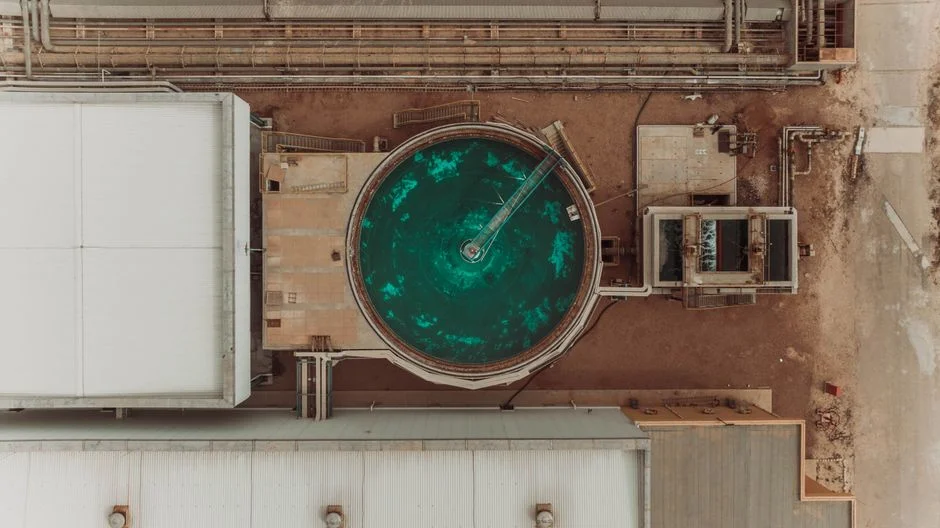
Roughly half of U.S. pulp and paper facilities discharge directly to surface waters and half to POTWs (IWA Publishing, 1988, cited in the HydropureWater reference, 2026). The decision is rarely a technical preference — it usually turns on local POTW capacity, hauling cost, and whether the mill can meet local limits without treatment-train expansion. The simple rule to hand to management: stay indirect if POTW local limits are achievable; move to direct only if the POTW refuses acceptance or local limits are infeasible (per the HydropureWater reference, 2026).
| Dimension | Indirect (POTW + EPA pretreatment) | Direct (EPA / state NPDES) |
|---|---|---|
| Federal citations | 40 CFR 403 + 40 CFR 430 | 40 CFR 430 only |
| Limits stack | Categorical + POTW local limits | Categorical + receiving-water-quality-based limits |
| Treatment scope | Pretreatment only; POTW does final polishing | Full biological + tertiary to receiving-water quality |
| Capex | Lower (pretreatment scope only) | Higher (full biological + tertiary) |
| Opex | Lower hauling, modest chemicals | Higher power, chemical, and sludge-handling cost |
| Trigger to switch | POTW local limits are achievable | POTW refuses acceptance or local limits are infeasible |
Common Failure Modes Near the Sewer Connection
POTW local limits are specifically written to catch the failure modes that show up at the headworks and in the collection system: heavy metals (zinc, copper, lead) that disrupt biotreatment, sulfides that release H₂S in the collection system, high-temperature discharges that shift basin biology, and oil/grease that creates slug-loading at the headworks (per EPA, 2026). BMPs and self-monitoring are often imposed as conditions of discharge acceptance, and a mill that cannot show a working slug-control plan will usually be the first one the POTW cites after a collection-system upset. In the York context, the added exposure is the Susquehanna / Codorus TMDL load — a slug event that passes through the POTW can trigger a state-level notice independent of any POTW action.
Frequently Asked Questions
What federal regulations apply to a York-area pulp and paper mill discharging to a POTW?
Two stacked layers: the National Pretreatment Program at 40 CFR Part 403 and the categorical effluent limits at 40 CFR Part 430, with the 1998 toxic-pollutant amendment adding AOX, chlorinated organics, and color to bleached kraft and dissolving subparts. POTW local limits developed under 40 CFR 403.5(c) layer on top and are typically stricter for zinc, copper, lead, sulfides, and oil/grease (per EPA Effluent Guidelines, 2026).
Which 40 CFR Part 430 subpart covers a recycled-paper or tissue mill in York?
Most recycled-paper, tissue, and paperboard mills in the York region fall under Subparts C (bleached kraft market pulp / paperboard / tissue / fine paper), J (deink and secondary fiber), or L (tissue, filter, non-woven, and paperboard from purchased pulp). The subpart drives which parameters — AOX, color, TSS, FOG, BOD — are regulated, so it must be declared before any equipment proposal is finalized (per EPA, 2026).
What does a standard 2026 pretreatment train for an indirect discharger look like?
Fiber recovery and save-all → primary clarification → DAF for colloidal solids and FOG → equalization and pH control → biological treatment (activated sludge, MBR, or anaerobic for high-strength streams) → AOX/color polishing for bleached kraft, with sludge dewatered on a plate-and-frame filter press. DAF hydraulic loading of 15–25 m³/m²·h, MBR polishing TSS below 10 mg/L, and press cake dryness above 30% with polymer or lime conditioning are typical 2026 envelopes (HydropureWater field data, 2026).