
Why Fabricated Metals Wastewater Is a Different Problem
Fabricated-metals shops in Saint Paul produce a wastewater stream that is fundamentally messier than the mixed-municipal flows that most CAS vs MBR comparisons address. A typical job-shop, stamper, or finisher generates free and emulsified oils from stamping and drawing compounds; hexavalent chromium and nickel from plating rinse water; zinc, copper, and iron from pickling baths; EDTA and NTA chelating agents carried over from cleaning chemistries; and trace solvents from degreasing. A single shift changeover can dump a slug of oil or a pH swing from 2 to 11 across the equalization basin. Daily BOD swings of 200–3,000 mg/L are routine at small shops with batch rinse operations (per HydropureWater field data, 2026).
That variability is what kills a settling-based train. Clarifiers need floc to settle; oil, surfactants, and chelated metals all attack floc formation. Saint Paul discharges into the Mississippi River system under two overlapping regulators: the MPCA Industrial Stormwater and NPDES effluent program, which benchmarks TSS, O&G, total metals, and pH; and the Metropolitan Council Environmental Services (MCES) Metropolitan Industrial Pretreatment Program, which enforces local discharge limits on heavy metals and oil & grease before flow reaches the regional interceptor. Both regulators penalize the exact things CAS struggles with—soluble metals, emulsified oil, and TSS excursions after a hydraulic surge.
The comparison below assumes a Saint Paul fabricator is choosing between retrofitting a clarifier-based CAS train or upgrading to a submerged membrane bioreactor to meet those MPCA and MCES limits reliably.
How Conventional Activated Sludge Handles a Metals Stream
A conventional activated sludge (CAS) train for fabricated metals typically follows this layout: oil/water separation → equalization → pH adjustment → aeration basin → secondary clarifier → sludge handling, as modeled by Mannina et al. in their 2019 comparison of CAS and MBR (S4). Influent enters an aerated reactor where heterotrophic bacteria oxidize soluble BOD and nitrifiers convert ammonia, then the mixed liquor flows to a clarifier where biomass settles and clarified water overflows to disinfection or discharge.
For a Saint Paul shop with steady flow, low chelant loading, and a tight capital budget, CAS has real strengths. Capital cost is lower than MBR at the same design flow. The PLC scope is simple, operators without membrane experience can run it, and—per the Bertanza et al. (2017) plant comparison cited in S4—CAS scored better on raw operating cost than MBR across three full-scale WWTPs. Typical CAS design for an industrial sidestream lands at SRT 5–15 days, MLSS 2,000–4,000 mg/L, and a clarifier-driven footprint that scales with flow (HydropureWater field data, 2026).
The failure modes are also specific to metals. Emulsified oil and surfactant carry over the clarifier weir when mixed liquor is overwhelmed, producing TSS and O&G spikes that MPCA flags. Heavy metals precipitate as hydroxides in the aeration basin and ride out in the waste sludge stream—meaning metals compliance is largely a function of how well sludge is captured and hauled, not destroyed. Chelating agents such as EDTA keep nickel and copper in solution at neutral pH, pushing them straight through the clarifier into the effluent and into MCES's daily-maximum local limits. A metals-shop CAS is a working system, but a leaky one.
How an MBR Reconfigures That Train
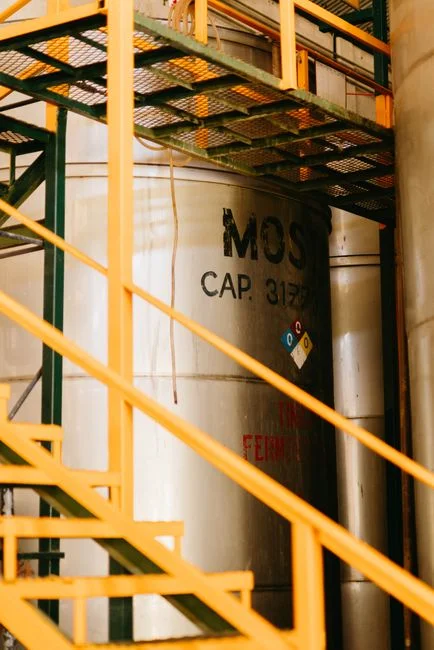
An MBR swap replaces the secondary clarifier with a submerged membrane cassette and pushes mixed-liquor concentrations far higher. In a typical packaged unit such as the HydropureWater integrated MBR system, PVDF flat-sheet membranes with 0.1 μm nominal pore size are immersed directly in the aeration tank. A single DF series module carries 80–225 m² of membrane area and treats 32–135 m³/day depending on the cassette size (per HydropureWater DF series datasheet, 2026).
Four mechanical differences matter for a metals plant. First, SRT rises to 20–60 days because biomass is no longer lost over a clarifier weir, letting slower-growing nitrifiers and degraders of recalcitrant compounds establish—relevant for shops that need consistent ammonia removal or want to biologically polish chelant-bearing rinses. Second, observed cell yield drops, so hauled waste sludge volume falls and the metals locked into that sludge leave the site less often. Third, the membrane is a physical solids barrier: <1 μm filtration, so essentially all particulate TSS, oil droplets, and particulate-bound metals stay on the bioreactor side, translating directly into the Lares et al. (2018) MBR effluent figure of 0.4 microplastics/L versus 1.0 MP/L for CAS (S4). Fourth, the solid/liquid separation footprint shrinks—HydropureWater quotes a 60% smaller footprint than an equivalent CAS train, and the Mannina et al. plant-wide model (S4) confirms this as a general MBR feature.
Two real downsides must be considered. Membranes foul, and the air-scour, relaxation, and chemical cleanings used to control fouling increase energy demand versus CAS (S4). This energy penalty is the entry point for the Saint Paul winter analysis below.
Head-to-Head Parameter Comparison
The table below collapses the comparison into the parameters a Saint Paul engineer needs for a project memo. Where the peer-reviewed literature pins a number, it is cited; where only a directional range is defensible, the cell is marked "typical."
| Parameter | CAS (Clarifier-Based) | Submerged MBR (PVDF 0.1 μm) |
|---|---|---|
| Influent tolerance | Stable, low-toxicity flow; sensitive to oil and chelant surges | Handles BOD swings and oil/grease slugs; chelant-resistant via high SRT |
| Effluent TSS (mg/L) | 10–30 typical; excursions after hydraulic surges | <5 typical; membrane pore band 0.04–0.2 μm excludes particulates (S5) |
| Effluent O&G (mg/L) | Emulsified oil carryover common | Physical barrier rejects oil droplets |
| SRT (days) | 5–15 | 20–60 |
| MLSS (mg/L) | 2,000–4,000 | 8,000–12,000 |
| Footprint (relative) | 1.0× baseline | ~0.4× (≈60% smaller, HydropureWater 2026) |
| Direct GHG (kgCO₂eq/m³) | 0.85 (Mannina et al., S4) | 0.91 (Mannina et al., S4) |
| Waste sludge yield | Higher cell yield, more hauling | Lower observed yield, less hauling |
| Microplastic removal | ~1.0 MP/L in effluent (Lares et al., S4) | ~0.4 MP/L in effluent (Lares et al., S4) |
| CAPEX class | Lower | Higher (membrane skids, cassette replacement) |
| OPEX class | Lower (Bertanza et al., 2017, S4) | Higher air-scour energy; lower sludge disposal |
| Cold-climate flux | Clarifier tolerant of cold; nitrification drops below 10 °C | Air-scour demand rises in sub-zero months; design mitigation required |
| On-site reuse fit | Usually no | Yes — near-reuse-quality permeate |
Mannina et al. (S4) show direct MBR emissions slightly higher than CAS at 0.91 vs 0.85 kgCO₂eq/m³, almost entirely because the air-scour blowers and permeate pumps draw more power. That difference is small enough that site electricity carbon intensity (Xcel Energy's Minnesota grid mix in 2026) can flip the result in many operating years.
The Saint Paul Winter Penalty Most Comparisons Skip
Cold-climate operation affects industrial wastewater treatment, and this omission matters for a Minnesota fabricator. As mixed-liquor temperature drops below 10 °C in the December–February window, water viscosity rises and membrane fouling accelerates because foulant transport to the membrane surface is less efficiently sheared off by air-scour bubbles. Design mitigation is standard practice: enclose or heat the membrane tank skid, pre-equalize cold rinse flows with tempered water, and run a higher air-scour rate at the cost of blower energy. No peer-reviewed source provides a numeric flux-derating factor for sub-zero operation on industrial MBRs, so this section is qualitative—flag the line item in CAPEX, do not invent a percentage.
CAS looks better on the same cold morning only at first glance. Secondary clarifiers tolerate cold well—settling physics is largely unchanged—but nitrification efficiency drops sharply below 10 °C because Nitrosomonas and Nitrobacter growth rates fall. A fabricator discharging to MCES limits on ammonia cannot rely on a CAS nitrification step in February without extended SRT or supplemental heat. The trade-off is that MBR still wins on effluent quality year-round for most Saint Paul sites, but the CAPEX must include the enclosure, heat tracing, or both—line items a Phoenix or Houston comparison will never show.
2026 Cost and Compliance Sketch
Two findings from the peer-reviewed literature anchor the cost conversation. Karim and Mark (2017), as summarized in S4, found that MBR becomes the lower total-cost option over very long operating horizons (the model showed more than 67 years), because the high initial investment is offset by excellent effluent quality and lower downstream costs. Bertanza et al. (2017), also cited in S4, found the opposite for short-term OPEX alone: CAS was cheaper to run, while MBR won on environmental performance and social acceptance. Both findings are relevant when defending a capital decision to a Saint Paul owner.
The compliance payoffs a Saint Paul shop captures from MBR are concrete: tighter TSS and total metals on the daily discharge report, less hauled waste sludge leaving the site, and a permeate that supports on-site water reuse for rinse makeup or cooling tower bleed—a direct alignment with the metal finishing industry's reuse push. For a 2026 dollar number, build from the Minnesota 2026 wastewater treatment cost breakdown and the DF series PVDF flat-sheet MBR modules specification, then add site-specific line items for enclosure heat, equalization, and chemical cleaning systems.
Choosing the Right System for Your Shop
Pick MBR if any of these apply: shop footprint is constrained, MCES local limits on nickel or copper are tight, oil and chelant surges are routine, or on-site reuse is on the three-year roadmap. Pick CAS if flow is steady, capital is constrained, no reuse goal exists, and sludge hauling is cheap and accessible—a profile that is the rarer case for a Saint Paul urban fabricator with batch rinses.
For borderline cases, run a skid-mounted pilot before committing to a full build. The modular MBR concept—a small-footprint cassette on a rental skid for 60–90 days—produces site-specific flux, fouling rate, and effluent data on the actual waste stream, including the Saint Paul winter quarter. That pilot data is the most defensible input to a 2026 capital request. For the equipment specification, the pharma-focused MBR vs CAS footprint guide walks through the same footprint and SRT logic for a different regulated stream, and it transfers cleanly to a metals plant.
Frequently Asked Questions
Does MBR really beat CAS on greenhouse gas emissions for a Saint Paul fabricator?
Plant-wide modelling by Mannina et al. (S4) shows direct MBR emissions of 0.91 kgCO₂eq/m³ versus 0.85 kgCO₂eq/m³ for CAS. The gap is small and is driven by air-scour and permeate pump electrical load, so a low-carbon grid (Xcel Energy's Minnesota mix in 2026) can flip the total GHG result in MBR's favor once indirect emissions are included.
How does MBR handle hexavalent chromium from plating rinses compared with CAS?
<Frequently Asked Questions
Is MBR better than conventional activated sludge for metal finishing wastewater?
MBR is generally superior for fabricated metals wastewater because it decouples hydraulic retention time (HRT) from solids retention time (SRT), allowing for the retention of slow-growing nitrifying bacteria that are often inhibited by heavy metals. While Conventional Activated Sludge (CAS) relies on gravity settling, which is prone to sludge bulking when faced with variable metal concentrations, MBR utilizes membrane filtration to ensure 100% biomass retention, resulting in a more resilient process against toxic shocks and influent fluctuations.
How cold does it have to get before an MBR stops working well in Minnesota?
MBR systems remain biologically active down to wastewater temperatures of approximately 8°C to 10°C, though nitrification rates decline significantly below 12°C. In Saint Paul, while ambient air temperatures drop well below freezing, influent wastewater temperatures typically remain above 10°C due to subterranean piping and process heat; however, operators must increase the SRT and potentially implement supplemental heating or insulation for membrane tanks if temperatures consistently dip below 8°C to prevent membrane fouling and maintain biological kinetic rates.
What effluent quality can an MBR realistically achieve for a fabricated metals shop?
An MBR system can consistently achieve high-quality effluent with Total Suspended Solids (TSS) of less than 1 mg/L, Turbidity below 0.2 NTU, and BOD5 concentrations typically under 5 mg/L. Regarding heavy metals, MBRs effectively remove particulate-bound metals through membrane exclusion, often achieving effluent metal concentrations below 0.1 mg/L, provided that chemical precipitation or ion exchange is utilized upstream to address the soluble metal fraction that biological processes alone cannot remove.
Does the Saint Paul MCES pretreatment program push plants toward MBR or CAS?
The Metropolitan Council Environmental Services (MCES) does not mandate specific technology, but their increasingly stringent industrial discharge limits for metals, phosphorus, and oil and grease favor the MBR process. Because MCES enforces strict numerical limits for pollutants such as Copper, Nickel, and Zinc, the superior solids removal and consistent effluent quality of MBRs make them a lower-risk compliance choice compared to the variable effluent quality often associated with the secondary clarifiers of a CAS system.
What is the typical 2026 CAPEX difference between an MBR and a CAS system of the same capacity?
In 2026, an MBR system typically commands a 25% to 40% higher initial capital expenditure (CAPEX) compared to a CAS system of equivalent capacity. This cost premium is driven by the purchase of high-flux membrane modules, automated backpulse and cleaning systems, and the requirement for more robust aeration blowers to provide both process oxygen and membrane scouring, though this is partially offset by the reduced footprint and the elimination of tertiary filtration equipment often required for CAS to meet strict discharge standards.