What Massillon Transportation Equipment Plants Are Actually Discharging
On a typical Massillon factory floor in 2026, stamping lube and soluble coolant pool at the trench grates, mixing with blowdown from alkaline parts washers and occasional overflow from an e-coat rinse tank. That mixture is the wastewater signature of a transportation equipment plant, and it is more complex than generic "industrial wastewater" suggests. Four stream categories dominate Stark County facilities:
- Stamping and drawing lines — free oils, graphite, and drawing compounds at 200–2,000 mg/L FOG (HydropureWater field data, 2026); occasional tramp hydraulic fluid from press leaks.
- Machining and grinding — emulsified coolants, tramp oil, and fine metal fines at 300–3,500 mg/L TSS; pH often drifts to 8.5–10.5 from amine-based additives.
- Parts washing — alkaline cleaners (pH 10–11), silicate or phosphate builders, surfactants; FOG typically <100 mg/L but COD is high from surfactants.
- E-coat and paint line rinsewater — low oil, high pigment TSS, and regulated metals including hexavalent chromium (when e-coat bath turnover is routed to the trench), nickel, and lead from pretreatment stages.
That last stream is the one that triggers the regulatory framework. Massillon WWTP's pretreatment ordinance — administered under the city's NPDES permit through Ohio EPA — imposes 40 CFR Part 437 categorical standards on any metal-finishing subcategory discharging to the POTW (per EPA Process Design Manual guidance on categorical pretreatment). The first decision a Massillon engineer has to make is which unit operation goes upstream of pH equalization and metals precipitation: flotation or sedimentation. Everything else follows from the answer.
40 CFR Part 437 and the Massillon Sewer Permit in 2026
40 CFR Part 437 sets daily-maximum and monthly-average effluent limits for the metal-finishing subcategory that covers most transportation equipment plants: O&G 52 mg/L daily max, lead 0.69 mg/L, chromium 2.77 mg/L, nickel 3.98 mg/L (per the EPA effluent guidelines table, 2024/2025; verify against current eCFR before specification). Those are the numbers on the permit, and they are the numbers the primary separator must hit consistently, not just on a monthly average.
Massillon WWTP's local sewer-use ordinance layers an economic penalty on top: a Surcharge Index multiplied by the mg/L above each limit, billed monthly. Partial removal upstream therefore has a real dollar value beyond compliance — every 10 mg/L of FOG reduced at the plant is FOG the city does not surcharge. Any plant discharging more than 25,000 gpd of process flow, or meeting the categorical thresholds, is classified as a Significant Industrial User (SIU) and is subject to the full 40 CFR 437 sampling and reporting schedule (per EPA SIU guidance, 2025).
The regulatory envelope is summarized below.
| Parameter | 40 CFR Part 437 Daily Max | Monthly Average | Massillon Surcharge Trigger |
|---|---|---|---|
| Oil & Grease | 52 mg/L | 26 mg/L | > local limit (mg/L × SI) |
| Total Chromium | 2.77 mg/L | 1.71 mg/L | > local limit |
| Lead | 0.69 mg/L | 0.43 mg/L | > local limit |
| Nickel | 3.98 mg/L | 2.38 mg/L | > local limit |
| pH | 6.0–9.0 (categorical) | — | Outside 6.0–9.0 |
For a primary separator, the practical target is to bring FOG and TSS below the categorical limits on a daily-max basis before the stream hits pH adjustment, coagulant dosing, and metals precipitation. A DAF or a clarifier can be that primary — but they behave very differently when a stamping press dumps 1,500 mg/L of free oil into the equalization tank.
How a DAF Unit Treats Transportation Equipment Wastewater
A dissolved air flotation unit saturates a portion of clarified effluent with air at 4–6 bar, then releases that pressure inside the flotation tank through needle-valve or nozzle headers. The resulting 20–80 µm micro-bubbles attach to oil droplets and coagulated floc, lifting them to the surface in 3–5 minutes. A mechanical skimmer sweeps the 5–15% solids float into a sludge hopper, and clarified underflow exits at the bottom.
For an industrial DAF sized for a transportation equipment plant, the 2026 design envelope is well established:
- Hydraulic retention time: 15–40 minutes (much shorter than a clarifier's 1.5–4 hours).
- Recycle ratio: 20–50%, depending on influent oil and solids load.
- Surface loading (hydraulic): 10–25 m/h.
- Air-to-solids ratio: 0.02–0.06 (mass basis) for oily streams.
- Polymer/coagulant envelope: cationic polyacrylamide 5–15 mg/L, often paired with PAC 50–150 mg/L or a dedicated emulsion breaker on coolant streams (per Ecologix 2026 design reference).
The mechanism is forgiving on oil. A DAF can absorb a 5–10× oil spike — for example, a 1,000–2,000 mg/L slug from a press hydraulic leak — and recover normal float quality within an hour once the slug passes. A clarifier, by contrast, will scum over and lose its blanket under the same load. The HydropureWater dissolved air flotation system is factory-skid tested in 13 model sizes from 4–300 m³/h, which fits the 20–150 m³/h envelope typical of a single Massillon plant's combined oily streams.
How a Clarifier Treats Transportation Equipment Wastewater
A clarifier relies on gravity. In a circular or rectangular rake clarifier, flocculated solids settle to the bottom and are scraped to a central hopper; clarified supernatant overflows a peripheral weir. A lamella clarifier stacks the equivalent settling area as inclined plates at 55–60°, multiplying the effective surface area inside a small footprint — which is why lamella plates dominate retrofits in older Massillon plants where floor space is tight.
Typical 2026 design parameters for clarifiers on industrial streams:
- Surface loading: 1–3 m/h for circular/rake clarifiers; 20–40 m/h equivalent for lamella (based on projected plate area).
- Hydraulic retention time: 1.5–4 hours.
- Underflow solids: 2–4% w/w (lower than DAF float, which runs 3–6% w/w).
- Flocculation upstream: 20–50 mg/L polymer, 30-minute flocculation HRT, pH window 6.5–7.5 for best settling.
The mechanism works beautifully for heavy inorganic TSS, paint sludge, and metal-bearing solids — exactly the streams where a clarifier outperforms a DAF on solids removal. Where it falls down is free oil and emulsified coolant: these float rather than settle, form a scum blanket at the surface, and scour rising floc. FOG removal plateaus around 70% on oily streams (per the 2026 Ecologix selection guide), compared with 90–95% for a DAF on the same chemistry. For a Massillon engineer, the HydropureWater high-efficiency lamella clarifier is the right gravity unit for the parts-wash and e-coat polish duty described later in this guide.
DAF vs Clarifier: Head-to-Head Comparison for Massillon Plants
The matrix below is sized so a plant engineer can lift it directly into a recommendation memo or P&ID basis-of-design note. All values are 2026 design envelopes for industrial units; the FOG/TSS removal figures are typical operating ranges, not guaranteed minimums.
| Parameter | DAF | Lamella Clarifier | Circular/Rake Clarifier |
|---|---|---|---|
| FOG removal | 90–95% | 50–70% | 50–65% |
| TSS removal | 85–95% | 85–95% | 90–95% |
| HRT | 20–35 min | 60–120 min | 90–240 min |
| Surface loading | 10–25 m/h | 20–40 m/h (eq.) | 1–3 m/h |
| Footprint | Compact skid | Small tank, tall | Large-diameter tank |
| Polymer demand | 5–15 mg/L | 20–50 mg/L | 20–50 mg/L |
| Oil-slug tolerance | 5–10× spike, recovers <1 h | Scum overflow, hours to recover | Scum overflow, hours to recover |
| CAPEX (50 m³/h, 2026 USD) | $180K–$280K skid | $110K–$180K | $140K–$220K |
| Dominant OPEX | Air compressor power, polymer | Polymer, sludge pumping | Polymer, sludge pumping |
Two interpretive notes. First, polymer demand is the swing variable: a DAF uses roughly one-third the polymer of a flocculated clarifier, which over a year offsets a meaningful chunk of the DAF's air-compressor power cost. Second, the 95% FOG figure on the DAF column is not a lab number — it tracks the food-plant DAF case study in the 2026 Ecologix reference, where the oil-removal mechanism is mechanistically identical to a coolant/lube stream. The 90% TSS figure on the clarifier column is the same source's heavy-solids case, mechanistically analogous to a paint-line or grinding-fines stream. The technologies are not competing on the same axis; they are competing on the right axis for the right stream.
Matching Technology to the Massillon Plant's Dominant Stream
Convert the parameter matrix into a Monday-morning decision with the rules below. If the influent FOG exceeds roughly 30% of the total mass balance, the DAF wins on footprint, removal efficiency, and slug recovery; if the stream is dominated by inorganic TSS or paint sludge, the clarifier wins on CAPEX and TSS removal ceiling.
| Dominant Stream | Typical 2026 Influent | Primary Separator | Polish (if needed) |
|---|---|---|---|
| Stamping & drawing | FOG 200–2,000 mg/L; TSS 100–500 mg/L | DAF | Lamella on wash-stream reject |
| Machining & grinding | FOG 100–1,000 mg/L; TSS 300–3,500 mg/L | DAF if coolant > ~30% mass; lamella if fines dominate | DAF + lamella in series (common) |
| Parts washing | FOG <100 mg/L; COD high from surfactants | Lamella clarifier + coagulant | DAF over-spec |
| E-coat / paint rinse | FOG <50 mg/L; TSS 200–1,000 mg/L; Cr/Ni/Pb | Lamella clarifier ahead of pH adjust + metals precipitation | DAF polish if FOG spikes from upstream cross-connection |
Many Stark County plants run exactly that hybrid: a DAF as primary on the oily front half of the plant and a lamella clarifier as a polish ahead of the metals precipitation step. The series configuration handles slug events on the DAF and gives the clarifier a stream that no longer has a free-oil layer to manage. A similar hybrid is documented in the HydropureWater planning-stage guide for new industrial facilities, and a comparable approach at transportation plants outside Ohio is detailed in How Transportation Equipment Plants Near Independence Meet 2026 Pretreatment Limits.
Cost, Footprint, and Permitting Considerations in Stark County
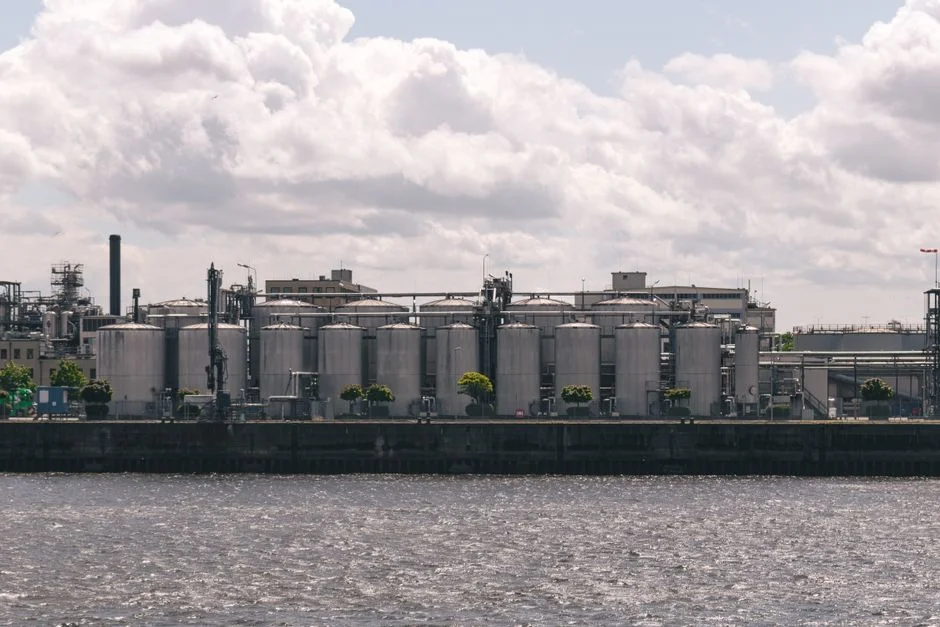
CAPEX bands for 2026 (USD, skid-delivered, excluding installation and building): a 50 m³/h DAF unit runs $180K–$280K; an equivalent-capacity lamella clarifier runs $110K–$180K; a circular/rake clarifier of the same capacity runs $140K–$220K (HydropureWater field data, 2026). OPEX on the DAF side is dominated by air-compressor power — roughly $0.02–$0.05 per m³ treated at Ohio industrial electricity rates — plus 5–15 mg/L of cationic polymer. OPEX on the clarifier side is dominated by 20–50 mg/L of flocculant and sludge pumping.
Two permitting realities shape the project schedule. First, Massillon WWTP pretreatment permit modifications typically run 60–120 days through Ohio EPA Division of Surface Water, so early engagement on the application's SIU determination and slug-control plan is the cheapest schedule item on the project. Second, the city's sewer-use ordinance requires a slug-control narrative for any SIU whose process includes oil storage or hydraulic systems above a threshold; that narrative lands in the same permit package as the technology selection. Factory-skid-tested equipment — like the HydropureWater DAF (4–300 m³/h, 13 models) and the HydropureWater lamella clarifier (20–40 m/h surface loading) — compresses on-site installation in tight Massillon plant yards because the piping, controls, and skimmer assemblies arrive pre-aligned.
Frequently Asked Questions
Can I run a DAF and a clarifier in series?
Yes. A DAF primary followed by a lamella clarifier as a polish is a standard configuration for transportation equipment plants with both oily and high-TSS streams. The DAF removes the free oil and emulsified coolant; the clarifier catches the fine floc and metal-bearing solids ahead of pH adjustment and metals precipitation.
How long does a DAF installation take in a Massillon plant?
For a skid-delivered unit in the 20–150 m³/h range, plan on 2–4 weeks of on-site installation after the skid arrives, followed by 1–2 weeks of commissioning and jar testing. Permit modifications through Ohio EPA Division of Surface Water run concurrently at 60–120 days, so the technology lead time is usually the schedule bottleneck rather than the equipment lead time.
Will a DAF meet 40 CFR Part 437 oil and grease limits on its own?
Typically yes. With proper coagulant and polymer chemistry, a DAF treating 200–2,000 mg/L FOG influent will produce effluent at or below the 52 mg/L daily-max and 26 mg/L monthly-average limits for the metal-finishing subcategory (per 40 CFR Part 437). The same cannot be said for a clarifier on a free-oil stream, where effluent FOG will commonly sit at 100–200 mg/L without a polish step.
When is a clarifier the wrong choice?
Anywhere free oil or emulsified coolant dominates the stream, or where oil-slug events are credible — stamping presses, hydraulic test stands, drawing compound sumps. A clarifier will scum over, lose its floc blanket, and produce off-spec effluent for hours after the slug passes.
Do I need chemical dosing for either system?
Yes for both, in nearly all industrial applications. A DAF typically uses 5–15 mg/L cationic polyacrylamide plus 50–150 mg/L PAC or an emulsion breaker on coolants. A clarifier typically uses 20–50 mg/L flocculant plus pH adjustment to the 6.5–7.5 settling window. Jar testing on the actual plant wastewater is the only way to lock in the dose; do not specify chemistry from generic curves.