The Vallejo compliance stack: federal categorical rules, NPDES, and VFWD local limits
A refinery or marine terminal near Vallejo sits inside a three-layer compliance stack: federal categorical prohibitions at 40 CFR Part 403, the VFWD local pretreatment ordinance, and NPDES Order R2-2023-0001 (CA0038764) — adopted 8 Feb 2023, effective 1 Apr 2023, expiring 31 Mar 2028 — which authorizes VFWD's secondary-treated discharge to the Carquinez Strait at 38.0647 N, -122.2283 W (Discharge Point 001) and the Mare Island Strait at 38.0897 N, -122.2533 W (Discharge Point 002). The Regional Water Board classifies both outfalls as a "Major" discharge (per Order R2-2023-0001, Finding F-2). Reissuance application is due 3 Jul 2027, per Section 5 of the Order.
40 CFR Part 403 applies to every industrial user that discharges to a POTW, "whether or not the POTW has an approved pretreatment program and also whether or not the nondomestic discharger has been issued a control mechanism or permit" (per EPA, 40 CFR Part 403 overview). The general prohibition at 40 CFR 403.5(a) bans any pollutant that causes pass-through or interference. The specific prohibitions at 40 CFR 403.5(b) are what an EHS manager at a refinery will actually trip: 403.5(b)(1) closed-cup flashpoint below 140 °F (60 °C), 403.5(b)(2) pH below 5.0, 403.5(b)(5) headworks temperature above 104 °F (40 °C), and — the one that matters most for petroleum — 403.5(b)(6): "Petroleum oil, nonbiodegradable cutting oil, or products of mineral oil origin in amounts that will cause interference or pass through" (per 40 CFR 403.5(b)).
VFWD's local limits sit on top of the federal floor. Order R2-2023-0001 sets the secondary-treatment capacity at 35 MGD; peak wet weather flows above that trigger blended-effluent rules (Section 1.7, Attachment D). Discharges at DP-001 and DP-002 are prohibited when the outfall cannot achieve the modeled 26:1 initial dilution (Section 4.3.4.2 of the Fact Sheet). The Order's Table 2 effluent limits — including ammonia and the enterococcus caps in Table 3 — are measured at monitoring locations EFF-001, EFF-001b, and EFF-002, not at the refinery outfall. That distinction matters: the engineer is designing pretreatment to a manhole limit tighter than what the POTW reports to the Regional Board.
How VFWD administers its pretreatment program on Mare Island
Every new industrial user on Mare Island files VFWD's 9-page Pretreatment Questionnaire (Document 852) before the first drop of process wastewater reaches the collection system. The questionnaire asks for SIC code, employee count by shift, every City of Vallejo water source by meter number, every wastestream by GPD, batch frequency, maximum batch volume, chemical inventory from the Solano County Hazardous Materials Business Plan, EPA Hazardous Waste generator number, and a process plumbing diagram showing every drain, sampling point, and connection to the District's sanitary sewer. The signature line certifies the information as "true and correct" — false certification is an enforceable violation under the VFWD ordinance.
The Environmental Compliance Department runs the program. The contact is (707) 644-8949 ext. 1609, [email protected], with the office at 450 Ryder Street, Vallejo, CA 94590. Mare Island tenants are tracked by a District-issued SSI number, and the questionnaire's wastewater-characteristics checklist explicitly calls out: flammable, toxic, pH < 5.0, pH > 12.5, heavy metals, solvents, suspended solids, high BOD, ammonia, FOG, high temperature > 150 °F, solid or viscous material > 3/4 inch, and petroleum products. Inspections are unannounced, and VFWD can revoke an SSI or connection permit for non-compliance. The same administrative pathway applies for comparable petroleum pretreatment in Lynchburg, where the local POTW runs a near-identical questionnaire-and-SSI structure.
For a refinery, the practical implication is that the questionnaire is a binding discharge characterization, not a courtesy form. Whatever GPD and concentration the engineer writes into Section II becomes the design basis VFWD will hold the plant to during the first slug event.
Refinery wastewater streams and the limits they must beat

Refinery sewer streams that reach a Mare Island or Carquinez-waterfront pretreatment system are not a single composite — they are a stack of batch and continuous sources that have to be characterized independently before they are mixed. Desalter brine, API separator skimmings recycle, tank-farm draw-off, hydrotest water, marine-terminal ballast, and stormwater that contacts process areas all carry different oil droplet size distributions, salt loads, and sulfide potentials. Slug events from tank draining and desalter dumps are the dominant upset cause for downstream oil-water equipment.
Typical petroleum-plant influent (engineering baselines, not site-specific): free oil 200–2,000 mg/L; emulsified oil 50–500 mg/L; TSS 100–800 mg/L; sulfides 1–30 mg/L; phenols 5–50 mg/L; pH 4–11. VFWD's practical sewer-acceptance targets — the de-facto thresholds inspectors use to enforce the federal floor — are total oil < 50 mg/L, TSS < 200 mg/L, sulfides < 1 mg/L, pH 6–9, flashpoint > 140 °F. Peak wet weather flows above 35 MGD at the plant can pull blended-effluent rules into play, and a refinery slug that arrives inside that window is the highest-risk event on the calendar.
| Parameter | Typical refinery influent | VFWD sewer-acceptance target | Reduction required |
|---|---|---|---|
| Free oil | 200–2,000 mg/L | < 50 mg/L (total oil) | ~95–98% |
| Emulsified oil | 50–500 mg/L | included in < 50 mg/L | ~90–99% |
| TSS | 100–800 mg/L | < 200 mg/L | ~75–95% |
| Sulfides | 1–30 mg/L | < 1 mg/L | ~67–97% |
| Phenols | 5–50 mg/L | Pass-through limit per Order | ~90%+ |
| pH | 4–11 | 6–9 | Neutralization |
The gap column is the engineer's design target. Anything short of an 85–95% reduction on free oil or a 90% reduction on emulsified oil means the slug will arrive at the manhole above the 50 mg/L ceiling and trip 40 CFR 403.5(b)(6).
The 2026 treatment train: oil-water separator, DAF, and biological polishing
Standard 2026 practice for a petroleum plant on Mare Island is a five-stage train, in the order each stage is required: corrugated-plate interceptor (CPI) for free oil, equalization/neutralization for batch surges, dissolved air flotation (DAF) with chemical conditioning for emulsified oil and TSS, sulfide stripping for H₂S control, and a biological polishing stage — typically an MBR or conventional activated-sludge with clarification — for residual BOD, phenols, and ammonia. The CPI alone removes free oil down to ~50–150 mg/L via Stokes-law separation but does nothing for emulsified oil. Equalization evens out the desalter-dump and tank-draining pulses so the DAF sees a steady influent; without it, polymer demand spikes and oil carry-under goes up. The dissolved air flotation (DAF) unit with a PLC-controlled chemical dosing skid breaks the oil emulsion and floats TSS; sulfide stripping (packed-tower air stripping or oxidant dosing) handles dissolved sulfides that would otherwise release H₂S in the collection system, and a MBR polishing stage closes the loop on phenols and ammonia to prevent pass-through if a slug is organics-heavy.
Inline pH, temperature, and conductivity monitoring with auto-shutoff at the sewer manhole is the most common 2026 control-room upgrade. The shutoff setpoints are the VFWD sewer-acceptance targets, not the looser POTW effluent limits from Table 2 of the Order — because VFWD's enforcement pathway is the federal 403.5(b) floor, not the Order's receiving-water limits.
| Stage | Function | Typical outlet | Footprint / OPEX driver |
|---|---|---|---|
| CPI | Free oil & settleable solids | Free oil 50–150 mg/L | Large footprint, low OPEX |
| Equalization/neutralization | Smooth batch surges; pH 6–9 | Steady flow, neutral pH | Hold-up volume, agitator power |
| DAF + chemical dosing | Emulsified oil & TSS | Total oil < 30 mg/L, TSS < 100 mg/L | Polymer + saturator air |
| Sulfide stripping/oxidation | Dissolved sulfides | S²⁻ < 1 mg/L | Blower or oxidant feed |
| Biological polishing (MBR or ASP) | BOD, phenols, ammonia | Residual BOD/phenols near detection | Membrane replacement or sludge wasting |
Gravity OWS vs. CPI vs. DAF: which unit fits a Vallejo refinery
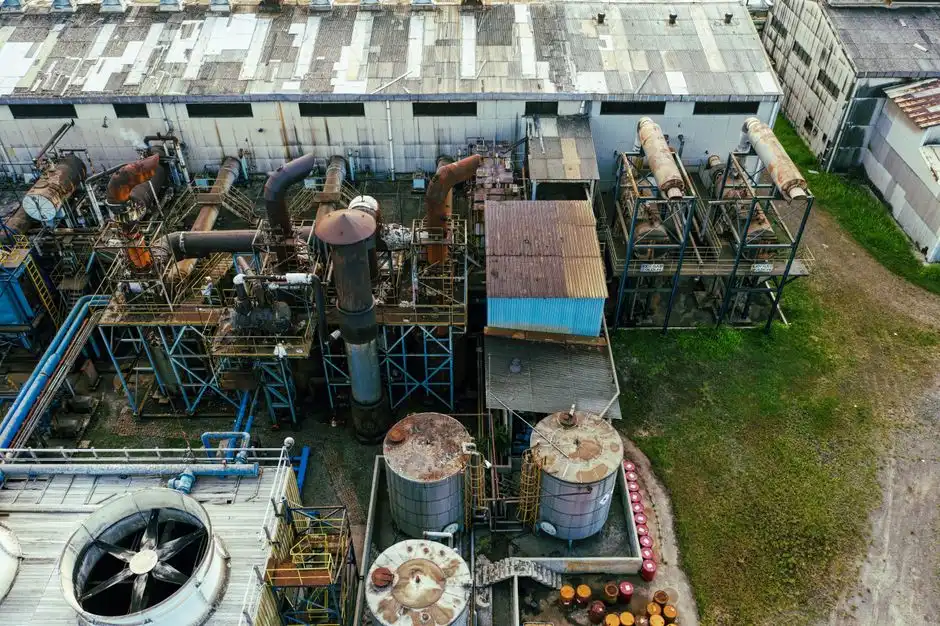
Primary-separator selection is the procurement decision that drives every downstream stage. A refinery that buys the wrong primary unit pays for it twice: once in CAPEX, and again in the DAF or biological stage that has to compensate. The three viable options for a Mare Island influent envelope are gravity oil-water separator (API 421 design), corrugated-plate interceptor, and dissolved air flotation. The trade is straightforward: a DAF vs. gravity oil-water separator comparison for FOG-sensitive streams shows the gap clearly. CPI + DAF in series is the most common 2026 configuration for Mare Island refineries targeting total oil < 50 mg/L at the sewer manhole.
| Unit | Droplet size handled | Typical outlet free oil | CAPEX | OPEX | Best fit |
|---|---|---|---|---|---|
| API / gravity OWS | > 150 µm | 100–200 mg/L | Lowest | Lowest | Free oil only, no emulsion |
| CPI | > 60 µm | 50–150 mg/L | Low–moderate | Low | Pre-DAF free-oil removal |
| DAF (dissolved air) | Emulsified (< 60 µm) | < 30 mg/L (with chemistry) | Moderate | Polymer + air | Refinery desalter brine, blending |
| Induced-gas flotation | Emulsified | < 30 mg/L | Moderate | High shear | Higher TSS, fewer chemicals |
API/gravity is cheapest but will fail VFWD on emulsified streams from desalters or chemical-additive blending. CPI is a compact pre-treatment that drops free oil to 50–150 mg/L but still misses emulsified oil — it needs a DAF downstream to reach the 50 mg/L ceiling. DAF handles emulsified oil and TSS simultaneously in a smaller footprint but carries higher OPEX from polymer and saturator air. For a 2026 Mare Island or Carquinez-waterfront refinery, the default answer is CPI + DAF in series.
2026 commissioning and compliance checklist for a new or modified process
- File the VFWD pretreatment questionnaire and obtain an SSI/connection permit. Describe each wastewater stream with estimated or measured GPD, batch frequency, and maximum batch volume. Submit the Solano County Hazardous Materials Business Plan chemical inventory alongside.
- Install a sampling port after final pretreatment, before the sewer manhole. The port must be accessible to VFWD inspectors without entering the process area. Use a mobile-app wastewater monitoring for pretreatment package to push pH, conductivity, temperature, and flow to the control room in real time.
- Calibrate pH, temperature, conductivity, and flow meters. Set auto-shutoff at the local limits from Table 2 of Order R2-2023-0001, tightened to the VFWD sewer-acceptance targets (oil < 50 mg/L, TSS < 200 mg/L, sulfides < 1 mg/L, pH 6–9).
- Run a 30-day commissioning profile with daily composite sampling. Report excursions within 24 hours per the Order's Monitoring and Reporting Program (Attachment E). Retain chromatograms and chain-of-custody for VFWD inspection.
- Keep a Spill Prevention Plan, Solvent Management Plan, and Spill Log on file. VFWD routinely asks for them during inspections; the questionnaire's Section V already calls them out as available documents.
Frequently Asked Questions
What is the federal rule that gets a petroleum plant near Vallejo shut down?
40 CFR 403.5(b)(6) bans "petroleum oil, nonbiodegradable cutting oil, or products of mineral oil origin in amounts that will cause interference or pass through." If a refinery slug sends total oil above VFWD's practical sewer-acceptance ceiling of 50 mg/L and the discharge causes a violation at the POTW, the discharger is liable under the federal prohibition — independent of any VFWD local limit.
Where does VFWD publish its sewer-acceptance limits for petroleum discharges?
The federal floor is 40 CFR Part 403; the local limit sits in NPDES Order R2-2023-0001 (CA0038764), adopted 8 Feb 2023 and effective 1 Apr 2023. Table 2 of the Order sets ammonia and other effluent limits, and the Order's prohibition on discharge when the 26:1 initial dilution cannot be achieved drives outfall design. The de-facto sewer-acceptance targets inspectors enforce are total oil < 50 mg/L, TSS < 200 mg/L, sulfides < 1 mg/L, pH 6–9, flashpoint > 140 °F.
Who do I contact at VFWD to file a pretreatment questionnaire for a Mare Island facility?
VFWD Environmental Compliance, (707) 644-8949 ext. 1609, [email protected], 450 Ryder Street, Vallejo, CA 94590. Mare Island tenants use the District-issued SSI number, and the 9-page questionnaire (Document 852) requires a process plumbing diagram, every wastestream GPD, and the Solano County Hazardous Materials Business Plan.
What triggers VFWD's blended-effluent rules?
Peak wet weather influent flow above 35 MGD at the secondary treatment units triggers blended-effluent rules under Section 1.7 of Attachment D, Order R2-2023-0001. A refinery slug that arrives in that window is the highest-risk event because the POTW is already operating at capacity, and pass-through at the outfall is more likely.
Do I need a CPI if I already have a DAF?
Yes, in practice. A DAF without a CPI upstream sees high free-oil loading, which drives polymer demand up and breaks the flotation bubble field. The CPI brings free oil to 50–150 mg/L and protects the DAF from slug events, which is why CPI + DAF in series is the most common 2026 configuration for Mare Island refineries.