
What an RO Desalination System Does in a Pharmaceutical Plant
An RO desalination system for pharmaceutical plants removes 95–99.5% of dissolved salts through semi-permeable membranes. Permeate can meet USP Purified Water and EP bulk-water conductivity limits. On pharma wastewater with TDS from 5,000 to 100,000 mg/L, BWRO typically delivers 50–70% recovery. High-pressure RO or DTRO reaches 80–90%+ recovery, and concentrate TDS can exceed 120,000 mg/L.
Pharma plants use the same platform for four duties: Purified Water make-up pretreatment, ZLD pre-concentration, utility reuse, and salt recovery from brine. Earlier industry reviews put reverse osmosis near 70% of installed global desalination capacity. According to the IEA (2026), reverse osmosis and other membrane-based plants now account for more than 80% of capacity worldwide. That share explains why pharma EPCs default to membrane desalination before thermal stages in most 2026 ZLD trains.
Pharma feedwater is harder than the brackish utility water most RO reference designs assume. Batch production drives intermittent COD spikes (often 5,000–50,000 mg/L), residual solvents, ammonium sulfate, and APIs that survive upstream biology. Conductivity can swing from 5,000 µS/cm on a normal day to 100,000 µS/cm during a crystallization campaign. A generic industrial RO skid sized for steady TDS will foul within weeks unless pretreatment and membrane selection match that foulant matrix. Engineered pharmaceutical Industrial Reverse Osmosis (RO) Water Treatment System skids are built around that reality, with high-pressure pump sizing, energy-recovery hardware, and CIP sequences matched to the waste the plant actually generates.
Matching RO Technology to Pharma Feedwater: BWRO, SWRO, or DTRO?
Selecting the correct RO architecture depends on feedwater TDS, because operating pressure, energy, and recovery scale with salinity. Below about 10,000 mg/L TDS, brackish water RO (BWRO) is the cost-effective default. Between 10,000 and 45,000 mg/L, the duty sits in seawater RO (SWRO) territory. That band matters when the plant draws seawater or high-TDS borehole water. Above about 45,000 mg/L, standard RO is no longer applicable. The design must shift to high-pressure RO (HPRO) or disc-tube RO (DTRO) at 10–15 MPa with recovery of 80–90%+. Most plants we size for pharma concentrate duty land in the DTRO band once primary reject exceeds roughly 80,000 mg/L TDS.
The decision framework below reflects typical 2026 pharma operating envelopes. One equipment platform can cover all three bands. For example, the HydropureWater industrial RO skid can be configured from BWRO through DTRO service. Recovery rates can reach up to 95% as an engineering envelope spanning those duties (HydropureWater verified product catalog, 2026).
| Parameter | BWRO | SWRO | DTRO / High-Pressure RO |
|---|---|---|---|
| Feed TDS range (mg/L) | 1,000–10,000 | up to ~45,000 | 40,000–120,000+ |
| Operating pressure (bar) | 10–30 | 55–80 | 100–150 (10–15 MPa) |
| Typical recovery (%) | 50–75 | 35–45 | 80–90+ |
| Permeate TDS target (mg/L) | < 50 | < 500 | < 1,000 (then polish) |
| Pharma duty fit | Purified Water make-up, reuse | Coastal plant source water | ZLD concentrate, brine volume reduction |
| Energy recovery device | Optional (ERT) | Standard (PX/ERT) | Standard on concentrate stage |
Practical rule of thumb for 2026 pharma projects: start with BWRO if feed TDS is below 10,000 mg/L and the train is not pushing to ZLD. Specify DTRO whenever the concentrate leaving primary BWRO exceeds 80,000–100,000 mg/L TDS. Volume reduction and downstream evaporator savings then outweigh the higher pressure-pump cost. Full treatment trains frequently stage BWRO → DTRO → evaporation in series. The first stage does bulk water recovery at low pressure. The second stage does volume reduction for crystallization.
Design Parameters and Specs an Engineer Must Lock In
A 2026 pharma RO skid should lock feed SDI below 3, free chlorine below 0.1 mg/L, and permeate conductivity below 1.3 µS/cm at 25 °C. The table below is the operating envelope used to compare vendor bids. Any proposal outside these ranges needs a written engineering justification, not a brochure claim.
| Parameter | Spec / target | Source / basis |
|---|---|---|
| Feed SDI (15 min) | < 3 | S3 (general RO feed limit) |
| Free chlorine | < 0.1 mg/L | Polyamide membrane tolerance |
| Feed pH | 6.5–7.5 | Polyamide membrane operating range |
| Feed temperature | 20–35 °C | Membrane rating envelope |
| Permeate flux, BWRO | 15–25 LMH | Standard design flux |
| Permeate flux, SWRO / DTRO | 10–18 LMH | Higher-pressure membrane rating |
| Recovery range | 50–95% (by skid selection) | BWRO to DTRO envelope |
| NaCl rejection (monovalent) | 99.0–99.7% | Tight RO membrane spec |
| Divalent ion rejection | 99.5–99.8% | Tight RO membrane spec |
| Organics > 200 Da rejection | > 99.9% | Tight RO membrane spec |
| Permeate conductivity | < 1.3 µS/cm at 25 °C | USP <645> / EP bulk water |
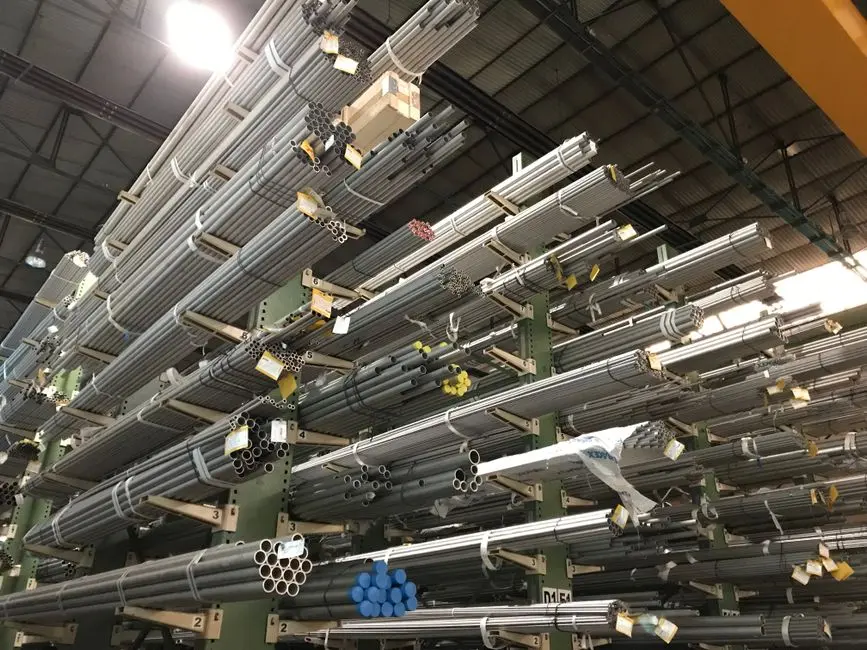
| Pressure vessels / piping | FRP vessels, PP or PVDF piping | Corrosion resistance |
| Automation | PLC + HMI, remote monitoring, data historian export | 21 CFR Part 11 readiness |
The permeate conductivity target of < 1.3 µS/cm at 25 °C is the Stage 1 conductivity requirement from USP <645> and the corresponding EP monograph for bulk purified water. Recent USP water-system guidance continues to cite the same Stage 1 limit of 1.3 µS/cm at 25 °C for both Purified Water and Water for Injection. RO alone routinely hits that conductivity number. It does not satisfy full compendial purified-water or WFI microbiological and TOC limits. A downstream EDI polish, double-pass RO, or distillation column is normally required. Clarify this in the RFQ so operations does not treat RO permeate as WFI-grade off the skid. Material selection matters. FRP pressure vessels with PP or PVDF piping avoid the leaching and corrosion failures that hit stainless skid retrofits in high-chloride pharma service.
Pretreatment and ZLD Integration: The Two Forces That Decide Success
An RO skid only performs as well as the unit operations bolted to it on both sides. Upstream, pharma pretreatment must cut fouling potential to RO feed limits while handling organic and solvent loads that municipal-style chains never saw. The standard pharma chain runs equalization, then biological treatment or advanced oxidation (AOP). Next comes coagulation-sedimentation or DAF, followed by multi-media filtration, a 5 µm cartridge filter, UF, and RO. UF is the primary pretreatment barrier. It cuts suspended solids, colloids, bacteria, and most macromolecular organics, holding RO feed SDI reliably below 3.
Fouling in pharma RO usually combines biofouling from fermenter residues, organic fouling from APIs and residual solvents, and scaling from CaSO₄ and silica once recovery pushes past 70%. Standard alkaline CIP is not enough. Pair alkaline oxidative cleaning (NaOH + NaOCl or a proprietary oxidant) with acid cleaning for scale. Add routine soak cycles for biofouling. Skid design should allocate a dedicated CIP loop with heated cleaning solution and a flush step verified by conductivity.
Downstream, the ZLD chain is what justifies the higher-pressure RO investment. Primary RO feeds a secondary high-pressure RO or DTRO stage that concentrates to 100,000–150,000 mg/L TDS. Electrodialysis (ED) or membrane distillation (MD) can cut volume further before MEE or MVR evaporation and crystallization or fractional salt recovery. Energy recovery devices on the high-pressure stages cut system energy use by 20–40% and belong on any pharma RO spec. Projects that recover saleable Na₂SO₄ or (NH₄)₂SO₄ can shorten payback through salt credits.
Cost, ROI, and Supplier Selection in 2026
Pharma project scopes vary by an order of magnitude, so frame CAPEX by capacity band and technology. For 2026 industrial RO skids, a 50 m³/day BWRO unit sits at the small-project end. A 200 m³/day BWRO or BWRO + DTRO train is the typical plant expansion. A 500 m³/day multi-stage system with full ZLD polish is the large-facility scope. OPEX is dominated by energy (typically 40–60% of OPEX). Membrane replacement on a 3–5 year cycle, CIP chemicals, antiscalant, and high-pressure pump maintenance follow. VFD-controlled high-pressure pumps plus an ERD on the high-pressure stage remain the most effective energy package we specify.
Payback economics in pharma ride on three value streams: avoided potable-water purchase, avoided wastewater discharge fees, and recovered salt by-product revenue. Where discharge rules are strict and water is expensive, ZLD systems typically reach payback in 5–8 years. Projects that recover saleable sodium sulfate or ammonium sulfate can shorten that window. Filter the supplier shortlist on five non-negotiables. Require documented pharma or USP reference projects, FAT records, and BACT compliance documentation. Demand clear membrane warranty terms, local service with a defined response-time commitment, and PLC architecture that exports to a 21 CFR Part 11 compliant data historian.
Selection checklist before you issue the RFQ:
- Measured feed TDS, COD, and conductivity swing across at least one full production campaign.
- Target duty: Purified Water make-up, reuse, or ZLD concentrate reduction.
- Required recovery and concentrate TDS after the last membrane stage.
- Permeate conductivity, TOC, and microbiological polish path (EDI, double-pass RO, or distillation).
- CIP chemistry compatibility with residual APIs and solvents.
- ERD requirement and expected specific energy (kWh/m³) at design TDS.
- FAT, documentation pack, and historian export format for validation.
For a deeper parameter-by-parameter RFQ build-out, see our RO desalination system design criteria for 2026. The brackish water RO system for pharmaceutical engineering guide covers the BWRO duty in more detail when feed TDS stays below 10,000 mg/L.
Who This Is For / Next Step
Plant engineers, EPC process leads, and procurement teams use this page when sizing membrane desalination inside a pharmaceutical water or ZLD train. Look elsewhere if you need a laboratory-scale RO cart or a municipal drinking-water SWRO plant with no industrial foulants. When feed analyses and recovery targets are ready, send the duty data for a pharma RO skid review so pump pressure, membrane type, and pretreatment can be locked before the bid set freezes.
Frequently Asked Questions
What recovery rate can an RO system hit at high pharma feedwater TDS?
Primary BWRO typically achieves 50–70% recovery on pharma feed streams. Secondary high-pressure RO or DTRO reaches 80–90%+. The upper design envelope on a properly staged skid is about 95%. Pushing past 90% on a single stage risks calcium sulfate and silica scaling unless antiscalant and CIP are written for that recovery. Most plants we size for high-TDS campaigns keep primary BWRO near the lower band and push recovery in the DTRO stage.
Does RO permeate meet USP Purified Water or WFI requirements on its own?
RO permeate can satisfy the USP <645> / EP conductivity test (target < 1.3 µS/cm at 25 °C). Compendial purified water and WFI also require microbiological, endotoxin, and TOC control. A downstream EDI polish, double-pass RO, or distillation step is typically required for WFI. Treat single-pass RO as the desalting block, not the finished water system.
Is pretreatment really required for pharma RO?
Yes. RO feed SDI must be held below 3 (15 min) before the membranes, or colloidal fouling will cut flux within weeks. The standard pharma chain ends with UF ahead of the cartridge and RO stages. Skipping UF to save CAPEX is the most common cause of early membrane replacement we see on pharmaceutical wastewater skids.
When should a plant specify DTRO instead of BWRO?
Specify DTRO or high-pressure RO when feed or intermediate concentrate TDS sits above about 45,000 mg/L, or when primary BWRO reject already exceeds 80,000–100,000 mg/L TDS. Operating pressure rises to 100–150 bar (10–15 MPa). Design recovery moves into the 80–90%+ band used for ZLD volume reduction. BWRO remains the right first stage when feed TDS stays below 10,000 mg/L and the plant is not forcing crystallization duty.
What drives OPEX on a 2026 pharma RO skid?
Energy typically accounts for 40–60% of OPEX, followed by membrane replacement on a 3–5 year cycle, CIP chemicals, antiscalant, and high-pressure pump maintenance. VFD-controlled pumps plus an energy recovery device on the high-pressure stage cut specific energy most effectively. Salt recovery credits for Na₂SO₄ or (NH₄)₂SO₄ can offset OPEX where a buyer exists for the crystal product.