
Why Vista, CA Pharma Plants Cannot Use Generic Pretreatment Advice
Pharmaceutical facilities discharging to the sanitary sewer in the Vista, California area operate under a three-layer regulatory stack: federal EPA categorical standards under 40 CFR Part 439, the State of California's delegated NPDES pretreatment program administered by the State Water Resources Control Board and the San Diego Regional Water Quality Control Board (Region 9), and the local limits set by the receiving POTW — either the City of Vista sanitary sewer system or the Encina Wastewater Authority service area, depending on the exact plant address. The 1972 Clean Water Act, amended in 1977, plus the 1978 General Pretreatment Regulations, established the framework that requires States and POTWs to enforce national pretreatment rules on industrial users (per PCWRA, 2025). EPA delegates implementation either to an approved State program or to the POTW itself; where neither exists, EPA is the default Control Authority (per PCWRA).
Almost every Vista-area API or formulation plant falls under 40 CFR Part 439. The U.S. pharmaceutical market covers roughly 10,000 approved products with about 3,000 active ingredients, plus their reaction byproducts, reactants, and solvents — every one of which can show up in a process wastewater stream (per WaterTechOnline, 2025-11). The federal floor is the categorical standard, but POTW local limits are site-specific and almost always tighter; a Vista plant must design and operate to whichever is stricter. Articles that walk through Colorado POTW rules or Alabama residential lagoons do not address the Encina/Vista pretreatment ordinance, the Region 9 Basin Plan ammonia objectives, or the 24-hour composite sampling cadence the local Control Authority expects.
Step 1: Identify Your 40 CFR Part 439 Subcategory
EPA's 1998 Development Document for the Pharmaceutical Manufacturing category (summarized by WaterTechOnline, 2025-11) lists exactly five subcategories: fermentation products, extraction products, chemical synthesis products, mixing/compounding and formulation, and research. The classification drives every downstream numerical limit, so getting it wrong propagates into the wrong BOD/COD/TSS target and the wrong monitoring list.
A single physical plant can fall under multiple subcategories when it runs both, for example, a fermentation suite and a chemical synthesis suite. In that case, 40 CFR Part 439 limits are applied proportionally to each waste stream before they are combined for discharge. The mixing/compounding and formulation subcategory typically covers downstream tablet, capsule, ointment, and solution operations, while chemical synthesis covers API manufacture. The research subcategory applies to pilot and clinical-scale facilities — a frequent miss for Vista-area biotech startups that self-report as "research" but actually run GMP production at batch scale. Use the table below to map your operation to the right subcategory before pulling any vendor proposal.
| Subcategory (40 CFR Part 439) | Typical Vista-area operation | Common waste-stream signature |
|---|---|---|
| Fermentation products | Antibiotic, vitamin, amino acid, enzyme production | High BOD/COD, separable mycelia, residual solvents, broth |
| Extraction products | Natural product isolation, botanical APIs | Solvent-bearing extracts, FOG, high-strength organics |
| Chemical synthesis products | Small-molecule API manufacture | Listed solvents and intermediates, variable pH, trace actives |
| Mixing/compounding and formulation | Tablet, capsule, ointment, solution lines | Lower BOD, intermittent cleaning-agent loads, suspended excipients |
| Research | Pilot, clinical-scale, process-development labs | Variable composition, low flow, high solvent/API diversity per liter |
The Numbers a Vista Plant Has to Hit: 40 CFR 439.12 BPT, 439.14 BAT, 439.15 NSPS
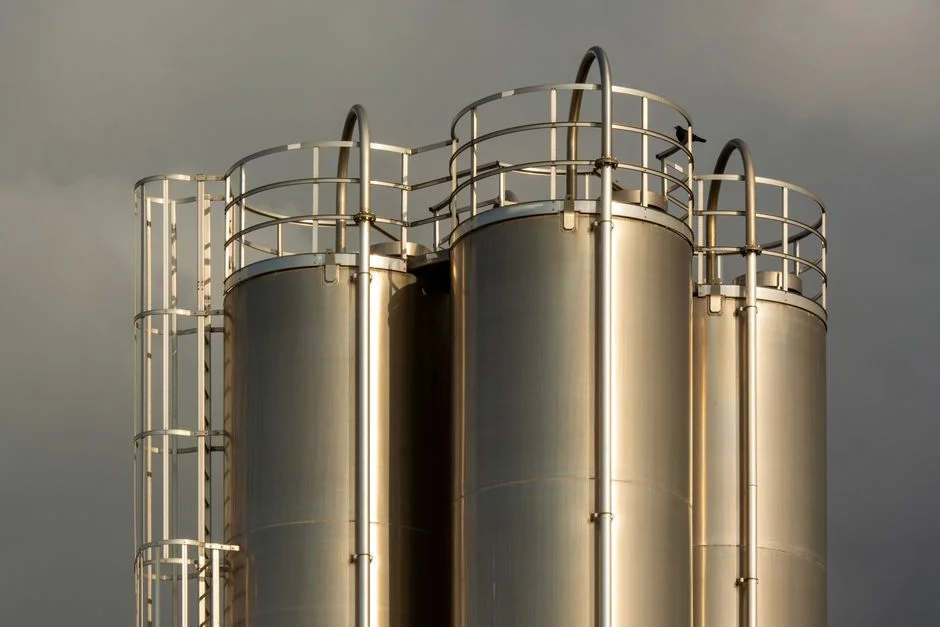
40 CFR 439.12 (BPT) sets the floor that every existing point source must meet. The maximum monthly average BOD5 limitation must reflect no less than 90% reduction of the long-term average daily raw-process BOD5 load multiplied by a variability factor of 3.0, with the long-term average defined as the average daily load over 12 consecutive months within the most recent 36 months and required to include at least one maximum-production period (per 40 CFR 439.12(a), summarized by WaterTechOnline, 2025-11). The maximum monthly average TSS limitation is calculated as 1.7 times the BOD5 limitation just calculated, and the COD limits are 1,675 ppm maximum daily load and 856 ppm maximum monthly average where the paragraph (d) alternative does not apply.
BAT (40 CFR 439.14) and NSPS (40 CFR 439.15) impose numerical maximum daily and maximum monthly averages in mg/L for a long list of basic process chemicals — the specific solvents, intermediates, and actives used in your process drive which line items you must monitor. A Vista plant needs to cross-check every chemical on its process flow diagram against 40 CFR 439.14 and 439.15 tables, not just the conventional BOD/COD/TSS trio. For the BOD5 long-term average, the regulation explicitly credits physical separation and removal of separable mycelia, solvent recovery, incineration of concentrated solvent waste streams including tar still bottoms, and concentration of broth for off-system disposal — any of these, or a combination, may be used to achieve the limit (per 40 CFR 439.12(a)(3)).
| Parameter | 40 CFR 439.12 BPT limit | Calculation method |
|---|---|---|
| BOD5 (max monthly avg) | ≥90% reduction of long-term avg × 3.0 variability factor | 12 of 36 consecutive months, must include a max-production period |
| TSS (max monthly avg) | 1.7× the BOD5 limit | Derived from BOD5 calc |
| COD (max daily) | 1,675 ppm | Where 439.12(d) alternative does not apply |
| COD (max monthly avg) | 856 ppm | Where 439.12(d) alternative does not apply |
| BAT/NSPS listed chemicals | Per 40 CFR 439.14 / 439.15 tables, mg/L | Match to your process flow diagram chemical inventory |
The Treatment Train That Actually Gets You Under Those Limits
A validated treatment sequence is required to transition typical Vista fermentation or chemical synthesis wastewater from raw discharge to a sewer point that meets the 40 CFR 439.12 floor and all local limits.
Start with flow equalization in a 24- to 48-hour basin. 40 CFR 439 limits are calculated on long-term averages and POTWs in California typically require a 24-hour flow-proportional composite sample at the discharge monitoring point, so smoothing pH (typically 6.5–8.5 su), temperature (often <38 °C to protect downstream biology), and BOD swings is the precondition for any other unit process to perform to spec. An automatic chemical dosing skid handles pH correction and nutrient supplementation (N and P) for the biological stage ahead.
Next, a dissolved air flotation (DAF) system in the 4–300 m³/h packaged range is the standard first physical step. DAF removes separable mycelia, residual solvents, free and emulsified oils, and FOG that would otherwise pass through to the biological stage and be counted against the BOD/COD load — and 40 CFR 439.12(a)(3) explicitly credits physical separation of separable mycelia and solvent recovery toward the BOD5 limit. Concentrated solvent streams and tar still bottoms should be sent to incineration or off-site recovery, not into the treatment train, to capture that regulatory credit.
Biological treatment is typically either conventional activated sludge or an MBR membrane bioreactor system. An MBR with submerged PVDF membranes at ≤1 μm pore size is the preferred choice where the receiving POTW sets a tight effluent BOD, where trace solids carryover would risk an SIU permit violation, or where plant footprint is constrained. The MBR effluent typically lands well under 10 mg/L BOD5 and under 5 mg/L TSS in steady operation (HydropureWater field data, 2026), which is what gives the plant headroom against the 1.7× TSS rule.
Close the train with clarification (lamella plate settler for footprint, conventional clarifier for larger flows) followed by a ClO2 disinfection generator or ozone for pathogen reduction before the final sewer monitoring point. The discharge sample tap must be upstream of any diluting non-process stream and downstream of all treatment.
| Unit process | Primary pollutant removed | Design range / target |
|---|---|---|
| Flow equalization basin | pH, temperature, load variability | 24–48 h HRT; pH 6.5–8.5 su; T <38 °C |
| Dissolved air flotation (DAF) | Separable mycelia, FOG, residual solvents, TSS | 4–300 m³/h packaged; 80–95% FOG/TSS removal |
| Biological (activated sludge or MBR) | Soluble BOD/COD, ammonia | MBR effluent typically <10 mg/L BOD5, <5 mg/L TSS |
| Clarification (lamella or conventional) | Biomass carryover, residual TSS | <30 mg/L TSS to disinfection |
| Disinfection (ClO2 or ozone) | Indicator bacteria | Per local POTW reuse/discharge criteria |
For readers working in other regulated industries, the sister guide on EPA 40 CFR 403 pretreatment compliance for another industry and the pretreatment compliance walkthrough for another O&G-heavy industry cover the same Control Authority / local-limits logic in different regulatory contexts. The pharma wastewater treatment guide for a comparable regulatory environment walks through the Taiwan EPA stack.
Local Limits, Monitoring, and the Self-Audit Checklist

A Vista-area pharma plant should complete the following actions and compile the listed documents for the Control Authority within 30 days. None of these steps requires new capital — they are documentation and procedural moves that de-risk the next SIU permit cycle.
- Request the receiving POTW's local limits letter and any existing SIU permit conditions in writing — these are public-record documents under California's delegated pretreatment program.
- Confirm the 24-hour flow-proportional composite sampling location, the chain-of-custody protocol, and the certified lab on the POTW's list. Batch-discharging plants need an automatic sampler paced to flow, not time.
- Run EPA's Process-Based Self-Assessment Tool for the Organic Chemical Industry (3 modules, 8 appendices) as the EMS framework the Control Authority will expect to see referenced during inspection (per WaterTechOnline, 2025-11).
- Assemble the standard Control Authority submittal package: process flow diagram with all wastewater generating steps labeled, mass balance for BOD/COD/TSS and any listed solvents, slug-control plan, BMPs for solvent handling and API loss control, and a complete chemical inventory cross-referenced to 40 CFR 439.14 and 439.15 tables.
- Calibrate pH, temperature, and flow meters at the discharge monitoring point and document the calibration records; these are the three parameters most often cited in POTW enforcement actions.
Frequently Asked Questions
Which federal regulation governs pharmaceutical process wastewater discharged to a POTW?
EPA's 40 CFR Part 439 sets the categorical pretreatment standards for pharmaceutical manufacturing, broken into five subcategories: fermentation, extraction, chemical synthesis, mixing/compounding and formulation,
Frequently Asked Questions
What are the federal pretreatment limits for pharmaceutical wastewater in the U.S.?
Federal pretreatment standards for the pharmaceutical manufacturing industry are governed by 40 CFR Part 439. These regulations establish categorical pretreatment standards for existing sources (PSES) and new sources (PSNS), primarily focusing on limits for Total Organic Carbon (TOC), Chemical Oxygen Demand (COD), and specific priority pollutants based on the manufacturing subcategory (e.g., fermentation, extraction, or chemical synthesis).
Which equipment train is used to treat pharma wastewater before sewer discharge?
A typical pharmaceutical pretreatment train begins with flow equalization and pH adjustment to stabilize influent variability. This is followed by solids removal via Dissolved Air Flotation (DAF) or clarifiers, and biological treatment, often using Membrane Bioreactors (MBR) or Moving Bed Biofilm Reactors (MBBR) to achieve high TOC reduction. Advanced stages may include Granular Activated Carbon (GAC) adsorption or ozone oxidation to ensure compliance with stringent local discharge parameters.
Are local POTW limits stricter than the federal 40 CFR 439 limits?
Yes, local Publicly Owned Treatment Works (POTW) often impose Local Limits that are significantly more stringent than the federal baseline established in 40 CFR 439. While federal standards focus on broad categories, local agencies set site-specific mass loading and concentration limits for parameters like heavy metals, cyanide, and total dissolved solids to protect the biological integrity of the municipal treatment facility and ensure compliance with their own National Pollutant Discharge Elimination System (NPDES) permits.
How often does a Vista pharmaceutical plant have to monitor its discharge?
Monitoring frequency is determined by the facility’s individual industrial wastewater discharge permit issued by the local sanitation agency. While federal regulations may suggest periodic sampling, most pharmaceutical plants in the Vista area are required to perform self-monitoring on a monthly or quarterly basis for standard parameters, with continuous monitoring often required for pH and flow volume to ensure consistent adherence to permit conditions.
Do new pharmaceutical plants have different limits than existing ones under 40 CFR 439?
Yes, 40 CFR 439 distinguishes between Pretreatment Standards for Existing Sources (PSES) and Pretreatment Standards for New Sources (PSNS). New sources are generally subject to more rigorous performance standards, as they are expected to incorporate Best Available Demonstrated Control Technology (BADCT) during initial facility design, whereas existing sources may have slightly different compliance benchmarks based on the date of their original construction or major process modifications.