Japan's 2026 Pharmaceutical Wastewater Regulations: What Changed and What Matters
Japan’s Water Pollution Control Law (2026 enforcement) mandates that pharmaceutical facilities adhere to strict national discharge standards, with additional regional constraints often dictated by local prefectural ordinances. For facilities discharging to public sewers, the national standard requires BOD ≤20 mg/L, COD ≤160 mg/L, TSS ≤30 mg/L, total nitrogen (TN) ≤60 mg/L, and total phosphorus (TP) ≤8 mg/L. Direct discharge into river systems necessitates a 50% reduction in BOD and COD limits, alongside mandatory compliance with acute toxicity (TU ≤1) and mutagenicity (Ames test negative) protocols.
The 2026 regulatory framework introduces tentative monitoring values for priority pharmaceutical residues. Facilities must now track specific API concentrations, including carbamazepine at 0.1 μg/L and diclofenac at 0.05 μg/L. In high-density industrial zones, prefectural adders significantly compress these limits; for instance, the Tokyo Metropolis enforces a COD limit of 40 mg/L for all direct discharge to the Tokyo Bay watershed, while the Osaka prefectural government limits TN to 30 mg/L for the Yodo River basin.
| Parameter | Sewer Discharge (mg/L) | River Discharge (mg/L) |
|---|---|---|
| BOD | 20 | 10 |
| COD | 160 | 60 |
| TSS | 30 | 30 |
| Total Nitrogen (TN) | 60 | 20 |
| Total Phosphorus (TP) | 8 | 2 |
| Priority APIs | Monitoring Required | <0.01–0.1 μg/L |
Permitting for new pharmaceutical wastewater treatment plants typically requires a 6–9 month lead time, while modifications to existing infrastructure require 3–4 months. Regulatory approval for novel treatment trains necessitates a minimum of 3 months of on-site pilot data verified by third-party sampling laboratories using JIS K 0102 standardized testing methods.
Pharmaceutical Wastewater Profiles in Japan: Fermentation, Synthesis, Formulation
Pharmaceutical wastewater in Japan exhibits distinct chemical profiles based on the specific production sub-sector, requiring tailored hydraulic and biological design parameters. Fermentation-based antibiotic and amino acid production generates high-strength waste, often characterized by COD levels between 15,000 and 30,000 mg/L, high sulfate concentrations, and a BOD/COD ratio of 0.6–0.8. A typical penicillin production plant in Shizuoka, for instance, manages an average flow of 1,200 m³/day with a baseline COD of 22,000 mg/L, necessitating high-capacity anaerobic pretreatment.
Chemical synthesis facilities focusing on API intermediates present a different challenge, with COD ranging from 5,000 to 15,000 mg/L and a lower BOD/COD ratio of 0.2–0.4. These streams often contain high total dissolved solids (TDS) of 5,000–20,000 mg/L and recalcitrant aromatics or solvents like DMF and toluene. Formulation sites (tablets and injectables) produce lower-strength waste (COD 2,000–5,000 mg/L) but experience high variability due to surfactant-rich cleaning-in-place (CIP) cycles. Equalization tanks with a minimum of 24-hour hydraulic retention time (HRT) are mandatory for all multi-product Japanese facilities to dampen peak loads.
| Sub-sector | Typical COD (mg/L) | BOD/COD Ratio | Flow (m³/day) |
|---|---|---|---|
| Fermentation | 15,000–30,000 | 0.6–0.8 | 500–1,500 |
| Synthesis | 5,000–15,000 | 0.2–0.4 | 300–800 |
| Formulation | 2,000–5,000 | 0.5–0.7 | 100–400 |
Technology Deep-Dive: MBR, RO, Ozonation, and Advanced Oxidation for Japanese Consent Limits
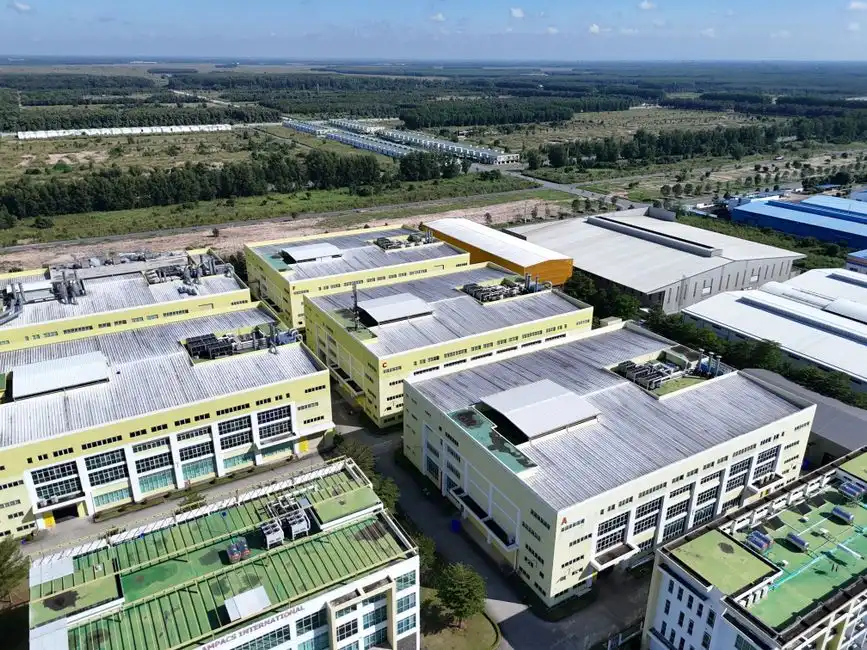
Modern Japanese pharmaceutical wastewater treatment relies on a multi-stage process to ensure consistent compliance with strict discharge limits. The submerged PVDF MBR system (0.1 μm, 15–20 LMH flux) has become the industry benchmark, achieving effluent BOD <5 mg/L and TSS <1 mg/L while maintaining an MLSS of 8–12 g/L. This configuration requires approximately 0.8 m² of footprint per m³/day of flow, offering a 60% space efficiency advantage over conventional activated sludge processes.
For TDS removal and final polishing, a two-pass brackish/seawater RO train (85%+90% recovery) provides 99.9% API rejection, producing permeate with conductivity <50 μS/cm. In systems with high silica content, PLC-controlled coagulant/antiscalant/pH dosing skids are essential to prevent membrane fouling. Ozonation is utilized at a dose of 15–25 mg/L with a 15–20 minute contact time, achieving >90% removal of priority APIs. To manage bromate formation (limit 10 μg/L), operators typically employ H₂O₂ quenching or maintain pH <8. For highly recalcitrant streams, advanced oxidation (AOP) processes like O₃/H₂O₂ provide efficient degradation at an energy intensity of 0.5–1.2 kWh/m³ per order of removal.
| Technology | Key Performance Metric | Application |
|---|---|---|
| MBR (PVDF) | BOD <5 mg/L, TSS <1 mg/L | Primary Biological Treatment |
| Two-Pass RO | 99.5% TDS Rejection | API/TDS Polishing |
| Ozonation | >90% API Removal | API/Micro-pollutant Control |
| GAC Polishing | 30–60 min EBCT | Final Residual VOC Removal |
Three Real-World Equipment Configurations for Japanese Pharma Sites
Engineering managers must align treatment configurations with specific production demands to optimize total cost of ownership (TCO) over a 10-year horizon. Fermentation-dominant plants typically require an integrated approach: UASB pretreatment followed by high-flux MBR and two-pass RO, which balances high organic loads with stringent water quality requirements. Synthesis-heavy sites necessitate additional stripping columns for solvent recovery prior to biological treatment to prevent toxicity-induced biomass failure.
| Scenario | Process Train | CAPEX (JPY) | 10-Year OPEX (JPY) |
|---|---|---|---|
| Fermentation (1,000 m³/d) | UASB + MBR + 2-Pass RO + O₃ | ¥2.8 Billion | ¥180 Million/yr |
| Synthesis (500 m³/d) | Stripper + MBR + 2-Pass RO + AOP | ¥2.1 Billion | ¥140 Million/yr |
| Formulation (200 m³/d) | Eq + MBR + O₃ + GAC | ¥1.2 Billion | ¥45 Million/yr |
All designs must incorporate seismic Category S2 standards and include automatic filter press (25% DS cake, 1–500 m² filtration area) units for sludge management. Sludge handling must be fully integrated into the plant's SCADA system for manifest tracking and reporting to ensure compliance with the Waste Management Law.
Procurement Checklist: 12 Items Your RFP Must Specify for Japan
- Membrane supplier: Must utilize Japanese-certified (JIS K 7222) PVDF components.
- RO elements: Must be NSF/ANSI 61 and JWWA K-101 certified.
- Ozone generation: Must be JIS K 1401 compliant with integrated bromate monitoring.
- Control system: PLC must be major Japanese brand (Yokogawa/Mitsubishi) with Japanese-language HMI.
- Seismic design: Must meet JIS E 4031 Category S2; base isolation required for tanks >500 m³.
- Sludge dewatering: Filter press must guarantee ≥25% dry solids (DS).
- Pilot testing: 90-day on-site pilot program with third-party verification.
- Availability: 5-year O&M contract with 98% uptime guarantee.
- Response time: 4-hour emergency response commitment for major metropolitan zones.
- Discharge monitoring: Real-time TOC/COD analyzer linked to plant DCS.
- Chemical safety: ozone-compatible ClO₂ generator (50 g/h–20,000 g/h) for secondary disinfection.
- Data logging: Secure, non-editable historian for regulatory auditing.
Frequently Asked Questions
What are the 2026 Japan discharge limits for pharmaceutical wastewater?
National sewer standards are BOD ≤20 mg/L and COD ≤160 mg/L, while direct river discharge requires BOD ≤10 mg/L and COD ≤60 mg/L. Specific APIs are subject to individual monitoring values, such as 0.1 μg/L for carbamazepine.
Is MBR mandatory for new pharma plants in Japan?
While not strictly mandatory by name, the footprint and effluent quality requirements for modern pharmaceutical facilities make MBR the standard selection to meet 2026 discharge limits for BOD, TSS, and TN within limited urban space.
How does Japan regulate API residues in wastewater?
The 2026 update to the Water Pollution Control Law includes a monitoring list for 12 priority APIs. Facilities are required to track these residues and, in many cases, utilize advanced oxidation or ozonation to ensure concentrations remain below tentative risk-based thresholds.
What is the typical CAPEX for a 500 m³/day pharma WWTP in Japan?
For a standard synthesis-focused facility, CAPEX typically ranges between ¥1.2 billion and ¥2.1 billion, depending on the complexity of the pretreatment required for specific solvent and recalcitrant organic loads.
Can I use my global standard design in Japan without changes?
Global designs often require significant modifications to meet Japanese seismic Category S2 standards, specific JIS-certified equipment requirements, and local language HMI/SCADA reporting protocols required by regional environmental bureaus.