Why ETP Diligence Matters in a Pharmaceutical Factory Acquisition
An effluent treatment plant (ETP) carries two exposures that the rest of the factory's fixed assets do not: a forward operating cost tied to chemicals, energy, and sludge disposal, and a backward-looking contingent liability tied to whatever the previous owner discharged, stored, or buried on the site. In a Roche-style acquisition of a manufacturing asset, those exposures sit in the deal room next to the purchase price, and most acquirers under-scrutinize them. A legacy pharma site typically carries at least three hidden-liability categories: undiscovered historical active pharmaceutical ingredient (API) contamination in on-site lagoons or equalization basins, unpermitted bypass events documented only in operator logs, and prior operator non-compliance notices that follow the asset under most jurisdictions' successor-liability doctrine. Expired discharge permits are a fourth, and a clean Phase I environmental site assessment (ESA) does not always reveal them because regulators publish enforcement data unevenly.
The financial magnitude is not trivial. Environmental remediation reserves in pharma M&A routinely run 5-15% of purchase price for legacy sites with documented contamination history, and the range widens when antibiotic or cytostatic residues are involved (industry practice, 2026). Treat the ETP review as a deal-protection step, not an administrative chore — the price you negotiate, the indemnity you write, and the closing condition you insist on all depend on what the ETP records actually show. The seven-part protocol below — pulled from the standard ETP audit checklist and reorganized for an acquirer's risk lens — is the framework a deal team should walk into the data room with. Each section layers pharma-specific effluent concerns (API residues, antibiotic resistance, biosafety level context) on top of the standard audit items.
Permit Transferability and Regulatory Standing
The first diligence question is the most fundamental: can the existing wastewater discharge permit legally transfer to the acquirer, and is the seller in current good standing with the regulator? Permit transferability is a deal-killer in three specific failure modes. The first is an expired permit — the asset has been operating on an expired authorization, which means every gallon discharged since the expiry date is unpermitted. The second is a permit issued to a specific legal entity that does not match the closing entity; in most jurisdictions the permit does not automatically follow a share or asset transfer and the new owner must file a transfer application, which the regulator can reject. The third is a permit under active enforcement action, consent order, or notice of violation — even if the permit itself is valid, the regulator's pending case creates a contingent liability that travels with the asset.
What to demand from the seller: a 5-year history of all discharge monitoring reports (DMRs), self-monitoring records, and any consent orders or warning letters from the relevant environmental authority. Cross-reference the regulator's public enforcement database — in the U.S. this is the EPA ECHO system, in the EU it is the member state's competent authority register — to verify the seller's representation of a clean record. Sellers routinely omit informal warnings and pre-enforcement letters, which still constitute evidence of regulator concern. For a pharma site, also confirm the permit covers the API and antibiotic parameters the new owner plans to produce; legacy permits issued for non-pharma or lower-hazardity production often do not.
ETP Design Documentation and Original Constructor Analysis

The design-document review determines whether the existing ETP is properly sized for current production and for the acquirer's planned future output. The seven items to pull from the data room: the ETP flow process chart, the same chart as submitted to the approving authority, the designed flow rate (m³/day), the initial constructor analysis performed before construction, production records, the future production plan if one exists, and the as-built drawings (which often differ from the submitted design). Compare the designed hydraulic and organic loading against the seller's stated current production — and then against the acquirer's planned production. A legacy ETP is almost always undersized once the new owner modernizes the line, changes product mix, or extends operating hours. If the ETP is currently running at 80-90% of design capacity with no headroom, the deal team should price in an upgrade.
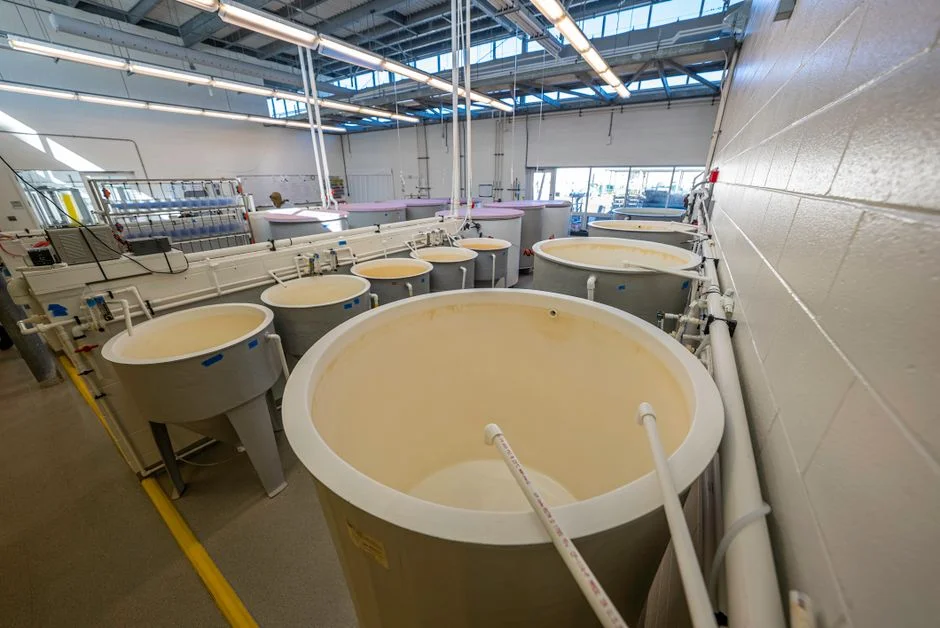
The standard treatment train a properly designed ETP follows: primary sedimentation (typically achieving 60-70% suspended solids removal per Green Mark Engineering, 2026), biological treatment for BOD/COD and nutrient removal, secondary clarification, and tertiary polishing for discharge or reuse. Flag any missing stage — a legacy pharma ETP without a tertiary stage is a real risk for reuse-water projects. The pharma-specific load characterization changes the design basis materially. Fermentation broth generates high BOD/COD with a BOD/COD ratio that can shift from 0.5 to 0.8 as the batch progresses, residual solvents (methanol, ethanol, acetone, dichloromethane) can reach hundreds of mg/L in batch discharges, antibiotic residues at sub-therapeutic concentrations select for antimicrobial resistance, and heavy metals from process catalysts (palladium, platinum, rhodium, nickel) accumulate in the sludge. None of these are always covered by a legacy ETP designed for non-pharma loadings, and the constructor's original analysis should be tested against the current product portfolio.
Twelve-Month Water and Wastewater Records Audit
The design documents tell you what the ETP was supposed to do; the operational records tell you what it actually did. Pull the five record items: 12-month overall water consumption, water bills from the utility, breakdown of water consumption by process, ETP inlet and outlet records, and any internal analysis the seller has done to identify improvement areas. Each record exposes a different risk. Water bills expose unauthorized withdrawals from boreholes or surface sources that may not be in the permit. Breakdown consumption shows whether the ETP influent matches the design basis — a process that suddenly doubles its water use without a corresponding ETP upgrade is a red flag. Inlet and outlet records show actual removal efficiency versus the permit limits; if outlet BOD is consistently near the limit, the ETP has no margin for production increases.
For a pharma overlay, add these parameters to the test panel: API residues (broad-screen LC-MS/MS for the site's product portfolio), total nitrogen and total phosphorus (often under-monitored in legacy permits), antibiotic activity (using standard microbiological assays or specific HPLC methods for known compounds), and process-specific contaminants such as residual solvents, cleaning agents, and heavy metals from catalysts. A 12-month rolling record is also long enough to catch seasonal variation in groundwater temperature, which affects biological stage performance. The red flags that should trigger a reserve adjustment: missing records, records that stop before the data-retention window (typically 5 years under most jurisdictions), or a sudden drop in reported ETP inlet flow that may indicate an unpermitted bypass to a stormwater line.
Operations, Maintenance, and Instrument Calibration
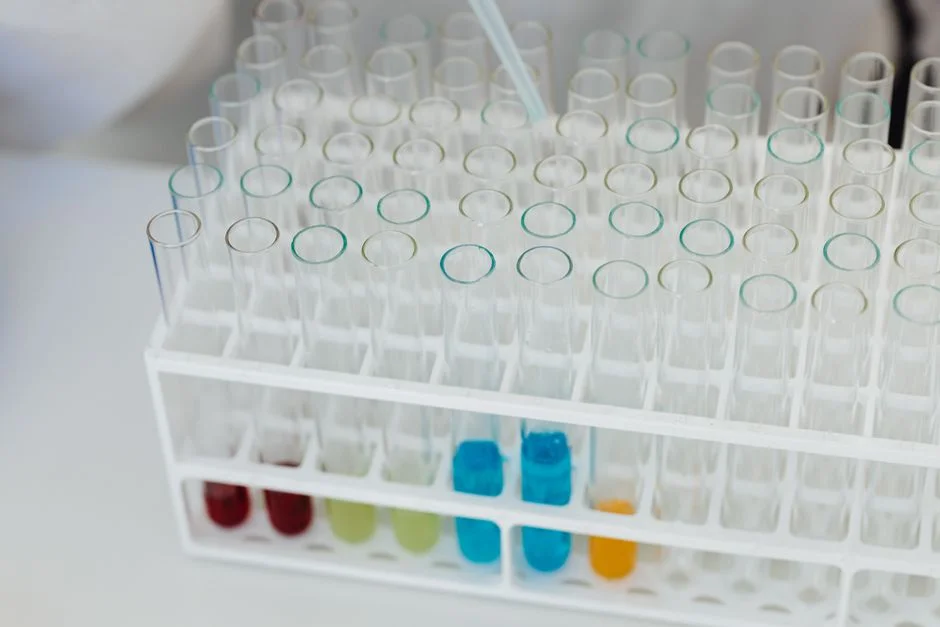
A poorly operated ETP is both a compliance risk and a CapEx exposure post-close. The operations-doc items to review: the O&M manual, O&M records, chemical dosing records, on-site wastewater quality test records, instrument calibration certificates, the internal calibration procedure, instrument manuals from the supplier, the internal testing procedure, the testing plan, the advanced treatment manual and records (if applicable), and the action plan for excursions above permit limits. A written action plan for parameter excursions is not optional — if the seller cannot produce one, the ETP has been operating without a documented response protocol, and the deal team should treat every recorded excursion as a potential notice of violation that the regulator has not yet issued.
The pharma-specific traceability requirement is the one most often missed: monitoring data must be FDA 21 CFR Part 11 compliant, meaning electronic records with full audit trails, electronic signatures, and validated systems (per Actini SAS, 2026). A legacy ETP running on paper logs or on an unvalidated spreadsheet does not meet this standard, and upgrading the data acquisition system post-close is a known cost item. Also describe what clean-in-place (CIP) validation looks like for a pharma ETP and why it matters: the ETP influent from a poorly cleaned production line carries residual solvents, cleaning agents, and product residues that can shock the biological stage and cause permit excursions. Automated chemical dosing for pharma effluent reduces the shock-load risk by maintaining stable dosing ratios during CIP events. The seller must produce a 36-month record of every recorded excursion event with the corrective action taken.
External Contracts: Sludge, Laboratories, and Third-Party Waste Haulers
The third-party liability chain is often the largest contingent-liability category in a legacy pharma ETP, and it is the area most often delegated to a junior associate. The external-document items: the sludge contractor agreement, the contractor's authorization to handle sludge under the relevant waste code, the sludge disposal method (landfill, incineration, composting, land application), external wastewater testing reports, and the laboratory's certifications (government accreditation or ISO 17025). Pharma sludge is the top hidden liability because it can classify as hazardous waste under most jurisdictions — typically when heavy metals from catalysts exceed thresholds, when API residues are detectable, or when the calorific value is high enough to trigger hazardous-waste incineration requirements. Historical disposal of pharma sludge to a non-hazardous landfill creates a cleanup obligation that follows the asset under successor-liability doctrine, and that obligation is usually unpriced in the seller's books.
What to demand from each laboratory: scope of accreditation (specifically the test methods, not just general ISO 17025), chain-of-custody documentation, method detection limits, and 5-year retention of raw data including chromatograms and calibration records. The failure modes that have killed pharma deals: contracts with haulers whose licenses have lapsed, missing waste manifests covering 5-10 years of operations, laboratories whose accreditation was never extended to the specific test methods used (e.g., a lab accredited for BOD but not for heavy metals by ICP-MS), and disposal records that stop before the regulatory retention window. For the on-site sludge dewatering stage, a well-specified pharma sludge dewatering filter press materially reduces the volume sent off-site and therefore the contingent liability envelope.
Organization, Training, and Emergency Response
The human-capital review covers two areas: whether the ETP operators can stay through the transition, and whether the emergency plan has actually been drilled rather than just drafted. The organization items: the ETP organization chart, operator personnel files including background and tenure, certificates of completion of external wastewater training, internal training records on the facility's wastewater management procedures, and external training records on ETP operation and maintenance. The emergency-response items: the factory risk assessment including ETP emergency scenarios, the ETP emergency response plan, ETP drill records, and the action plan for ETP failure including fail-safe modes and backup power.
The BSL context matters when the acquired factory handles biological agents. Under BSL-3 and BSL-4 conditions, the ETP emergency plan must address containment failure and the integration of the effluent decontamination system (EDS) with the production-side biosafety envelope (per Actini SAS, 2026). A continuous-mode thermal EDS with heat recovery is the standard for high-containment facilities because it processes effluent in real time without accumulation tanks that could become a secondary containment breach. For BSL-3/BSL-4 sites, verify the EDS has been validated to the required log-reduction standard and that the validation records are available. The retention risk is operational: experienced ETP operators often leave during M&A transitions because reporting lines, compensation, and site culture change, so the deal team should negotiate operator retention agreements as a closing condition. For facilities handling biological or pharmaceutical contamination, an integrated medical wastewater treatment system sized to the design flow rate is the typical post-close upgrade path.
Diligence Summary Checklist and Reserve Sizing
The consolidated checklist below ties each document requested to the red flag that triggers a reserve adjustment and assigns a data-room owner. The minimum test panel for any pharma ETP includes the standard parameters — BOD (typically <30 mg/L for surface discharge), COD (<250 mg/L), TSS (<100 mg/L), pH (6.5-9.0), and heavy metals per local regulation — with API residues, antibiotic activity, residual solvents, and process-catalyst metals as pharma overlays. The tiered reserve framework has three layers: Tier 1 (administrative gap) covers the cost to update missing records, validate data systems to 21 CFR Part 11, and file permit transfer paperwork; Tier 2 (operational gap) covers immediate ETP upgrade costs such as MBR retrofit for undersized legacy ETPs, chemical dosing system replacement, and instrument recalibration; Tier 3 (legacy contamination) covers the Phase II ESA, the remediation cost estimate, and the contingent indemnity reserve. The diligence checklist should be re-issued at 30, 60, and 90 days post-close as new records become available and the new owner takes over operations.
| Category | Document Requested | Red Flag Triggering Reserve Adjustment | Data-Room Owner |
|---|---|---|---|
| Permits & Regulatory | Discharge permit, 5-year DMR history, NOV/consent order file | Expired permit, active enforcement, permit issued to non-matching entity | Seller EHS / Legal |
| Design Documents | Flow process chart, constructor analysis, as-built drawings, designed flow rate | Designed flow < 110% of current peak; missing constructor analysis; no tertiary stage | Seller Engineering |
| Water & Wastewater Records | 12-month water consumption, water bills, breakdown by process, ETP inlet/outlet records | Missing records; bypass indicated by flow discontinuity; outlet BOD/COD consistently near limit | Seller Operations |
| Operations & Maintenance | O&M manual, dosing records, calibration certificates, excursion log, 21 CFR Part 11 validation | Paper logs only; missing excursion action plan; calibration certificates expired | Seller EHS |
| External Contracts | Sludge hauler agreement, hauler license, disposal manifests, lab accreditation, 5-year lab raw data | Hauler license lapsed; manifests missing; lab not accredited for specific methods | Seller Legal / Procurement |
| Organization & Training | Org chart, operator personnel files, training certificates, drill records | No drill records; single-operator dependency; no retention agreements | Seller HR / EHS |
| Emergency Response | Factory risk assessment, ETP emergency plan, EDS validation (BSL sites), fail-safe test records | No EDS validation; emergency plan not drilled in 36 months; no backup power test | Seller EHS / Engineering |
Frequently Asked Questions
What is the first ETP document to request in a pharma factory acquisition?
The wastewater discharge permit, plus 5 years of discharge monitoring reports and any notice of violation or consent order history. Permit transferability failure — expired permit, permit issued to a non-matching legal entity, or permit under active enforcement — is the single most common ETP-related deal-killer and must be confirmed before any other document review.
What records should the acquirer demand to characterize legacy pharmaceutical contamination?
A 12-month rolling dataset of ETP inlet and outlet flows, water bills, and a broad-screen analytical panel covering BOD, COD, TSS, total nitrogen, total phosphorus, API residues by LC-MS/MS, antibiotic activity, residual solvents, and heavy metals from process catalysts (palladium, platinum, rhodium, nickel). Sludge disposal manifests and laboratory accreditation certificates are equally important because pharma sludge can classify as hazardous waste under most jurisdictions.
Who pays for legacy wastewater contamination discovered during pharma M&A diligence?
Allocation is governed by the purchase agreement's environmental indemnity clause and the representations and warranties insurance policy. Standard market practice is for the seller to indemnify pre-closing contamination up to a cap (typically 10-25% of purchase price), with the buyer funding any remediation cost above the cap and any contamination caused by post-closing operations. The Phase II ESA and remediation cost estimate produced during diligence is what sizes the indemnity cap.
How long does ETP due diligence typically add to a pharma factory closing timeline?
For a straightforward site with complete records and no enforcement history, the ETP review adds 2-4 weeks to the confirmatory diligence phase. For a legacy site with missing records, expired permits, or historical non-compliance, the timeline extends 8-16 weeks because the Phase II ESA, permit transfer application, and remediation cost estimate must be completed before closing conditions can be satisfied.