What the CASS Process Is and How Its Cycle Works
The CASS (Cyclic Activated Sludge System) process is a sequencing batch reactor variant with a continuous-feed pre-anoxic selector and four timed phases — fill, react, settle, decant. Published 2024–2025 reviews confirm its three core advantages: improved nutrient removal, reduced energy demand, and stable operation in a single basin (Mosaferi et al., 2024, Sustainable Chemistry for the Environment, Vol. 9). The main disadvantages are scum and foam control in the selector, decanter reliability, PLC tuning complexity, and limits when scaling to high-strength industrial flows.
A single rectangular basin divided by a baffle facilitates the process. The first compartment, the pre-anoxic (sometimes anaerobic) selector, receives raw influent continuously, even while the main reactor is mid-cycle. The main reactor, by contrast, runs on a closed loop of four timed phases:
- Fill — influent continues to enter the main basin; mixed and aerated per cycle design.
- React — basin is isolated from the outlet; mixed and aerated for BOD oxidation and nitrification, optionally with an anoxic sub-phase for denitrification.
- Settle — mixing and aeration stop; biomass settles under quiescent conditions.
- Decant — a floating or traveling decanter draws clarified supernatant from above the sludge blanket.
Industrial CASS designs typically distribute a 4–8 h total cycle as: fill 1–2 h, aerobic react 2–4 h, anoxic react 0.5–1 h, settle 0.5–1 h, decant 0.5–1 h, and idle 0.5–1 h. Two or three cycles per basin per day is the usual operating envelope. The selector operates at a high food-to-microorganism (F/M) ratio, typically 5–10 kg COD/kg MLVSS·d, so that fresh substrate meets return sludge in a short-contact zone. That contact suppresses bulking filamentous bacteria such as Microthrix parvicella and Nocardia before the mixed liquor enters the main aeration volume. Mosaferi et al. (2024) classify CASS alongside other cyclic activated sludge systems by metabolic function, biomass type, and structural variation, noting that continuous feed combined with enzymatic and microbial activity differentiates CASS from a fill-and-draw SBR.
The Three Documented Advantages of CASS
The 2024–2025 Mosaferi et al. review of cyclic activated sludge processes lists three headline benefits: improved nutrient removal, reduced energy demands, and greater system stability.
1. Improved nutrient removal. The continuous-feed selector plus alternating aerobic and anoxic phases inside the same basin deliver simultaneous nitrification-denitrification and enhanced biological phosphorus uptake, without a dedicated anoxic tank or internal mixed-liquor recycle pumps (Mosaferi et al., 2024). When designed and operated within typical parameters, CASS effluent commonly falls in the following design-target ranges:
- COD 30–60 mg/L
- BOD5 5–15 mg/L
- TSS 10–20 mg/L
- NH3-N 1–5 mg/L
- TN 5–15 mg/L (with sufficient anoxic react time)
These are design-target ranges; actual performance depends on temperature, SRT, and influent fractionation.
2. Reduced energy demand. Three mechanisms cut energy relative to a fully aerobic continuous-flow plant. First, the selector's small volume is mixed rather than aerated, so it does not need blower air. Second, the aerobic react phase is intermittent, so blowers cycle on and off rather than running continuously. Third, there is no inter-zone recycle pumping because everything happens in one basin. The resulting specific energy demand typically falls in the 0.3–0.5 kWh/m³ range, compared to 0.5–0.8 kWh/m³ for conventional activated sludge (Mosaferi et al., 2024).
3. Greater system stability. A single basin with a defined cycle tolerates hydraulic and organic shock better than a continuous-flow system because the operator — or the PLC — can extend the react phase to absorb a load spike, or shorten fill to ride out a hydraulic surge. There are no fixed weirs and splitter boxes requiring rebalancing for every shift. Mosaferi et al. (2024) list this stability as a primary strength, making CASS a frequent choice for remote or lightly staffed sites such as a packaged WSZ underground A/O packaged plant.
CASS vs SBR vs MBBR vs MBR: A Parameter Comparison

Engineers evaluating CASS should compare the process against three common alternatives: conventional SBR, MBBR, and MBR. The table below consolidates the operating envelope for each, drawing on Mosaferi et al. (2024) and standard SBR/attached-growth design practice.
| Parameter | CASS | Conventional SBR | MBBR | MBR |
|---|---|---|---|---|
| MLSS (mg/L) | 3,000–5,000 | 2,500–4,000 | 1,500–3,000 (attached) | 6,000–12,000 |
| HRT (h) | 18–30 | 18–30 | 4–10 | 6–12 |
| F/M (kg BOD/kg MLVSS·d) | 0.10–0.20 | 0.10–0.25 | 0.20–0.50 | 0.05–0.15 |
| Effluent TSS (mg/L) | 10–20 | 10–20 | 15–30 | <5 |
| Effluent COD (mg/L) | 30–60 | 30–60 | 40–80 | <30 |
| Effluent NH3-N (mg/L) | 1–5 | 1–5 | 2–8 | <1 |
| Footprint | Compact (single basin) | Compact | Smallest (high-rate) | Compact + membrane skid |
MBBR offers a smaller footprint at high flow because its HRT is roughly one-third of CASS or SBR. MBR provides superior effluent quality through membrane-based physical retention, which is necessary when discharge limits demand TSS below 10 mg/L or COD below 30 mg/L, as discussed in the MBR configuration guide for industrial reuse and the MBR membrane bioreactor system documentation. CASS and SBR occupy the middle ground for both footprint and effluent quality.
The Real Disadvantages of the CASS Process
The Mosaferi et al. (2024) review identifies three open challenges: optimizing parameters, scaling technology for industrial use, and managing operational costs. The following failure modes represent the practical limitations of the technology.
1. Scum, foam, and floating sludge in the selector. The selector frequently accumulates FOG, surfactants, and high F/M filaments. Operators often encounter a thick brown or grey scum mat that can blanket the selector and starve the mixed liquor of oxygen. Remediation requires maintenance hardware such as rotary scum skimmers, tipping troughs, foam-knockdown spray nozzles, and manual removal.
2. Decanter reliability. Floating and traveling decanters are mechanical, submerged, and prone to wear, leakage, and ragging. Failure causes short-circuiting of untreated or partially treated supernatant into the effluent launder, particularly during the final phase of decant. Standard mitigation includes keeping spare parts, seal kits, and redundant decanters on critical trains.
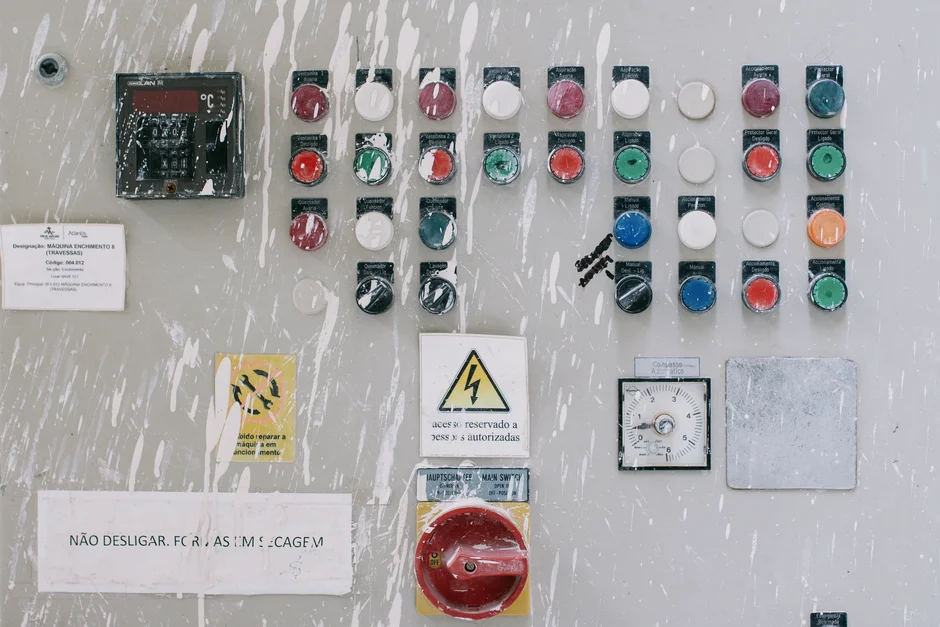
3. PLC and instrumentation complexity. CASS relies on level sensors, flow meters, DO probes, and a PLC to sequence aeration, decanting, and sludge wasting. Cycle performance depends directly on the accuracy of the PLC program and the calibration schedule. Plants lacking on-site instrument technicians often face operational difficulties.
4. Cold-weather nitrification limits. Nitrification rates decrease by approximately half for every 10 °C drop, reaching near-zero below 8 °C for unacclimated biomass. Unlike continuous-flow activated sludge systems that allow for higher SRT, CASS cannot easily extend the react phase without disrupting the cycle timetable. Unheated installations in cold climates require additional basin volume to manage this risk.
5. Scale-up ceiling. Single-train CASS basins above 20,000 m³/day often require multiple parallel trains, which negates the footprint advantage and increases the decanter and PLC count. For high-strength industrial flows exceeding 50,000 m³/day, alternative technologies are generally preferred, such as those described in the EGSB reactor engineering explainer.
6. Civil capex from long cycle time. A 6 h cycle requires a basin volume roughly twice that of an 18 h continuous-flow HRT for the same daily flow. For a buried or packaged installation such as a WSZ underground integrated sewage treatment skid, the civil cost is limited by transport and crane capacity.
When to Choose CASS — and When to Walk Away
CASS is an effective choice when flows are between 500–20,000 m³/day, influent is medium-strength (COD 250–1,000 mg/L), and the site is space-constrained or remote. Choose an alternative when influent is high-strength (COD above 2,000 mg/L), highly variable, or contains oils and greases that overwhelm the selector; in these cases, an MBBR or anaerobic reactor with DAF pretreatment is preferred. Walk away from CASS if discharge consents demand TSS below 10 mg/L or COD below 30 mg/L, as the decanter hydraulics cannot guarantee membrane-grade performance.
Frequently Asked Questions
What is the main advantage of the CASS process?
Combined nitrification-denitrification and biological phosphorus removal in a single basin, driven by the continuous-feed pre-anoxic selector and the alternating aerobic/anoxic react phases (Mosaferi et al., 2024).
What is the biggest disadvantage of CASS?
Decanter reliability and PLC tuning complexity are the most operationally expensive weaknesses, as decanter failure causes effluent non-compliance and PLC faults halt the cycle.
Is CASS better than SBR?
CASS is a continuous-feed SBR variant, not a strictly superior technology. It is better for variable influent because the selector buffers shock loads, while conventional SBR may be sufficient for stable municipal flows.
What flow range is CASS best suited to?
500–20,000 m³/day as a single train. Above this range, multiple parallel trains increase complexity and footprint.
Can CASS treat industrial wastewater?
Yes, for light industrial streams in the medium-strength COD range (250–1,000 mg/L). High-strength (COD above 2,000 mg/L) or oily streams usually require DAF pretreatment, anaerobic pre-treatment, or processes such as MBBR.