What Happens to the Wastewater Permit the Moment Tyson Closes on a Texas Plant
The Texas Commission on Environmental Quality re-issues the existing TPDES permit in the buyer's legal name under 30 TAC §305.64 within 30 days of closing — it is a transfer, not a new permit — and the seller's Discharge Monitoring Reports, Notice of Violation history, and open Agreed Orders travel with the asset as successor liability. The site must also comply with 40 CFR Part 432 categorical pretreatment standards for meat products, covering BOD5, TSS, oil & grease, and ammonia on process streams.
The Day 1 legal reality is starker than most deal teams model. The TCEQ change-of-ownership form (CORE-103) must be filed within 30 days of closing, with electronic copies of the application packet routed to [email protected] per TCEQ Water Quality Division guidance (TCEQ, 2026). Filing late does not pause the compliance clock — it stacks a late-filing penalty on top of any pre-existing exceedances a buyer has already inherited. Combined process flows above 50,000 gpd push the site into an individual TPDES permit under 30 TAC Chapter 305; satellite operations such as QA labs, training kitchens, or pilot lines may stay under multi-sector general permit TXR050000, but each must file its own Notice of Intent with an SIC code matching the eligibility list. The permit file pulls easily from EPA ECHO, but successor liability is not a file — it is the seller's last 8 quarters of DMR values becoming the buyer's baseline. Pre-acquisition diligence should run that pull before signing; a shorter diligence window misses the rolling exceedance history that EPA ECHO and TCEQ reviewers examine first (per EPA ECHO, 2026). For the parallel four-rail framing in a different Texas sector, see the UMC factory acquisition ETP due diligence guide.
Federal Categorical Standards: 40 CFR 432 for Meat Products, Not 40 CFR 405 for Beverages
A Tyson Texas plant binds to 40 CFR Part 432 (Meat Products), not 40 CFR 405 (Beverages) — importing the wrong categorical standard is the single most expensive diligence error in food-sector M&A. SIC 2011 (meat packing), SIC 2013 (sausages and other prepared meats), and SIC 2015 (poultry slaughter) all sit under Part 432, with subparts A through D defining the applicable subcategory: Subpart A covers simple slaughter; Subpart B covers low-processing operations (cutting, deboning, rendering of offal); Subpart C covers high-processing (cooked products, curing, smoking, sausages); and Subpart D covers poultry products. Each subcategory carries its own BOD5, TSS, oil & grease, and ammonia limits on process streams, and the categorical values for the heaviest subcategory set the floor for any local limits the receiving POTW may impose.
40 CFR 405 / SIC 2086 beverage limits do not transfer to a meat plant — the categorical compliance math is rebuilt from scratch, and a deal team carrying over a bottling CAPEX template will size the wrong plant. A TCEQ-approved POTW pretreatment program then stacks its own local limits on top of the federal categorical floor; ammonia is where the conflict typically surfaces, because municipal POTWs frequently set ammonia limits tighter than the federal default. The one-week engineering task every Tyson acquirer should run before signing is to map every outfall on the acquired site to the correct 40 CFR 432 subcategory. Skipping it guarantees a six-figure retrofit surprise within 12 months of closing.
| Parameter / Frame | Beverage / Bottling (SIC 2086, 40 CFR 405) | Meat / Poultry (SIC 2011/2013/2015, 40 CFR 432) |
|---|---|---|
| Dominant categorical limit driver | BOD, TSS, pH on process streams | BOD5, TSS, oil & grease, ammonia (TKN) |
| High-load subcategory | Concentrate / bottling | Subpart C (high-processing) / Subpart D (poultry) |
| Typical load benchmark | Sugar, FOG, packaging fibre | Blood, paunch manure, rendering condensate, stickwater |
| pH swing on cleaning cycles | 2–11 | 4–12 (caustic hot cleaning, acid descalers) |
| Front-end equipment | DAF, lamella, MBR | DAF (high FOG), lamella, MBR, equalization |
| Local-limit risk surface | Phosphorus (cleaning chemistries) | Ammonia (rendering, condensate) |
| Sanitary / process segregation | Required | Strictly required; mixing inflates CAPEX |
What Slaughterhouse and Poultry Wastewater Actually Looks Like
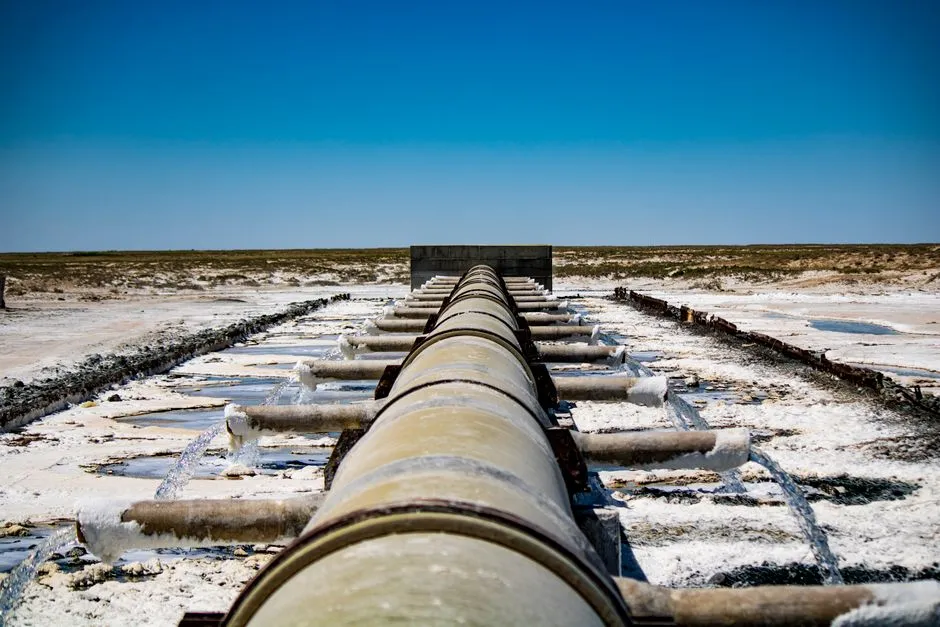
A Tyson plant is not a bottling line — the influent characteristics drive the entire CAPEX envelope and the permit-limit risk profile. High-strength streams dominate the load: blood alone runs at BOD5 of roughly 200,000 mg/L, and even a small slug of blood loss into the equalization basin can spike a day's composite past the 7-day permit limit. Paunch manure from the green offal handling, rendering condensate from the cookers, and stickwater from the blood-drying circuit add further high-strength sidestreams. These streams are categorically different from bottling CIP effluent; they carry particulate-bound nitrogen and oil that any deal team importing a beverage template will mis-size.
Typical poultry processing influent ranges from industry data and comparable plant disclosures: BOD5 800–2,500 mg/L, TSS 600–1,800 mg/L, oil & grease 200–800 mg/L, and TKN 100–250 mg/L (typical industry values, verify with site-specific sampling). pH swings 4–12 across cleaning cycles, and rendering and scalding streams run hot — cooling to below 50 °C is required before they enter biological treatment. Blood solidifies if cooled below ambient before it reaches the screens, which means equalization temperature control is not a comfort feature; it is a permit-compliance prerequisite. Sanitary flow must stay segregated from process flow; mixing them inflates CAPEX and creates permit-limit conflicts at the outfall. A bottling deal team that has never visited a kill floor will read "BOD5 2,000 mg/L" and mistake it for the bottling range — it is an order of magnitude higher in loadings per gallon.
| Parameter | Typical Range (Poultry Processing) | Implication for Treatment |
|---|---|---|
| BOD5 | 800–2,500 mg/L | Front-end DAF + high-rate biological polishing required |
| TSS | 600–1,800 mg/L | Screening plus DAF for primary solids removal |
| Oil & grease | 200–800 mg/L | DAF sized for FOG skimming; lamella polish |
| TKN | 100–250 mg/L | Local ammonia limit risk at POTW; MBR + nitrification sizing |
| pH | 4–12 (cleaning swings) | Equalization with PLC-controlled dosing |
| Temperature | Hot on rendering/scalding streams | Cooling required before biological stage |
The Five-Rail Diligence Checklist: What to Pull Before Signing
The TPDES permit file is one workstream, not the whole environmental diligence. A Texas meat-plant acquisition runs on five legal rails; a missed rail on any one of them becomes successor exposure on Day 1. The diligence team should be able to forward the checklist below to a closing checklist system and tick boxes mechanically.
- Rail 1 — TPDES permit file. Pull 8 quarters of DMRs from EPA ECHO; flag any parameter within 80% of its limit; cross-check against 30 TAC Chapter 307 effluent limits. Confirm the permit authorizes the actual SIC code on site; mismatches surface here.
- Rail 2 — Federal categorical pretreatment. Confirm 40 CFR 432 subcategory applicability; map each outfall to the correct subcategory; review prior year's compliance reports. This is the rail where the wrong-standard error lives — see the previous section.
- Rail 3 — TRI / Form R. Ammonia (refrigeration and boiler feed), NaOH, and phosphoric acid all commonly exceed TRI threshold quantities at a meat plant. Confirm prior-year filing; schedule the July 1 successor filing if the seller missed it. The obligation survives closing.
- Rail 4 — Drainage-district and pipeline easements. Any outfall or forcemain crossing a county drainage district easement. Diligence the easement map independently of the permit file. The Robstown 2026 precedent showed a TPDES permit can be issued while a separate drainage-district violation sits 12 months later (KRIS 6, 2026-02-17). The permit authorizes discharge quality; it does not authorize the right-of-way.
- Rail 5 — Stormwater and construction. Confirm NOI and SWPPP currency under TXR150000 or TXR050000 for any active expansion on site. Verify NOT coverage under 30 TAC Chapter 281 if the site is in a non-attainment zone. For a parallel PE-buyer diligence framing, see the 47-question ETP due diligence checklist for PE buyers.
The Equalization-Basin Channel Count: One Visual That Resets the CAPEX Model

The single highest-leverage due-diligence diagnostic on a Texas meat-plant acquisition is the equalization-basin influent channel count. Count the number of segregated inlet channels feeding the equalization basin during the first site walk — this is a one-hour observation any non-engineer can collect. One channel means process streams were never segregated, and the Phase 1 CAPEX in the deal model is wrong: biological reactors will be sized to mixed-strength flow that would be much smaller if paunch, blood, and rendering condensate were kept separate and treated on a sidestream. Five or more channels means the prior owner already paid for segregation discipline; retrofit CAPEX typically drops, and integration risk falls because the permit limit envelope is closer to design.
This diagnostic is the takeaway that justifies the article's existence as practical guidance. The equalization-basin channel count is information any due-diligence team can collect before signing — no sampling, no lab work, no P&ID review required. Repeat the count on every acquired Tyson site before the integration model is locked (HydropureWater field data, 2026). For a parallel visual diagnostic in a different process-water sector, see the TI Arizona plant acquisition wastewater compliance guide.
Retrofit Treatment Train for a Texas Tyson Plant: DAF, MBR, RO, and Sludge Handling
The reference P&ID below is the benchmark a buyer's engineer should gap any acquired site's drawings against. It is reverse-engineered from TCEQ permit structures for SIC 2011/2013/2015 operations, public Impact Report disclosures, and documented best practice at comparable Texas meat and poultry sites. Use it to size retrofit CAPEX, not to copy a vendor proposal.
| Stage | Equipment & Specification | Function |
|---|---|---|
| Equalization / surge basin | 6–12 h HRT; PLC-controlled pH and coagulant dosing; pH 6.5–7.5 | Absorbs pH 4–12 swings; buffers blood, paunch, and rendering slug loads |
| Front-end FOG / TSS | Dissolved air flotation (DAF) system; 4–300 m³/h skid; 80–95% FOG removal; TSS < 100 mg/L downstream | Removes blood, FOG, and suspended solids in the front end |
| Lamella clarification | Ferric chloride or polyaluminum chloride; pH 9–10; surface loading 20–40 m/h | Phosphate precipitation and residual organics removal |
| Biological polishing | HydropureWater MBR membrane bioreactor system with PVDF hollow-fiber modules; effluent turbidity < 1 NTU; MLSS 8,000–12,000 mg/L; reactor 1,000–5,000 m³/day peak | Nitrification of high-TKN sidestreams; reusable effluent quality |
| Reuse / concentration | RO; recovery 70–85%; reject 15–30% of hydraulic load; permeate < 50 µS/cm | Cooling-tower makeup; reduces hauled-brine volume |
| Disinfection | Chlorine dioxide generator or UV bank; 50 g/h to 20,000 g/h | Final disinfection at reuse or discharge point |
| Sludge dewatering | Plate and frame filter press; cake dryness 25–35% TS | Nutrient-rich biological sludge; treat as discrete budget line |
| ZLD-ready option | Evaporator/crystallizer; 1.5x–2.5x base-train CAPEX | Aligns with 2030 zero-liquid-discharge corporate targets |
The biology stage is where meat-plant design diverges most from bottling: high TKN sidestreams from rendering condensate require dedicated nitrification volume, and the MBR MLSS window must be held at 8,000–12,000 mg/L to keep the FOG and blood residuals from fouling the membranes. RO reject becomes a meaningful brine-management line item at 15–30% of total hydraulic load — plan the evaporator decision on the basis of that rejected volume, not on a generic ZLD target.
Phase 1 CAPEX Envelope and 90-Day Integration Roadmap

The full DAF + MBR + RO train (no evaporator) for a 1,000–5,000 m³/day Tyson Texas plant fits a $1M–$4M CAPEX envelope, or roughly $1,000–$4,000 per m³/day of design capacity. A ZLD-ready configuration with evaporator/crystallizer adds 1.5x–2.5x base-train CAPEX, which aligns with corporate 2030 zero-liquid-discharge targets (HydropureWater field data, 2026). Brine hauling is the hidden OPEX line: at a 15–30% reject ratio on a 1,500 m³/day plant, that is 225–450 m³/day of liquid leaving the site at a $0.40–$0.90 per 1,000-gallon disposal tariff. The integration model should treat that OPEX as a steady-state cost, not as a transition item.
| Line Item | Range / Specification | Note |
|---|---|---|
| DAF + MBR + RO (no evaporator) | $1M–$4M; $1,000–$4,000 per m³/day | Standard meat-plant retrofit, 1,000–5,000 m³/day |
| ZLD-ready (evaporator / crystallizer) | 1.5x–2.5x base-train CAPEX | Aligns with 2030 corporate ZLD targets |
| Brine hauling (off-site disposal) | 225–450 m³/day at 1,500 m³/day plant; $0.40–$0.90 per 1,000 gal | Hidden OPEX line, not transition cost |
| Filter press | Discrete line item, not buried in treatment upgrades | Cake 25–35% TS |
The 90-day integration roadmap is the sequence a defensible environmental handoff looks like in 2026: (1) file the TCEQ CORE form within 30 days of closing under 30 TAC §305.64; (2) commission the equalization-basin channel count and full first site walk; (3) pull 8 quarters of DMRs from EPA ECHO and flag any parameter within 80% of its limit; (4) size RO reject against the local brine-hauling tariff; (5) lock the Phase 1 CAPEX envelope before the integration model is finalized. Closing is the moment the compliance ledger becomes yours — the 90 days after closing are the window where diligence becomes either good decisions or expensive surprises.
Frequently Asked Questions
What happens to the wastewater permit the day a Tyson plant closes in Texas?
The TCEQ re-issues the existing TPDES permit in the buyer's legal name under 30 TAC §305.64 — it is a re-issue, not a new permit. The CORE form must be filed within 30 days of closing, and the seller's DMR history, NOV ledger, and open Agreed Orders travel with the asset (TCEQ, 2026). Closing is the moment successor liability starts.
Which federal categorical standard applies to a Tyson Texas plant?
40 CFR Part 432 (Meat Products) covers SIC 2011 (meat packing), 2013 (sausages), and 2015 (poultry slaughter). The standard is divided into Subparts A through D by subcategory, and a TCEQ-approved POTW pretreatment program stacks local limits on top of the federal floor. 40 CFR 405 (beverages) does not apply.
How long should the pre-signing environmental diligence take?
A complete five-rail diligence pass — TPDES, federal categorical, TRI/Form R, drainage easements, and stormwater — fits within 4 to 6 weeks. The 8-quarter DMR pull from EPA ECHO is the longest lead-time item and should be commissioned first.
What CAPEX should a deal team model for a 1,000–5,000 m³/day Texas meat plant retrofit?
The full DAF + MBR + RO train fits $1M–$4M CAPEX, or $1,000–$4,000 per m³/day. ZLD-ready configurations add 1.5x–2.5x base CAPEX (HydropureWater field data, 2026). Brine hauling at $0.40–$0.90 per 1,000 gallons should be sized as a steady-state OPEX line item.