Why Argentina's Regulatory Stack Changes the Process Design
Pharmaceutical wastewater treatment in Argentina operates under three overlapping jurisdictions that fire on a single discharge event. A plant emptying 200 m³/day into a Matanza-Riachuelo tributary triggers (1) the federal floor under Ley 24.051 and Decreto 2109/1994, (2) a provincial discharge permit, and (3) basin-specific limits from ACUMAR. Designing to only the federal annex routinely fails permitting because the basin limit is almost always stricter.
Provincial discharge tables diverge sharply. ADA Resolución 336/2003 sets Buenos Aires defaults at 250 mg/L DQO, 50 mg/L DBO, 35 mg/L SS, and pH 6.5–10 for industrial effluents. Córdoba (Secretaría de Recursos Hídricos) tightens conductivity to 2,500 µS/cm for certain industrial categories. Río Negro (APA) and Mendoza add metals clauses not present in the federal annex. ACUMAR Res. 283/2019, applicable across the Cuenca Matanza-Riachuelo, sets a 50 mg/L DBO₅, 250 mg/L DQO, 35 mg/L SS, 1 mg/L total phosphorus, 2 mg/L ammoniacal nitrogen, and a 10 mg/L hydrocarbons envelope — and these are the maximum a compliant plant will ever face on the basin.
For new facilities, SARA-INF (Sistema de Evaluación de Impacto Ambiental) requires a Declaración de Impacto Ambiental for any ETP handling more than 10 m³/day. The sequence is: EIA provincial → aptitud de descarga del establecimiento → permiso de vuelco. Each step expects the influent characterization and the proposed treatment train to map to the binding table — not to a generic global limit. The EPA Clean Water Act, EU WFD, and REACH are useful comparators, but they do not override the Argentine permit.
Characterizing Pharmaceutical Effluent in Argentine Plants
API manufacturing wastewater in Argentina is typically a blend of synthesis mother liquors, solvent washes, and antibiotic finishing-line rinses. A defensible design envelope for an API plant sits at COD 5,000–25,000 mg/L, BOD₅ 1,500–5,000 mg/L, TSS 500–3,000 mg/L, and TDS up to 15,000 mg/L from sulfate, chloride, and phosphate salts used in synthesis. A BOD₅/COD ratio below 0.3 signals a recalcitrant stream that will not respond to biological treatment alone — it is the single most important number for sizing the AOP step.
Antibiotic finishing lines add residual methanol, acetone, and acetonitrile, alongside active ingredients such as sulfamethoxazole, ciprofloxacin, and azithromycin at concentrations between 0.5 and 50 mg/L per compound. Sulfamethoxazole and carbamazepine routinely pass through conventional activated sludge with less than 20% removal (per S3 evidence, 2025), which is why the biological stage alone is never enough for any plant holding an ACUMAR permit.
Batch operation drives wide swings: pH from 2 to 12 between discharges, and temperature from 15 °C in winter to 35 °C in summer across central Argentina. Aydin et al. (2019, per S3) documented antibiotic removal dropping from 79% in summer to 36% in winter in conventional plants — the same swing that the biological stage in an Argentine ETP will see. Equalization for 24–48 hours is the first non-negotiable unit operation; it dampens both the pH and the hydraulic peaks before they hit the bioreactor. The design basis is a 24-hour composite sample built from three 8-hour grabs, taken over at least one production campaign, not a single spot check.
| Parameter | API synthesis effluent | Antibiotic finishing line | Design basis |
|---|---|---|---|
| COD (mg/L) | 5,000–25,000 | 3,000–12,000 | 24-h composite |
| BOD₅ (mg/L) | 1,500–5,000 | 800–2,500 | BOD₅/COD < 0.3 |
| TSS (mg/L) | 500–3,000 | 200–1,000 | DAF after equalization |
| TDS (mg/L) | 5,000–15,000 | 2,000–8,000 | RO if reuse |
| pH | 2–12 | 4–9 | Equalize 24–48 h |
| Temperature (°C) | 15–35 | 20–30 | Seasonal swing |
The Process Train: Biological Stage, Membrane Polishing, Advanced Oxidation
Three trains cover most of the discharge scenarios an Argentine pharmaceutical plant will encounter. None of them is a copy of a hospital wastewater design — the influent loads and the ACUMAR envelope are different.
Train 1 — Anaerobic + MBR + AOP. A UASB or EGSB reactor cuts COD by 60–80% biologically and produces biogas that offsets part of the aeration load downstream. The aerobic stage is an integrated MBR system holding 80–90% removal of bulk APIs (Zhao et al., 2014 per S4), with a final ozone-based AOP pushing past 90% removal of diclofenac and ibuprofen (Yuan et al., 2019 per S4). The EGSB reactor design deserves a closer look for any high-strength API stream because the upflow velocity handles high TSS better than a conventional UASB. This train is the right default for plants discharging to a basin under ACUMAR or to a surface water body with strict limits.
Train 2 — Activated sludge + DAF + MBR + GAC. This is the retrofit path for plants that already have a biological basin. DAF strips oil and suspended solids before the membranes; GAC polishes the MBR permeate and removes more than 70% of residual APIs (Huang et al., 2018 per S4). The recurring liability is spent carbon: under Ley 24.051 it falls into Y-category waste and must be sent to a hazardous waste operator. GAC is defensible only where the spent-carbon logistics are already in place.
Train 3 — Anaerobic + MBR + AOP + RO. This is the reuse train. Reverse osmosis permeate hits the conductivity and silica targets for boiler feed and cooling-tower makeup, with concentrate at 20–25% of feed sent either to evaporation or to a secure landfill. For high-COD polish, ozone or O₃/H₂O₂ is preferred because of higher hydroxyl radical yield. For low-organic polishing, UV/H₂O₂ is the safer choice because ozone can push bromate above the 0.5 mg/L threshold when chloride is present. Integrated MBR + AOP + tertiary systems are consistent with the sustainable path forward documented for hospital wastewater in S3 (2025), with the same logic carrying over to API manufacturing polishing.
| Unit operation | Train 1 (Anaerobic + MBR + AOP) | Train 2 (AS + DAF + MBR + GAC) | Train 3 (Anaerobic + MBR + AOP + RO) |
|---|---|---|---|
| COD removal | 60–80% (anaerobic) + >90% (AOP) | 70–85% (AS) + ~70% (GAC) | 60–80% + >95% (RO) |
| API removal | >90% (diclofenac, ibuprofen) | ~70% (GAC) | >95% (RO barrier) |
| Effluent DQO | < 100 mg/L | 120–180 mg/L | < 30 mg/L |
| Discharge option | Surface water / ACUMAR | Sewer (with permit) | Reuse |
| Main OPEX driver | Energy (MBR + ozone) | Spent GAC disposal | Membrane replacement + energy |
| AOP advice | O₃ or O₃/H₂O₂ | None (GAC only) | O₃ or UV/H₂O₂ |
Discharge Destination Drives the Final Treatment Step
The receiving environment — not the influent — decides the polishing step. Sewer discharge to AySA in Buenos Aires or to the provincial utility in Rosario typically accepts a pretreated effluent under 500 mg/L COD, oil and grease under 100 mg/L, and pH between 5.5 and 10; a biological stage plus DAF pre-treatment usually closes that gap. For plants in Córdoba, the SRNH typically asks for a similar envelope but adds a conductivity check.
Surface water discharge to the Río de la Plata, the Paraná, or any Matanza-Riachuelo tributary triggers ACUMAR Res. 283/2019 with its 250 mg/L DQO ceiling. An MBR alone will not reliably hold DQO under 100 mg/L on a high-TDS API stream, so an AOP polish is the standard add-on. Plants near the basin are also the ones where source reduction pays back fastest: waste segregation and process optimization can cut effluent load 20–40% before any treatment is installed (per S4 best practice).
Reuse for boiler feed or cooling-tower makeup raises the bar again. Conductivity must drop below 50 µS/cm and silica below 0.5 mg/L, which is only achievable with an industrial RO system downstream of the AOP polish. Antiscalant selection follows the feedwater profile, and the concentrate stream (typically 20–25% of feed) needs a defined disposal route before the ETP is approved.
CAPEX and OPEX Benchmarks for an Argentine Pharmaceutical ETP
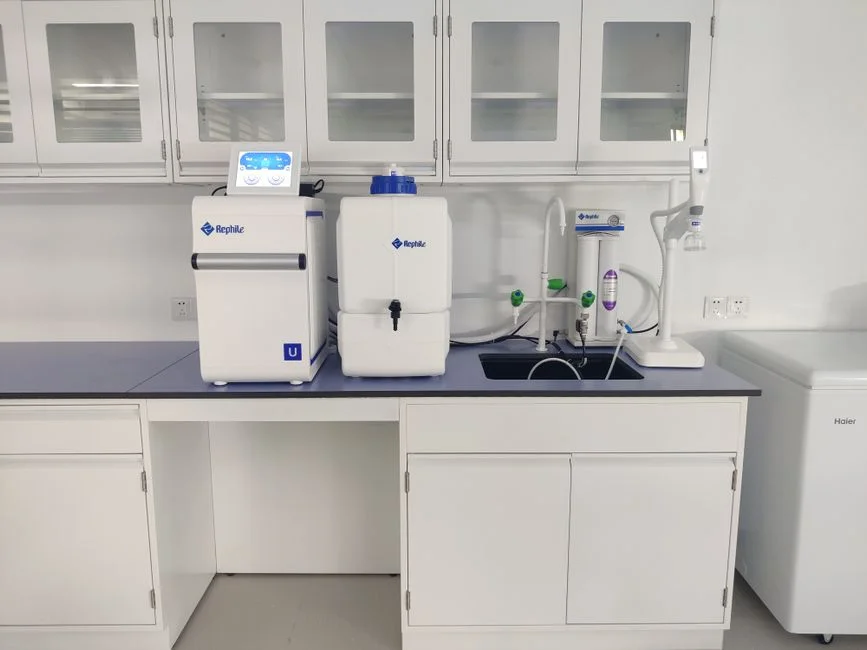
Benchmarks below are 2026 USD for equipment and installation, anchored to a turnkey Argentine pharma ETP. They exclude land, civil works outside the process island, and the EIA study itself.
| Capacity | Sewer-discharge train (AS + DAF + MBR) | Surface-water train (Anaerobic + MBR + AOP) | Reuse train (Anaerobic + MBR + AOP + RO) |
|---|---|---|---|
| 50 m³/day | USD 80K–110K | USD 110K–150K | USD 150K–220K |
| 200 m³/day | USD 250K–340K | USD 330K–460K | USD 480K–680K |
| 1,000 m³/day | USD 1.1M–1.5M | USD 1.5M–2.0M | USD 2.0M–2.6M |
OPEX sits in the 4–8 kWh/m³ envelope, with the MBR aeration and ozone generation carrying the load. Spent GAC disposal (Train 2) adds 8–15% to OPEX whenever it is in the train. For a 500 m³/day plant, the AOP step alone pays back in roughly 4–6 years through reduced environmental impact fees and avoided regulatory penalties (per S4 framing, 2025-09) — the kind of figure a board or HQ finance reviewer will accept. The AOP energy optimization explainer is worth reading before the OPEX line is locked, and the AOP retrofit decision guide covers the path when an existing plant moves from sewer to surface-water discharge.
Common Compliance Failures and How to Avoid Them
Five mistakes show up on most first Argentine pharma ETP projects. The first is under-equalizing batch effluent: a basin sized for 8 hours of hydraulic retention lets pH excursions reach the bioreactor, knock out nitrifiers, and trigger a DQO excursion in the MBR permeate. A 24-hour equalization basin is the minimum. The second is designing to the federal annex without checking the basin overlay — an EIA submitted against Ley 24.051 numbers will be returned when the ACUMAR 250 mg/L DQO limit is cited in the comments.
The third is ignoring seasonal temperature swing. A biological stage sized for a 30 °C summer MLVSS target loses nitrification and a large fraction of antibiotic removal at 15 °C in July — the same 79% to 36% drop documented by Aydin et al. (2019, per S3). The fourth is sending spent GAC to a non-hazardous landfill. Under Ley 24.051, spent carbon from pharma polishing is Y-category waste and must go to an operator with a provincial manifest. The fifth is skipping real-time monitoring. Conductivity, pH, and residual oxidant sensors feeding the SCADA let the operations team catch a drift before it becomes a non-compliance event; pairing the biological stage with an automated chemical dosing loop keeps the AOP feed within the design envelope.
Frequently Asked Questions
What permits does a new pharmaceutical ETP need in Argentina?
A new ETP above 10 m³/day requires a provincial Declaración de Impacto Ambiental under SARA-INF, an aptitud de descarga del establecimiento, and a permiso de vuelco from the provincial authority (ADA in Buenos Aires, SRNH in Córdoba, APA in Río Negro).
Which regulation is stricter for a plant on the Matanza-Riachuelo basin?
ACUMAR Res. 283/2019, which sets 50 mg/L DBO₅, 250 mg/L DQO, and 35 mg/L SS — typically tighter than the underlying provincial ADA Resolución 336/2003 table.
What removal efficiency should I expect from an MBR on API effluent?
An integrated MBR system delivers 80–90% removal of bulk APIs (Zhao et al., 2014, per S4). Pushing past 90% on diclofenac, sulfamethoxazole, and carbamazepine requires an ozone- or UV-based AOP downstream (Yuan et al., 2019, per S4).
How long should the equalization basin be for a batch API plant?
Plan for 24–48 hours of hydraulic retention. This dampens pH swings of 2–12 and hydraulic peaks from batch discharges before the stream reaches the biological stage.
Is spent GAC from pharmaceutical polishing classified as hazardous waste in Argentina?
Yes. Under Ley 24.051, spent GAC loaded with APIs falls into Y-category waste and must be sent to a licensed hazardous-waste operator with a provincial manifest.