What an MVR Evaporator Is, in One Sentence
A mechanical vapor recompression evaporator is a forced-circulation thermal concentrator that boils wastewater, captures the secondary vapor, and compresses it to reuse its own latent heat as the heating medium—eliminating live-steam demand and reducing energy costs by 13% compared to multi-effect evaporation in documented field operation (Japan Technical Association of the Pulp and Paper Industry, Gotsu Mill operating report). MVR is the workhorse technology behind modern zero liquid discharge evaporator trains in chemicals, pulp and paper, pharma, food, metal finishing, and landfill leachate, where high-TDS streams must be reduced to a small brine or crystal volume before disposal or reuse. Standard packaged units handle 500–1,350 gph, with custom skids for larger flows (ENCON, MVR Evaporator product page). Operating costs sit in the $0.01–$0.02 per gallon range, and ENCON documents up to 95% reduction in wastewater hauling and disposal costs once an MVR replaces tanker-truck offload (ENCON).
The Working Principle: A Step-by-Step Walk Through the Loop
The six steps below correspond to the MVR working principle used in every forced-circulation flash design on the market, requiring a clear understanding of the fluid path to map component names to their function.
- Feed preheat. Cool wastewater enters a plate-and-frame or shell-and-tube preheat exchanger that recovers sensible heat from the hot distillate and condensate streams before the feed joins the main loop. ENCON specifies this recovery stage as standard on every MVR skid (ENCON).
- Forced circulation. A heavy-duty circulation pump (Sulzer, Gould, or equivalent) drives the liquid through the main heat exchanger at 2–4 m/s tube velocity. The loop is held at a pressure high enough to suppress nucleate boiling inside the tubes—the primary anti-scaling design choice in the machine (ENCON).
- Flash evaporation. Downstream of the heat exchanger, an orifice plate drops the static pressure. The superheated liquid flashes to a two-phase mixture that enters the separation tank.
- Vapor separation. The separation tank splits the two-phase flow: concentrated bottoms (brine or slurry) discharge from the bottom, while saturated water vapor leaves the top. Almost all of the energy added in the heat exchanger is carried in that vapor as latent heat.
- Vapor compression. A vapor compressor blower—a rotary-lobe (roots) blower on small units or a centrifugal compressor on large units—raises the vapor's pressure and saturation temperature by typically 5–15 °C. That delta-T allows the vapor to serve as a heating medium (ENCON; Multi-Effect Evaporation Coupled with MVR Heat Pump Thermal Integration Distillation, Energy and Power Engineering, 2017).
- Latent-heat reuse. The compressed vapor enters the shell side of the main heat exchanger, condenses on the tubes, releases its latent heat into the circulating liquid, and exits as distillate. The loop is closed; only the compressor's electrical input is added to the system.
The labeled component map below provides a single reference table that ties each physical item to its function and a typical specification band.
| Component | Function | Typical Specification |
|---|---|---|
| Feed preheat exchanger | Recovers sensible heat from distillate to cold feed | Plate-and-frame (compact) or shell-and-tube (fouling-tolerant); stainless 304/316 standard |
| Circulation pump | Drives liquid through loop at high velocity to suppress in-tube boiling | Heavy-duty centrifugal; cast iron, duplex SS, or alloy for corrosive service |
| Main heat exchanger | Transfers latent heat from compressed vapor to circulating liquid | Shell-and-tube preferred for scaling service; plate-frame where fouling is low |
| Orifice plate / pressure let-down | Drops loop pressure to trigger flash at the separation tank | Engineered for designed ΔP; fixed or adjustable |
| Separation tank | Demisters vapor from concentrated slurry; discharges both streams | ASME Section VIII pressure vessel code; rupture disk on vapor space |
| Vapor compressor | Raises vapor saturation temperature 5–15 °C so it can heat the loop | Rotary-lobe blower (small units); high-alloy rotary lobe or duplex-SS centrifugal (large units, corrosive duty) |
| PLC / instrumentation | Automates feed, discharge, distillate transfer, and CIP | Allen-Bradley PLC standard; Rosemount, Ashcroft, Endress+Hauser instruments |
On sites where the feed carries oil, suspended solids, or high TSS upstream of the evaporator, a dissolved air flotation pre-treatment step is commonly inserted ahead of the MVR to protect the loop from fouling.
Why Recompressing Vapor Uses So Little Energy
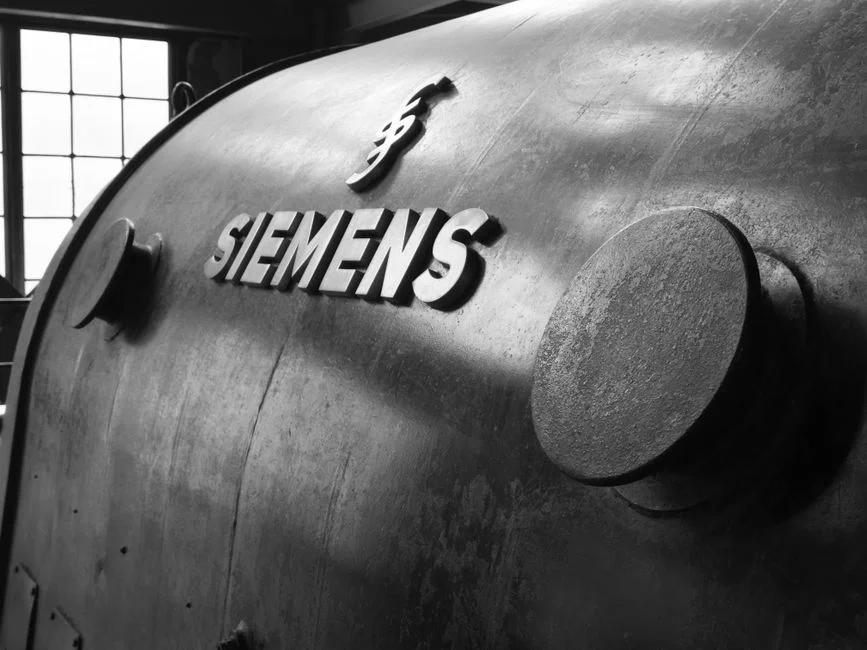
Producing fresh steam at process conditions from liquid water requires roughly an order of magnitude more energy than raising already-generated low-pressure vapor by a few degrees of saturation through mechanical compression (ENCON). The compressor's job is only to push the vapor up the small temperature lift needed to drive heat transfer across the main exchanger; the bulk of the latent heat is already inside the vapor and simply must be relocated. The energy bill on a running MVR is therefore dominated by compressor kWh, not boiler fuel.
The Gotsu Mill installation quantified this on a real industrial black-liquor stream: energy cost ran 13% below an equivalent multi-effect vacuum evaporator running on fresh steam, with zero loss in evaporation capacity (Japan Technical Association of the Pulp and Paper Industry). On the academic extreme, a three-effect evaporation train coupled with MVR heat integration cut total energy consumption by 81.32% against a single-effect baseline, with total compressor power of 192.86 kW and a TAC reduction of 58.55% (Energy and Power Engineering, 2017). The same study showed that the MVR heat-integration variant outperformed the MVR heat-pump-only variant by 58.25% on energy, confirming that the latent-heat reuse path is the dominant efficiency lever.
MVR vs Multi-Effect Evaporation: Head-to-Head
The following comparison evaluates MVR and multi-effect evaporation (MEE) using documented data from the Gotsu Mill field installation, the ENCON product page, and the 2017 multi-effect + MVR integration study.
| Parameter | MVR (mechanical vapor recompression) | Multi-Effect Evaporation (MEE) |
|---|---|---|
| Primary energy input | Electricity to drive vapor compressor (no live steam at steady state) | Live steam to first effect; secondary steam reuses latent heat in subsequent effects |
| Typical energy use | 13% lower energy cost than MEE on equivalent duty (Gotsu Mill); 81.32% reduction vs single-effect in MEE+MVR heat integration case | Reference case in the same study; energy cost 535.92 t·a⁻¹ vs 202.28 t·a⁻¹ for MEE+MVR |
| Steam header dependency | None at steady state; only utility loads (CIP, instruments) | Requires continuous steam supply to first effect |
| CAPEX profile | Higher (compressor + clean-grade utilities); equipment depreciation 2.29–2.53 ×10⁵ $/y in academic case | Lower mechanical cost but full steam-boiler infrastructure |
| OPEX profile | $0.01–$0.02 per gallon (ENCON); up to 95% reduction in hauling/disposal cost | OPEX scales with steam unit cost; competitive where waste steam is free |
| Best-fit stream | High-TDS, scaling-prone, ZLD-targeted, electricity-cheap sites | Large dilute streams where cheap waste steam is already on site |
| Sensitivity to scale | Strong economy at small-to-mid flows (500–1,350 gph standard, custom larger) | Economy improves with effect count; typically favored at very large flows |
| Sensitivity to feed TDS / scaling | Forced-circulation flash suppresses in-tube boiling; documented scaling and compressor-vibration incidents manageable (Gotsu) | Boiling inside effects makes scaling more aggressive; frequent CIP |
| Maintenance profile | Co-dominant loads on compressor bearings, seal, and CIP skid; modern PLC automates cycles | Tube bundle cleaning, effect-by-effect inspection, steam-side integrity |
If the site already uses cheap waste steam and the stream is large and dilute, MEE remains the preferred option; if electricity is cheap, steam is expensive, or the project targets ZLD with a downstream crystallizer, MVR is more efficient (Energy and Power Engineering, 2017; ENCON). For full ZLD duty, skid-mounted units such as Condorchem's DESALT MVR FC combine evaporation and crystallization in a single package for water recovery plus solid by-product (Condorchem Enviro Solutions, DESALT Series).
Where MVR Evaporators Are Used in Industrial Wastewater
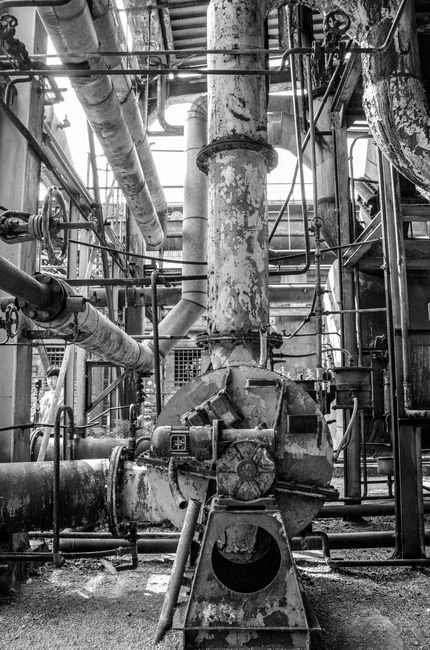
The proven application base is broad enough that self-screening by sector is a reasonable first step for facility managers. Pulp and paper remains the canonical case: at Gotsu Mill, an MVR unit delivered a 111% increase in pulp production versus the prior evaporator train once stable operation was reached (Japan Technical Association of the Pulp and Paper Industry). In pharma, chemical processing, and electronics, MVR handles high-TDS mother liquors and rinse waters and is normally paired with a crystallizer downstream for full ZLD. In metal finishing, food and beverage, and landfill leachate, the unit operates on oily or high-COD streams with documented operating costs in the $0.01–$0.02 per gallon band and up to 95% reduction in disposal hauling cost (ENCON). For ZLD designs that integrate renewable power, see our Photovoltaic Wastewater ZLD: 2026 Hybrid System Design with 99.9% Recovery, Cost Breakdown & Solar Integration guide for how solar-driven MVR changes the operating-cost math.
Failure Modes, Maintenance, and What Modern Automation Fixes
Heater scaling and compressor vibration are the two primary failure modes documented in the Gotsu Mill operating paper. Heater blockage from scale deposition was addressed by intensifying vapor-side drain cleaning, while compressor vibration was mitigated by scheduling open cleaning of the compressor; both interventions returned the unit to stable operation with the 13% energy-cost advantage intact (Japan Technical Association of the Pulp and Paper Industry). Modern packaged MVRs close most of this gap with automation: ENCON specifies Allen-Bradley PLCs as standard, running fully automated feed, distillate transfer, and CIP cycles, with continuous monitoring of temperature, pressure, and water level triggering deviation alarms before fouling can derate evaporation rate (ENCON). For corrosive streams, material upgrades—high-alloy rotary-lobe vapor compressors and duplex stainless centrifugal compressors—extend mechanical life. For sites where the downstream solids load is heavy, a plate and frame filter press is typically paired with the MVR to dewater the concentrated bottoms. For the broader OPEX levers across a ZLD plant, our AOP System Energy Efficiency: 2026 Engineering Guide to EEO, kWh/m³ and OPEX Reduction piece covers the kWh/m³ math on the upstream side.
Frequently Asked Questions
How much electricity does an MVR evaporator use?
Electricity is dominated by the vapor compressor, which on a packaged unit is sized in tens to low hundreds of kW—the three-effect + MVR heat-integration case in the academic literature ran total compressor power of 192.86 kW (Energy and Power Engineering, 2017). At the operating-cost level, ENCON documents $0.01–$0.02 per gallon of feed for the MVR train itself (ENCON).
Can MVR handle high-TDS or scaling wastewater?
Yes. The forced-circulation flash design suppresses in-tube boiling, which is the dominant scaling trigger in conventional evaporators, and
Frequently Asked Questions
How does an MVR evaporator work step by step?
The MVR process begins by feeding the dilute liquid into a heat exchanger where it is heated to its boiling point. The resulting vapor is separated from the liquid and directed into a mechanical compressor, which increases the vapor's pressure and temperature (typically by 5 to 15 degrees Celsius). This compressed, high-energy vapor is then returned to the heat exchanger as the primary heating medium, condensing on the exterior of the tubes to boil the incoming feed, effectively recycling the latent heat of evaporation.
How much electricity does an MVR evaporator use per gallon?
Energy consumption in an MVR system is primarily driven by the compressor motor, typically ranging from 15 to 40 kWh per 1,000 gallons (approx. 3.8 cubic meters) of evaporated water. Actual efficiency depends on the Boiling Point Elevation (BPE) of the solution; fluids with low BPE require less compression work, allowing the system to achieve specific energy consumptions as low as 8 to 12 kWh per cubic meter under optimal thermodynamic conditions.
What is the difference between MVR and a multiple-effect evaporator?
A multiple-effect evaporator (MEE) uses a series of vessels where the vapor from one effect serves as the heating source for the next at progressively lower pressures, requiring external steam for the first effect. In contrast, an MVR system uses a single effect and a mechanical compressor to upgrade the latent heat of the produced vapor, eliminating the need for a continuous supply of external live steam once the system reaches thermal equilibrium.
Can an MVR evaporator handle high-TDS or scaling wastewater?
MVR evaporators can process high-TDS (Total Dissolved Solids) wastewater, but they require specific design configurations such as forced circulation or falling film with seed crystals to manage scaling. When dealing with salts near saturation or scaling compounds like calcium sulfate, systems must be equipped with automated cleaning cycles, specialized heat exchanger materials like titanium or duplex stainless steel, and high-velocity flow regimes to minimize fouling layers.
Does an MVR evaporator need steam?
An MVR evaporator only requires external steam during the initial startup phase to bring the system up to operating temperature and pressure. Once the mechanical compressor is engaged and the system reaches a steady state, the latent heat of the recycled vapor provides sufficient energy to maintain the evaporation process, rendering the system self-sustaining and eliminating the need for ongoing live steam consumption during normal operation.