The Regulatory Stack That Governs an Orangeburg Sewer Discharge
Four overlapping authorities control what a petroleum plant in Orangeburg County can send down the drain in 2026, and the binding limit in any conflict is always the most stringent one. At the top sits the federal Clean Water Act and its implementing regulation 40 CFR Part 403, which requires every POTW serving significant industrial users to operate an approved pretreatment program (S2, S4). One tier down, 40 CFR Parts 405–471 carry industry-specific categorical pretreatment standards — Part 419 governs petroleum refining — and those apply to refineries and bulk terminals whenever they are stricter than local limits (S3 §51.062(Q)). The state layer is the SC Department of Environmental Services (SCDES) Bureau of Water, which approves the POTW pretreatment program, issues wastewater construction permits for any on-site pretreatment system, and folds the program requirements into the POTW's NPDES permit before any industrial user is allowed to discharge (S2). At the bottom of the stack — but the layer the operator deals with day to day — is the City of Orangeburg Department of Public Utilities (DPU), organized into six divisions including a Wastewater (Sewer) Division, enforcing Industrial Discharge Regulations codified at Sections 27-170 to 27-189 (S1). The practical consequence of this hierarchy: a 2026 discharger who designs only to the DPU cap and ignores a tighter 40 CFR 419 daily-maximum or a SCDES construction condition will fail on the first compliance sampling event.
Specific Limits a Petroleum Discharger Must Hit in 2026
The Orangeburg DPU caps heavy metals in the discharge from any industrial user as follows: chromium 1.0 mg/L (total of Cr III, Cr VI, or combined), lead 2.0 mg/L, tin 2.0 mg/L, zinc 2.0 mg/L, copper 0.5 mg/L, nickel 1.0 mg/L, cyanide 2.0 mg/L, and cadmium 1.0 mg/L; the combined total of those eight metals may not exceed 9.0 mg/L in the effluent, and no single metal in the trunk-line blend may exceed 1.0 mg/L when it reaches the WWTP headworks (S1). The DPU does not publish a separate petroleum-oil or FOG cap on the cited page, but comparable POTW ordinances in the region cap total petroleum oil and nonbiodegradable cutting oils at 100 mg/L, floatable FOG at 200 mg/L, and trigger a FOG surcharge at 100 mg/L (S3 §51.062(A)(B), S5) — the same range an Orangeburg discharger should design against in 2026. Conventional surcharge-trigger ceilings are 350 mg/L BOD, 1,000 mg/L COD, 350 mg/L TSS, 30 mg/L NH3-N, and 14 mg/L total phosphorus, with the prohibition on stormwater inflows and the no-dilution rule from §51.063 applying alongside (S3 §51.062(M)(E)). The DPU retains authority to set limits more stringent than federal or state requirements whenever needed to protect the receiving stream, biosolids, or pass-through/interference thresholds (S1, S3 §51.062(P)).
| Parameter group | Cap / trigger | Unit | Source |
|---|---|---|---|
| Chromium (total) | 1.0 | mg/L | Orangeburg DPU §27-170 (S1) |
| Lead | 2.0 | mg/L | Orangeburg DPU §27-170 (S1) |
| Copper | 0.5 | mg/L | Orangeburg DPU §27-170 (S1) |
| Nickel | 1.0 | mg/L | Orangeburg DPU §27-170 (S1) |
| Cadmium | 1.0 | mg/L | Orangeburg DPU §27-170 (S1) |
| Cyanide | 2.0 | mg/L | Orangeburg DPU §27-170 (S1) |
| Eight-metal combined ceiling | 9.0 | mg/L | Orangeburg DPU §27-170 (S1) |
| Trunk-line headworks blend, any single metal | 1.0 | mg/L | Orangeburg DPU §27-170 (S1) |
| Total petroleum oil / cutting oils | 100 | mg/L | Comparable POTW ordinance (S3 §51.062(A)) |
| Floatable FOG | 200 | mg/L | Comparable POTW ordinance (S3 §51.062(B), S5) |
| FOG surcharge trigger | 100 | mg/L | Black & Veatch 2020 TBLL (S5) |
| BOD surcharge trigger | 350 | mg/L | S3 §51.062(M) |
| COD surcharge trigger | 1,000 | mg/L | S3 §51.062(M) |
| TSS surcharge trigger | 350 | mg/L | S3 §51.062(M) |
| NH3-N surcharge trigger | 30 | mg/L | S3 §51.062(M) |
| Total phosphorus surcharge trigger | 14 | mg/L | S3 §51.062(M) |
| Peak-day BOD (slug protection) | 1,000 | mg/L | Black & Veatch 2020 TBLL (S5) |
| Peak-day TSS (slug protection) | 1,200 | mg/L | Black & Veatch 2020 TBLL (S5) |
| Peak-day NH3-N (slug protection) | 100 | mg/L | Black & Veatch 2020 TBLL (S5) |
How the Limits Map to a Typical Refinery or Terminal Waste Stream
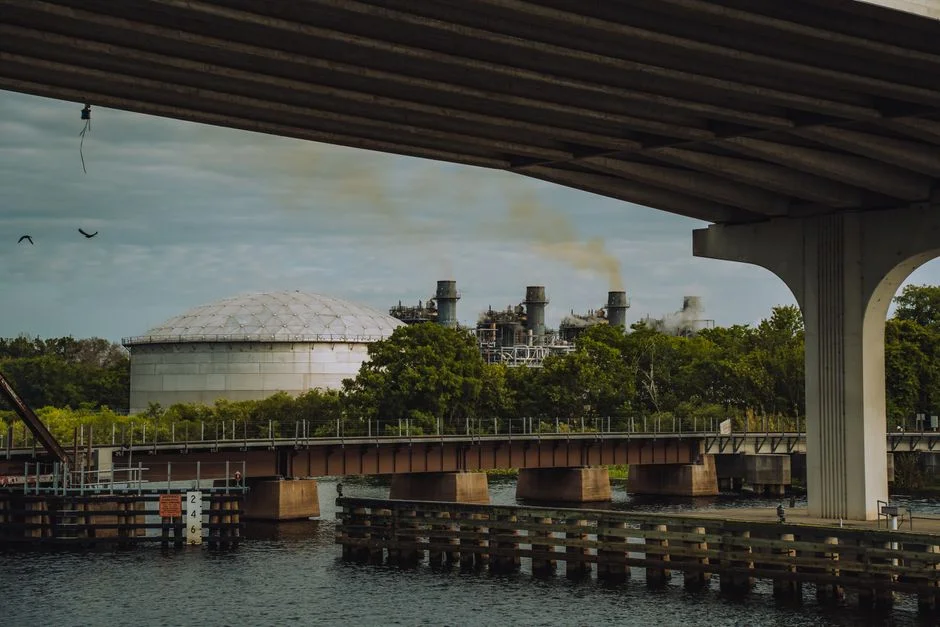
A tank-farm operator in Orangeburg County typically has five wastewater streams that compete for the same sewer connection, and each one drives a different cap. Desalter brine from a refinery crude unit is the dominant source of total dissolved solids, chloride, and trace metals (chromium, nickel, lead) — so it sets the conversation around the 1.0 mg/L chromium and 2.0 mg/L lead local caps. API separator effluent and skimmings are the binding constraint on the 100 mg/L petroleum-oil ceiling, because free and emulsified oil routinely runs 200–500 mg/L out of a poorly tuned separator. Tank-farm stormwater collected inside secondary containment carries phenol, sulfide, and residual hydrocarbon risks during a turnover, and the 200 mg/L floatable FOG limit is the line that matters there. Hydrotest discharge from new or recertified piping is usually low in oil but high in iron oxide and TDS, which puts pressure on the 9.0 mg/L combined-metals ceiling. Boiler blowdown is hot, low-volume, and high in TDS — usually segregated rather than sewered. Slug-discharge risk is the cross-cutting issue: any one of those streams can briefly exceed its governing cap during a tank changeover, a pump seal failure, or a maintenance event, which is why the DPU's permit condition (j) requires immediate slug-discharge notification (S1).
The Pretreatment Train That Hits These Numbers in 2026
The treatment train that a 2026 petroleum discharger specifies has five engineered stages, and the order is not optional if every cap in the previous section is to be met simultaneously. Step 1 — equalization: a flow-buffering tank sized to dampen slug loads before the downstream units; comparable POTW slug-protection design works to peak-day ceilings of 1,000 mg/L BOD, 1,200 mg/L TSS, and 100 mg/L NH3-N (S5). Step 2 — primary oil/water separation: a corrugated-plate interceptor or API separator to remove free oil down to the 50–100 mg/L range before FOG polishing. Step 3 — dissolved air flotation: the workhorse for FOG and emulsified-oil reduction; a properly chemized HydropureWater DAF unit routinely drives total petroleum oil into the single-digit mg/L range and brings floatable FOG comfortably under 100 mg/L, which is where the surcharge trigger sits. Step 4 — biological polishing and metals precipitation: an MBR, conventional activated-sludge, or SBR basin sized to drive BOD below 350 mg/L, COD below 1,000 mg/L, and NH3-N below 30 mg/L; the MBR biological polishing step also strips residual organics that would otherwise carry metals through. Where the DAF underflow or the biological effluent trends above the 1.0 mg/L chromium or 2.0 mg/L lead trigger, an automatic chemical dosing skid feeding hydroxide or sulfide precipitation is the standard fix. Step 5 — sludge handling: a plate-and-frame filter press dewatering the DAF float and waste activated sludge to a 25–35% dry cake suitable for offsite disposal. Engineers comparing the DAF and clarifier options for a tank-farm application can reference our DAF-vs-clarifier selection guide, and operating teams commissioning an MBR should keep our MBR troubleshooting reference close at hand. A comparable chemical-plant build is laid out in the comparable Little Rock chemical-plant pretreatment guide.
Permit, Sampling, and Reporting Obligations

The DPU's standard permit contains eleven conditions labeled (a) through (k), and each one is enforceable: (a) the user-charge or fee schedule, (b) numeric limits on average and maximum wastewater constituents, (c) limits on rate and time of discharge plus sampling-facility specs, (d) inspection and sampling-facility requirements, (e) monitoring programs covering location, frequency, test methods, and reporting schedule, (f) compliance schedules, (g) technical and discharge-report submittals, (h) plant-records retention with DPU access rights, (i) notification of any new wastewater constituents or substantial volume/character change, (j) slug-discharge notification, and (k) other conditions the DPU deems necessary (S1). The default compliance sample is a 24-hour composite unless a grab is demonstrably more representative, and the chain of custody must be documented to the standard in §51.062(M). Two upstream obligations catch most operators off guard: every POTW must re-evaluate its local limits every five years under 40 CFR 122.44(j)(2)(ii), so the DPU's MAHL (Maximum Allowable Headworks Loading) recalculation can tighten a petroleum plant's cap between permit cycles without any change in plant operations (S4, S5). And any waste classified as hazardous under RCRA cannot be discharged without 60 days of prior written notice to the pretreatment coordinator, including the EPA hazardous waste number, type, volume, and timing of the discharge (S3 §51.062(L)). The state-side piece is the SCDES wastewater construction permit, which the Federal/Energy/Pretreatment Section must issue before any pretreatment equipment is built — the DPU will not accept a discharge from an unpermitted system (S2).
Frequently Asked Questions
What sewer-discharge permit does a petroleum plant need near Orangeburg, SC?
An industrial user permit issued by the City of Orangeburg Department of Public Utilities under Industrial Discharge Regulations Sections 27-170 to 27-189, plus an SCDES wastewater construction permit for the on-site pretreatment equipment, before any discharge to the DPU sewer (S1, S2).
What are the actual numeric FOG and petroleum-oil limits a refinery or terminal must meet in 2026?
The Orangeburg DPU's published heavy-metal caps include chromium 1.0 mg/L, lead 2.0 mg/L, copper 0.5 mg/L, and a combined eight-metal ceiling of 9.0 mg/L (S1); comparable regional POTW ordinances cap total petroleum oil at 100 mg/L, floatable FOG at 200 mg/L, and impose a 100 mg/L FOG surcharge trigger (S3 §51.062(A)(B), S5) — the design range a 2026 Orangeburg discharger should specify against.
What unit operations are needed to meet those limits at a petroleum plant?
Equalization, an API separator or corrugated-plate interceptor, a dissolved air flotation unit, biological polishing (typically an MBR), chemical precipitation for residual metals, and a plate-and-frame filter press for sludge dewatering — the same sequence that drives petroleum oil into single-digit mg/L and conventional pollutants under the 350/1,000/350/30/14 mg/L surcharge triggers (S3 §51.062(M), S5).
How often does the DPU re-evaluate its local limits, and can my cap get tighter?
Federal regulation requires a written technical evaluation of local limits following each NPDES permit issuance or reissuance, which typically occurs on a five-year cycle under 40 CFR 122.44(j)(2)(ii); the DPU's MAHL recalculation can lower an industrial user's cap without any change at the plant itself (S4, S5).